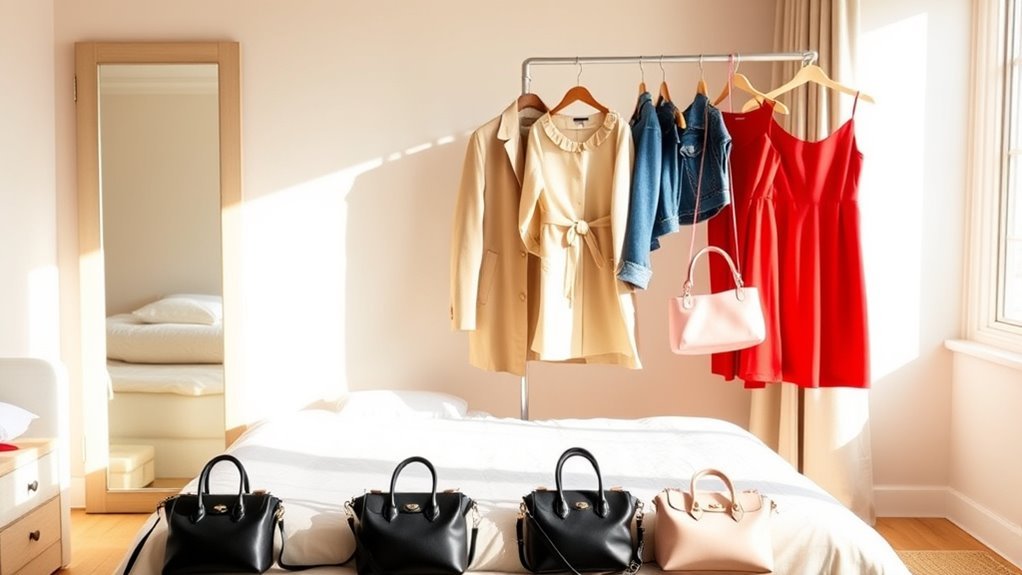
To coordinate a handbag with outfits you already own, start with the colors you wear most. A neutral bag in black, tan, beige or navy works with nearly all of them. A colored bag works when it repeats one color in your outfit or stands alone against plain clothes. With patterns, a solid bag is the safe choice. The steps below show how to check each match.
How to Choose Handbag Colors
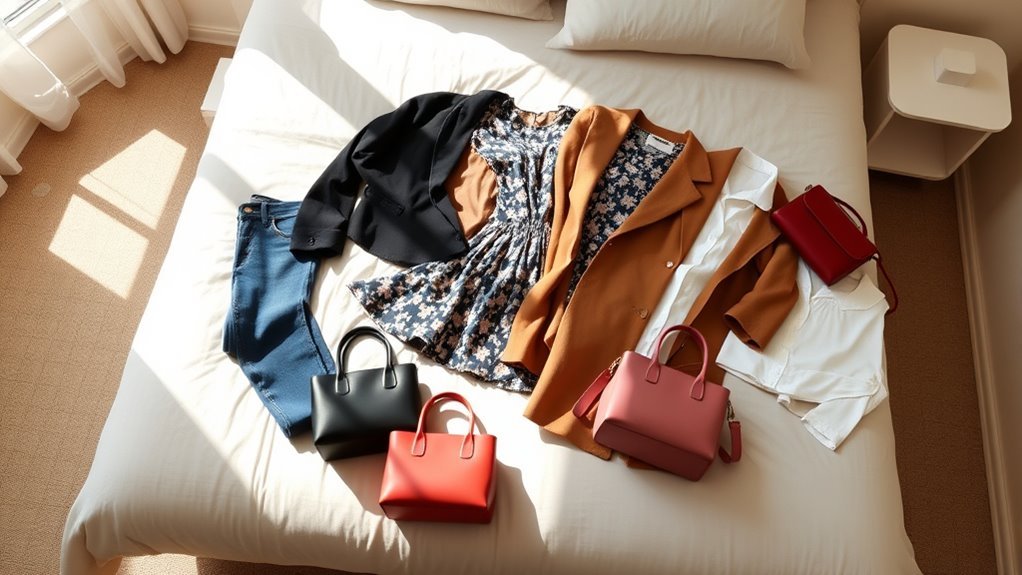
Begin with your closet, not the store. Look at the clothes you wear in a normal week and note the three colors that show up most.
If those colors are mostly dark or cool, such as black, gray and navy, a black, gray or navy bag will blend in easily. If they are warm, such as cream, camel, olive and rust, look at tan, brown or beige bags instead.
A simple guideline is to keep an outfit to about three main colors, including the bag. It is a guideline, not a rule, but it stops a look from feeling busy.
Colored bags work best when they have a link to your clothes. A dusty rose bag can pick up the pink in a floral dress. An olive bag sits well with denim, cream and brown.
Material changes how a color reads. Smooth leather makes a color look sharp and dressy. Suede, canvas and woven straw make the same color look softer and more casual.
Adding Colorful Handbags to Your Outfit
A colored bag is the easiest way to add interest to plain clothes. It is also easier to wear than a bright coat or dress, because it covers so little of the outfit.
There are two reliable ways to wear one. Let the bag be the only strong color against neutral clothes, or repeat a color that is already in your outfit.
The sections below cover bold bags, the color wheel and ideas for each season.
Bold Color Choices
A bold bag needs a quiet background. Red, cobalt blue or emerald green stands out against black, white, gray, beige or denim. The bag becomes the focal point, and the rest of the outfit supports it.
With an outfit in one color, a bright bag adds a clear accent. Hot pink or mustard looks good with blue jeans and a white shirt. Keep jewelry and shoes simple so the bag does not have to compete.
If two bright colors feel like too much, repeat the bag color once in a small way. A scarf, a lip color or a stripe in your top is enough to make the bag look planned.
Complementary Color Pairing
The color wheel takes the guesswork out of pairing. Colors that sit opposite each other are called complementary, such as blue and orange or purple and yellow. They make each other look brighter.
A cobalt bag with a rust or orange sweater is a complementary pair. So is a mustard bag with a purple dress. For a softer effect, choose neighbors on the wheel, such as a burgundy bag with pink or red.
Muted versions are easier to wear than pure brights. Dusty rose, sage and lavender bags blend with gray, cream and denim. They add color without strong contrast.
Seasonal Color Ideas
Your wardrobe changes with the seasons, so the bags that suit it change as well. These pairings are common starting points, not rules.
In autumn, mustard, rust and burgundy bags go with brown, olive and camel clothes.
In spring, pastel bags such as lavender or pale pink suit florals, light denim and white.
In summer, coral, teal and straw bags look right with white, linen and bright prints.
In winter, emerald, deep red and navy bags add color to black, gray and camel coats.
Choosing Timeless Neutral Bags for Versatility
If you want one bag that works with most of your closet, choose a neutral. Neutrals do not clash with other colors, so matching takes little thought.
Black, white, beige, tan, brown, gray and navy all count. The best one for you is the one closest to the colors you already wear.
A neutral bag also calms a loud outfit. It lets a bright dress or a bold print stay the center of attention.
Timeless Neutral Choices
Each neutral has its own strengths. Here is how the main ones behave with real outfits.
Beige and tan are the most flexible in warm weather. They go with denim, white, pastels and most brights.
Brown works well with earth tones, cream, olive, navy and denim. It looks softer than black next to warm colors.
Off-white and cream pair well with pastels and soft colors. They show dirt faster, so they need more care.
Black goes with nearly everything and suits formal settings. It can look heavy with very pale summer outfits. White gives a crisp contrast to dark or bright clothes.
Burgundy, olive and navy act almost like neutrals. They are dark and muted, so they sit quietly beside most colors while adding a little depth.
Effortless Outfit Coordination
Neutral bags make daily dressing faster, because you do not have to rethink the bag each morning.
A black bag grounds a bright outfit. A cream bag softens pastels and light colors. In both cases the bag supports the clothes without adding a new color.
Beige and brown bags move easily between casual and dressy outfits. They are a good choice with patterned clothes, since they do not add a new color to the mix.
You do not need to match your bag to your shoes. A loose link is enough, such as both being warm toned or both being dark.
Elevate Everyday Looks
If you are building a small bag wardrobe, two or three neutrals cover most outfits.
Choose one dark bag, one light bag and, if you like, one mid-tone such as tan.
Here are three must-have options:
- Classic Black: Grounds your look, providing a striking contrast against lighter hues, perfect for any occasion.
- Chic White: Brightens darker ensembles and pairs beautifully with vibrant colors, adding a fresh twist to your style—just remember to keep it clean!
- Soft Cream: An elegant alternative to stark white, it complements pastels and muted tones, creating a harmonious vibe.
How to Match Handbag Textures
Texture matters as much as color. A simple way to add interest is to contrast the bag with your clothes. Smooth leather stands out against knits, denim and cotton. Suede or woven bags add softness to crisp shirts and tailored pieces.
Think about the occasion as well. Smooth, structured leather reads as formal. Canvas, straw and slouchy shapes read as casual.
Balance heavy textures. With a chunky knit or a fuzzy coat, a smooth bag keeps the outfit from looking bulky. With sleek clothes, a textured bag adds some life.
Match the hardware to your jewelry if you want a pulled-together look. Gold hardware suits warm colors and gold jewelry. Silver hardware suits cool colors and silver jewelry.
Handbags for Every Occasion
The setting also guides the color. Some colors look more formal than others, and each occasion has its safe choices.
- For casual outings, grab a sturdy crossbody in a neutral shade like beige or brown. It pairs perfectly with denim and relaxed attire.
- At formal events, opt for an elegant clutch or structured bag in classic colors like black or cream to improve your sophisticated look.
- For outdoor gatherings, a versatile tote in a fun color like mustard or sage adds warmth and vibrancy while being practical.
For a date night, a small bag in a rich or soft color, such as burgundy or dusty rose, adds interest to a simple outfit.
For a wedding, a small bag in a soft shade such as blush, light blue or metallic gold or silver goes with most dresses.
Mixing Patterns With Solid Handbags
Patterned clothes are busy already, so the bag should be calm. A solid bag in black, white, beige or tan is the easiest match for stripes, florals and checks.
For a more planned look, pick the bag color from the pattern itself. Choose one of the smaller colors in the print, not the main one. The bag then ties the outfit together.
Shape helps too. A plain, structured bag gives the eye a place to rest beside a busy print. Avoid a patterned bag with patterned clothes unless the two share a color and differ clearly in scale.
Elevating Your Look With Statement Handbags
A statement bag is one that draws the eye through color, shape or detail. It works best when it is the only loud piece.
Here are three easy ways to wear a statement bag:
- Bold Colors with Neutrals: Pair a vibrant bag with an all-white outfit to create an eye-catching contrast that feels fresh and intentional.
- Warmth with Denim: Opt for mustard or tan handbags to soften the ruggedness of denim, adding warmth and balance.
- Structured Chic: A colorful, structured bag can upgrade casual ensembles, making them feel polished without effort.
Keep the rest of the outfit to two or three colors so the bag stays the focus.
Before you leave, check the full outfit in a mirror in daylight. If your eye goes to the bag first and nothing fights it, the match works.
Frequently Asked Questions
What Is the Most Popular Color for Handbags?
Black is widely seen as the most common handbag color. It goes with nearly every outfit and suits both casual and formal settings.
How to Check Color Combination for Clothes?
Use a color wheel. Colors opposite each other give strong contrast, and colors next to each other blend. Keep to about three main colors, and check the outfit in daylight before you go out.
Does a Black or Brown Purse Go With Everything?
Black goes with almost everything, though it can look heavy with very light summer outfits. Brown and tan suit warm colors, denim, cream and navy. Owning one of each covers most wardrobes.
Should Your Handbag Match Your Shoes?
No. Matching is optional. It looks more modern when the two simply go together, for example both neutral or both in the same color family.
Conclusion
Coordinating a bag with clothes you already own comes down to a few habits. Know your most-worn colors, keep one or two neutral bags and add color with a link to your outfit. Keep to about three colors, use a solid bag with patterns and check the result in daylight.

