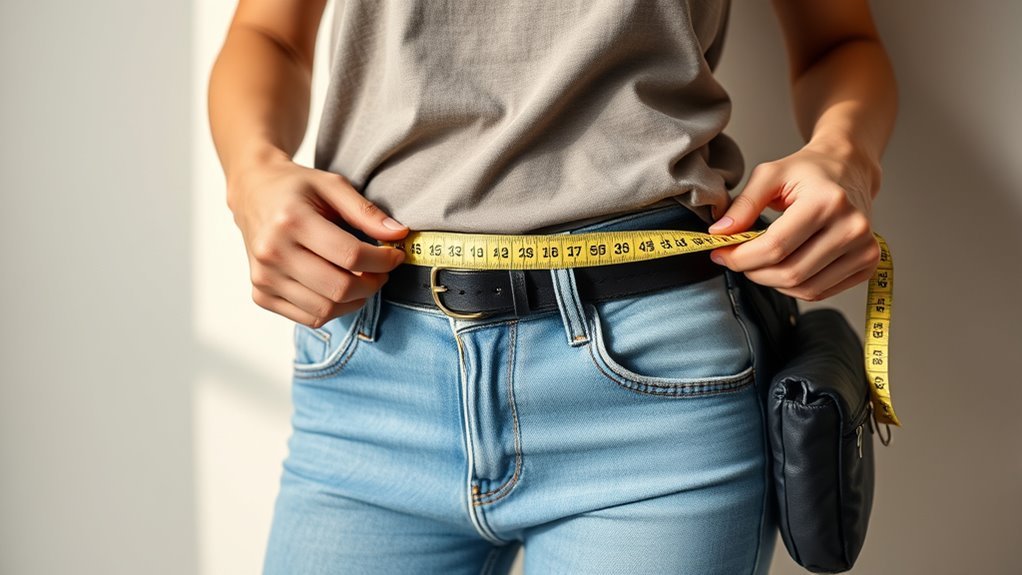
To measure your belt bag strap length for the waist or chest, start by deciding where you’ll wear it. Use a flexible measuring tape and measure snugly around your waist or below your armpits for chest bags. If you’re measuring waist straps, add 2-4 inches for comfort. Don’t forget to account for buckles and clips, and test the fit while wearing your typical outfit. Stick around to uncover tips on achieving the perfect strap length!
Why Strap Length Matters for Comfort
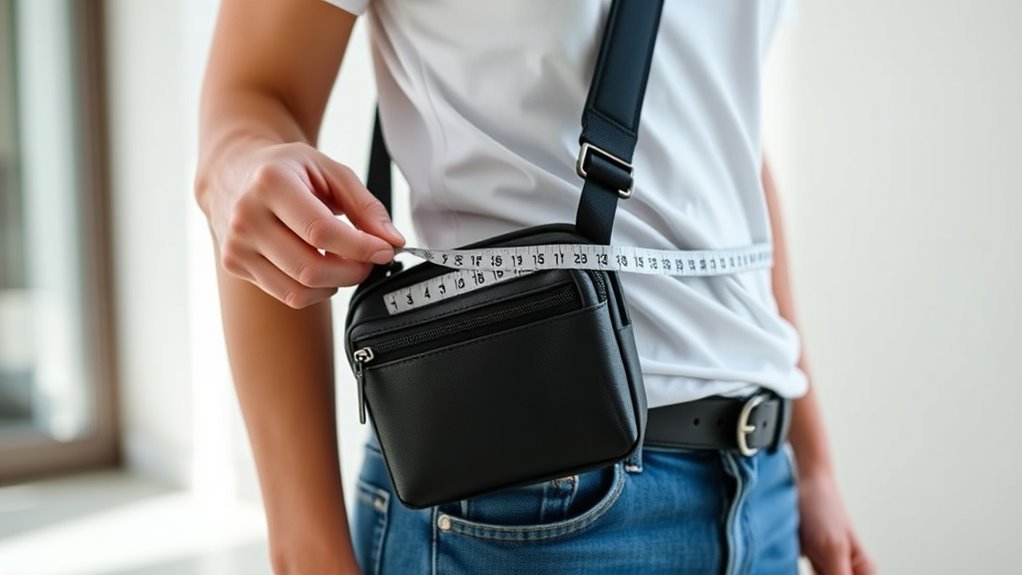
When you’re out and about, the strap length of your belt bag can make all the difference in your comfort level. Confirming proper strap comfort is essential; a bag sitting at the right position—whether on your waist or chest—prevents strain and allows for easy access to your essentials.
A strap that’s too short can ride up uncomfortably, while one that’s too long may swing or bounce, disrupting your balance.
Fit is important, and an adjustable strap adds versatility, letting you tailor the bag to your individual body shape and layering style. You want it snug without pinching or digging into your skin.
Fit is key; an adjustable strap ensures comfort and customization, allowing for a snug fit without pinching.
Measuring correctly based on where you plan to wear it guarantees that your bag remains secure and functional during your adventures. Embrace that liberation and find the perfect fit for your lifestyle!
How to Determine Where Your Bag Will Sit
Where will your belt bag sit most comfortably? Start by deciding if you want it on your waist or across your chest. This choice greatly impacts your bag placement and fit preferences. Measure your waist or chest at the point you plan to wear the bag, confirming the tape’s snug but not tight. For a waist bag, add 2 to 4 inches for comfort. For a chest bag, measure just below your armpits and think about how high or low you’d like it to sit. The style of your bag also affects its placement, so adjust accordingly.
| Measurement Type | Tips for Fit Preferences |
|---|---|
| Waist | Add 2-4 inches for comfort |
| Chest | Measure below armpits |
| Position | Higher for style, lower for ease |
| Style Influence | Adjust strap length accordingly |
| Comfort Level | Confirm snug fit without tightness |
Step-by-Step Guide to Measuring Strap Length
When you’re ready to measure your belt bag strap length, start by choosing how you want to wear it—around your waist or across your chest.
Each method requires a different approach, so grab your flexible measuring tape and let’s get precise.
Whether you want a snug fit or a bit of extra length for comfort, we’ve you taken care of!
Choosing Measurement Method
Measuring the strap length for your belt bag is an essential step to guarantee a comfortable fit.
Start by deciding where you want the bag to sit—waist or chest level. Use a flexible measuring tape and wrap it snugly around that area. Record the measurement where the tape meets, giving you a solid base length for your strap.
If you’re using an existing strap, lay it flat and measure from the buckle attachment to the most used hole.
Don’t forget to add a few extra inches for adjustability and comfort, especially if you’ll be layering clothing.
Master these measurement techniques, and you’ll enjoy perfect strap adjustments, ensuring your belt bag feels just right!
Measuring for Waist Fit
To achieve the perfect waist fit for your belt bag, start by wrapping a flexible measuring tape around your waist at the desired height.
Make certain it’s snug but not tight, capturing your unique waist variations. Record the measurement in inches, noting both the smallest and largest adjustments for comfort.
If you have an existing strap, measure from the buckle to your most-used hole for a precise reference.
For ideal fit, consider adding 2 to 4 inches to your waist measurement to accommodate strap thickness and adjustability.
Always measure while standing in a relaxed position to guarantee accuracy.
With these measurement techniques, you’ll find the freedom to wear your belt bag with style and confidence!
Adjusting for Chest Fit
After finding the right waist fit, it’s time to confirm your belt bag sits perfectly across your chest. Begin with these chest measurement techniques:
| Step | Action |
|---|---|
| Wrap the tape | Measure around your chest at the desired height, keeping it snug. |
| Record & adjust | Note the measurement, then add 2-4 inches for comfort and adjustability. |
| Check alignment | Verify your arms are relaxed to avoid inaccurate inflation. |
Consider your clothing’s thickness, too; it affects how the strap sits. If you’re using an existing strap, measure from the attachment point to your usual hole. Embrace adjustable strap options for a fit that feels liberating and lets you move freely!
Tools You Need for Accurate Measurement
To get the perfect belt bag strap length, you’ll need some essential tools at your side. A flexible measuring tape is your best friend for snug areas, while a straight ruler works wonders for longer lengths.
With the right techniques, you can guarantee every measurement is spot on for a stylish fit.
Measuring Tools Required
When you’re ready to measure your belt bag strap length, having the right tools can make all the difference. Start with flexible measuring tape options, as they easily conform to your body’s curves, ensuring accuracy around your waist or chest.
A cloth tape is perfect for snug fitting, while a ruler or straight edge can help with fixed lengths, though they may struggle with curves. You can also use a belt or strap you currently own—just measure from the buckle to your most-used hole for a reliable length.
If you’re feeling resourceful, try an alternative measuring method by using a piece of string or cord; mark your desired length and measure it against a ruler for precision.
Measuring Techniques Explained
Having the right tools is just the beginning; understanding how to measure belt bag strap length accurately is key to achieving the perfect fit. Here’s how to guarantee measuring accuracy:
- Use a flexible measuring tape for snug, comfortable measurements.
- Start where the bag will rest, wrapping the tape around to the opposite side.
- If you have an existing strap, lay it flat and measure from the buckle to the desired hole.
- Wear the clothes you’ll match with the bag for an accurate fit.
- Record measurements in inches, adding 1-2 inches for adjustability based on your preference.
How to Adjust for Buckles and Clips
Adjusting for buckles and clips is essential for achieving the perfect fit on your belt bag strap. When measuring, start by noting the desired length from your waist or chest for comfort.
For buckle types, measure from the attachment point to the most frequently used hole or the middle adjustment range. This guarantees you get an accurate size that considers how you’ll wear it.
If your strap includes clips, don’t forget to factor in their lengths. They can add extra inches that affect the overall fit when fully extended. Always account for the dimensions of these components to avoid surprises.
After measuring, try on the strap with the bag to test its comfort. Make any necessary adjustments to confirm it sits just right.
This attention to detail will elevate your style while keeping your hands free for whatever adventures await!
Common Measuring Mistakes
Measuring your belt bag strap can seem straightforward, but common mistakes can throw off the fit completely. To guarantee you get the right strap length, watch out for these measurement errors:
- Measuring total strap length instead of the distance from the attachment point to your preferred adjustment hole.
- Ignoring wear position—whether it’s for your waist or chest can lead to an ill-fitting strap.
- Overlooking clothing thickness; the bulk of layers can greatly affect how the strap fits.
- Relying solely on generic size charts, which may not reflect your unique body shape.
- Neglecting to measure while dressed in the intended outfit, as clothing can alter the fit.
Test the Fit for Comfort
Finding the perfect fit for your belt bag strap is critical for comfort and ease of use. Start by wrapping a measuring tape around your waist or chest where the bag will sit, keeping it snug but not tight. If you plan to wear the bag at your waist, adjust the strap to rest comfortably at your hips. For a chest carry, a slightly shorter length guarantees a secure fit.
Once you’ve made your fit adjustments, try on the bag. Move around to see if it allows for freedom without pinching or excessive slack. You want to strike a balance between easy access to your bag’s contents and feeling secure while wearing it.
Tips for Finding the Perfect Strap Length
When you’re on the hunt for the perfect strap length for your belt bag, it’s all about knowing where you want it to sit and how you plan to use it.
Here are some tips to help you find that ideal fit:
Finding the perfect strap length for your belt bag is key to comfort and functionality.
- Measure your waist or chest with a flexible tape measure.
- Add 2 to 4 inches for comfort if it’s a waist strap.
- For chest straps, make sure it’s snug but not restrictive, especially with layering.
- Consider how you’ll use the bag; active use might require a shorter, more secure fit.
- Check for adjustable features like extra holes or buckles for a custom fit.
What to Do if Your Strap Is Too Long or Short?
Struggling with a strap that’s too long or short can be frustrating, but there are simple solutions to help you achieve the perfect fit.
If your strap’s too long, start by adjusting it using existing holes, or create new ones, ensuring it doesn’t hang excessively. A snug fit is key—aim for comfort without pinching.
For a strap that’s too short, consider extending it with compatible strap materials. Match the fabric for style and functionality, ensuring it complements your belt bag. Always measure from the attachment point to your desired position to get it right.
If you find yourself making frequent adjustments, investing in adjustable straps with versatile buckle types can offer the flexibility you need. This way, you can easily adapt your belt bag to any outfit or occasion, freeing you to express your unique style effortlessly.
Frequently Asked Questions
How Do You Measure the Length of Your Belt?
To measure your belt, start at the buckle’s inside edge and go to your most-used hole. For accurate belt sizing, use flexible measuring techniques, adding a few inches for comfort and style.
Will a 34 Inch Belt Fit a 32 Inch Waist?
A 34-inch belt fits a 32-inch waist perfectly, offering adjustable straps for comfort. For a proper fit, remember your waist measurement matters. Feel liberated with a belt that complements your style and freedom of movement!
What Size Belt Is a 26 Waist?
For a 26-inch waist, you’ll want a belt size in the XS/S range. Remember, belt sizing varies by brand, so check the specific chart to confirm your waist measurement gets the perfect fit.
What Is a Size 8 Belt in Inches?
A Size 8 belt typically measures around 31.5 to 39.5 inches. For the best fit, use a fitting guide to guarantee you’re choosing the right size, allowing for adjustments and ultimate comfort in your style.
Conclusion
Finding the perfect strap length for your belt bag is like tailoring a suit—it’s all about the fit. When you take the time to measure properly, you guarantee comfort and style go hand in hand. Remember, a well-fitted strap not only keeps your bag secure but also enhances your overall look. So, don’t rush the process—adjust and test until it feels just right. After all, comfort is key to rocking any trend!