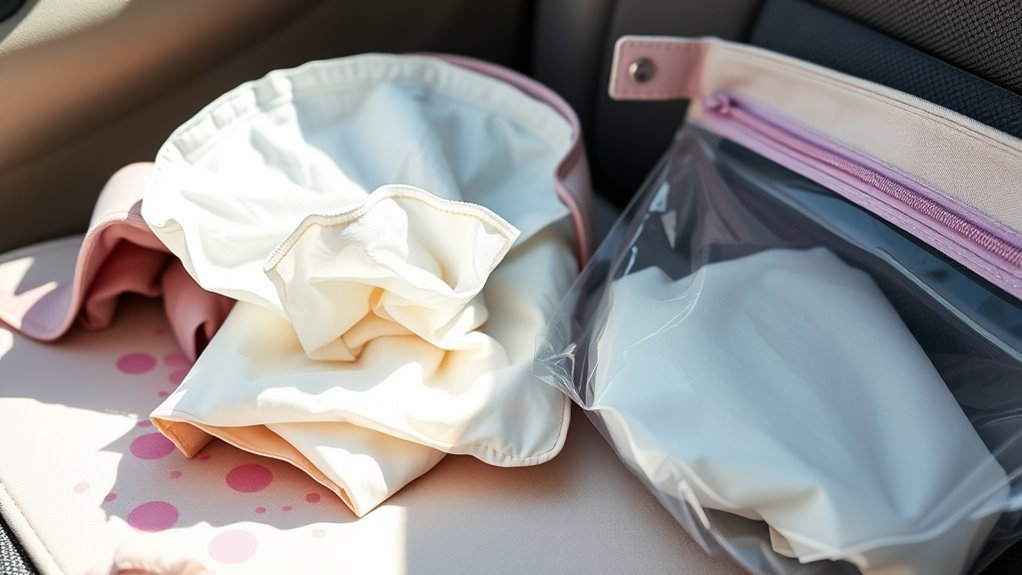
Wipes dry out in a diaper bag because heat, air exposure, and loose seals let moisture evaporate quickly, especially in warm cars or sunny places. You can slow this by snapping the lid shut after each use, checking for worn closures, and keeping the pack in a ziplock bag or hard case. Store wipes in a cool, dry place, and flip the pack occasionally. If you keep going, you’ll see better ways to protect and revive them.
Why Baby Wipes Dry Out in a Diaper Bag
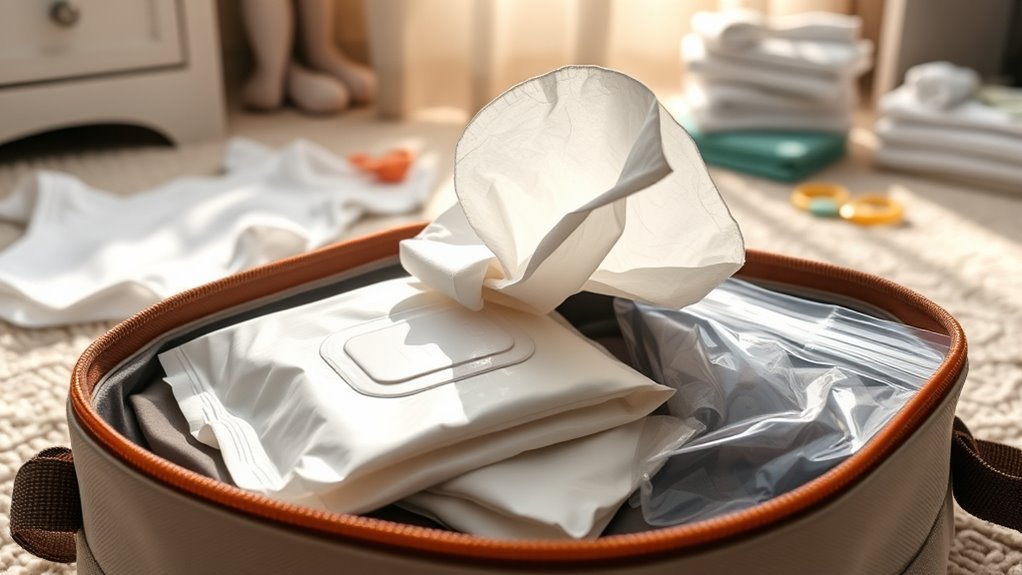
Baby wipes in a diaper bag dry out when air gets in, especially if the package isn’t sealed tightly after each use. You lose wipes moisture because the wipes are porous, so evaporation happens fast.
Warm bags, direct sunlight, and hot cars speed that loss, which can leave your diaper bag essentials less reliable when you need them. Larger packs dry out sooner because they expose more surface area to air.
That doesn’t mean you need to overthink every outing; it just means your wipes need basic protection from heat and repeated air exposure. When you check the pack regularly, you can catch drying early and keep the wipes usable longer.
If you travel often, be aware that temperature changes can drain moisture quickly. Knowing why this happens helps you stay in control and keeps a simple caregiving routine working with you, not against you, during busy days.
How to Keep Baby Wipes Sealed Tight
Keep the wipe package lid fully closed after each use to limit air exposure and slow moisture loss. This simple step supports moisture management and helps you keep control of the wipes you depend on.
Choose packaging options that seal reliably, such as hard-shell flip tops or zipper seals, because they resist opening during transport. If the original pack feels weak, place it in a resealable plastic bag or a lidded container for extra protection.
Choose packaging that seals securely, like flip tops or zipper seals, to keep wipes protected in transit.
Check the seal regularly; worn adhesive or cracked closures can let air in and dry wipes faster. Replace damaged packaging as soon as you notice failure.
You can also store the pack upside down in the diaper bag so moisture redistributes toward the top wipes, reducing dryness when you need them most.
With consistent sealing and the right packaging options, you’ll keep wipes ready, intact, and easier to use on your terms.
Where to Store Baby Wipes to Stay Moist
Store wipes in a cool, dry place away from direct sunlight and heat sources to slow moisture loss and help preserve freshness.
For ideal storage, keep them at room temperature, about 68°F–77°F, so you protect moisture retention without extra effort.
After each use, seal the package tightly; even a slightly open lid lets air pull moisture out fast. Choose resealable packs or airtight containers when you can, because they reduce exposure and keep wipes ready when you need them.
Avoid bathrooms, cars, and other warm zones, since heat and humidity can speed evaporation and support bacterial growth.
Every 2–3 days, invert the package gently to redistribute liquid that settles at the bottom.
You don’t need complicated routines. You just need a stable environment, a tight seal, and a little attention to keep wipes soft, usable, and on your terms.
What’s the Best Way to Use a Ziplock Bag or Hard Case?
You can use a Ziplock bag to limit air exposure and help wipes stay moist, as long as you seal it fully after each use.
A hard case can offer stronger seal protection and a more durable barrier during travel.
Keep either option packed in a cool, dry place away from heat and check the seal regularly for wear.
Ziplock For Moisture Control
A ziplock bag can be an effective moisture barrier for wet wipes because it limits air exposure and helps slow evaporation. You get clear ziplock benefits: better moisture retention, fewer dry wipes, and simpler control over storage conditions.
After each use, press out extra air and seal the bag tightly to keep the environment airtight. That small step helps preserve hydration without extra effort.
Place the bag in a cool, dry spot inside the diaper bag, away from heat that can speed drying. Check the seal regularly for wear or leaks so you can correct problems early.
If you want added protection, use a hard case as a backup container. This gives you more freedom from waste, mess, and unnecessary replacement.
Hard Case Seal Strength
Hard cases add another layer of protection when you want to keep wipes from drying out in a diaper bag. You benefit from a rigid shell that limits air exchange and slows moisture loss.
Look for seal technology that closes cleanly and stays closed under routine handling. Silicone or rubber gasket materials improve the barrier, helping block air and environmental contaminants.
After each use, verify that the lid snaps shut without gaps. Check the seal regularly, because wear can reduce performance over time.
If you prefer a simpler option, a ziplock bag can also work when you press out excess air and close it fully every time. Both methods support fresh wipes, but a hard case gives you more secure, dependable control.
Packing And Travel Tips
When packing wipes for travel, a tightly sealed ziplock bag is a simple, effective option because it limits air exposure and helps preserve moisture. Use smaller bags to reduce empty space, and add a damp paper towel for humidity. A hard case can work too, especially if your diaper bag gets compressed.
| Option | Benefit |
|---|---|
| Ziplock bag | Flexible, lightweight |
| Small ziplock | Less air, better moisture retention |
| Hard case | Rigid protection from pressure |
| Damp towel | Supports humidity |
Check seals often; even brief leaks can dry wipes fast. These travel essentials support practical packing strategies without overcomplicating your routine. Choose the container that fits your movement, inspect it regularly, and keep your wipes ready when you need them.
How Can You Revive Slightly Dried-Out Baby Wipes?
To revive slightly dried-out baby wipes, add 5–10 ml of boiled, cooled water evenly over the pack without rubbing the wipes, since rubbing can damage the fibers.
This wipes rehydration technique works best when you then seal the pack tightly and let it rest for 8–12 hours at room temperature. You’ll give the fibers time to absorb moisture evenly and regain usable softness.
For better moisture absorption tips, check the pack before each use and note the opening date so you can track freshness. Avoid tap water; use sterile hydration solutions instead, because you want clean, controlled rehydration.
Cotton wipes often respond well, while synthetic wipes may absorb less reliably, so results can vary.
Stay practical: rehydrate only slightly dry wipes, not those that feel degraded. This approach helps you keep control, reduce waste, and use what you’ve already got without unnecessary disposal.
When Should You Toss Dry or Moldy Baby Wipes?
You should toss baby wipes if they show mold, discoloration, or a foul odor, because those are signs of contamination or bacterial growth.
For reliable mold detection, inspect each pack before you use it, especially after travel or storage in heat or humidity. If you notice odor signs, don’t try to mask them or “save” the wipes; discard them immediately.
Dried-out wipes aren’t just less useful—they can irritate sensitive skin and won’t clean well. Check the expiration date too, since expired wipes should go in the trash even if they look intact.
If a pack’s seal failed, or the wipes feel warm, damp, or stale from a humid bag, replace them. You deserve products that support clean, easy care without risk.
Choosing fresh wipes protects your baby’s skin and gives you one less thing to worry about.
Frequently Asked Questions
How to Stop Baby Wipes From Drying Out?
Reseal wipes packaging tightly after each use; you’ll improve moisture retention. Store packs cool and out of sun, invert them every few days, and move nearly empty wipes into airtight bags to keep them usable.
How to Store Wipes in a Diaper Bag?
You should keep wipes storage simple: place wipes in a resealable plastic bag or tightly sealed travel pack inside your diaper bag essentials, then store the bag cool and dry, checking moisture regularly.
How to Fix Dried Out Baby Wipes?
You can revive dried-out baby wipes quickly; it’s not hopeless. Add 5-10 ml boiled, cooled water, reseal tightly, and wait 8-12 hours. This supports wipes moisture retention and smarter wipes packaging solutions.
How to Keep Baby Wipes From Drying Out in a Car?
Keep wipes in a cooler compartment or insulated bag, and seal them tightly after each use. You’ll improve wipes moisture retention and reduce car temperature effects, while checking them regularly and avoiding long heat exposure.
Conclusion
To keep your wipes usable, you need to block air, heat, and time from doing their worst. Seal the pack tightly, store it in a cooler spot in your diaper bag, and use a ziplock or hard case for extra protection. If wipes are only a little dry, you can often rescue them with a few drops of clean water. If they’re moldy, smelly, or crumbly, toss them—no one wants a diaper disaster that feels apocalyptic.