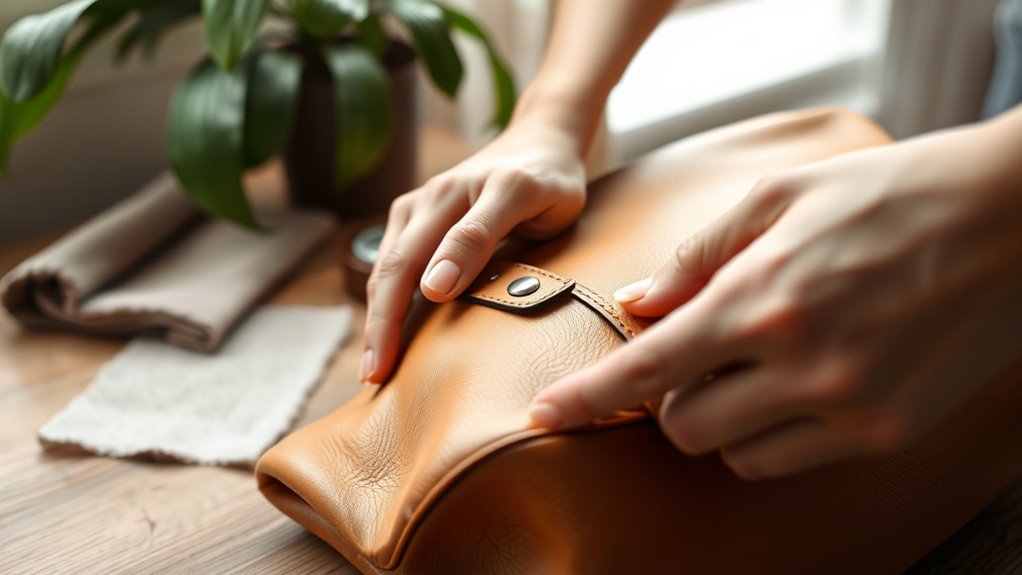
To identify real leather on a bag without damaging it, start by examining the texture; genuine leather feels soft and slightly stretchy, while faux leather is often stiff and overly smooth. Next, perform the smell test—real leather has an earthy scent, unlike the chemical odor of faux options. You can also conduct the water absorption test; genuine leather darkens slightly when moisture is applied. Explore more sensory cues and preservation tips to guarantee your leather bag stays in excellent condition.
How to Identify Real Leather: Understanding the Basics
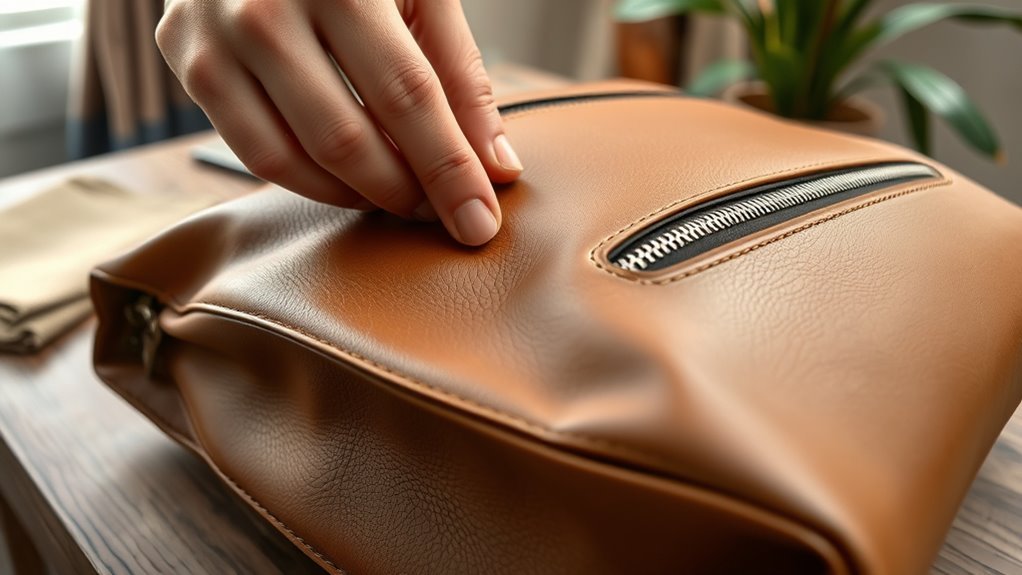
When it comes to identifying real leather, knowing what to look for can make all the difference. Start by evaluating the texture and feel; genuine leather is soft, supple, and slightly stretchy, while faux leather feels stiff and overly smooth.
Next, perform the scent test—real leather has an earthy, woody smell, unlike the plastic odor of synthetics.
Pay attention to surface characteristics; authentic leather shows natural inconsistencies in grain and texture, whereas fake leather has a uniform appearance.
Another critical factor is moisture absorption; real leather absorbs moisture, darkening slightly, while faux leather repels it.
Finally, consider the patina; genuine leather develops a unique patina over time, highlighting its durability factors and history, a quality synthetic materials simply can’t replicate.
What Sets Real Leather Apart From Faux?
When you compare real leather to faux, the differences are striking.
Real leather boasts a rich, earthy scent that can’t be replicated, while faux leather often smells synthetic and plastic.
Additionally, the texture of authentic leather is soft and features unique imperfections, whereas faux leather tends to feel overly smooth and uniform.
Natural Smell Difference
The distinctive aroma of genuine leather is one of its most telling characteristics, setting it apart from faux alternatives.
Real leather boasts a rich, earthy, and woody scent profile, while faux leather often emits a harsh plastic or chemical odor. This unique scent isn’t easily replicated, making it a reliable indicator of authenticity.
High-quality vegan leathers may lack any smell, further distinguishing them from real leather. As genuine leather ages, it develops a unique patina that enhances its natural scent, showcasing its aging characteristics.
A simple smell test can quickly reveal the authenticity of your bag without causing any damage. Trust your senses; the aroma of real leather speaks volumes about its quality and authenticity.
Surface Texture Variations
While examining a bag, you’ll notice that surface texture variations are one of the most telling signs of real leather versus faux. Genuine leather showcases unique pores and grain patterns, highlighting its character. In contrast, faux leather often presents a uniform, artificial texture devoid of personality.
| Feature | Real Leather | Faux Leather |
|---|---|---|
| Surface Variations | Natural imperfections | Smooth, consistent finish |
| Tactile Differences | Soft, slightly warm | Cold, plasticky feel |
| Aging Quality | Develops a rich patina | Remains unchanged |
| Edge Inspection | Rough, uneven edges | Smooth, polished edges |
Engaging in texture analysis reveals these tactile differences, helping you discern authenticity without damaging your bag.
Why Smell Matters: Identifying Leather by Aroma
Although many factors contribute to identifying authentic leather, the aroma is one of the most telling. Genuine leather boasts a distinct earthy, woodsy scent profile that’s impossible to replicate. This rich aroma stems from natural oils and tanning processes, signaling quality and authenticity.
In contrast, faux leather often emits a plastic or chemical odor, which can be a red flag for lower quality materials.
When you’re evaluating a bag, take a moment to engage in aroma recognition. If you detect a strong or unpleasant chemical smell, it’s likely faux leather. High-end vegan leathers tend to have little to no scent, making the smell test a quick and effective tool for discerning real from fake.
Trust your instincts; the olfactory characteristics of leather provide immediate clues about its authenticity, empowering you to make informed decisions without any guesswork.
How to Conduct the Touch Test for Authenticity
To effectively determine if a bag is made from genuine leather, start with the touch test, as it reveals critical characteristics that differentiate real from fake.
Feel the bag’s surface; genuine leather should feel soft, slightly stretchy, and grainy. In contrast, faux leather often feels cold and plastic-like.
Next, conduct an elasticity test by gently stretching the material. Real leather will show slight wrinkling, indicating its natural elasticity, while imitation leather remains rigid.
Notice the warmth; authentic leather warms up with your body heat, offering a unique comfort that faux leather lacks.
Finally, assess the overall texture. Genuine leather will have natural imperfections and variations, while fake leather typically presents a consistent, overly smooth surface.
Testing Water Absorption: A Quick Test for Real Leather
To test if your bag is made of real leather, sprinkle a few drops of water on its surface.
If the leather absorbs the moisture and darkens slightly, it’s likely genuine; faux leather will simply repel the water.
This quick absorption test not only reveals authenticity but also highlights the leather’s quality and durability over time.
Water Absorption Test
When you’re trying to determine if a bag is made of real leather, the water absorption test is a simple yet effective method.
Start by placing a few drops of water on the surface. Genuine leather will allow water penetration, absorbing the moisture and darkening slightly.
In contrast, faux leather will cause the water to bead up and stay on the surface. This characteristic of real leather stems from its porous nature, enabling effective moisture retention.
If the water is absorbed within a few seconds, it’s a strong indication of authenticity; if it lingers, you’re likely dealing with synthetic material.
This non-invasive test guarantees you check for authenticity without damaging your bag.
Observing Resulting Effects
Observing the effects of the water absorption test can provide immediate insights into the authenticity of your bag’s leather. When you sprinkle water on genuine leather, it absorbs the moisture, darkening slightly, showcasing its natural absorbency effects. This moisture retention not only indicates authenticity but also highlights its breathable nature.
- Genuine leather feels softer and more pliable after absorbing water.
- Faux leather will typically allow water to pool, revealing its synthetic nature.
- If absorbed, conditioning may be necessary to maintain the leather’s elasticity.
This simple, non-damaging test allows you to confidently assess whether your bag is crafted from real leather or a lower-quality alternative. Embrace this knowledge and make informed choices!
Grain Patterns: Natural vs. Uniform
Grain patterns play an essential role in distinguishing real leather from synthetic alternatives. Natural leather showcases grain irregularities and texture variations, making each piece truly unique. In contrast, faux leather typically presents a uniform, smooth surface devoid of natural imperfections.
| Feature | Real Leather |
|---|---|
| Grain Patterns | Inconsistent, with unique variations |
| Surface Texture | Natural imperfections visible |
| Authenticity Indicators | Pores and signs of natural wear |
When you inspect a bag, look for these key indicators. Genuine leather will display subtle variations and may develop a rich patina over time. Smooth, flawless surfaces often indicate synthetic materials, as authentic leather retains its natural state. By understanding these grain patterns, you can confidently identify real leather and appreciate its inherent beauty.
More Tests: Flame and Edge Quality
To effectively determine whether a bag is made of real leather, you can perform two straightforward tests: the flame test and an inspection of the edge quality.
- Flame Characteristics: Real leather chars slowly, giving off a smell similar to burnt hair, while faux leather burns quickly, emitting a chemical odor.
- Edge Examination: Authentic leather often has rough, uneven edges that reflect its natural hide, whereas faux leather features smooth, uniform edges indicative of mass production.
- Durability in Fire: Genuine leather is more resilient to heat, resisting flames better than faux leather, which can melt.
Care Tips for Preserving Genuine Leather Bags
After confirming your bag’s authenticity through tests like the flame examination and edge quality check, it’s important to focus on caring for your genuine leather. Regular maintenance preserves its beauty and longevity.
| Task | Details |
|---|---|
| Cleaning Techniques | Clean every six months with mild dish soap and a soft cloth. Use leather wipes for everyday dirt. |
| Deeper Cleaning | For deeper cleaning, apply leather cleaner in circular motions and wipe away residue. |
| Storage Solutions | Store in a cool, dark, dry place using paper stuffing to maintain shape and avoid sunlight. |
To enhance durability, consider conditioning your leather with a cream, though this isn’t strictly necessary. By following these care tips, you’ll guarantee your genuine leather bag remains a cherished companion for years to come.
Frequently Asked Questions
How Can I Tell if My Bag Is Genuine Leather?
To tell if your bag’s genuine leather, check its smell, feel, and surface texture. Authentic brands usually offer quality leather care. Observe for natural imperfections, moisture absorption, and warmth—these indicate real material types.
Is 100% Leather the Same as Genuine Leather?
No, 100% leather isn’t the same as genuine leather. Think of it as a royal robe versus a worn-out cloak. The former boasts superior quality indicators, while the latter often compromises on durability and richness.
How Can I Identify Genuine Leather?
To identify genuine leather, conduct a smell test—real leather has an earthy scent. Then, analyze the texture; authentic leather features natural imperfections and a soft, flexible feel, unlike the uniform smoothness of faux alternatives.
How Can You Tell the Difference Between Leather and Fake Leather?
You can tell the difference between leather and fake leather by evaluating texture comparison and durability. Genuine leather feels soft and flexible, while fake leather is rigid and often has a plastic-like appearance.
Conclusion
By knowing how to identify real leather, you can make informed choices, protect your investment, and appreciate quality. Trust your senses—smell the aroma, feel the texture, and examine the grain. Conduct simple tests to confirm authenticity and verify your bag stands the test of time. With these tips, you’ll confidently distinguish genuine leather from faux, guaranteeing you only own the best. Invest wisely, care diligently, and enjoy your authentic leather bag for years to come.