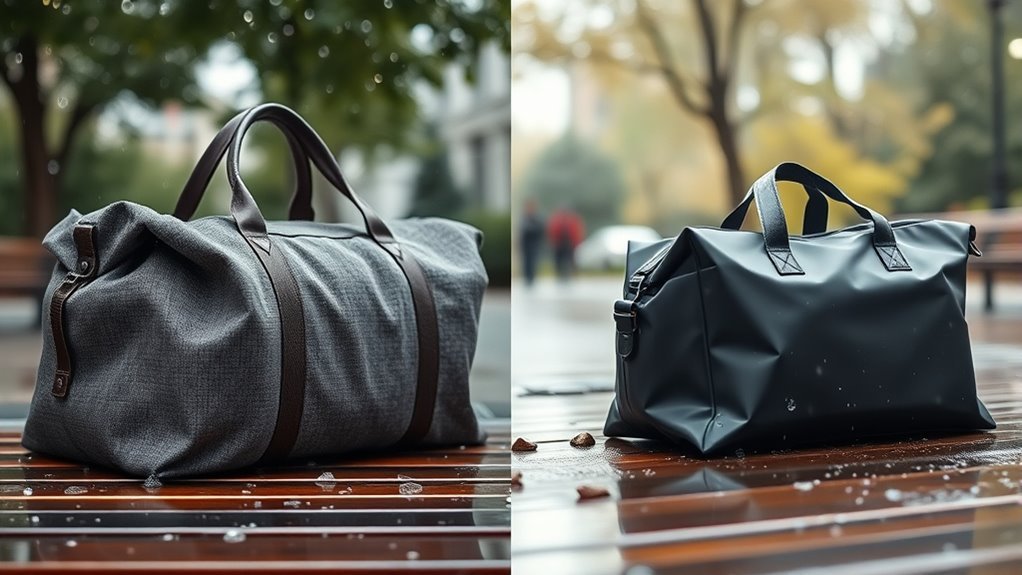
When choosing between water-resistant and waterproof bags, it’s essential to understand their distinctions. Waterproof bags use materials like PVC and TPU, ensuring complete protection against water with high hydrostatic head ratings above 5,000mm. In contrast, water-resistant bags can handle light rain and splashes but may allow moisture in, typically featuring hydrostatic ratings below 1,500mm. Knowing these differences helps you select the right gear for your needs in varying weather conditions, leading to informed decisions for your adventures.
Understanding the Basics: Waterproof vs. Water-Resistant
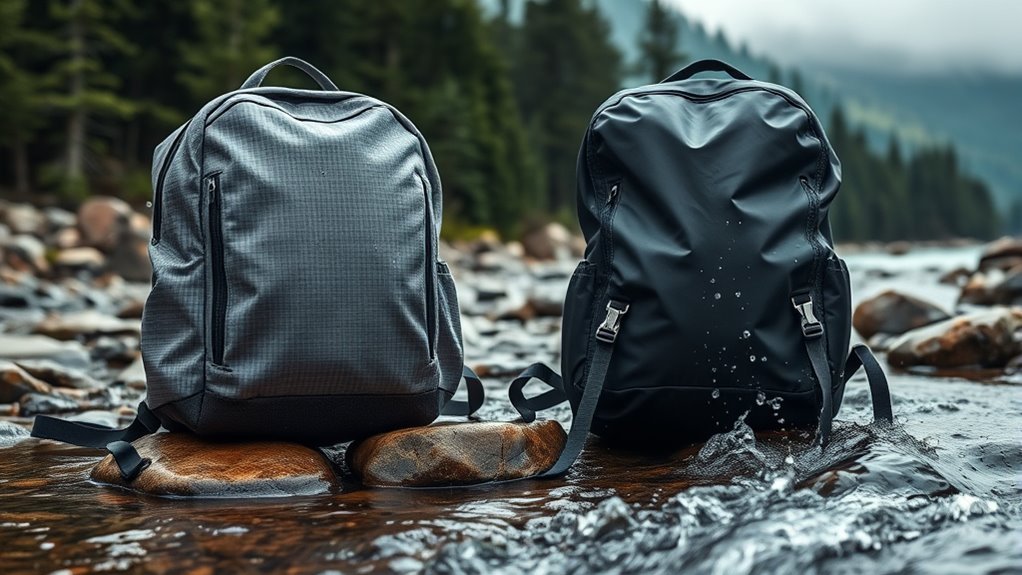
When choosing between waterproof and water-resistant bags, it’s essential to understand their fundamental differences.
Waterproof technology is engineered to completely prevent water penetration, employing materials like PVC and TPU, along with sealed seams and waterproof zippers. This makes them ideal for prolonged exposure to wet environments.
Waterproof technology utilizes materials like PVC and TPU, ensuring complete water protection for extended exposure to wet conditions.
In contrast, water-resistant features allow bags to endure light rain and splashes, relying on tightly woven fabrics and coatings to slow water ingress, but they aren’t completely impervious.
To gauge a bag’s effectiveness, consider the hydrostatic head measurement, where higher ratings (e.g., 5,000mm) indicate superior waterproof capabilities.
Additionally, IP ratings provide a standardized assessment; for instance, an IP68 rating signifies enhanced resistance to water.
Ultimately, your choice hinges on your intended use—opt for waterproof options if you need maximum protection, while water-resistant bags suffice for less demanding conditions.
What Does Being Waterproof Actually Mean?
When you consider what “waterproof” really means, it’s essential to understand the key features that define these bags.
Manufacturers often use specific testing methods, like the hydrostatic head test, to measure how well a bag can withstand water pressure.
Knowing these details helps you assess a bag’s true waterproof capabilities and make an informed choice.
Key Features Defined
Understanding what “waterproof” truly means is vital for anyone selecting bags for wet environments. Waterproof bags are crafted to prevent water penetration, relying on features like seam sealing and waterproof zippers. They undergo rigorous pressure testing, with hydrostatic head ratings indicating their resistance to water pressure. For instance, a rating of 20,000 mm suggests superior protection against leakage.
Here’s a breakdown of key features:
| Feature | Waterproof Bags |
|---|---|
| Seam Sealing | Essential for integrity |
| Pressure Testing | Guarantees high resistance |
| Construction Methods | RF-welding, taped seams |
| IP Ratings | Higher numbers signify better resistance |
These aspects define waterproof capabilities, distinguishing them from merely water-resistant options.
Testing Methods Explained
Selecting the right bag for wet conditions hinges on comprehending the testing methods that validate waterproof claims. Understanding these tests can enhance your confidence in a bag’s performance.
- Hydrostatic Head Testing measures water pressure resistance; ratings above 5,000mm indicate superior waterproofing.
- IP Ratings standardize water protection levels, from IPX0 to IPX9, helping you gauge resistance.
- Submersion Tests assess real-world performance by checking for leaks when bags are submerged, utilizing dry paper towels inside.
These testing standards guarantee accuracy in waterproof claims, guiding your purchase decisions.
Understanding Water-Resistant Bags
Water-resistant bags offer essential features that protect against light moisture, making them suitable for everyday use.
Understanding their ideal use cases and material compositions, like waxed canvas or ballistic nylon, can help you choose the right bag for your activities.
Key Features Explained
When you’re considering a bag for everyday use, it’s essential to grasp the key features that define water-resistant options. These bags are designed to slow water penetration, making them suitable for light rain and spills but not for heavy moisture or prolonged exposure.
- Common materials include tightly woven fabrics and Durable Water Repellent (DWR) coatings.
- Hydrostatic head ratings generally fall below 1,500mm, indicating limited protection.
- Standard zippers and sewn seams can allow water in during significant exposure.
While water-resistant bags provide decent durability and lightweight functionality, they may not safeguard electronics in unexpected downpours.
Understanding these characteristics helps you choose a bag that aligns with your needs and expectations regarding waterproof technologies and overall bag durability.
Ideal Use Cases
For those managing daily commutes or casual outings, understanding the ideal use cases for water-resistant bags is essential. These bags are perfect for light rain, splashes, and brief moisture exposure. They typically feature tightly woven fabrics and treatments like DWR to slow water penetration.
| Use Case | Description |
|---|---|
| Daily Commuting | Ideal for light rain, protecting essentials. |
| Casual Outings | Provides peace of mind during outdoor activities. |
| Hiking | Lightweight and breathable for various conditions. |
| Biking | Keeps gear dry during quick weather changes. |
| Errands | Perfect for unpredictable urban climates. |
While these bags offer some protection, they may not safeguard electronics during unexpected downpours. Choose wisely based on your specific needs.
Material Composition Insights
Understanding the materials behind water-resistant bags is essential for making informed choices. These bags typically use tightly woven fabrics like ballistic nylon or waxed canvas, which enhance fabric durability while slowing water penetration. Common treatments, like Durable Water Repellent (DWR) coatings, cause water to bead on the surface, improving their water repellent qualities.
- Taslan nylon offers lightweight breathability, perfect for travel.
- Taped seams provide better moisture protection than standard stitches.
- Ideal for light rain and everyday use, but not for heavy downpours.
While they offer some protection, remember that water-resistant bags aren’t designed for prolonged exposure to wet conditions. Assess your needs carefully to guarantee you choose the right level of protection.
Key Differences Between Waterproof and Water-Resistant Gear
While both waterproof and water-resistant bags offer some level of protection against moisture, they serve distinct purposes based on their construction and intended use. Understanding these key differences can help you choose the right gear for your needs.
| Feature | Waterproof Bags |
|---|---|
| Water Protection Level | Complete prevention of water entry |
| Usage Scenarios | Prolonged exposure, submersion |
| Common Materials | PVC, TPU |
| Hydrostatic Head Test | Exceeds 5,000mm |
| Feature | Water-Resistant Bags |
| Water Protection Level | Withstands light rain and splashes |
| Usage Scenarios | Casual use, light moisture exposure |
| Common Materials | Waxed canvas, ballistic nylon |
| Hydrostatic Head Test | Typically below 5,000mm |
In performance comparison, waterproof options excel in severe conditions, while water-resistant choices suffice for everyday scenarios.
When to Choose Waterproof Gear?
Choosing waterproof gear is essential when you anticipate prolonged exposure to heavy rain or wet environments, as it guarantees complete protection against water penetration.
Choosing waterproof gear ensures complete protection from water penetration during prolonged exposure to heavy rain or wet environments.
Whether you’re hiking through a downpour or engaging in water sports, the right gear is crucial for maintaining the integrity of your belongings and personal safety.
- Look for features like sealed seams and watertight zippers for maximum moisture protection.
- Opt for waterproof options during activities like kayaking or wading, where your gear may be submerged.
- Evaluate the hydrostatic head rating of materials; higher ratings (e.g., 20,000mm) indicate superior water resistance.
When Water-Resistant Bags Are Enough
For everyday scenarios where exposure to moisture is minimal, water-resistant bags often provide adequate protection.
These bags excel during casual outings, effectively guarding against splashes and light rain without the bulk of waterproof alternatives. Materials like waxed canvas and ballistic nylon combine style and functionality, making them ideal for daily commuting or brief encounters with wet conditions.
Their tightly woven fabrics and durable water-repellent coatings guarantee that your belongings stay safe during light drizzle, although they aren’t foolproof against sudden downpours.
It’s crucial to gauge your environment when selecting a bag, especially if you carry electronics. While water-resistant options deliver peace of mind in mild weather, they won’t replace waterproof gear for extreme conditions.
Ultimately, if you’re maneuvering through urban environments or enjoying leisurely walks, a water-resistant bag strikes the right balance between practicality and aesthetic appeal.
Top Materials for Waterproof and Water-Resistant Bags
When selecting the right bag for your needs, understanding the materials used in waterproof and water-resistant options is essential. Each material offers unique benefits tailored to various activities.
- Waxed Canvas: Naturally water-repellent, perfect for everyday use with a vintage charm.
- Ballistic Nylon with DWR: Tough and abrasion-resistant, ideal for professional settings.
- X-Pac® VX21: Ultralight, waterproof, and boasts an exceptional strength-to-weight ratio.
For travel, Taslan Nylon provides breathability and light rain resistance, while PVC and TPU deliver complete water protection, making them suitable for extreme conditions.
These materials cater to diverse needs, from casual outings to intense adventures, ensuring you stay prepared regardless of the elements. Knowing these options empowers you to choose a bag that fits your lifestyle and keeps your belongings safe and dry.
Maintenance Tips for Your Waterproofing Gear
To guarantee your waterproof gear remains effective, regularly inspecting it for signs of wear is essential. Look for frayed seams or damaged closures that can compromise its water resistance.
Cleaning methods matter too; follow the manufacturer’s guidelines to remove dirt and grime, as these can hinder waterproof coatings.
Establish a maintenance frequency that suits your gear’s usage—more frequent exposure to water means more regular checks.
Every so often, apply re-waterproofing techniques like silicone spray or Durable Water Repellent (DWR) treatments to restore fabric performance. Be cautious with these products; always adhere to specific re-waterproofing instructions from the manufacturer to avoid damaging the material.
Finally, store your gear in a cool, dry place, away from direct sunlight, to prevent degradation over time. By following these tips, you’ll extend the life of your waterproof gear and guarantee it continues to perform when you need it most.
Frequently Asked Questions
Is a Water-Resistant Bag Better Than a Waterproof Bag?
A waterproof bag’s durability surpasses that of a water-resistant bag, offering better protection against heavy rain. If you need reliable defense for harsh conditions, opt for waterproof; otherwise, water-resistant suffices for lighter encounters.
Which Is Better, Waterproof or Water-Resistant?
Waterproof bags are better for rigorous conditions, offering superior durability compared to water-resistant options. While waterproof gear often costs more, it’s essential for protection against heavy rain or submersion. Choose based on your specific needs.
What Does a 10,000mm Waterproof Rating Mean?
A 10,000mm waterproof rating means your gear can withstand significant water pressure before leaking, verified through waterproof testing. This standard guarantees reliable protection in heavy rain, enhancing your outdoor experiences and freedom from wet conditions.
Are Waterproof Bags Worth It?
Absolutely, waterproof bags are worth it. Imagine hiking through a torrential downpour; their durability features protect your gear in intense usage scenarios, preventing damage and ensuring your adventures remain enjoyable instead of disastrous.
Conclusion
In conclusion, understanding the difference between waterproof and water-resistant bags is essential for making informed choices. Did you know that nearly 40% of outdoor enthusiasts have experienced gear failure due to water exposure? This statistic highlights the importance of selecting the right type of protection for your adventures. Whether you opt for waterproof or water-resistant gear, knowing their capabilities guarantees you’re prepared for whatever nature throws your way, keeping your belongings safe and dry.