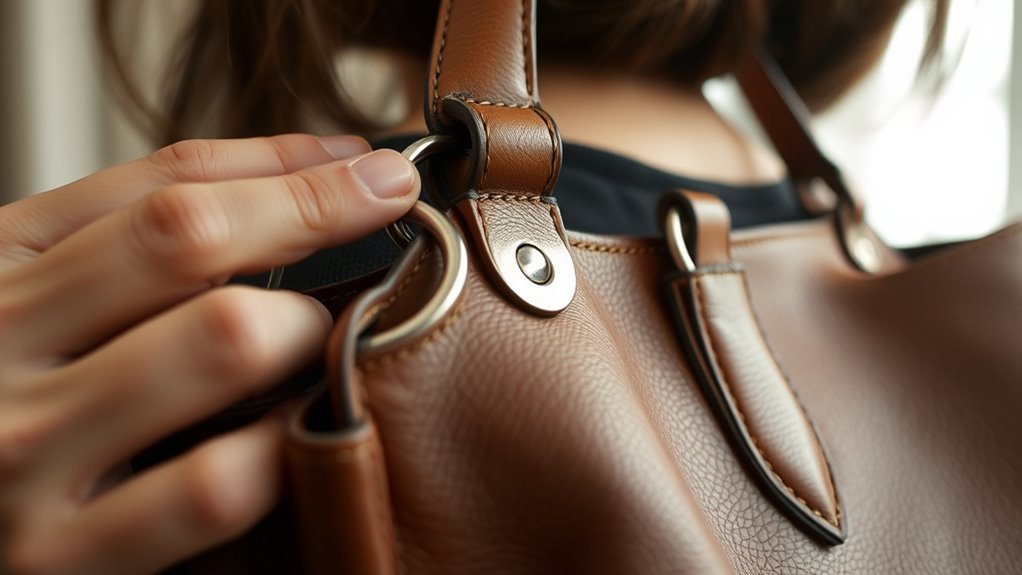
You usually hear a handbag strap squeak because leather is rubbing at a fold, seam, or where the strap meets hardware. To find the cause, hold the bag still and flex one section at a time, then listen for noise at bends, buckles, D-rings, clasps, and stitching. New or dry leather squeaks more because it’s stiffer. Once you isolate the trigger, you can target the fix, and there’s more to know if the noise keeps coming back.
Why Your Handbag Strap Squeaks
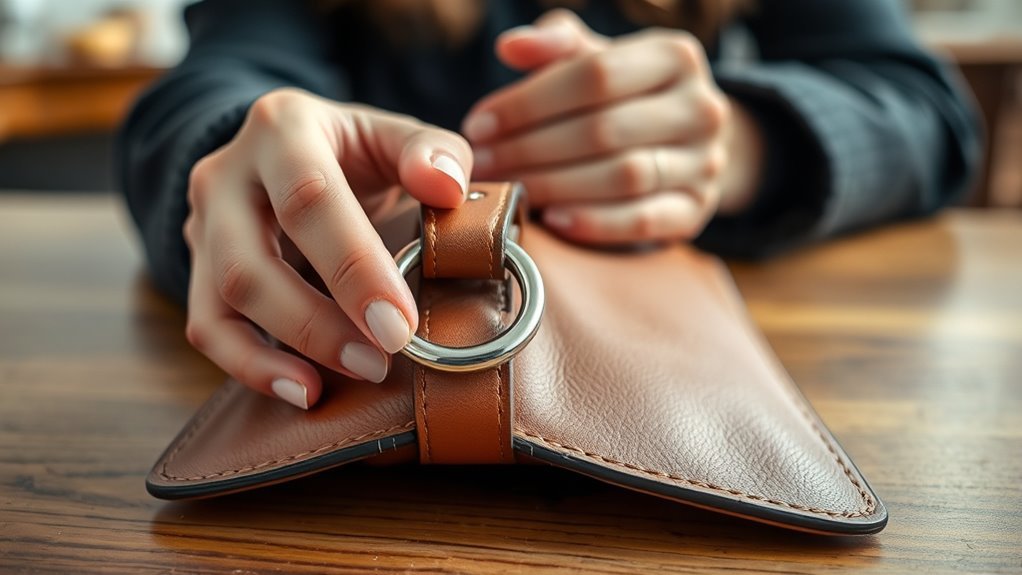
Your handbag strap usually squeaks because something in the system is moving under friction. You’re hearing leather rubbing against leather at folds, bends, or where the strap meets your body. Metal hardware can add a creak when D-rings or clasps shift under load.
New leather often squeaks more because it’s stiff and dry, so the fibers resist motion until conditioning restores flexibility. Heat, humidity, and dry air also change the leather over time, making the noise more likely.
New leather squeaks more when it’s stiff and dry, until conditioning restores flexibility.
For effective squeak prevention, treat strap maintenance as part of bag care, not an afterthought. Keep the leather conditioned, avoid letting hardware grind unchecked, and watch how the strap behaves as you move.
A strap that’s properly cared for should flex without protest, giving you quiet control instead of constant friction. When you understand the mechanics, you reclaim the bag’s function and your own mobility.
Find the Source of the Squeak
To find the source of the squeak, hold the bag still and flex one section of the strap at a time until you can reproduce the noise. This isolates the fault fast. Check folds, buckles, D-rings, clasps, stitching, and inner linings; each can broadcast a distinct creak. New leather may sound stiffer and drier, so note whether the noise tracks with rigidity or movement at hardware. Use this diagnostic grid:
| Zone | Motion | Likely clue |
|---|---|---|
| Fold | Bend | Leather-on-leather |
| Buckle | Shift | Metal creak |
| Stitching | Press | Loose contact |
| Lining | Glide | Interior rub |
When you identify the spot, you can judge material choices and plan squeak prevention with precision. Don’t guess; reproduce, observe, and log the exact trigger. That method gives you control and keeps the bag’s mechanics answerable to you.
Fix Leather-on-Leather Friction
When the squeak comes from leather meeting leather, treat the contact point directly. Inspect strap folds, buckles, and the zone where the strap meets the bag body; these points usually squeak because the leather’s dry surface is binding under load.
Apply a small amount of leather conditioner, neatsfoot oil, or petroleum jelly to the exact rubbing area. Work it in with your fingers so the fibers accept the lubricant, then wait 60–90 seconds before testing.
Apply a small amount of conditioner to the rubbing spot, then wait briefly before testing the strap.
If the noise remains, repeat the application in a couple of days to restore suppleness. Use only enough product to reduce drag, not saturate the leather. These friction reduction techniques give you control without compromising structure.
For long-term reliability, follow basic leather maintenance tips and condition the strap every 3–6 months. Keeping the leather moisturized preserves flexibility, lowers surface resistance, and helps you move through the day free from recurring squeaks.
Stop Metal Hardware From Creaking
If your handbag’s D-rings, clasps, or buckles creak, you should lubricate the moving joints with a small amount of WD-40, silicone spray, or petroleum jelly.
Apply it with a cloth so it doesn’t contact the leather or leave residue on the fabric.
Then wipe off any excess lubricant to prevent grime buildup that can worsen the noise.
Lubricate Moving Hardware
Metal hardware can squeak when D-rings, clasps, or buckles shift and rub against each other, so lubricating the moving parts is often the fastest fix. You can apply a small amount of WD-40, silicone spray, or petroleum jelly to the hinge points to reduce friction and stop the noise.
Use a cloth or swab for controlled placement; don’t let the lubricant touch the leather, since it can stain or weaken it. These lubrication techniques are practical hardware maintenance tips that keep the strap functioning with less resistance.
Regular servicing also extends the life of the hardware and helps you preserve the strap’s integrity over time. By treating the moving joints early, you keep control over the problem and avoid letting a minor squeak dictate your movement.
Wipe Off Excess
After lubricating the D-rings, clasps, or buckles, wipe away any visible residue with a clean cloth so the hardware doesn’t keep attracting dirt and grime. You’re removing excess lubricant before it can bind dust, increase friction, and trigger fresh squeaking during movement.
Use cleaning techniques that target only the metal parts: hold the strap steady, then gently polish each contact point until the surface feels dry, not slick. Don’t let lubricant touch the leather, because it can stain or weaken the material.
Inspect the hardware regularly and repeat this wipe-down whenever you notice residue. This disciplined maintenance keeps the mechanism free, quiet, and responsive, extending the life of your handbag and preserving the smooth, unencumbered use you deserve.
Break In a New Leather Strap Gently
If your new leather strap squeaks, you should flex and bend it gently to loosen stiff sections without stressing the material.
You can also wear the bag in normal conditions for a few days so the leather gradually adapts and the noise diminishes.
If needed, test a suitable conditioner on a hidden area first, then treat the strap to soften it and reduce friction.
Gentle Flexing
Gently flex a new leather strap to break it in and reduce stiffness, since rigid leather is a common source of squeaking. You should work the strap at its tightest points—folds, loops, and attachment bends—where friction usually concentrates.
Use short, controlled motions, then stop before you stress the grain. Repeat this over several days; don’t force full pliability in one session. That gradual approach supports strap maintenance and better leather care by preserving structure while easing noise.
If the strap feels dry, apply a suitable leather conditioner before and during flexing to improve suppleness and lower resonance. Regular use of the bag can also help the leather relax naturally, but keep monitoring the strap for persistent squeaks that indicate remaining stiffness or uneven tension.
Gradual Wear-In
Once you’ve flexed the tight points, let the strap wear in gradually so the leather fibers can soften and settle into the bag’s shape.
A new strap often squeaks because stiffness and dryness increase surface friction. Use the bag normally, but avoid overstressing the leather; controlled movement speeds break-in without distortion.
During this phase, you can bend the strap by hand for a few minutes each day to accelerate quieting. Apply a light leather conditioner to support suppleness and reduce drag. This is practical strap maintenance, not cosmetic fluff.
Expect several days of use before the noise fades as leather aging progresses and the material adapts. Patience gives you a freer, quieter carry.
Replace Worn Parts or See a Cobbler
When lubricant or conditioner doesn’t stop the squeak, inspect the strap hardware for wear and replace any damaged clasps, rings, or connectors. This hardware assessment is a core step in strap maintenance, because metal fatigue and abrasion often create the noise.
If you see scoring, looseness, or distortion, swap the part before it damages the leather further. You can usually solve the problem with a low-cost replacement, and many repairs stay under $20.
If the strap still squeaks, take the bag to a cobbler. A skilled cobbler can diagnose hidden friction points, repair leather straps, and preserve the bag’s structure while correcting the fault.
Prompt professional service helps you prevent deeper wear, extend the handbag’s lifespan, and keep your gear working on your terms. Don’t let a small defect control your movement.
Keep Your Handbag Strap Quiet Longer
To keep your handbag strap quiet longer, condition the leather every 3–6 months so it stays supple and less prone to friction. This is disciplined strap care: it preserves flex, reduces stiffness, and limits the micro-movements that trigger squeaks.
Keep moisture control tight. If the strap gets wet, let it air dry naturally; don’t use direct heat, which can harden the leather and amplify noise. Store the bag in a dust bag so the strap isn’t compressed or bent under pressure.
Wipe metal hardware periodically with a clean cloth to remove grit, since abrasive particles can increase contact noise. Rotate your handbags so each strap rests between uses; that downtime helps the leather retain its shape and reduces wear.
When you maintain these conditions, you keep the strap moving freely, quietly, and on your terms.
Pick a Leather Conditioner That Works
Choose a leather conditioner with natural oils such as neatsfoot oil or mink oil, because they soften the strap and reduce friction-related squeaks.
You’re targeting stiffness, so select a formula that penetrates evenly instead of coating the surface. Check the label for beeswax; it helps build a protective barrier while it moisturizes, which can calm abrasion points at buckles, seams, and folds.
Make sure the conditioner is pH-balanced, since acidic or alkaline products can weaken leather over time.
Before you treat the full strap, test a small hidden area for color shift or texture change. If the patch looks stable after drying, apply a thin layer and buff it in.
Recondition every 3–6 months to keep the leather supple and keep the strap free from the rigid drag that fuels squeaks.
Frequently Asked Questions
How to Get Fake Leather to Stop Squeaking?
Use a silicone-based lubricant or a dab of petroleum jelly on contact points, then wipe excess. Clean the fake leather regularly, follow maintenance tips, and store it dry for squeak prevention without staining.
How to Stop Leather From Squeaking?
You’ll stop leather squeaking by conditioning contact points; 68% of stiffness-related noise drops after treatment. Test first, then apply leather conditioning or neatsfoot oil, flex the strap, and keep up squeak prevention every 3–6 months.
How to Repair a Handbag Strap?
You repair a handbag strap by diagnosing the squeak, then treating the contact point: clean it, apply conditioner or lubricant, and flex it. Use handbag maintenance tips and strap cleaning techniques; consult a cobbler if it persists.
Does Genuine Leather Squeak?
Yes, genuine leather can squeak, old-world style. You’ll hear it when friction, dryness, or stiffness persists; leather quality matters, and proper strap maintenance with conditioning every 3–6 months can reduce noise considerably.
Conclusion
When your handbag strap squeaks, you can usually trace it to one of two coincidences: leather rubbing against leather, or hardware moving under tension. If you isolate the sound, you’ll diagnose the cause faster and avoid treating the wrong part. A light conditioner, careful break-in, or hardware adjustment often solves it. If the noise persists, you’re likely dealing with wear, and a cobbler can replace the failing component before it worsens.