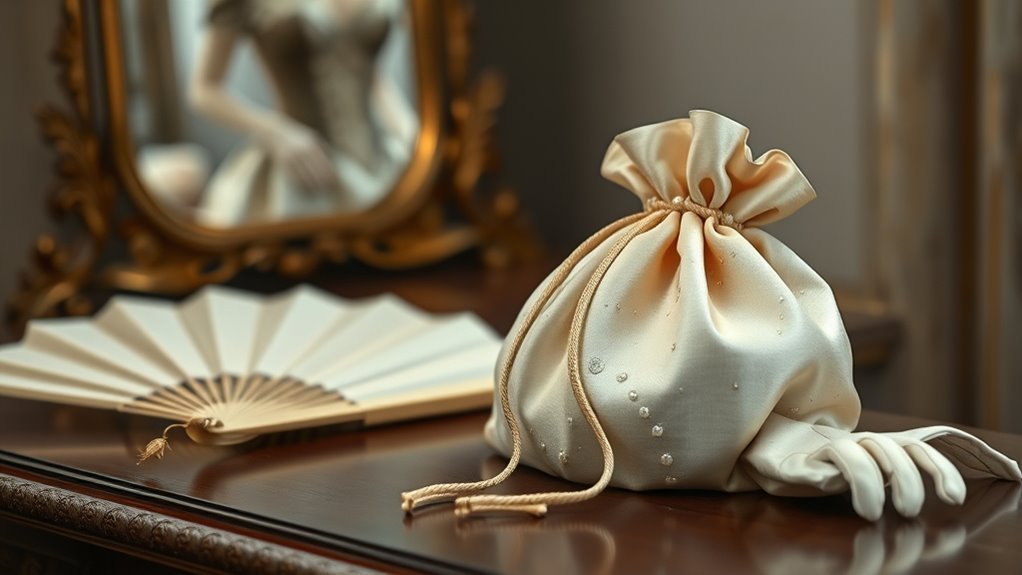
A reticule bag is a small, often luxurious accessory that emerged in the late 18th century, addressing the impracticalities of traditional pockets in women’s fitted gowns. These bags symbolize a significant shift in women’s roles, blending functionality with elegance. Made from materials like silk and velvet, reticules became essential fashion pieces, reflecting individuality and status. As you explore further, you’ll uncover how these bags influenced modern handbag design and women’s evolving identities through fashion.
What Is a Reticule Bag?
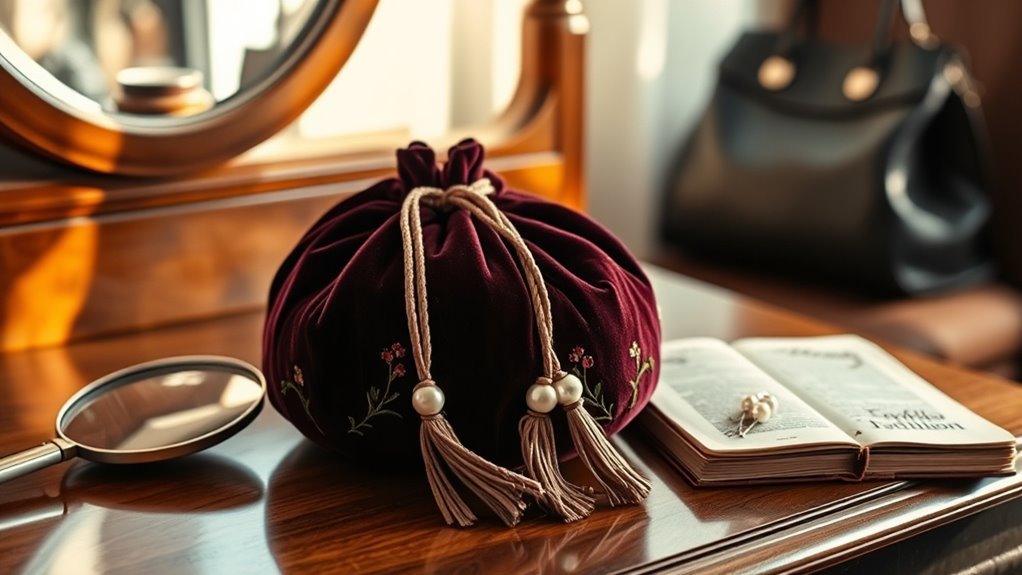
A reticule bag, often regarded as a quintessential accessory of its time, represents a fascinating evolution in women’s fashion. Emerging around 1795, it became indispensable during the Regency era, addressing the impracticality of traditional pockets in fitted gowns.
These small handbags weren’t just functional; they symbolized a shift toward a more expressive form of femininity.
Crafted from luxurious materials like silk and velvet, reticules showcased intricate designs with embroidery and beading, highlighting their decorative significance. The name, derived from the French word “réticule,” aptly reflects their delicate nature.
Reticule variations varied widely, offering women a chance to express their individuality and style. As decorative accessories, they complemented attire rather than merely serving a utilitarian purpose.
In this way, the reticule not only carried essentials but also represented a burgeoning sense of freedom and personal expression in women’s fashion.
The Origins of the Reticule: A Historical Perspective
Although many fashion trends come and go, the reticule bag’s origins reveal a unique intersection of practicality and artistry in women’s clothing. Emerging in the late 18th century, particularly during the Regency era, reticules offered a fashionable alternative to waist-tied pockets, which were impractical with the era’s columnar skirts.
Initially crafted from netting, these bags evolved into luxurious pieces made from velvet, silk, and satin, often adorned with exquisite embroidery and beading.
The term “reticule” derives from the French word “réticule,” reflecting its delicate design. These bags held significant historical importance, allowing women to carry essential items while embodying a shift towards decorative personal accessories.
This societal impact marked a change in women’s fashion, symbolizing newfound independence and creativity. However, by post-1810, as designs simplified, the reticule’s decline signaled the evolution toward modern handbag styles we recognize today.
Reticules: Materials Used in Their Design
As reticules evolved from simple netting into luxurious fashion statements, the materials used in their design became a reflection of both societal trends and personal expression. By the late 18th century, you’d find reticules made from sumptuous fabrics like velvet and satin, showcasing intricate silk embroidery and delicate beading. These elements not only enhanced their beauty but also highlighted the craftsmanship of the time.
| Material | Characteristics |
|---|---|
| Velvet | Soft, rich textures; luxurious feel |
| Silk | Smooth, elegant; perfect for embroidery |
| Satin | Glossy, sophisticated; often used for lining |
Women often took the initiative to create their own reticules, illustrating personal creativity and adaptability to the evolving norms of portable fashion. The drawstring closures added both practicality and style, making these bags essential for the fashionable woman of the era.
The Role of Reticules in Regency Fashion Trends
Reticules played a pivotal role in shaping Regency fashion trends, seamlessly blending practicality with elegance. Emerging in the late 18th century, they complemented the columnar skirts that made traditional pockets obsolete. Crafted from luxurious materials like silk and velvet, these bags were often embellished with intricate embroidery and beads, highlighting their reticule significance as both functional and fashionable.
The drawstring closure allowed you to carry essentials like coins and handkerchiefs with ease during social gatherings. As societal shifts began to prioritize aesthetics, reticules marked a departure from purely utilitarian accessories. Their popularity peaked between 1795 and 1820, reflecting a growing desire for personal expression in women’s fashion.
This evolution symbolized a new era where style and functionality coexisted, allowing you to navigate public spaces with both grace and individuality. Consequently, reticules became not just accessories, but essential elements of a liberated, fashionable identity.
What’s Behind the Name ‘Reticule’?
The name “reticule” traces its roots back to the French word “réticule,” reflecting its origins as a small meshwork bag designed for both function and flair.
This etymology not only underscores the practicality of early designs but also highlights a cultural shift in women’s fashion toward more portable accessories.
As you explore the evolution of the reticule, you’ll uncover how its playful linguistic ties to “ridicule” reveal deeper social commentaries of the time.
Etymology and Origin
Originating from the French word “réticule,” which denotes a small meshwork bag, the term “reticule” encapsulates both function and fashion in its etymology. This term reflects an etymological significance that traces back to the Latin “reticulum,” a diminutive of “rete,” meaning net. The playful connection with “ridicule” showcases the whimsical language of the Regency era. Initially, reticules served women in the late 18th and early 19th centuries, compensating for the impracticality of traditional pockets. Their evolution symbolizes a blend of utility and style, marking significant cultural adaptations in women’s accessory culture.
| Etymology | Significance |
|---|---|
| French “réticule” | Small meshwork bag |
| Latin “reticulum” | Diminutive of “rete” |
| Functional origin | Compensates for pockets |
| Cultural shift | Fashion meets utility |
| Whimsical pun | Connection to “ridicule” |
Cultural Connections
While exploring the cultural connections behind the name “reticule,” you’ll find that its playful etymology reveals deeper societal shifts.
Derived from the French “réticule,” meaning a small net, it emphasizes the delicate craftsmanship of these bags. The link between “reticule” and “ridicule” adds a humorous layer, reflecting the playful attitudes of the Regency era.
This term’s cultural significance lies in how reticules marked a change from practical pockets to fashionable accessories, showcasing women’s evolving roles in public life. As personal belongings took center stage, reticules embodied both utility and style, symbolizing a broader movement toward female empowerment and independence during the late 18th and early 19th centuries.
Fashion Evolution Insights
As fashion evolved in the late 18th century, the reticule emerged as an essential accessory, reflecting a shift in how women engaged with their personal belongings. Its very name, derived from the French “réticule” meaning a small net, symbolizes both functionality and a playful critique of social norms. The reticule served not only a practical purpose but also conveyed social status.
Key insights about the reticule include:
- Symbolism: It represented women’s autonomy in a world increasingly restrictive.
- Design Evolution: Initially practical, reticules transformed into decorative statements.
- Cultural Reflection: They mirrored broader societal changes in women’s roles and fashion during the Regency period.
In this way, the reticule embodies a complex narrative of empowerment and style.
Functionality of Reticules: Beyond Fashion
Reticules weren’t just stylish accessories; they were practical solutions for women maneuvering a world without pockets.
Their drawstring design made accessing essentials like coins and handkerchiefs effortless, while the intricate embroidery showcased personal creativity.
This blend of functionality and fashion not only met everyday needs but also represented a shift in women’s autonomy during the Regency era.
Essential Carrying Solutions
During the late 18th and early 19th centuries, women faced a practical dilemma: fashionable dresses often lacked pockets, making it crucial to find alternative carrying solutions. Reticules emerged as essential accessories, blending utility with style while reflecting social status.
Their practical designs catered to the needs of women maneuvering through public life, offering a way to carry essentials effortlessly.
Here are three key functions of reticules:
- Storage: They held coins, handkerchiefs, and personal effects, ensuring women had what they needed during outings.
- Accessibility: Drawstring closures made items easy to reach, enhancing convenience.
- Decoration: Intricate embroidery and beading transformed reticules into fashionable statements, showcasing individuality and taste.
In essence, reticules liberated women from the constraints of pocketless fashion.
Fashion Meets Functionality
While fashion often prioritizes aesthetics, the reticule stands out as a remarkable example of how functionality can seamlessly blend with style. Emerging in the late 18th century, these bags addressed a practical need for women without pockets in their gowns.
Crafted from silk, velvet, and netting, reticules featured intricate embroidery and beading, showcasing fashion innovation alongside utility. The drawstring closure offered easy access while keeping essentials secure during social events.
More than mere accessories, they represented personal style and social status, reflecting women’s evolving roles in public life during the Regency era. This accessory evolution influenced modern handbags, transforming reticules from practical items to fashionable statement pieces that continue to inspire today’s designs.
Reticules in Museum Collections
Museum collections offer a fascinating glimpse into the evolution of reticules, showcasing their significance in women’s fashion throughout history.
These artifacts reveal not just craftsmanship but also the societal context of their time.
Consider the following highlights of reticules in museums:
- Historical Significance: French reticules from the late 18th century display intricate designs, reflecting the artistry of the Regency era.
- Evolving Styles: European examples from around 1810 capture changing fashion trends and norms, illustrating how women’s roles were transforming.
- Enduring Trends: American reticules from the 1860s demonstrate the blend of style and functionality, continuing the legacy of these essential accessories.
Through these collections, you can appreciate the museum significance of reticule craftsmanship and the stories they tell about women’s liberation and identity.
Each piece serves as a demonstration of the evolving nature of fashion and personal expression.
The Evolution of Handbags From Reticules to Modern Styles
Reticules laid the groundwork for the handbags we recognize today, marking a significant change in women’s accessories. Emerging in the late 18th century, they filled the void left by the absence of functional pockets in women’s clothing during the Regency era. Crafted from delicate materials like silk and netting, these small bags featured drawstring closures and intricate embellishments, showcasing their aesthetic value.
As fashion evolved, the handbag transformation became evident. By the 19th century, simpler designs began to dominate, reflecting a growing emphasis on utility alongside beauty.
The reticule’s significance lies in its role as a precursor to modern styles, paving the way for a diverse array of handbags that cater to both functionality and fashion sensibilities. This evolution symbolizes women’s desire for portable personal accessories, embodying a liberation from restrictive norms while embracing their unique identities through style.
Frequently Asked Questions
What Is the Difference Between a Reticule and a Purse?
A reticule’s evolution reflects its historical significance as a decorative fashion accessory, while a purse serves broader functional needs. You see, reticules symbolize a past era, whereas purses adapt to modern essentials.
What Did a Reticule Look Like?
A reticule often features a drawstring closure, showcasing luxurious materials and intricate designs. Its historical significance reflects design evolution in women’s accessories, blending functionality with elegance, embodying a spirit of liberation and style from the Regency era.
Why Did Queen Elizabeth Carry a Purse All the Time?
Imagine a queen’s quiet command in a crowded room; her purse, a royal accessory, held historical significance. Elizabeth carried it to discreetly manage engagements, reinforcing her status while blending practicality with elegance in every moment.
Are Wristlets in Style in 2026?
Yes, wristlets are in style in 2026. Their versatility complements your outfits, while sustainable designs and tech-friendly features reflect current wristlet trends. Influencers’ fashion influence keeps them trendy, making them a must-have accessory.
Conclusion
In tracing the journey from reticules to today’s diverse handbag styles, you can see how fashion evolves while maintaining a connection to the past. These delicate bags weren’t just accessories; they were essential to Regency life, offering both practicality and elegance. Isn’t it fascinating how a simple design can influence trends for centuries? As you explore modern handbags, consider the rich history behind them and how each style reflects the era it represents.

