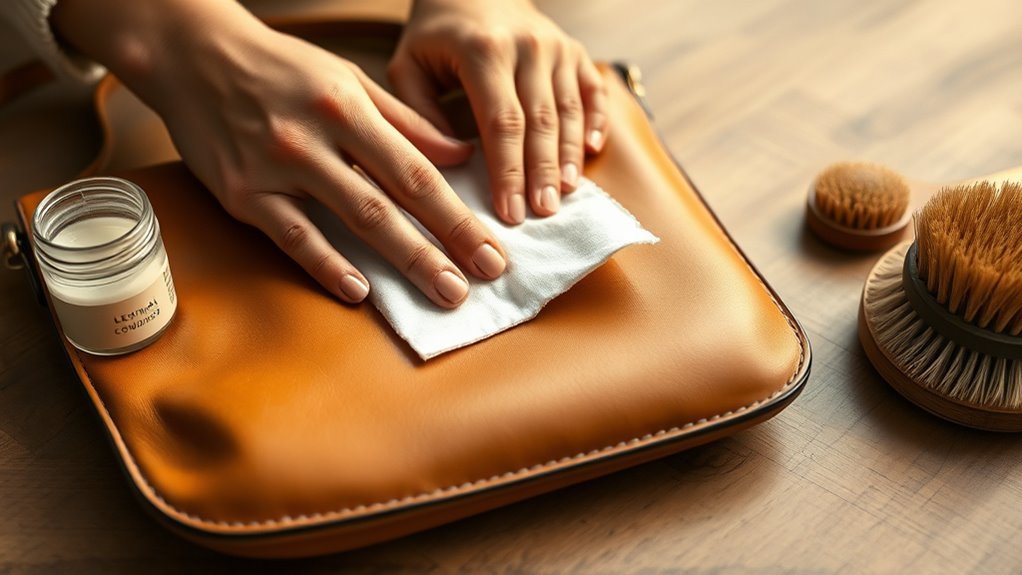
Start by checking how deep the scratch is: if it’s only in the finish, you can usually fix it safely. Clean the purse first with a pH-balanced leather cleaner or a lightly damp cloth, then let it dry. For light marks, rub in a small amount of conditioner or leather oil. For deeper scratches, try a tiny bit of vinegar, then color-matched shoe polish. Suede needs gentler brushing. Keep going and you’ll see what works best.
How to Identify Leather Purse Scratches
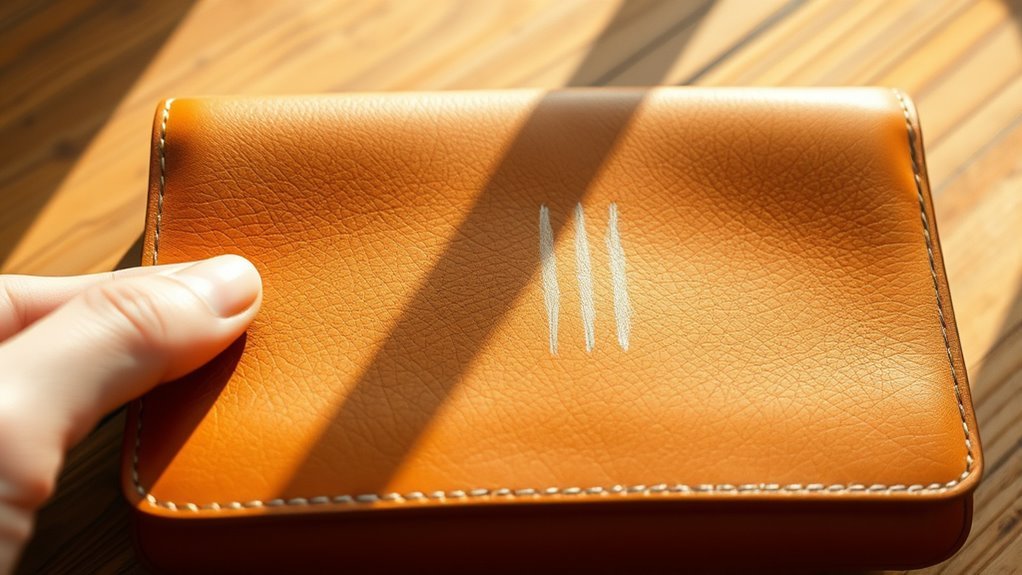
Before you repair a leather purse, inspect the scratch closely so you can judge its depth. Run a clean fingertip or a nail lightly across the mark. If your nail only catches a little, you’re likely dealing with a surface scratch that affects the finish, not the hide.
If your nail drops into the groove, the damage is deeper and may expose raw leather. That scratch depth tells you which repair methods make sense. Shallow marks often respond to gentle buffing, while deeper ones usually need filling and recoloring to restore control over the surface.
Check your purse regularly, because early spotting keeps small flaws from hardening into permanent damage. When you read the scratch accurately, you choose your next step with confidence instead of guesswork.
Check your purse regularly, because early spotting helps you choose the right repair before small scratches become permanent damage.
That’s practical care, and it helps you protect both the material and the freedom to use your purse without worry.
Clean the Leather Before You Treat It
Before you treat the scratches, you should clean the leather so dirt and oils don’t block the repair products or make the damage worse.
Use a dedicated pH-balanced leather cleaner and a soft cloth, working in small circular motions to protect the surface.
Make sure the purse dries completely before you apply anything else, so the treatment can absorb evenly.
Why Cleaning Matters
Cleaning your leather purse first helps the repair products work the way they should, because dirt and skin oils can block absorption and reduce their effectiveness. This importance of preparation gives you a cleaner base and steadier results. If you skip it, the effects of neglect can trap debris and make scratches look deeper over time.
| What you remove | Why it matters |
|---|---|
| Dirt | It can block repair products |
| Oils | They can stop even absorption |
| Residue | It can make repairs patchy |
A dedicated leather cleaner, such as Chamberlain’s Leather Milk, can lift residue without harsh abrasion. Use a soft cloth so you don’t add new marks. When the surface is clear, conditioners or fillers spread more evenly, and you keep more control over the repair.
Safe Cleaning Methods
Use a dedicated leather cleaner, such as Chamberlain’s Leather Milk or Leather Nova, to remove dirt and oils before you treat any scratches. You’ll protect the finish and give your repair products a clean surface to work on.
Put a little cleaner on a soft cloth, not directly on the purse, and use gentle cleaning techniques instead of scrubbing hard. Slightly dampen the cloth with water, then wipe in small circular motions to lift grime without soaking the leather.
Test the cleaner on a hidden spot first so you don’t change the color or sheen. Let the leather dry completely before moving on.
Careful leather care like this helps you repair your purse safely and keeps your favorite bag free to keep serving you.
Use Conditioner on Light Scratches
Light scratches on a leather purse often respond well to a little conditioner, which can replenish lost oils and help restore the surface’s appearance.
Begin with a careful scratch assessment so you know the mark is light, then move into conditioner application with a small amount on a clean microfiber cloth. Rub it into the scratch in gentle circles so the leather can absorb it evenly without stress.
Keep your hand light and focused; you’re aiming to revive the finish, not saturate it. Afterward, let the purse dry completely before you judge the result, because damp leather can hide the true improvement.
If any conditioner remains on top, wipe it away with a dry cloth to prevent a greasy residue that might trap dust.
With regular conditioning every few months, you can help protect the leather, slow future wear, and keep your purse looking cared for on your own terms.
Massage in Leather Oil for Surface Marks
Choose a leather oil made for purses, and test it on a hidden spot first to be sure it won’t change the color or finish.
Then use a soft cloth to massage a few drops into the surface mark in small, gentle circles so the oil can blend the scratch into the surrounding leather.
Once it’s absorbed, wipe away any excess to keep the purse from looking greasy.
Choosing A Leather Oil
When you’re treating surface marks on a leather purse, pick a leather oil made specifically for leather care, ideally one with ingredients like lanolin or beeswax that nourish the material without damaging it.
Check the label for leather oil benefits, especially conditioning and protection, so you can support the purse without overdoing it.
For oil application techniques, use a clean microfiber cloth and place only a small amount on it; you want a light coat, not saturation.
Test a hidden spot first if you’re unsure. Then spread the oil evenly over the scratched area and let it absorb for 15 to 20 minutes before wiping away excess with a dry cloth.
Repeat every few months to keep leather supple and help prevent future scratches.
Gentle Circular Massage
Gently massage a small amount of leather oil into the scratched area with a clean microfiber cloth, using slow circular motions to help the oil absorb evenly. You’re working to restore moisture and flexibility, which can soften surface marks without stressing the finish.
Keep the layer light; a little goes a long way in leather care. As you move in small circles, you help redistribute the leather’s natural oils and support a more even appearance.
Stay patient and avoid pressing hard, since aggressive rubbing can do more harm than good. Let the leather dry completely, then buff it with a dry cloth for a smooth result.
Regular treatment can strengthen scratch prevention and help your purse stay resilient, polished, and ready for daily freedom.
Wipe Away Excess
After the leather oil has had a few minutes to absorb, take a clean dry cloth and wipe away any excess so the surface doesn’t look greasy.
Use light pressure and follow the purse’s grain so your excess removal stays controlled and even. This step protects the leather sheen you’re restoring and keeps the finish from feeling slick or heavy.
Check the repaired spot in good light; if it still looks damp, wait a little longer before buffing again. You want the scratch to blend, not shine out.
Keep your touch calm and deliberate, because careful handling helps you protect the purse’s freedom to age well.
If you see color change or residue, stop and reassess before adding more conditioner.
Try Vaseline for a Quick Fix
For a quick fix, you can try a small amount of Vaseline on light scratches to help moisturize the leather and soften the scratch’s appearance. This simple step offers Vaseline benefits by adding a bit of pliability and supporting scratch blending with the surrounding finish.
First, test it on an inconspicuous spot to make sure the leather doesn’t react badly. Then place a tiny dab on a dry cloth, not directly on the purse, and rub it in gently with small circular motions. Keep the pressure light so you don’t spread the mark.
Afterward, wipe away any excess with a clean, dry cloth to avoid a greasy residue. Use this as a temporary solution while you plan a more thorough leather care treatment. This quick, careful approach can help your purse look more polished without trapping you in harsh, complicated repair routines.
Treat Deep Leather Scratches With Vinegar
When a scratch runs deeper into the leather, start by cleaning the area with a dedicated leather cleaner so dirt and oils don’t get in the way of the repair.
Once the surface is clear, dampen a soft cloth with distilled white vinegar and gently work it into the scratch. The vinegar benefits here include helping lift the mark and supporting leather restoration by rejuvenating some of the leather’s natural oils.
Don’t soak the purse; use just enough to treat the damaged spot without spreading moisture. Let the vinegar dry completely, because a dry surface accepts later care more evenly.
Afterward, inspect the scratch closely in good light. If the mark still stands out, you can continue with a matching finishing product in a careful, controlled way.
This measured approach helps you protect the purse’s texture and gives you more freedom to restore it without making the damage worse.
Hide the Scratch With Shoe Polish
To camouflage a scratch, choose a shoe polish that closely matches your purse’s leather color, and test it on an inconspicuous spot first to make sure it won’t change the finish.
If the patch looks stable, use this simple fix as one of your scratch concealment techniques. With a clean, soft cloth, take a small amount of polish and work it into the mark using gentle, circular motions.
Keep your pressure light so you fill the damaged area without overloading the leather. These polish application tips help the color blend naturally and keep the surface looking even.
Let the polish dry completely before you touch it again. Then buff it lightly with a dry cloth to restore a subtle shine and soften the repair line.
If the scratch still shows and feels deep, you can follow with leather conditioner to add moisture and support the leather, but stay measured and let each step do its job.
Fix Suede and Nubuck Purse Scratches
Gently tackle suede and nubuck scratches with a pencil eraser first, rubbing the marked area lightly to lift dirt and revive the nap without adding water.
Then use a soft wire brush or clean toothbrush to buff the fibers back into place with short, controlled strokes. You’re not erasing character; you’re restoring texture with care. Keep pressure gentle so you don’t flatten the surface or spread the mark.
Skip oils and conditioners made for smooth leather. They can darken, clog, and crush the nap, making scratches stand out more.
If the scratch feels deeper, choose a conditioner made specifically for suede and apply it sparingly, following the label. It can help bring back moisture and flexibility without smothering the material.
For lasting suede care and nubuck maintenance, brush the purse regularly with a suitable tool.
That steady attention keeps the nap lifted, the finish even, and your bag ready for everyday freedom.
Prevent Future Scratches on Your Purse
Once you’ve cleaned up the damage, protect the finish so new scratches don’t set in. Build preventive maintenance into your routine by applying a leather protector spray or cream every few months. This thin barrier helps your purse resist scuffs, moisture, and everyday abrasion without weighing it down.
Choose smart storage solutions when you’re not carrying it. Slip the purse into a dust bag and keep it away from rough shelves, crowded closets, and other abrasive surfaces. If you store leather jackets nearby, use padded hangers so zippers, buttons, and hardware don’t nick your bag.
Handle your purse with care each day. Set it on smooth, clean surfaces only, and avoid placing it near sharp objects, jewelry, or metal edges.
Small habits like these protect your investment and keep your bag looking free, polished, and ready for whatever path you take.
Frequently Asked Questions
Can You Get Scratches Out of a Leather Purse?
Yes, you can often lessen scratches on your leather purse with careful leather care. Clean it, test conditioner first, then buff light marks; deeper ones may need filler, recoloring, and scratch prevention.
Does WD-40 Really Remove Scratches?
No—WD-40 doesn’t truly remove scratches; it’s a quick mirage, not real repair. You’ll want safer leather care products for scratch prevention, since WD-40 can discolor, leave residue, and weaken your purse’s finish.
How Can I Remove Deep Scratches From Leather?
You can clean the scratch, treat it with distilled white vinegar, then let it dry. Next, apply colorless shoe polish; if needed, add a little olive oil. Good leather care and scratch prevention matter.
Does Vaseline Get Scratches Out of Leather?
Like balm smoothing a wound, yes—Vaseline can lessen light leather scratches. You’ll see limited Vaseline effectiveness, so test first, rub a tiny amount gently, wipe residue, and keep leather care cautious for freedom, not damage.
Conclusion
A scratched leather purse is like a weathered traveler: every mark tells a story, but you still want to keep it strong and graceful. By cleaning first, then choosing the right treatment for the scratch’s depth, you help the leather heal without adding more damage. Always test products in a hidden spot, work gently, and protect the bag afterward. With careful upkeep, you can restore its look and keep future scuffs from taking over.