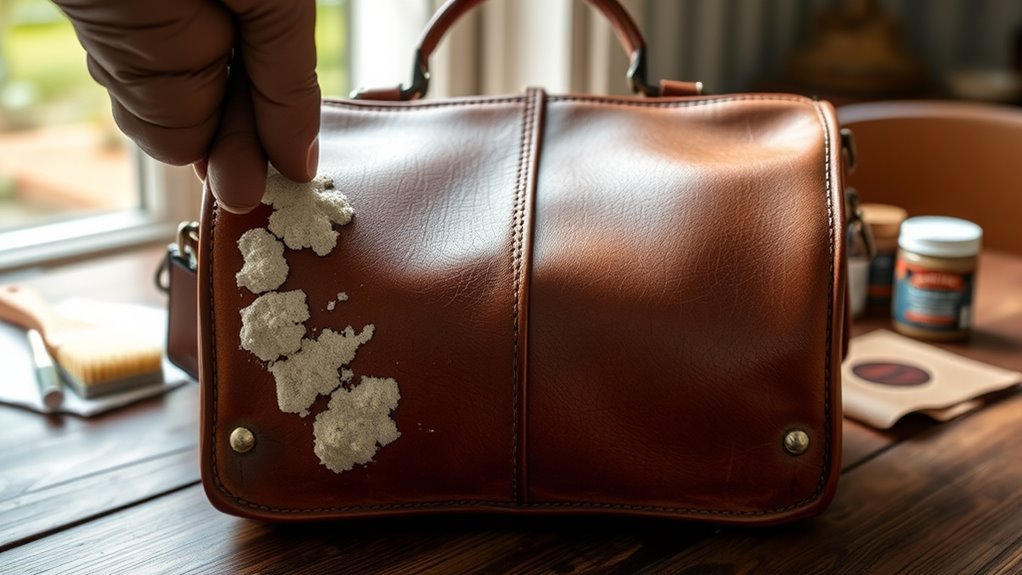
White residue on your leather bag is usually wax bloom, not mold. You’ll often see a thin, smooth, white film caused by natural oils and waxes rising with temperature or humidity changes. Mold looks different: it’s usually greenish, patchy, fuzzy, and may smell musty. Check the texture, color, and odor before cleaning. Proper storage, gentle conditioning, and careful inspection help protect the leather, and the next steps can show you how to treat it safely.
What Causes White Residue on Leather Bags?
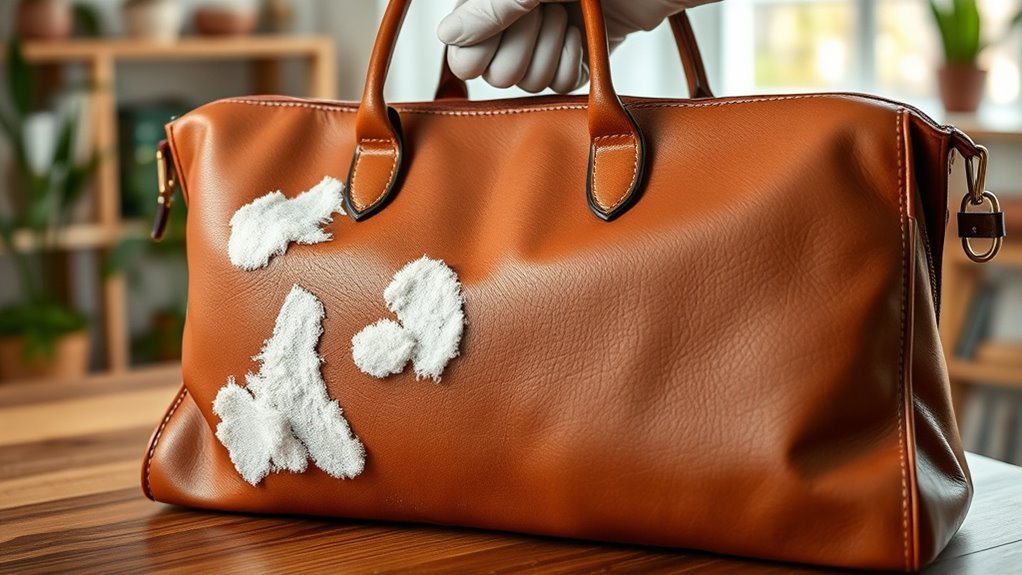
White residue on leather bags is often caused by wax bloom, a surface film that forms when the leather’s natural oils and waxes rise during temperature changes. You’re seeing migration, not damage, but you still need careful leather preservation.
Humidity and poor storage let moisture move through the hide, pushing those waxes to the surface and leaving a pale, smooth film. If you keep your bag in a stable, dry environment, you can slow that process. Regular conditioning also matters because it balances the leather’s oils and reduces buildup that feeds bloom.
Use restrained cleaning techniques: dust the surface gently, avoid harsh solvents, and don’t saturate the material. You can often remove bloom by lightly warming the leather, then wiping away the residue with a soft cloth. That approach protects the bag’s structure and keeps your access to durable, well-kept leather on your terms.
How to Tell Mold From Wax Bloom?
To tell mold from wax bloom, look closely at the residue’s color, texture, and pattern. Wax bloom usually shows up as a thin, white, waxy film across one area, and you’ll often see it after temperature swings push oils to the surface.
Wax bloom often appears as a thin, white, waxy film after temperature swings push oils to the surface.
Mold behaves differently: it tends to form irregular greenish patches or spots that cluster, and it may feel fuzzy or slightly raised. If the residue sits in a single layer and looks smooth, you’re likely seeing bloom. If it appears grouped, uneven, or textured, treat it as mold.
For leather maintenance, this distinction matters because bloom often responds to gentle warming or light rubbing, while mold needs more thorough cleaning with appropriate solutions. Accurate identification supports mold prevention and protects your bag’s finish without unnecessary intervention.
If you still can’t tell, consult a qualified leather care expert so you can act with precision and keep your leather in liberated, lasting condition.
How to Inspect a Leather Bag Before Cleaning It
Before you clean the bag, inspect the surface for mold patterns such as uneven patches, greenish tint, or moisture in seams and corners.
Then test the residue’s texture: a waxy, uniform film usually points to bloom, while a damp, irregular deposit suggests active mold.
A quick smell test can help too, since musty odor supports mold presence and a faint waxy scent fits leather bloom.
Check for Mold Patterns
How can you tell whether the white residue is wax bloom or mold? Use mold detection and inspection techniques in a bright, well-lit area so you can read the surface accurately.
Look closely for greenish or black patches; those point to mold, not bloom. Note the pattern of the white residue: wax bloom usually forms a thin, even film, while mold appears clustered, uneven, and visibly textured.
Check for a musty odor, which often signals active mold growth; wax bloom has no distinct smell.
Then gently wipe a small area with a damp cloth. If the residue lifts easily, you’re likely seeing bloom. If it clings stubbornly, treat it as mold and protect the leather before you clean it.
Test for Bloom Texture
A close texture check can confirm whether the white residue is bloom before you clean the bag. Use residue identification and texture comparison to protect the leather’s surface and your freedom to choose the least invasive care.
- Look for a smooth, waxy film; bloom usually sits flat.
- Watch for discoloration or a greenish tinge; mold often shows irregular patterns and a raised, three-dimensional look.
- Gently feel the area; bloom often feels slippery or greasy, while mold feels rougher.
- Test a small hidden spot with mild heat; if the residue fades, it’s likely bloom; if it stays, suspect mold.
If you’re uncertain, stop and consult a leather care professional before any cleaning. That pause preserves the bag, prevents damage, and keeps your restoration work precise and safe.
How to Remove Mold From Leather Bags
If you spot dark green or black mold on your leather bag, act quickly to limit staining and material breakdown.
First, move the bag outdoors or to a ventilated workspace. Use a soft-bristled brush to lift loose spores before they spread.
Then mix equal parts rubbing alcohol and water. Dampen, don’t soak, a soft cloth with the solution and wipe the affected areas in controlled passes.
Let the leather air dry in shaded conditions, away from heat, which can distort fibers. After drying, apply a suitable leather conditioner to replenish suppleness and strengthen the surface against future attack.
These cleaning techniques support mold prevention by reducing moisture retention and residue. Inspect your bag regularly, clean it promptly, and store it in a cool, dry place with good airflow.
When you control humidity and act early, you protect the leather, preserve its structure, and keep your bag free for use, travel, and self-directed mobility.
How to Remove Wax Bloom From Leather Bags
Wax bloom appears when leather’s natural oils and waxes migrate to the surface during temperature swings or changes in humidity, leaving a white, powdery residue. You can handle it with careful, preservation-focused leather care that respects the material’s structure and keeps you in control.
Wax bloom appears when leather’s natural oils and waxes rise to the surface, leaving a white, powdery residue.
- Warm the area gently with your hands or a soft cloth; this encourages the oils to resettle.
- Use a soft, dry cloth and rub in small circular motions to lift the bloom without abrading the finish.
- If residue remains, repeat the process with light pressure; removing wax should stay gradual, not aggressive.
- For stubborn bloom, apply a small amount of leather conditioner, then buff lightly to restore moisture and sheen.
Avoid harsh solvents and excess moisture; they can distort the surface.
After cleaning, store and inspect the bag regularly, because consistent leather care helps maintain freedom from recurring residue.
How to Prevent Mold on Leather Bags
To prevent mold on leather bags, keep them in cool, dry storage with steady air circulation so moisture can’t accumulate on the surface or inside the lining. Use these preventive measures and storage tips consistently:
| Action | Purpose | Frequency |
|---|---|---|
| Clean with leather cleaner | Remove oils and dirt | After heavy use |
| Air out bag | Release trapped humidity | After each wear |
| Condition leather | Preserve suppleness, barrier | Every few months |
| Check storage humidity | Limit mold growth | Weekly |
| Run dehumidifier | Stabilize moisture | As needed |
Wipe the bag with an appropriate cleaner before storage, then let it dry fully. Apply conditioner sparingly to protect fibers without saturating them. Don’t seal the bag in plastic; choose breathable dust covers instead. If your space feels damp, measure humidity and lower it with a dehumidifier. These disciplined habits help you protect your gear, maintain autonomy over your belongings, and keep leather resilient, clean, and mold-resistant without surrendering it to neglect.
When Should You Call a Leather Care Pro?
If mold has spread beyond a small area, you should call a leather care professional right away to prevent further contamination and material loss.
When a waxy bloom or white residue won’t lift with gentle warming or controlled cleaning, expert evaluation can identify the cause and protect the finish.
You should also seek professional treatment for valuable leather, since specialized restoration methods can limit damage and preserve the bag’s condition.
Severe Mold Spread
Severe mold on a leather bag usually appears as dark patches or a fuzzy surface, and it signals a problem that can affect both your health and the leather itself. You shouldn’t delay when spread is wide or cleaning fails.
- Watch for allergens and toxins that can trigger health risks.
- Protect your space with mold prevention: isolate the bag and control humidity.
- Call a leather care pro if mold keeps returning or covers seams, lining, or straps.
- Trust expert treatment for valuable items; specialists use methods that preserve fibers and limit discoloration.
Ignoring active growth can weaken leather, create odors, and compromise integrity.
Skilled conservation helps you keep the bag usable without surrendering material or meaning.
Stubborn Bloom Stains
Not every white residue on leather signals mold; stubborn bloom stains often come from the bag’s own oils and waxes rising to the surface during temperature swings.
You can usually confirm wax bloom when the film looks uniform, not patchy, and lacks a greenish cast.
Try gentle warming or light rubbing first; these bloom removal techniques often lift the residue without stressing the hide.
If the stain keeps returning after routine cleaning, the leather may need a professional assessment.
Call a leather care pro when bloom coincides with cracking, dry spots, or other texture changes. Their treatment can stabilize the surface and protect finish integrity.
With consistent conditioning and smart leather preservation tips, you keep control over the bag’s condition and extend its usable life.
Valuable Leather Damage
Noticeable discoloration, persistent odors, or structural changes in your leather bag call for a professional assessment, especially when home cleaning hasn’t resolved the issue.
A specialist can test the residue, distinguish mold from wax bloom, and map damage before it spreads. You protect leather longevity by intervening early, not by forcing harsher cleaners.
- Call a pro if stains keep returning.
- Seek help when seams, shape, or finish distort.
- Escalate if odors remain after careful drying.
- Use expert maintenance tips when DIY methods fail.
Technical treatment can restore surface integrity and prevent costly loss.
If damage is extensive, professional care offers the best path to recovery and helps you keep your bag usable, refined, and free from avoidable decline.
Frequently Asked Questions
How Do I Remove Mold From My Leather Bag?
Take your bag outside, brush off mold gently, then wipe it with equal parts rubbing alcohol and water after testing first. Air-dry it in shade, stuff with white paper, and maintain leather care for mold prevention.
Why Does Mold Grow on Bags?
Why does mold grow on bags? You trap moisture, feed spores, and skip ventilation. Control humidity, keep bags dry, and practice mold prevention. Without moisture control, leather invites fungal growth and weakens, limiting your freedom.
Why Is There White Stuff on My Leather Shoes?
It’s likely wax bloom: oils and waxes rise to your leather shoe’s surface. You can restore it with gentle warming and a soft cloth. Prioritize leather care and shoe maintenance to preserve flexibility and freedom.
How Do I Treat Fungus on My Bags?
Treat fungus with equal parts rubbing alcohol and water, applied by soft cloth after you’ve taken the bag outside. Investigate the stain’s truth, then use preventive measures, cleaning techniques, brush spores off, and air-dry shaded.
Conclusion
So, when you spot white residue on your leather bag, don’t guess—inspect it closely and act with care. If you identify mold, clean it promptly and dry the bag thoroughly; if it’s wax bloom, a gentle wipe may be enough. By treating the finish like a fragile archive, you protect both form and function. With regular storage checks and controlled humidity, you can keep your leather from becoming a modern-day relic.