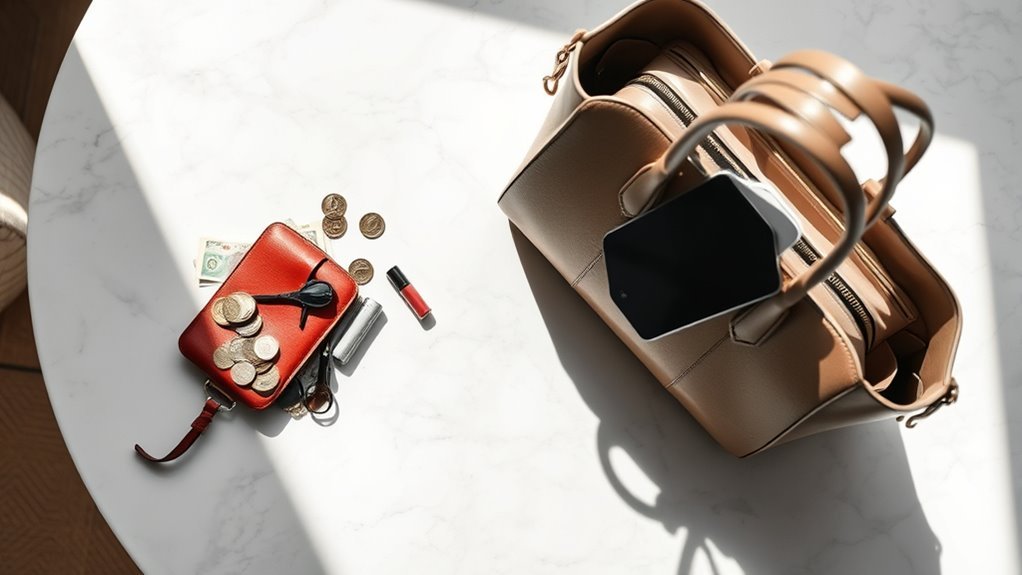
In American English, a purse is a bag for carrying personal items, and the word is used for a bag of almost any size, while a handbag is the more formal or fashion-industry term for the same thing. In British English, a purse is usually a small pouch for coins and cards, and a bag you carry on your arm is a handbag. So the same word means different things on each side of the Atlantic.
What Is the Difference Between a Purse and a Handbag?
The two words overlap a great deal. In the United States, people use purse and handbag for the same kind of bag, and the choice mostly depends on habit and tone. Purse tends to be the everyday word, and handbag is often used in shops, magazines and the fashion trade. Some people use purse for smaller bags and handbag for larger ones, but this is not a fixed rule, and you will find both words used for any size. If you want to know what a particular term means for a given style, check the description and the dimensions, not just the name.
American and British Usage
The biggest difference is regional. In American usage, a purse is a bag that holds your wallet, phone, keys and other items. In British usage, a purse is a small container for money, close to what Americans call a wallet or a coin purse, and a bag for general carrying is a handbag. A British person who talks about losing their purse is usually talking about a small wallet, while an American might be talking about a whole bag. Other English-speaking countries vary, with some following British usage and others using a mix.
This is a practical point if you are shopping online or reading a product listing from another country. A search for purse may show you wallets in one place and handbags in another.
Other Words You May Meet
- Pocketbook: an older American term for a purse or a handbag, still used by some people in certain regions.
- Clutch: a small bag without a handle or strap, carried in the hand. See what a clutch is.
- Tote: a large, open bag with two handles. See what a tote bag is.
- Satchel: a structured bag with a flap and a top handle. See what a satchel is.
- Shoulder bag: a bag with a strap that is worn on the shoulder. See what a shoulder bag is.
- Wristlet: a small pouch with a loop that goes around the wrist.
When to Choose a Smaller Bag for Casual Outings
For a casual outing, a small bag is often enough. It is a good choice for lunch with friends, a short shopping trip or a quick errand, when you need only a phone, a card and keys. A compact bag is easy to keep on your lap or a chair, and it can also slip into a larger bag when you are traveling. If you carry less, you can wear it crossbody or on the shoulder, and keep your hands free. For ways to wear one, see how to style a crossbody bag.
When a Larger Handbag Makes Sense
A larger bag suits days when you need to carry more, such as work, travel or a day out with a lot of extras. It has room for a laptop sleeve, a water bottle, a change of shoes and other things. It usually has more compartments, which helps with organization, and the structure of the bag affects how it looks and how heavy it feels. A larger bag is also useful for a day that moves from the office to dinner. If you carry a laptop, how to tell if a laptop fits in a tote bag with a sleeve will help you to check the fit.
Features to Consider When Choosing
- Size: choose according to what you carry, not the name of the bag. Measure the inside if you need to fit a specific item.
- Materials: leather, canvas, nylon and straw each have their own look and care needs. See leather types used in handbags, what patent leather is and straw versus raffia.
- Compartments: inner pockets and zippered sections keep small items easier to find.
- Closure: a zipper, flap or magnetic snap gives different levels of security.
- Strap: a handle, a shoulder strap or an adjustable crossbody strap changes how you can carry it.
Dressing for the Occasion
For formal events, a small clutch or evening bag is usual, and it is easier to carry for long periods. See when to carry an evening bag and handbag etiquette at weddings for guidance. For everyday wear, you have more freedom, and comfort and practicality come first.
Care Differs by Material, Not by Name
Whether you call it a purse or a handbag, the care depends on the material. Leather needs conditioning, suede needs a brush and protection from water, canvas can often be spot cleaned and straw should be kept dry. For suede, see how to restore a flattened suede bag nap, and for general storage advice, see how to store handbags.
Frequently Asked Questions
Are Purses and Bags the Same?
Not exactly. Bag is the broad word, covering totes, backpacks and many other styles, while purse and handbag usually refer to a bag for personal items.
What Does Purse Mean in America?
A bag that carries personal items, such as a wallet, phone and keys. It can be any size.
Why Do Some People Call a Purse a Pocketbook?
Pocketbook is an older word that was used for a small wallet-like book, and it later came to mean a purse in some regions. It is less common now, but it is still used by some people.
Conclusion
Purse and handbag mean nearly the same thing in the United States, while in Britain a purse is a small money pouch. Choose a bag by its size, material and features, not by its label, and use the regional difference as a guide when you read listings from other countries.