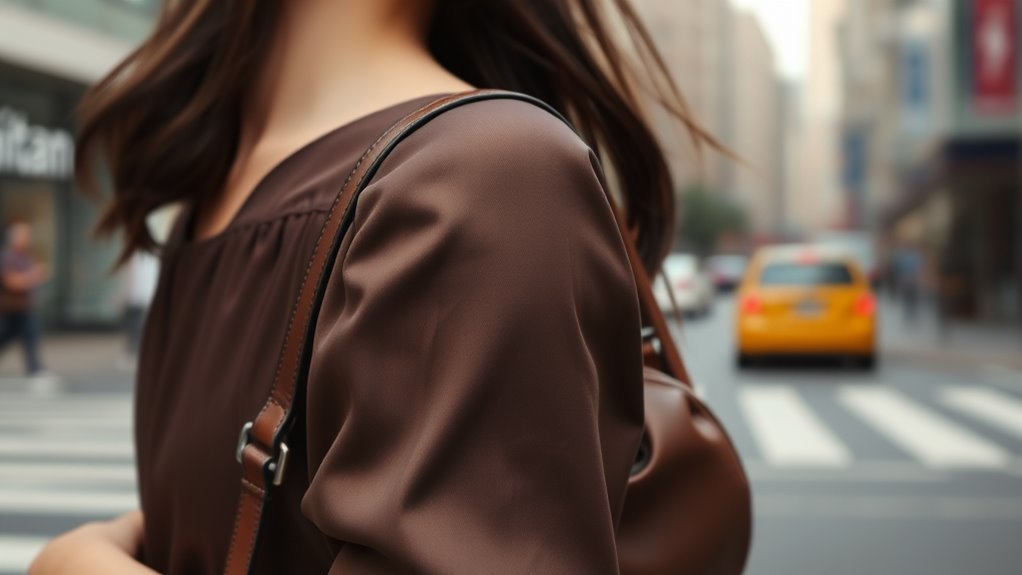
Your shoulder bag keeps slipping because the strap is too smooth, too narrow, or hanging too low, and the load may be pulling it off balance. To steady it, shorten the strap, keep heavier items centered and low, and choose a flatter, textured strap or add a silicone pad. Crossbody carry usually stays put better than a one-shoulder drop. If you want a bag that feels secure all day, there’s more to know.
Why Shoulder Bags Slip Off

Shoulder bags slip off because they’re built to hang from one side, so the weight naturally works against balance. You feel that drag most when the bag’s design flaws meet your body’s movement.
A smooth leather or nylon finish can glide over fabric, so the bag keeps migrating no matter how lightly you carry it. Rounded straps can twist under load, while flatter straps stay planted better.
The hanging angle matters too: if the bag is cut for a straight drop, it’ll slide down a sloping shoulder fast. Luxury styles often make it worse, trading stability for sleek lines, polished surfaces, and narrow straps.
Your user experiences aren’t random; they reflect choices that favor appearance over grip. When the load shifts, the bag follows gravity, not your intention, and you’re left adjusting again.
What Makes a Shoulder Bag More Slippery
Your strap material matters because polished leather, silk, and slick synthetics can slide against fabric instead of gripping it.
Shape and width matter too: slim, rounded straps roll and shift more easily than flat, broader ones.
When your load is uneven or your clothes are smooth, the bag can keep slipping even faster.
Strap Material Matters
A slippery strap can undo even a well-balanced bag. You feel it most with polished leather, nylon, silk, or satin: their smooth finish lowers friction, so the bag slides fast. Polyester and similar fabrics often sit in a low-friction range, too, which weakens hold. Table: | Material | Grip | |—|—| | Polished leather | Low | | Nylon | Low | | Silk | Very low | | Satin | Very low | | Textured rubberized/suede | High | Better strap durability starts with material innovation that adds texture, not shine. Choose surfaces that bite into clothing and resist drift. When you want freedom of movement, your strap should anchor the bag, not negotiate with it. That’s how you stay light, mobile, and in command.
Shape And Width
Shape and width can make a shoulder bag feel either steady or slippery. When you choose strap design, look for a flat profile; it stays planted better than rounded or tubular shapes that roll as you move.
Strap width matters just as much. Too narrow, and the strap digs in, raising pressure and making slips more likely. For light bags, aim for 1 to 1.5 inches; for heavier ones, 2 inches gives you more grip and a larger contact area. That extra surface spreads pressure, boosts friction, and helps the bag sit with confidence.
You also want a hang that matches your shoulder line. If the strap falls too vertically, it can slide; a smarter shape and width keep you freer.
Load And Clothing
Light loads on slick fabrics can turn a shoulder bag into a constant slide. If you wear silk or satin, the low friction lets the strap glide fast; lightweight summer pieces do the same.
Choose thicker cotton or wool when you want more hold. Your clothing texture matters, because rougher weaves grip the strap and keep your hands free.
Fit counts too: a close cut can match your body shape better and give the bag more contact, while loose drape may let it wander.
Don’t overload the bag, though. Balance the weight so it sits cleanly against you instead of tugging outward.
When you match load, fabric, and fit, you move with less fuss and more control, on your terms.
What a Non-Slip Shoulder Strap Looks Like
A well-made non-slip shoulder strap usually has a textured underside—think suede or rubberized inlays—that grips your shoulder instead of gliding off it. That strap texture isn’t decoration; it’s grip enhancement you can feel the moment you move.
Look for a flat profile with a rectangular shape, because it resists rolling and keeps the bag seated where you want it. Width matters too: 1 to 1.5 inches works well for lighter carry, while straps over 2 inches spread heavier weight with more ease.
Many quality designs add grippy strips or rubberized zones along the contact surface, so the strap stays steady during a full day out. Good construction also shows up in real-world testing, not just a polished photo.
You want a strap that’s been built to stay calm, hold its line, and let you move freely without constant adjustment.
How to Fix a Slipping Shoulder Bag
If your shoulder bag still slips even with a grippy strap, you can fix the problem with a few practical adjustments. Start with strap adjustments: shorten it a little so the bag sits closer to your torso, where it’s easier to control.
Then refine bag positioning by shifting the weight so the load feels centered, not swinging.
Then refine bag positioning so the weight stays centered, not swinging.
- Add a silicone strap pad for extra friction.
- Swap in a longer strap and go crossbody when you want more stability.
- Choose textured straps with rubberized or suede undersides.
- Place heavier items low and centered inside the bag.
- Test a slightly shorter drop for better balance and less pull.
These fixes work because they reduce torque and keep the bag from skating off your shoulder.
You don’t need to fight your bag all day; you just need to tune it to your body and your movement. Small changes can turn constant readjusting into easy, liberated carry.
How to Wear a Shoulder Bag So It Stays Put
Wear your shoulder bag crossbody when you can, since that spreads the weight across your torso and cuts down on slippage. That’s one of the best crossbody benefits: your bag moves with you, not against you.
Next, make smart strap adjustments so the bag sits high on your hip, where it stays closer to your center of mass and feels steadier. Choose straps with a textured underside, rubberized backing, or suede inlays; they add grip without killing the look.
Keep the load balanced, too. Don’t let heavy items bunch at the top, where they can torque the bag and invite a slide. If you want extra security, add a silicone strap pad or a slim non-slip shoulder pad.
You can stay polished and free, with a bag that holds its place.
Why Luxury Shoulder Bags Slip More Often
Luxury shoulder bags often slip because polished leather has less grip, so it glides more easily on your shoulder.
Their slim straps can also press into a smaller contact area, which makes them less stable.
And because many designs favor style over function, you don’t always get the practical hold you’d expect from the price.
Polished Leather Slips
Polished leather can be a slippery proposition: its smooth finish grips your clothing less than matte leather, so a shoulder bag is more likely to slide, especially over silk, satin, or other slick fabrics.
When you choose polished leather, you’re making fashion choices that favor shine over traction.
- Smooth leather lowers friction.
- Less grip means more movement.
- Luxury looks can ignore stability.
- Higher prices don’t fix that.
- Style often beats function.
You don’t need to accept the wobble as part of elegance.
If your bag keeps drifting, the material itself may be the culprit, not your posture. A sleek finish can look powerful, but it won’t anchor itself.
Choose with intention, wear it boldly, and let your bag match your pace.
Slim Strap Design
Slim straps look refined, but they often work against you: with less surface area against your shoulder, they create less friction and slip more easily. You feel that instability whenever the bag shifts during walking or reaching.
Polished leather makes it worse, since its smooth finish grips less than matte materials. Rounded straps can roll under load, so your bag drifts instead of staying centered.
Because slim designs spread weight poorly, they can dig in, then slide, hurting strap comfort and control. Luxury bags often favor aesthetic balance, but that sleek line can cost you stability.
If you want freedom in motion, choose a strap with more width, better grip, and a shape that stays planted on your shoulder.
Style Over Function
When design comes first, a shoulder bag can look elegant and still slide around all day. You pay for polish, but luxury often makes an aesthetic compromise instead of a functional design.
Glossy leather grips less than matte finishes, so the bag glides over clothing. Slim straps feel refined, yet they cut contact area and raise pressure, which pushes the strap to move. The industry knows this problem and still chooses beauty over stability.
You can spot the trade-offs fast:
- polished leather
- narrow straps
- low-friction surfaces
- weak grip
- pricey but unstable
Don’t assume a higher price fixes slippage. Choose bags that respect your movement and keep up with your life, not just your look.
Repair or Replace the Shoulder Strap
A shoulder strap doesn’t always need replacing; minor stretching or small hardware issues can often be fixed with a quick adjustment. Start with simple repair methods: tighten sliders, realign clasps, and check grommets for looseness. These small moves can restore function without buying a new bag.
Inspect the strap regularly, because wear in the hardware often shows up before the fabric gives out. If you spot deep fraying, split stitching, or broken clasps, replacement options become the smarter path. A worn strap can’t reliably carry your day, and you deserve gear that keeps pace with your freedom.
Consider how often you use the bag and whether it carries sentimental weight; that can tip the scale toward repair or replacement. You can also upgrade with aftermarket grip-backed straps or silicone pads for a steadier, more comfortable hold.
Choose the fix that matches your life, not the other way around.
Shoulder Bag Slippage Solutions That Work
If your shoulder bag keeps sliding, shorten the strap a bit so the weight sits closer to your torso and doesn’t pull as hard on your shoulder. That simple move improves stability fast, and smart strap adjustments give you more control without sacrificing style or freedom.
- Add a silicone pad or textured strap for extra grip.
- Switch to a crossbody carry for cleaner weight distribution.
- Pack heavier items low and centered to cut torque.
- Check clasps, sliders, and hardware regularly.
- Keep the strap snug enough to stay put, not so tight it binds.
You don’t need to wrestle your bag all day. Use friction, balance, and fit to make it move with you.
When you dial in the load and maintain the hardware, the bag stays steady, and you stay unburdened.
Frequently Asked Questions
How to Stop Shoulder Bag From Sliding?
Choose grippy strap designs, shorten the strap, and use silicone pads or textured bag materials for better friction. Keep heavier items low and centered, and try a secure wrap so your bag stays put.
Why Does My Shoulder Bag Fall off My Shoulder?
Your shoulder bag falls off because its shape, strap materials, and shoulder bag styles fight gravity; I once watched a silk-toting commuter lose hers twice in one block. Choose grippier straps and flatter designs.
Why Do Shoulder Bags Never Stay on My Shoulder?
Your shoulder bags don’t stay put because shoulder bag styles and strap materials often fight your movement; slick leather or nylon slides, while long, rounded straps shift. Choose shorter, grippier straps and wear them high.
How Can I Prevent My Shoulder Strap From Slipping?
Choose strap materials with texture, and you’ll stop most slips. One study found friction boosts grip dramatically. Adjust bag design higher, balance weight, or switch crossbody. Add silicone pads, and you’ll move freely, not fidget.
Conclusion
You don’t have to keep playing tug-of-war with a slipping shoulder bag. Choose a grippier strap, wear it higher on your shoulder, and add a simple fix if needed. Small changes can make a big difference, turning a sliding strap into one that stays put. If your bag still won’t behave, repair or replace the strap before it wears you out. With the right setup, your bag should sit like it was made for you.