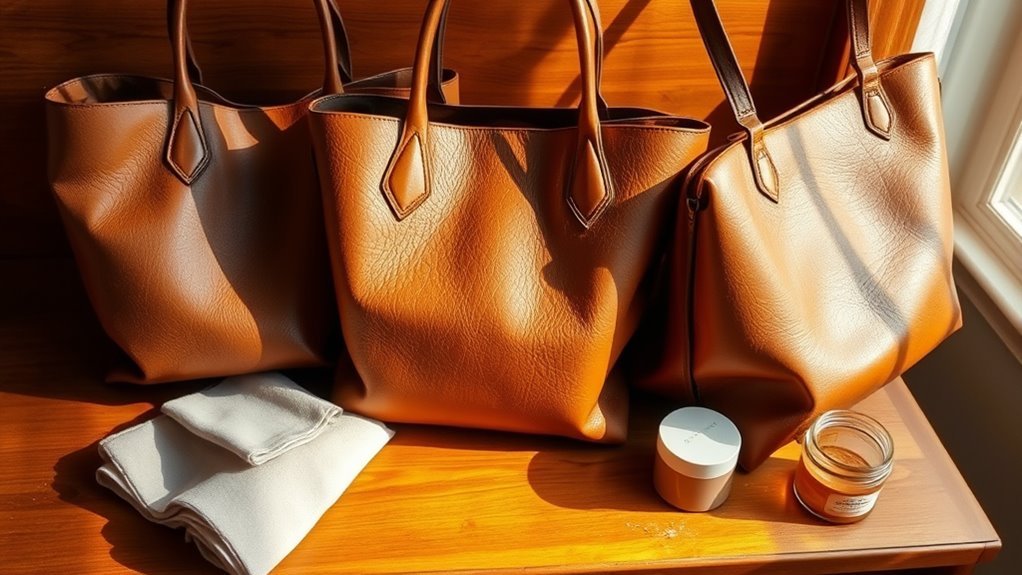
With regular care, high-quality leather handbags can last several decades. Full-grain leather may endure up to 30 years, while daily-use bags typically last 2-3 years. To maximize longevity, clean and condition your bag every three months, store it properly, and inspect for damage. Remember that quality craftsmanship and hardware play significant roles in durability. If you want to discover effective maintenance tips and repair signs, there’s more valuable information waiting for you.
How Long Can Your Leather Handbag Last?
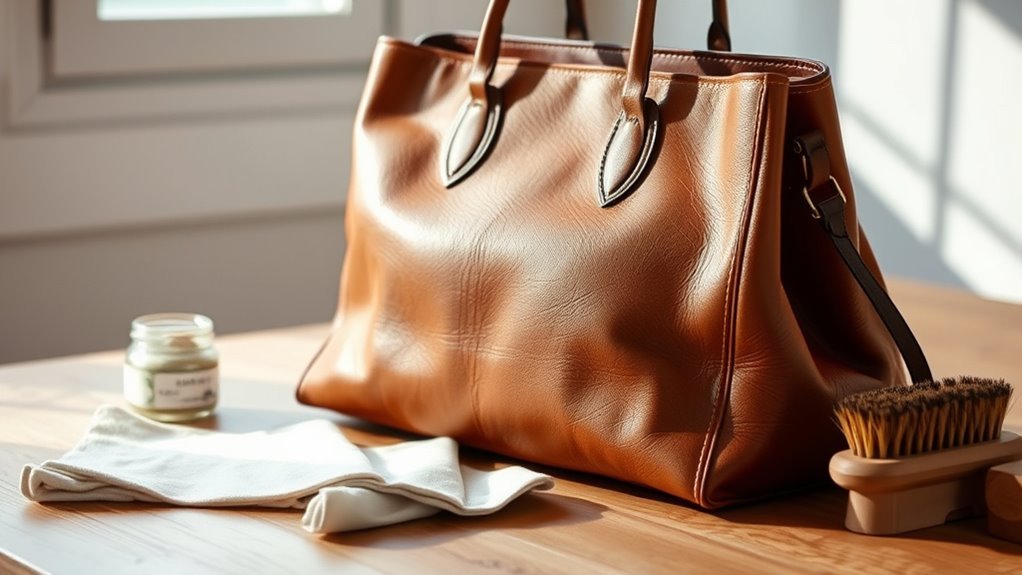
When you invest in a high-quality leather handbag, you’re not just buying an accessory; you’re acquiring a piece that can last for decades with the right care. Full-grain leather, known for its durability, can endure up to 30 years or more if maintained properly.
Regular conditioning every three months keeps the leather supple and prevents cracking, greatly extending the lifespan of your handbag.
While daily-use handbags typically last around 2-3 years, careful handling can prolong their life. Vintage handbag styles from reputable brands like Coach showcase craftsmanship that stands the test of time.
To protect your investment, regularly clean your bag and avoid harsh chemicals, which can lead to deterioration.
With attention to leather types and styles, your handbag can’t only be a fashion statement but also a lasting companion, offering both utility and elegance for years to come.
What Type of Leather Bags Last the Longest?
While many leather bags exist on the market, the type of leather used can greatly impact longevity. Full grain leather bags stand out as the most durable option, offering full grain benefits that include exceptional resistance to wear and moisture. With proper care, these bags can last a lifetime, making them a worthwhile investment.
Vegetable-tanned leather is another excellent choice, known for its durability and natural aging process, which enhances its character over time. This type often extends the lifespan of your bag when maintained correctly.
In contrast, top-grain leather, though still robust, has a slightly shorter life due to the sanding process that removes some natural grain.
Bonded leather, made from scraps, lacks the strength of higher-quality options and typically lasts only 3-5 years.
Prioritizing quality craftsmanship further guarantees your bag’s longevity, combining style with resilience.
How Hardware Choices Impact Leather Bag Durability
When choosing a leather handbag, the quality of its hardware plays a critical role in durability.
Opting for solid metal components and high-quality zippers can greatly enhance the bag’s lifespan and performance.
Understanding the impact of these choices helps you make informed decisions that guarantee your handbag withstands daily use.
Quality of Metal Hardware
The quality of metal hardware in leather handbags plays an essential role in determining their overall durability and longevity. Solid brass hardware is the most robust choice, ensuring your bag withstands daily wear.
High-quality zippers, particularly those made by Japanese YKK, are engineered for long-lasting performance, reducing the risk of premature failure. On the other hand, opting for cheaper hardware can compromise metal quality and lead to a shorter lifespan, increasing the need for repairs.
Difficult-to-replace zippers and clasps can impede hardware maintenance, making it crucial to invest in durable components from the start. Properly constructed hardware, with tight stitching and strong thread, not only enhances durability but also preserves the bag’s aesthetic appeal over time.
Impact of Zipper Types
Choosing the right zipper type can greatly impact your leather bag’s longevity and functionality. High-quality zippers, like the Japanese YKK, are engineered for durability, ensuring reliable performance and minimizing the risk of failure.
When you opt for solid brass hardware, you’re investing in a longer-lasting piece that withstands daily wear. Regular zipper maintenance, including lubrication and inspections, is vital; it prevents wear and tear that could compromise your bag.
Remember, difficult-to-replace zippers can shorten your bag’s lifespan, making hardware quality essential for overall durability. By prioritizing premium materials, you enhance your bag’s resistance to stress and environmental factors, ultimately prolonging its life and maintaining its beauty.
Choose wisely for both style and longevity.
Replacement Difficulties and Solutions
While selecting quality hardware might seem like a minor detail, it greatly influences both the lifespan and functionality of your leather handbag. Durable materials, like solid brass and Japanese YKK zippers, considerably enhance longevity compared to cheaper alternatives.
When hardware is difficult to replace, such as zippers and clasps, you risk a shorter bag lifespan, as repairs can be challenging and costly. Opting for high-quality metal hardware not only boosts durability but also reduces the need for replacements.
To maintain your bag’s integrity, regularly check hardware for wear and tear. Brands like Von Baer prioritize durable hardware and offer better long-term value, ensuring your handbag withstands daily use without compromising performance.
Top Tips for Extending Your Leather Bag’s Life
To guarantee your leather bag withstands the test of time, it’s crucial to adopt a proactive care routine. Start by cleaning your bag every three months with a leather-specific cleaner to remove dust and prevent color fading.
Conditioning is equally important—apply a quality leather conditioner every three months to keep the material hydrated and avoid cracking, especially in dry climates.
When storing your bag, keep it in a cool, dry place, stuffed with tissue paper to maintain its shape. Avoid hanging it by the straps to prevent stretching.
Use high-quality protective sprays that guard against stains and moisture, aiding in stain removal and extending your bag’s lifespan.
Lastly, regularly inspect high-wear areas, such as strap attachments and closures. Address any signs of wear promptly to prevent further damage.
How to Identify When Your Leather Handbag Needs Repair?
Recognizing when your leather handbag needs repair is essential for maintaining its beauty and functionality. Start with a thorough stitching inspection; look for frayed or broken seams, especially at stress points. Next, check the leather for signs of cracking or dryness, which indicate a lack of leather conditioning.
Inspect the metal hardware, like zippers and clasps, for rust or functional issues. Notice any structural changes, such as sagging or loss of shape, which may signal the need for reinforcement. Finally, be aware of unusual odors or discoloration; these can indicate moisture damage or mold, requiring immediate professional intervention.
| Signs of Damage | Recommended Action |
|---|---|
| Frayed or broken stitching | Repair or re-stitch |
| Cracking or dryness | Condition the leather |
| Rusty hardware | Replace or clean hardware |
How to Care for the Patina of Your Leather Handbag
Caring for the patina of your leather handbag is essential to preserving its beauty and longevity. To achieve effective patina maintenance, condition your bag every three months with a quality leather moisturizer. This prevents drying and cracking while enhancing its unique character.
Embrace the natural aging process; each mark and hue tells your bag’s story.
Regularly clean your handbag using leather-specific cleaning techniques to eliminate dirt and oils that can dull its sheen. Avoid exposing your handbag to direct sunlight and extreme temperatures, as these can accelerate fading and harm the patina.
When storing, place your handbag in a breathable cloth bag, stuffed with tissue paper to maintain its shape. Keep it away from moisture to uphold the integrity of the patina over time.
Frequently Asked Questions
How Long Should a Leather Handbag Last?
A leather handbag should last 5 to 30 years, depending on quality and usage. Follow leather maintenance tips, like regular conditioning and proper storage, to enhance handbag longevity factors and enjoy your investment for years.
Which Brand of Leather Bags Is the Most Durable?
If you want a leather bag that lasts a lifetime, brands like Coach and Saddleback Leather shine in durability. Their premium materials and craftsmanship set them apart in brand durability comparison, ensuring your investment truly endures.
Can Leather Last 100 Years?
Yes, leather can last 100 years with proper care. To guarantee leather longevity, follow maintenance tips like conditioning every three months and storing it properly. This care helps preserve its beauty and functionality for decades.
Does Vaseline Preserve Leather?
Using Vaseline doesn’t effectively preserve leather; it can create a sticky residue. For lasting quality, you should focus on proper leather conditioning and protective treatments specifically designed to maintain your leather’s suppleness and beauty.
Conclusion
At its core, with regular care, your leather handbag can gracefully age, becoming a timeless companion that tells your story. While it may not last forever, you can certainly enjoy many years of service from it. Think of maintenance as a loving embrace—nurturing your bag guarantees it withstands the test of time. By being attentive to its needs, you’ll not only preserve its beauty but also enhance its character, creating a cherished heirloom that evolves with you.

