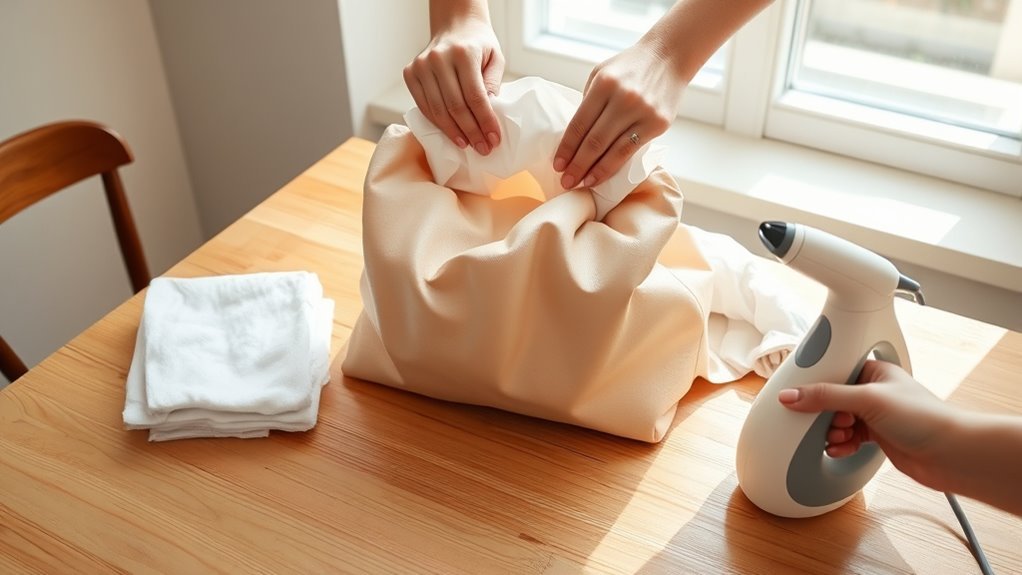
To reshape a crushed handbag without risky heat, empty it, let it settle at room temperature, stuff it lightly with acid-free tissue or soft cloth to restore its outline, smooth creases gently by hand, and leave it supported in a cool, dry place for several days. Do not use a hair dryer, steamer or radiator, which can shrink, crack or discolor leather.
What Causes a Handbag to Crush?
- Poor storage: stacking bags, squeezing them into small spaces or leaving them folded flat lets the structure collapse.
- Overloading or underfilling: a heavy bag stretches and sags, and an empty soft bag slumps.
- Humidity and temperature swings: damp air weakens leather and some fabrics, and heat dries them.
- Soft or thin construction: bags with little structure lose shape more easily.
- Repeated folding: creases form along the fold lines and stay.
Understanding the cause helps you to prevent it. For good storage habits, see how to store handbags.
Get the Handbag Ready
- Empty the bag completely, including all pockets, and shake out the dust.
- Wipe the outside with a soft, slightly damp cloth, using light strokes, and let it dry at room temperature.
- Check the zippers, corners and pockets for damage that might be worsened by shaping.
- Leave the bag open in a ventilated place until no dampness remains.
Do not rush this stage. Trapped moisture in leather can cause marks and mildew, and a damp bag is more likely to take a permanent shape.
Fill the Bag to Restore Its Shape
Use soft, light filling, such as acid-free tissue paper, clean cotton cloth or a small pillow wrapped in a clean cloth. Avoid newspaper, because the ink can transfer to the lining and the acid damages materials over time. Add the filling in small amounts, working into the corners first, and check the outline as you go. The aim is to restore the shape and not to stretch the bag, so stop when the walls are smooth and not tight. Then place the bag upright in a cool, dry place.
Smooth Out Creases by Hand
For finished leather that feels dry, a thin layer of leather conditioner can make it more flexible before you work on the creases. Test the conditioner on a hidden spot first, and never use it on suede or nubuck. See how to condition a leather bag without leaving it greasy.
- Press the creased area lightly with your fingertips, from the edges toward the center.
- Put a soft, clean cloth between your hand and the leather, and massage in small circles with light pressure.
- Support the inside of the bag while you press, so that you do not push the walls too far.
- Stop, let the bag rest, and look at the result before you repeat.
Deep creases that have set over a long time may soften but not disappear completely.
Use Body Warmth Carefully
Your hands warm leather gently, which makes it more pliable. Hold the bag against your body or in your hands for a few minutes at a time, and shape it with light, measured pressure. This is safe, because the warmth is mild and you can feel how the leather responds. Do not leave it in a warm car or beside a heater for the same effect, because those temperatures are higher and uncontrolled.
Let the Handbag Dry and Settle in Shape
After shaping, keep the bag lightly filled with acid-free tissue and place it upright, away from sun and heat. Check it every few hours on the first day, and adjust the filling if the outline has moved. Leave it for at least several days, so that the leather can settle. When it feels firm and the shape holds, remove the filling gently and check the result. Keep the tissue in the bag whenever you store it.
Mistakes That Damage Leather
- Using a hair dryer, steamer, iron or radiator, which can shrink the leather, dry it out or leave scorch marks.
- Overstuffing, which stretches the walls and the seams.
- Over-conditioning, which can make leather soft and floppy and mark it. A thin layer is enough.
- Using strong cleaners or household products. Use a cleaner made for leather, and test it first.
- Storing the bag in plastic, which traps moisture.
Bases and Faux Leather
If the bottom of a bag has gone soft, a base shaper can help. Cut a piece of thin cardboard, plastic canvas or a purpose-made base insert to fit, wrap it in fabric and place it in the bottom of the bag. For faux leather, avoid heat, because it can melt or crack, and remember that coated surfaces do not respond to conditioner in the same way. For repairs on faux leather, see how to repair torn faux leather. For a canvas tote that has changed shape, how to reshape a shrunken canvas tote is the right guide.
When Conditioner or Repair Is Needed
If the bag looks crushed and the leather is dry or cracked, shaping alone will not fix it. Condition the leather lightly, and look for deeper damage, such as splits, torn seams or broken stiffeners. See when to retire a damaged handbag for the signs that a bag is past repair. Conditioning every three to six months keeps leather flexible, but too much can soften it.
Frequently Asked Questions
How Do I Reshape Leather?
Stuff the bag with acid-free tissue, press creases gently by hand, condition dry leather lightly, and leave the bag supported in a cool, dry place for several days.
How Do I Make the Bottom of a Bag Stiff?
Add a base insert made of thin plastic, cardboard or a purpose-made base shaper, wrapped in fabric.
What Softens Leather?
A leather conditioner made for the finish of the bag. Avoid household oils and fats, which can stain and go rancid.
Can I Reshape Faux Leather?
You can stuff it and smooth it gently, but avoid heat. Faux leather does not soften like real leather.
Conclusion
A crushed handbag can often be coaxed back into shape with soft filling, gentle hand work and patience. Keep away from heat, support the bag while it dries and store it well to prevent the problem from returning.