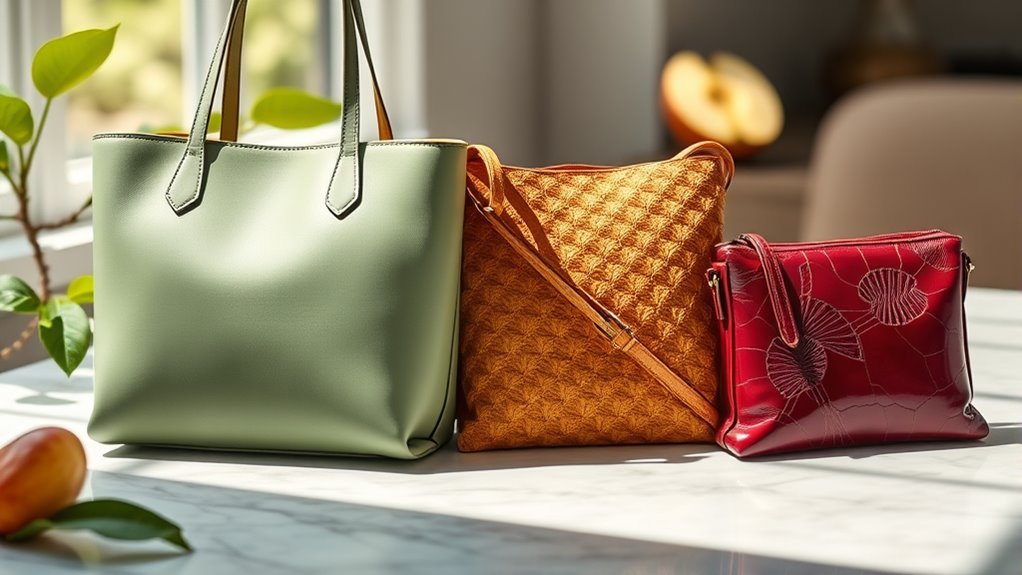
Vegan leather is a term for materials that imitate the look of leather without using animal hides. Most handbags sold as vegan leather are made from polyurethane (PU) or polyvinyl chloride (PVC) on a fabric backing, and a smaller number use plant-based or recycled materials. It can look good and cost less than leather, but its durability varies widely, and it is not automatically better for the environment.
What Is Vegan Leather?
The phrase vegan leather means that no animal products are used. It is not a technical standard, and it covers a wide range of materials, from basic plastic coatings to newer materials made partly from plants. You may also see it called faux leather, synthetic leather or leatherette. In everyday use, the terms are often mixed up, so check the product description for the actual material.
Common Materials Used in Vegan Leather Bags
Polyurethane (PU)
PU is the most common material. A layer of polyurethane is coated onto a fabric backing, and it is embossed to look like a grain. It is soft and flexible, and quality varies a lot. Thin, cheap PU can peel or crack in time, while thicker, better-made PU can last well.
Polyvinyl Chloride (PVC)
PVC is also common. It is generally stiffer and cheaper than PU, and it is often used for structured bags, glossy finishes and clear vinyl. It is durable and wipeable, but less breathable and less soft. See how to clean a clear vinyl bag.
Recycled Materials
Some bags use recycled plastics or fabrics in the backing or in the surface. These can lower the use of new raw materials, but the claim depends on how much recycled content is actually used, so look for specific information from the maker.
Plant-Based Materials
Newer materials include leather alternatives made from cork, from fruit and leaf waste and from other plant fibers. They are often combined with a polymer binder or a backing, so they are not entirely plant-based. Their performance varies, and they are still less common than PU.
Is Vegan Leather Better for the Environment?
It depends. Avoiding animal hides can matter to many people for ethical reasons. On the environmental side, the picture is mixed. Plastic-based vegan leather is made from fossil fuels, and it may not break down easily at the end of its life. Real leather has its own impacts, such as land use and tanning chemicals. A bag that lasts for many years usually has a lower impact than one that is replaced often, whatever the material. When you compare options, look for information about durability, recycled content, repairability and the maker practices, and be careful with vague claims such as eco-friendly.
Pros and Cons of Vegan Leather Bags
Advantages
- No animal hides, which matters to some buyers.
- Often lower in price than real leather.
- Usually easy to wipe clean.
- Available in many colors and finishes.
- Generally lighter in weight, in many cases.
Drawbacks
- Cheap versions can crack and peel, particularly at flex points and edges.
- It does not develop a patina in the way real leather does.
- It is less breathable, and it can feel warmer against skin.
- Repairs are harder than for real leather. See how to repair a torn faux leather bag.
- Most types are plastic-based, with end-of-life concerns.
How to Care for a Vegan Leather Bag
- Wipe the surface with a soft, slightly damp cloth, to remove dust and dirt. See how to clean a faux leather purse.
- For marks, use a mild soap solution on a cloth, test on a hidden spot first, and then wipe with a clean damp cloth and dry it.
- Keep the bag out of strong sun and away from heat, which can dry out and crack the coating.
- Avoid harsh solvents, such as nail polish remover, since they can damage the surface.
- Do not use leather conditioner or oils, which are made for real leather and can leave a sticky film on a plastic surface.
- Store the bag in a dust bag, lightly stuffed with acid-free tissue, away from other colored items, since dye can transfer.
If the surface starts to peel, the layer is failing, and it is not usually possible to restore it fully. For a related problem, see why vinyl turns yellow.
How to Tell Vegan Leather From Real Leather
- Real leather has an irregular grain, while a repeating, uniform pattern suggests an embossed synthetic.
- Look at the edges: real leather has a fibrous, rough edge, and synthetic leather shows a fabric backing.
- Real leather usually smells of leather, while synthetic often smells of plastic.
- Check the label or product description.
For more methods, see how to identify real leather on a bag.
Choosing a Good Vegan Leather Bag
- Choose a thicker material with a well-bonded surface.
- Check the stitching, the edges and the hardware, since these affect the life of the bag as much as the material.
- Look for clear information about the material and how it was made.
- Think about how you will use the bag, since a very thin material is a poor choice for a daily bag.
- Read reviews on how the bag has worn after a year or more.
To compare it with other coated materials, see coated canvas vs leather.
Frequently Asked Questions
What Are the Downsides of Vegan Leather?
Most types are plastic-based, they can peel or crack with age and they do not develop a patina. Quality varies widely.
Are Vegan Leather Bags Good Quality?
They can be, if the material is thick and the construction is sound. Cheap versions tend to wear quickly.
Is Vegan Leather the Same as Fake Leather?
In practice, mostly yes. Vegan leather is a broad term for materials that imitate leather without using animal products.
Conclusion
Vegan leather covers a wide range of materials, from basic plastic coatings to newer plant-based blends. It can be a good choice if you want to avoid animal products and like a wipe-clean surface, but quality and environmental claims vary, so look closely at the material, the construction and the care it needs.