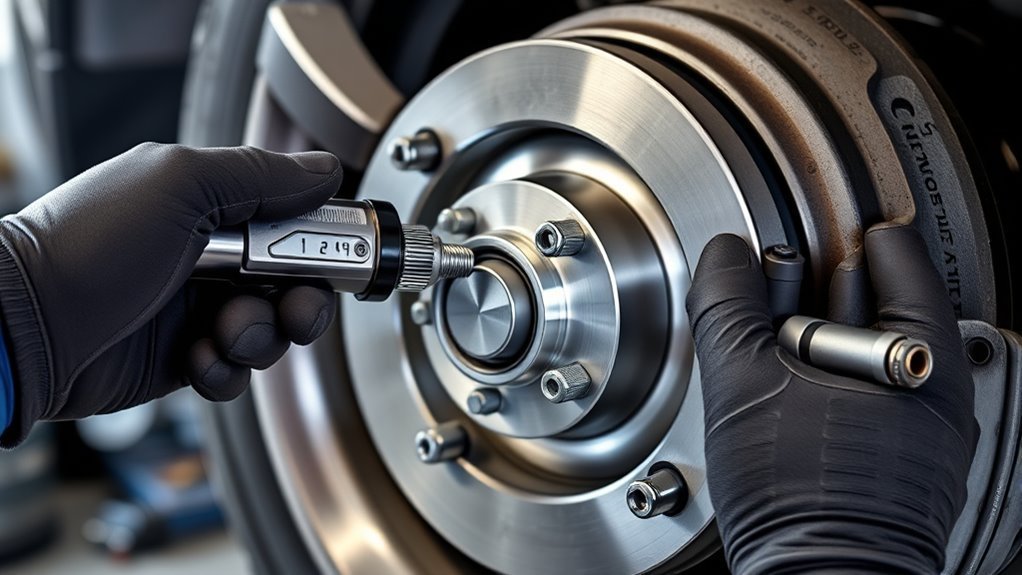
The correct 4Runner lug nut torque depends on your generation and wheel type. On 2015–2024 (5th-gen) models, Toyota’s owner’s manuals list 76 ft·lbf (103 N·m) for aluminum alloy wheels and 83 ft·lbf (112 N·m) for steel wheels. The 2025+ 6th-gen 4Runner uses larger M14 studs and a different spec, so confirm it in your owner’s manual before you tighten anything.
This guide covers the torque numbers, a step-by-step tightening method, when to re-check, and what goes wrong when lugs are too loose or too tight. If you need the socket size, thread pitch or seat type instead, see our 4Runner lug nut size and thread pitch guide.
4Runner Lug Nut Torque Specs by Generation
| Model years | Wheel type | Wheel nut torque | Stud thread |
|---|---|---|---|
| 2015–2024 (5th gen) | Aluminum alloy | 76 ft·lbf (103 N·m) | M12 x 1.5 |
| 2015–2024 (5th gen) | Steel | 83 ft·lbf (112 N·m) | M12 x 1.5 |
| 2010–2014 (5th gen) | All wheels | One value in the low 80s ft·lbf; check the manual for your year | M12 x 1.5 |
| 2025+ (6th gen, TNGA-F) | Factory alloy | Check your owner’s manual (owners quoting the 2025 manual report 97 ft·lbf / 131 N·m) | M14 x 1.5 |
The 5th-gen figures come from the wheel and tire section of Toyota’s owner’s manuals. You can download the manual for your exact model year free from Toyota’s owner’s manual library.
For the 6th gen, Toyota does not list wheel nut torque on its public spec pages. Treat the forum-reported figure as a cross-check only, and use the number printed in your own manual. Steel wheels on the 6th gen (including some spares) may carry a different value.
Why You See Different Torque Numbers Online
Search results for 4Runner lug nut torque often show 80, 85 or even 90 ft·lbs. Here is why:
- Older generations. Earlier 4Runners and many generic charts list one higher value for all wheels.
- Mixed wheel types. The alloy and steel specs differ on 2015–2024 models, and some lists only show the steel number.
- Enthusiast tables. Some popular torque lists use 85 ft·lbs, which does not match the 5th-gen owner’s manual.
- Aftermarket wheels. Wheel makers set their own spec for their wheel and lug nut design.
Factory TRD Off-Road and TRD Pro wheels on the 5th gen are Toyota alloy wheels, so use the alloy figure in your manual. For aftermarket wheels, follow the wheel manufacturer’s torque spec.
How to Torque 4Runner Lug Nuts: Step by Step
You need a 1/2-inch drive click-type torque wrench, the correct socket (21 mm for 5th-gen factory nuts) and a jack and stands or a safe lift.
- Clean the threads. Wipe dirt and rust off the studs and nuts. Toyota’s manuals warn against putting oil or grease on wheel studs or nuts, because lubricant changes how much clamp force a given torque produces.
- Seat the wheel. Make sure the wheel sits flat against the hub with no debris on the mating surfaces.
- Thread every nut by hand. Spin each one on several turns with your fingers to rule out cross-threading.
- Snug in a star pattern. With the wheel still off the ground or just touching, snug each nut lightly, working across the hub rather than around it.
- Lower the vehicle. Let the tire carry some weight so the wheel cannot spin.
- Torque in two passes. Go around in the star pattern at roughly half the final value, then again at the full 4Runner lug nut torque spec. Stop at the first click.
- Mark and record. A paint-pen line across each nut and wheel makes later checks fast.
| Do | Avoid |
|---|---|
| Use a calibrated torque wrench for the final pass | Final-tightening with an impact gun |
| Use a thin-wall socket on alloy wheels | Socket extensions that wobble or flex |
| Follow a star (crisscross) sequence | Tightening nuts in a circle |
| Store the wrench at its lowest setting | Using the torque wrench to loosen nuts |
When to Re-Check 4Runner Lug Nut Torque
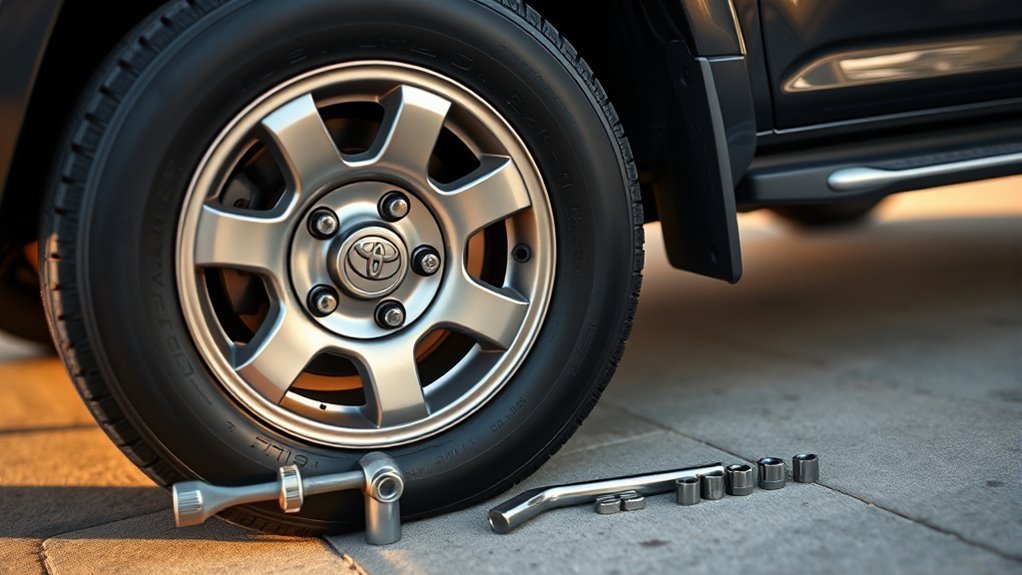
Wheels can settle slightly after they are mounted. Many tire shops and wheel makers recommend a re-check after the first 50–100 miles.
Re-check torque in these situations:
- After any tire rotation, tire swap or new wheel install
- After a shop used an impact gun on your wheels
- After mounting a spare or switching between seasonal wheel sets
- After hard off-road use, if you notice any new vibration or clunk
If a nut turns before the wrench clicks, it was under-torqued. If you suspect a shop over-tightened the nuts, loosen each one in turn and re-torque it to spec.
Signs of Under- or Over-Torqued Lug Nuts
Getting 4Runner lug nut torque wrong in either direction causes symptoms you can see, hear or feel.
| Symptom | Likely cause | What to do |
|---|---|---|
| Clicking or clunking from a wheel at low speed | Loose nuts letting the wheel shift | Stop safely and check torque right away |
| Vibration through the steering wheel | Uneven or loose clamping, or a wheel not seated flat | Re-torque in a star pattern; have balance checked if it persists |
| Pulsing brake pedal after a tire job | Uneven clamp load distorting the rotor or hub face | Re-torque evenly; inspect rotors if it continues |
| Nut very hard to remove, or galled threads | Over-torque, often from an impact gun | Inspect and replace damaged nuts or studs |
| Stud stretched, cracked or snapped | Severe over-torque | Replace the stud; do not drive on it |
| Elongated or chewed lug holes on the wheel | Driving with loose nuts | Replace the wheel; have a shop inspect it |
Vibration can also come from worn suspension parts. If torque is correct and the shake remains, read our guide to 4Runner lower ball joint failure signs. Uneven wheel clamping that affects the brakes can also hurt stopping performance, which we cover in 4Runner braking distance factors.
Aftermarket and Spare Wheels: Which Torque Applies?
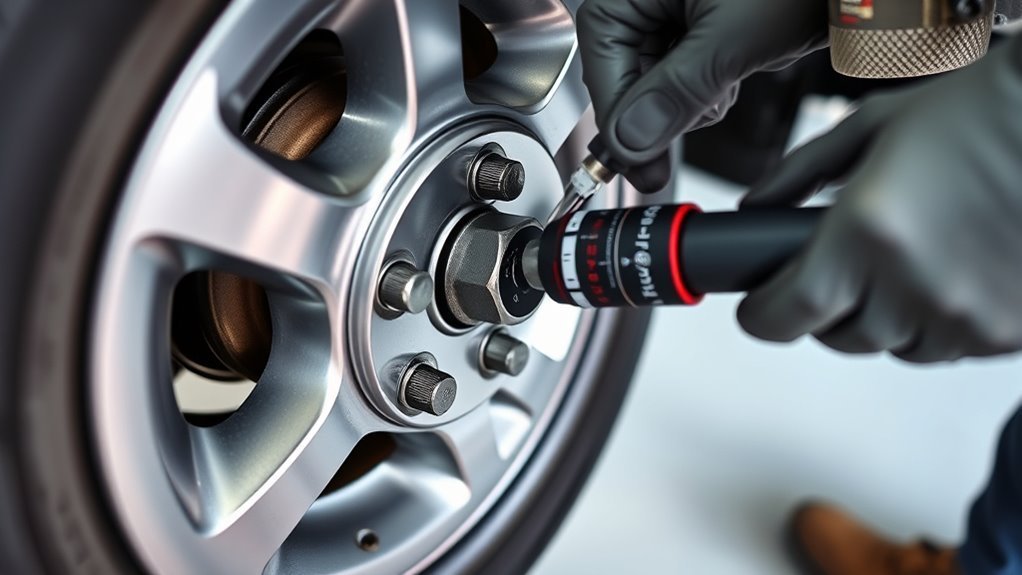
The factory 4Runner lug nut torque only applies to factory wheels and nuts.
- Factory alloy wheels (any trim): use the alloy value in your owner’s manual.
- Factory steel wheels or steel spare: use the steel value in your owner’s manual.
- Aftermarket wheels: use the torque the wheel maker specifies, with the lug nut seat type it requires.
- Wheel spacers: follow the spacer maker’s torque for both the spacer-to-hub and wheel-to-spacer nuts.
Many aftermarket wheels need conical (60°) seat nuts rather than Toyota’s factory flat-seat nuts. Using the wrong seat means no torque value will clamp the wheel properly. Our 4Runner lug nut size guide explains how to match nuts to wheels.
Safety Tips and When to See a Pro
- Never work under a 4Runner supported only by the jack. Use rated jack stands on firm, level ground.
- Do not drive on a wheel with a missing, cracked or stripped stud.
- Have a tire shop or Toyota dealer help if a stud spins in the hub, a nut will not thread on by hand, or the wheel will not sit flat.
- Get your torque wrench checked if it has been dropped, so your 4Runner lug nut torque readings stay accurate.
FAQ
What is the lug nut torque for a 2019 Toyota 4Runner?
Toyota’s 2015–2024 owner’s manuals list 76 ft·lbf (103 N·m) for aluminum alloy wheels and 83 ft·lbf (112 N·m) for steel wheels. Always confirm in the manual for your exact model year.
What is the lug nut torque for a 2025 4Runner?
The 6th-gen 4Runner uses M14 x 1.5 studs and a higher spec than the 5th gen. Owners quoting the 2025 manual report 97 ft·lbf (131 N·m) for factory alloy wheels, but check your owner’s manual before relying on it.
Do TRD Pro wheels need a different torque?
Factory TRD Pro and TRD Off-Road wheels are Toyota alloy wheels, so use the alloy figure in your owner’s manual. Aftermarket wheels should be torqued to the wheel maker’s spec.
Can I use an impact gun on 4Runner lug nuts?
An impact gun is fine for removing nuts or spinning them on lightly, but it can easily exceed spec. Do the final tightening with a calibrated torque wrench in a star pattern.
Should I lubricate 4Runner wheel studs?
No. Toyota’s owner’s manuals warn against putting oil or grease on wheel studs or nuts, because lubricant changes the clamp force produced at a given torque. Clean, dry threads give the most consistent results.
How often should I check 4Runner lug nut torque?
Re-check after the first 50–100 miles following any wheel or tire work, and whenever you notice new vibration or clicking from a wheel.

