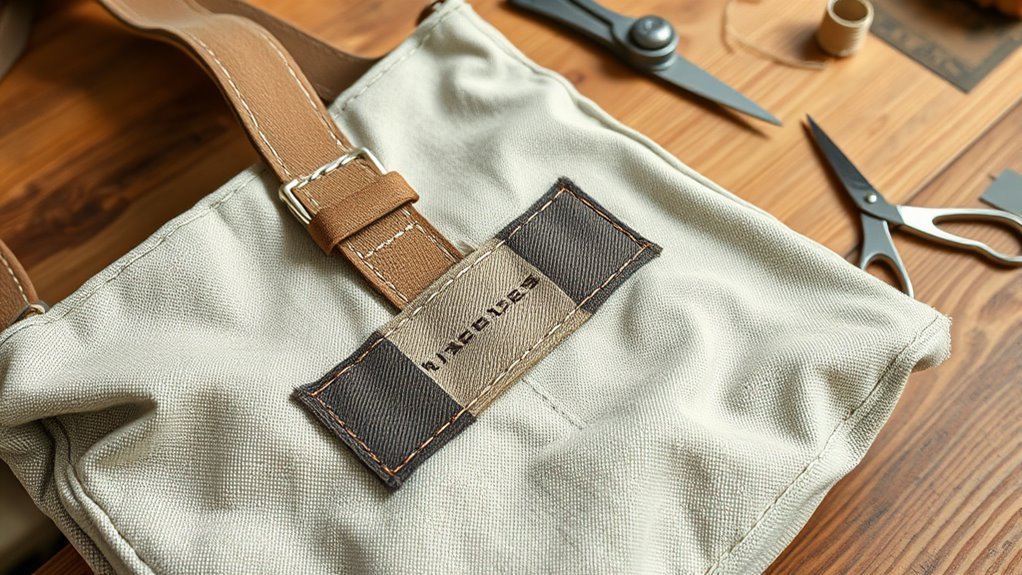
To fix a torn bag strap attachment so the seam stays strong, remove the damaged stitching, clean the area, reinforce it with a patch of strong material on the inside, and sew the strap back with heavy thread in a box-and-cross pattern. Glue can hold parts in place while you stitch, but it should not be the only thing holding a strap that carries weight.
Understanding the Causes of Strap Damage
A strap attachment is where the whole load of the bag is concentrated, so it is the most common point of failure. Straps tear away because of overloading, repeated flexing, weak or thin stitching, worn fabric around the seam, moisture that weakens thread and material, and age. Knowing the cause helps you to fix the real problem. If the fabric around the tear is weak, a new stitch in the same place will fail again, so reinforcement matters as much as the stitching.
Tools for a Lasting Repair
- A heavy-duty needle, such as a glover or leather needle for leather, and a strong needle for canvas
- Heavy, waxed or bonded thread, which is stronger than ordinary sewing thread
- An awl, to make neat holes in leather or thick fabric
- A seam ripper and small scissors
- A thimble or a sewing palm, for pushing the needle through thick layers
- Patch material, such as leather, heavy canvas or webbing
- Flexible fabric or leather adhesive, to position the patch
Clean the Area and Assess the Damage
Wipe the area with a slightly damp cloth, and let it dry. Look at how far the tear extends, whether the stitching is loose or broken, and how the surrounding fabric or leather looks. Check the hardware, such as D-rings or rivets, for bending or cracks, and replace any that are damaged. Press on the material near the tear. If it feels thin, brittle or frayed, it needs reinforcement before the strap goes back on. Take a photo, so that you can reproduce the original layout of the stitching.
Choose the Best Stitching for the Repair
Thread
Use heavy thread that matches or exceeds the original in strength. Waxed thread grips well and slips less as you sew, and bonded nylon or polyester thread resists wear. Ordinary sewing thread is too weak for a load-bearing strap.
Stitch Pattern
For leather, a saddle stitch is the strongest hand stitch, because it uses two needles and the stitching stays locked even if one thread breaks. For fabric, a box with a cross, stitched twice, spreads the load across the whole area. On a machine, a heavy needle and a short stitch of about 2.5 to 3 mm gives good strength. See how stitch length affects bag seam strength.
Even Tension
Pull each stitch snug, but not so tight that it puckers the material or cuts it. Backstitch at the start and the end to lock the thread.
Reinforce the Repair With a Patch
A patch spreads the load over a larger area, and it is the step that stops the tear from happening again.
- Cut a patch of leather, heavy canvas or webbing a little larger than the damaged area. Round the corners.
- Place it on the inside of the bag, behind the attachment point, with a thin layer of flexible adhesive, to hold it while you sew.
- Sew around the edges of the patch, then stitch a box with a cross where the strap attaches, so that the stitches pass through the bag, the patch and the strap.
- Trim the threads, and check that the patch lies flat.
Use Adhesive Only to Assist
A flexible adhesive made for leather or fabric helps to position a patch, and it can add some strength. It cannot take the place of stitching or hardware in a joint that carries weight. Clean both surfaces, spread a thin layer on each, press them together and let it cure fully, as the label says, before you add any load. Then sew through the glued area for a lasting repair.
Sew the Strap Back to the Bag
- Mark the original position of the strap, and make new holes slightly away from the old, torn ones, in the reinforced area.
- Place the strap end on the patch, and stitch with a backstitch pattern, using the heavy thread.
- Go through each hole twice for extra strength.
- If the original attachment used a rivet or a D-ring, reuse the hardware, or replace it. See how to fix loose handbag rivets.
If the bag has a clip and the clip is the problem, see how to fix a slipping bag strap buckle and how to replace a purse swivel clip.
Test the Repair
Before you carry the bag, load it with a typical weight, and hang it by the strap. Look at how the weight sits on the attachment, and tug gently on the strap. Check the stitching for movement, and the hardware for any shifting. Increase the load a little at a time, up to your normal use. If anything gives way, stop, find the weak point and redo it. After a few days of use, check the repair again.
Maintain the Strap After the Repair
- Inspect the attachment points every few weeks for loosening or fraying.
- Do not overload the bag, and avoid carrying heavy items on a thin strap.
- Condition leather straps now and then, with a conditioner suited to the leather.
- Replace the strap if the material itself has started to fail.
- Choose a strap that is made for the weight you will carry.
If you carry a baby and a bag, a strap failure can be dangerous, so check straps carefully. See how to carry a bag with a baby carrier for advice.
Frequently Asked Questions
How Do I Fix a Broken Bag Strap Clip?
Check whether the spring or the gate is broken. Replace the clip with one of the same size and with a suitable load rating, and attach it to the strap securely.
How Do I Repair a Torn Leather Bag Strap?
Reinforce the area with a patch, and re-stitch with waxed thread, using a saddle stitch. Condition the leather afterward.
How Do I Attach a Strap Without Sewing?
Rivets or screw posts are the most reliable non-sewn methods, and they should be set through a reinforced area.
How Do I Reinforce a Bag Strap?
Add a backing patch, use heavy thread and stitch a box with a cross at each attachment point.
Conclusion
A strap attachment lasts when the area is reinforced and stitched with strong thread. Remove the damaged stitching, add a patch, sew a box with a cross, test with weight and check it regularly.