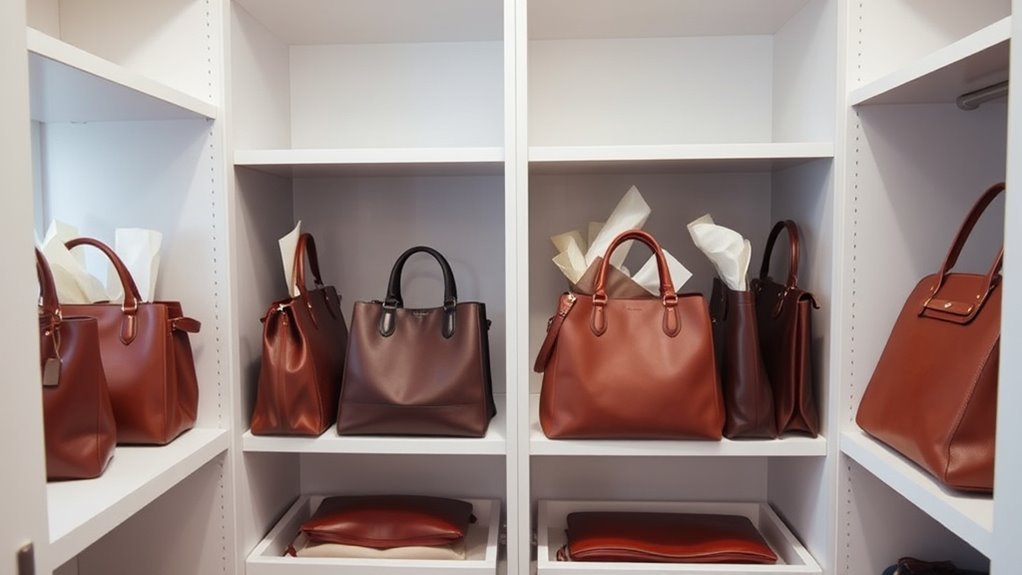
To store handbags and protect their shape and finish, clean and dry them first, stuff them lightly with acid-free tissue, keep them in breathable dust bags, and store them upright in a cool, dry place away from sun. Avoid sealed plastic, hanging heavy bags by their straps and stacking bags on each other.
Why Proper Storage Matters
Handbags spend most of their lives in storage, so the way that you keep them has a large effect on how long they last. Bad storage can cause creases, collapsed shapes, stretched straps, mildew, fading and sticky or cracked finishes. A few simple habits prevent most of this. If you have a crushed bag, see how to reshape a crushed handbag without risky heat.
Clean the Bag Before Storing It
- Empty the bag completely, including all pockets, and shake out crumbs and dust.
- Wipe the exterior with a soft, dry cloth. For stains, use a method that suits the material, such as a barely damp cloth and a mild soap for coated canvas, a leather cleaner for leather, or a brush for suede.
- Wipe the lining, and let the bag air-dry completely in a cool, ventilated place.
- Condition leather if it is dry, as how to condition leather explains, but never use conditioner on suede or nubuck.
Dirt and body oils attract insects and mold in storage, and moisture left inside the bag causes mildew. For specific materials, see how to clean a suede purse and how to wash a nylon bag.
Keep the Shape Intact
- Stuff the bag lightly: use acid-free tissue paper, clean cotton cloth or a purpose-made bag pillow. Avoid newspaper, which can transfer ink and acid.
- Store the bag upright: this prevents flat spots and creases, in most cases. Soft slouchy bags can also be stored on their sides.
- Do not overstuff: too much filling stretches the walls and the seams.
- Close the zippers and fasten the clasps: this helps the bag hold its form.
- Do not stack bags: weight crushes the one underneath.
Protect Straps, Chains and Hardware
- Fold or tuck the straps inside the bag, or wrap them in tissue or cloth, so that they do not leave marks.
- Wrap metal chains and hardware in soft cloth, to avoid scratches and to limit tarnish. See why handbag hardware tarnishes.
- Do not hang a heavy bag by a thin strap, which stretches over time. Hang only light, sturdy bags, and by the handles.
- Keep the original dust bag, or use a breathable cotton pillowcase.
Ideal Storage Conditions
- Cool and dry: choose a room with stable temperatures. Attics, basements and garages tend to be too hot, cold or damp.
- Moderate humidity: aim for about 40 to 55 percent. Too much humidity encourages mildew, and too little dries out leather.
- Away from sunlight and heat: light fades color and dries the material, and heat damages glue and finishes.
- Good airflow: leave space around the bags, and avoid cramming them in.
- Breathable covers: a cotton dust bag is better than plastic.
Silica gel packets can help to absorb moisture in a closed cupboard, but keep them away from the leather and do not rely on them in a damp room.
Space-Saving Ideas
- Shelves with dividers keep bags upright and separate.
- Hooks or racks work for light bags that can hang from their handles.
- Open or ventilated boxes protect bags that are in long-term storage. Avoid airtight plastic containers for leather.
- A repurposed dresser or cabinet can hold bags in drawers, with tissue between them.
Organize Your Collection
Keep the bags that you use most at an easy height, and store the occasional and seasonal ones higher or further back. Group bags by material, since leather, suede and canvas have different needs. Use dividers or bookends to keep bags upright, and label the dust bags or take a photo of each, so that you can find the right bag without opening them all.
Regular Maintenance in Storage
- Check stored bags every few months for dust, moisture, pests, mold and changes in shape.
- Air them for a short while, and replace damp tissue.
- Rotate the bags that you use, so that none stays in the same position for too long.
- Wipe the exterior and lining before you put a bag back in use.
- Fix small problems early, such as loose stitching or a stiff zipper.
For a bag with leather trim and a fabric body, see how to care for bags with leather trim and fabric bodies. For canvas, see waxed versus unwaxed canvas bags.
Frequently Asked Questions
Is It OK to Store Leather Purses in Plastic Containers?
It is best not to. Sealed plastic traps moisture and can cause mildew and sticky finishes. Use cotton dust bags, and ventilated boxes if you need to stack.
How Do I Prevent Handbags From Peeling?
Peeling is usually the failure of a coating as it ages, and it is worsened by heat, humidity and sun. Store bags cool and dry, and keep them out of sealed plastic. See why waterproof bag coatings peel.
How Do I Display Handbags at Home?
Use shelves with dividers or hooks, out of direct sun, and rotate the bags on display, so that they do not stay in one place for years.
What Is the Best Handbag Organizer?
One that suits your space and keeps bags upright without squeezing them, such as dividers, shelves and cotton dust bags.
Conclusion
Handbags last longest when they are clean, lightly stuffed, covered with a breathable bag and stored upright in a cool, dry, dark place. Check them now and then, and treat small problems early.