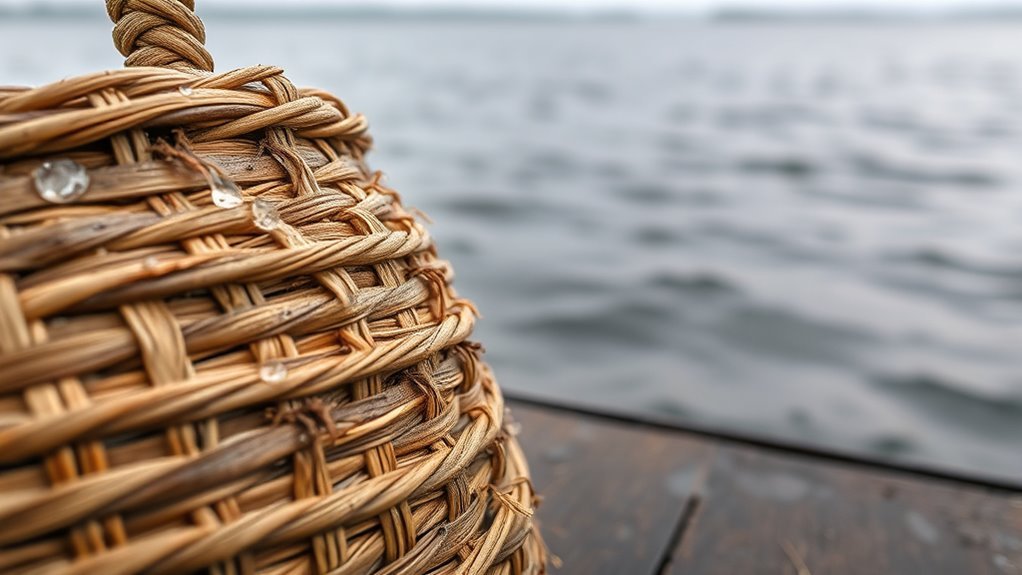
Straw bags can’t handle moisture well. When wet, fibers absorb water, swell, and distort the bag’s shape. This prolonged exposure weakens the fibers, increasing the risk of breakage and encouraging mildew growth, which results in odors and further deterioration. You should look for watermarks, fraying, and color changes after moisture contact. Proper care and storage can prevent these issues, ensuring your bag stays in good shape. There’s more to learn about keeping your straw bags protected and functional.
How Does Moisture Affect Straw Bags?
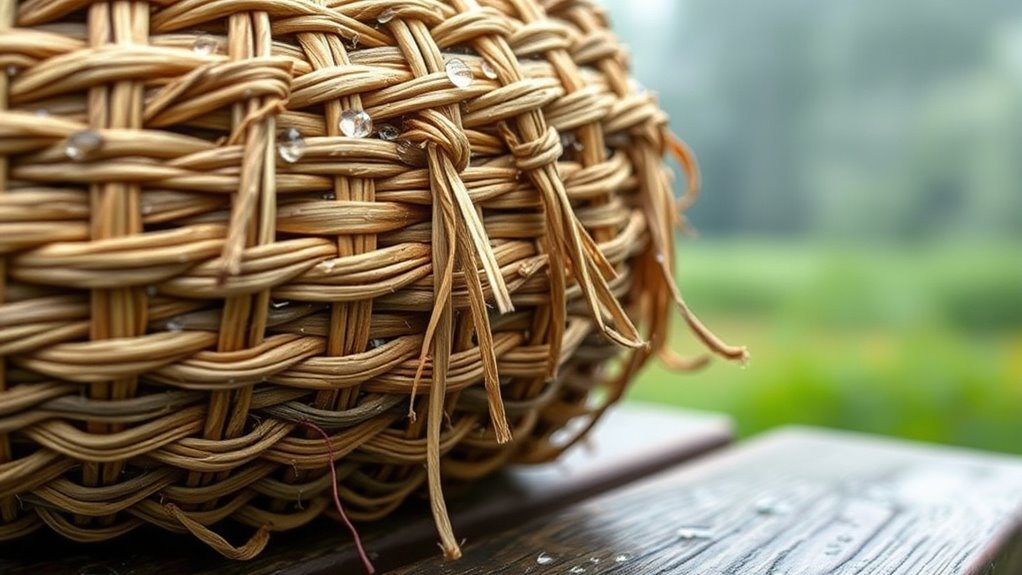
When straw bags encounter moisture, the effects can be significant, often compromising their structural integrity. The natural fibers in straw are prone to moisture absorption, which leads to fiber swelling. This swelling distorts the bag’s shape and appearance, making it less aesthetically pleasing and functional.
Over time, prolonged exposure can weaken the fibers, increasing the risk of breaking or snapping during use. Additionally, damp conditions may encourage mildew growth, causing further deterioration and leaving unpleasant odors.
When your bag gets wet, it’s essential to air-dry it at room temperature; heat sources can exacerbate damage and alter the fibers’ texture. To maintain your bag’s longevity and appearance, prioritize regular maintenance and prompt drying after moisture exposure.
Understanding these effects empowers you to take proactive measures, ensuring your straw bags remain both a stylish and durable choice in your collection.
What Damage Should You Look For After Exposure?
If your straw bag has been exposed to moisture, you should carefully inspect it for specific types of damage.
Start by checking for watermarks and tide lines, which can be tough to remove and may alter the bag’s overall aesthetic.
Check for watermarks and tide lines, as these can be difficult to eliminate and may change your bag’s appearance.
Look closely at the weave; prolonged exposure can weaken the natural fibers, leading to fraying or breaks.
Mildew can also become a concern if the bag isn’t dried properly, resulting in unpleasant odors and potential material degradation.
Pay attention to color changes; moisture can cause uneven fading, especially if dried in direct sunlight, making the bag appear patchy.
Finally, frequent wetness can compromise the structural integrity, causing your bag to lose its shape.
Regular maintenance and prompt watermark removal will help preserve your bag, while diligent mildew prevention will guarantee it remains a cherished accessory.
How to Dry and Reshape Your Wet Straw Bag?
When your straw bag gets wet, it’s essential to follow proper drying techniques to prevent damage.
Start by gently blotting excess moisture and letting it air dry at room temperature.
Then reshape it using soft materials to maintain its structure.
If the bag is misshapen, lightly mist it with water, reshape, and keep it stuffed while it dries to restore its form.
Proper Drying Techniques
To effectively dry and reshape your wet straw bag, start by gently blotting excess moisture with a soft cloth, ensuring you don’t soak the material, as excess water can weaken the fibers.
For ideal drying, store the bag upright on a shelf, avoiding hanging it to prevent stretching the handles and distorting its shape. Allow it to air dry completely in a shaded area; direct sunlight can lead to fading and uneven discoloration, highlighting the moisture effects on the weave.
Once dry, use a soft brush to restore the weave’s texture and remove any dust. These drying tips will help maintain the integrity of your straw bag, ensuring it remains a cherished accessory for years to come.
Reshaping Methods After Wetness
Reshaping a wet straw bag requires careful attention to detail to restore its original form without damaging the fibers. Start by lightly misting the bag to promote fiber relaxation. Stuff it with clean, soft materials to maintain its shape as it dries. Always dry at room temperature, avoiding direct heat sources, which can warp or crack the fibers. Make sure the bag is upright; hanging can stretch the handles and distort its overall shape. If it appears misshapen post-drying, mist it lightly again and reshape while damp for best results.
| Step | Action | Purpose |
|---|---|---|
| Mist | Lightly spray with water | Fiber relaxation |
| Stuff | Fill with soft materials | Maintain shape |
| Drying Position | Keep upright | Prevent distortion |
| Post-Dry Adjustment | Mist and reshape if needed | Restore original form |
How Can You Protect Your Straw Bags From Moisture Damage?
To effectively protect your straw bags from moisture damage, you should prioritize proper storage and maintenance.
Keeping them in a cool, dry place away from sunlight helps prevent fading and weakening.
Additionally, incorporating protective liners and establishing a regular maintenance routine can greatly enhance their durability against moisture.
Storage Away From Moisture
While you may love the aesthetic of your straw bags, protecting them from moisture damage is crucial for their longevity.
For best moisture prevention, store your bags in a cool, dry place, away from humid areas like bathrooms or basements. Using breathable cotton dust bags or pillowcases offers ideal storage, shielding your bags from dust while allowing for air circulation, which helps inhibit mold growth.
Avoid direct sunlight, as excessive heat can dry out fibers, leading to cracking or fading.
Regularly check your stored bags for any signs of moisture or mildew, and act swiftly to clean and dry them if needed.
Maintaining these practices guarantees your straw bags remain beautiful and functional for years.
Use Protective Liners
Using protective liners in your straw bags can greatly mitigate the risk of moisture damage, guaranteeing their longevity and aesthetic appeal.
These liners act as a barrier, absorbing moisture before it penetrates the weave, thereby preserving the bag’s structure and appearance.
To maximize protection, consider the following:
- Liner Materials: Choose waterproof or water-resistant options like TPU or nylon.
- Installation Tips: Confirm a snug fit to prevent movement that could expose the straw.
- Regular Maintenance: Check and replace liners periodically to maintain effectiveness.
Regular Maintenance Routine
Regular maintenance is essential for protecting your straw bags from moisture damage.
Start with dust prevention; regularly dust your bags using a soft, dry brush to eliminate dirt and moisture buildup.
For stains, apply effective cleaning techniques by spot cleaning with a damp cloth, but avoid soaking the material to prevent weakening the weave.
Store your straw bags in shaded areas, away from direct sunlight, to minimize fading and moisture issues.
To maintain their shape, stuff them with clean, soft materials when storing, and avoid hanging them, which can stretch handles.
After exposure to moisture, let your bags dry naturally at room temperature, steering clear of heat sources that could inflict damage.
Regular care guarantees your bags remain beautiful and functional.
What Storage Solutions Keep Your Straw Bags Safe From Moisture?
To keep your straw bags safe from moisture, it’s vital to choose the right storage solutions. Proper storage not only preserves the integrity of the materials but also guarantees longevity.
Here are some effective strategies:
- Use breathable dust bags or cotton pillowcases: These allow for air circulation, reducing moisture accumulation.
- Store in a cool, dry place: This prevents mold growth and protects the fibers from weakening.
- Position bags upright on shelves: This maintains their shape and prevents bending that moisture can exacerbate.
Incorporating moisture monitoring into your routine is imperative. Regularly check your stored bags for any signs of dampness or mold.
What About Synthetic Straw Bags?
While natural straw bags have their charm, synthetic straw bags offer a practical alternative that withstands moisture better. Crafted from materials like polypropylene, these bags are generally more water-resistant, ensuring they maintain their shape and appearance even in wet conditions.
Unlike natural straw, synthetic fibers don’t absorb water, which protects against damage from spills or rain.
The synthetic benefits extend beyond moisture resistance; many bags mimic the aesthetic of natural straw while enhancing durability and ease of cleaning. They’re often treated with protective coatings, further improving resilience against fading and mildew.
However, it’s important to note that prolonged exposure to moisture can still weaken the bag over time.
For maintenance, consider these cleaning tips: wipe with a damp cloth and air dry. This approach keeps your synthetic straw bag looking fresh and functional, empowering you to embrace your lifestyle without fear of the elements.
Frequently Asked Questions
Are Canvas Bags Waterproof?
Canvas bags aren’t waterproof; they absorb moisture, which can compromise canvas durability. While waterproof materials can enhance resistance, prolonged exposure to water still risks weakening the fibers and reducing the bag’s overall lifespan.
How to Clean a Straw Purse?
To clean your straw purse effectively, spot clean with a damp cloth, avoiding excess moisture. Regular maintenance, like dusting with a soft brush and wiping after beach trips, preserves its appearance and longevity.
Do Yard Waste Bags Hold up in the Rain?
Yard waste bags generally struggle in rain due to limited weather resistance. While they can handle light moisture, heavy rain risks tearing and makes handling awkward. Store them dry to maintain their integrity and effectiveness.
What Is a Good Protective Spray for a Canvas Bag?
For ideal canvas care, choose a protective spray with silicone or acrylic coatings. These waterproofing solutions enhance durability and maintain breathability. Remember to test it first, then apply regularly for long-lasting protection against moisture.
Conclusion
To sum up, while straw bags exude a charming, rustic vibe, they’re not invincible to moisture’s effects. Just like a delicate piece of art, they require care to maintain their integrity. By understanding how to dry, reshape, and protect your bags, you can prolong their life and beauty. Remember, safeguarding your accessories is akin to preserving a treasured heirloom—both deserve the utmost attention and respect. So, keep your straw bags dry, and they’ll remain your stylish companions for years to come.