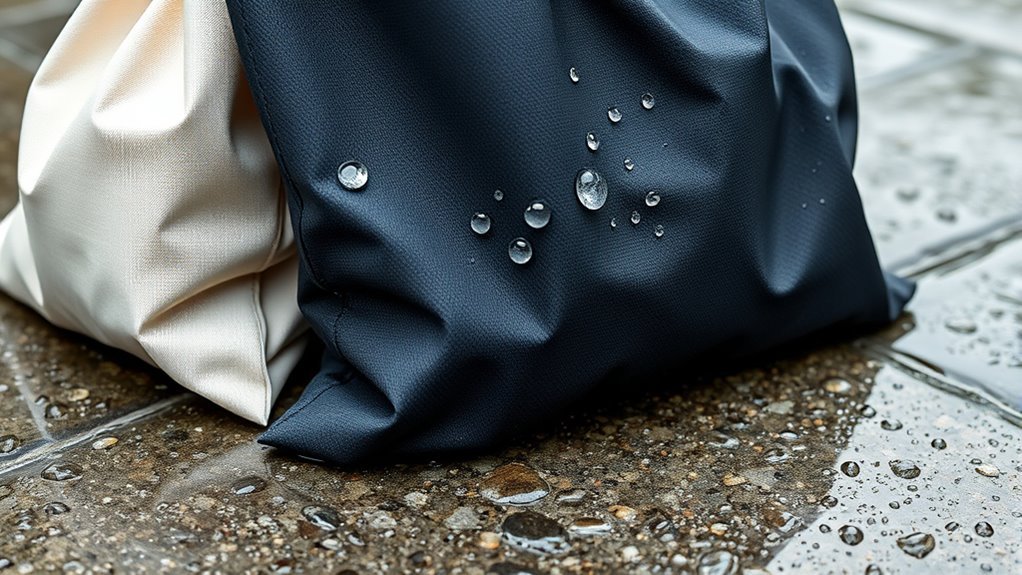
Nylon bags can handle light moisture thanks to their inherent water resistance, but their performance varies considerably based on coatings and weave patterns. Coatings like Durable Water Repellent (DWR) enhance water resistance, while tight weaves minimize leakage. However, prolonged exposure to water can lead to absorption, especially if the seams aren’t properly sealed. Understanding how these elements interact is essential for choosing the right bag for your needs. There’s more to discover about ideal bag performance in wet conditions.
What Is Nylon and Why Is It Popular for Bags?
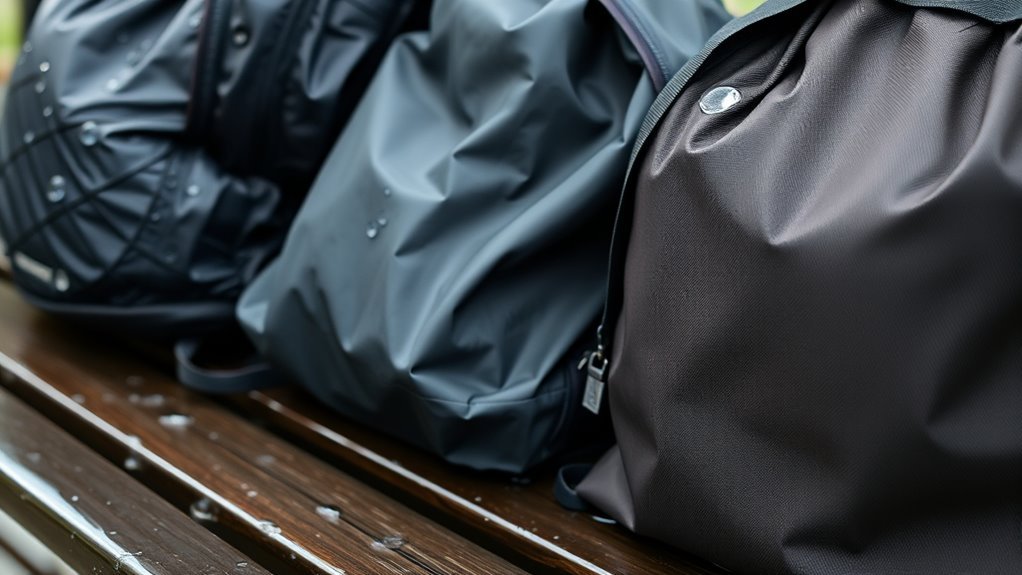
Nylon, a synthetic fiber developed by DuPont in 1935, has become a cornerstone in the bag industry due to its remarkable strength and elasticity. Its nylon applications are extensive, ranging from backpacks to travel bags, making it a favored choice for those seeking durability.
Nylon, introduced by DuPont in 1935, is a durable, elastic fiber essential for backpacks and travel bags.
The advantages of nylon lie in its exceptional abrasion resistance and lightweight nature, which enhance usability without sacrificing performance.
Nylon’s hydrophobic properties allow it to resist moisture, making it suitable for light rain and damp conditions. By treating nylon with coatings like polyurethane or silicone, manufacturers can further improve its water resistance, adapting it to various environmental challenges.
Additionally, the tight weave structure in higher denier fabrics bolsters its ability to withstand water pressure, reducing leakage risk. Overall, nylon’s unique characteristics position it as a versatile and resilient option for consumers who prioritize functionality and reliability in their bags.
Water Resistance vs. Waterproofing: Key Differences for Nylon Bags
When selecting a nylon bag, understanding the distinction between water resistance and waterproofing is significant.
Water resistance means your bag can handle light moisture without immediate damage, but prolonged exposure may lead to absorption. In contrast, waterproofing provides a barrier against complete submersion, ensuring no water intrusion.
The effectiveness of water resistance varies based on the nylon type, fabric thickness, and any coatings applied, such as Durable Water Repellent (DWR).
Additionally, seam construction plays an important role; sewn seams can allow water intrusion, while welded seams minimize leakage by eliminating needle holes.
Testing standards like hydrostatic head and AATCC 127 help quantify these waterproofing differences, revealing how much pressure a fabric can withstand before leaking.
Coated nylon generally offers better waterproofing but may require maintenance as coatings degrade over time.
Understanding these factors is essential for choosing the right bag for your needs.
How Coatings Enhance Nylon’s Water Resistance
Enhancing nylon’s water resistance primarily relies on specialized coatings that create an effective barrier against moisture. The most common coating types include:
- Polyurethane (PU) – Offers a strong repellent barrier, reducing water absorption considerably.
- Silicone – Provides a lightweight, flexible layer that enhances water shedding properties.
- Durable Water Repellent (DWR) – Improves overall fabric performance, ensuring moisture doesn’t saturate the nylon.
Application methods vary; coatings can be spray-applied or integrated during fabric manufacturing. Effective coatings allow nylon to withstand higher water pressure, making it ideal for outdoor use.
Coatings can be spray-applied or integrated during manufacturing, enhancing nylon’s ability to endure high water pressure for outdoor applications.
However, keep in mind that the effectiveness of these coatings can diminish over time, especially with frequent moisture exposure and wear. Regular maintenance and reapplication are essential to maintain peak water resistance.
How Weave Patterns Enhance Nylon’s Water Resistance
Coatings greatly improve nylon’s water resistance, but the fabric’s weave pattern also plays a critical role. The tight weave structure reduces the number and size of gaps, making it less prone to leakage.
When you choose higher denier fabrics, you’re opting for greater thickness and density, which typically enhance water resistance through sturdier weave types. Specialty patterns like ripstop incorporate reinforcing threads that create a grid, boosting durability factors and minimizing water intrusion.
This combination of tightly woven structures and effective coatings allows nylon bags to perform adequately in light rain and splashes. However, maintaining these water-resistant properties requires care over time.
Ultimately, understanding how different weave types interact with coatings gives you the insight needed to select the right nylon bag for your needs, ensuring both performance and longevity.
What Happens When Nylon Bags Get Wet?
Although nylon bags are designed to be water-resistant, prolonged exposure to water can compromise their integrity. Here’s what happens when your nylon bag gets wet:
- Water Absorption: While treated nylon can resist light rain, extended water exposure leads to absorption, affecting your bag’s structure and contents.
- Degraded Coatings: If your bag has a coating, it may lose its effectiveness over time, particularly with repeated soaking or pressure from heavy items.
- Maintenance Needs: Regular reapplication of Durable Water Repellent (DWR) treatments is essential to sustain the water resistance of your nylon bag.
In essence, while wet nylon may initially withstand minor moisture, the risks of leaks and structural compromise increase with continued water exposure.
Understanding these dynamics helps you care for your bag, ensuring it remains a reliable companion for your adventures.
Myths About Nylon and Water: What’s True?
What do you really know about nylon bags and their relationship with water? Many myths cloud the truth, leading to water misconceptions that can cost you. Let’s break down some key points through myth debunking.
| Myth | Reality | Impact |
|---|---|---|
| Nylon bags are waterproof. | They’re water-resistant, not waterproof. | Misleading expectations can lead to ruined contents. |
| All coatings last forever. | Treatments wear off with time. | Neglecting maintenance can reduce effectiveness. |
| Thicker fabric is always better. | Weave density matters too. | Misjudging fabric can lead to poor choices. |
| Seams are water-tight. | Pressure can force water through. | Ignoring seam sealing can expose your gear. |
Understanding these points empowers you to choose the right nylon bag for your adventures. Embrace knowledge and liberate yourself from outdated beliefs!
Caring for Water-Resistant Nylon Bags
To guarantee the longevity and performance of your water-resistant nylon bags, regular maintenance is essential. Here are some key maintenance tips:
- DWR Treatments: Apply Durable Water Repellent (DWR) treatments periodically to enhance water resistance.
- Cleaning: Use a mild detergent and lukewarm water to clean the bags, avoiding harsh chemicals that can degrade coatings.
- Drying Techniques: Always air-dry your bags away from direct sunlight to prevent heat damage and maintain material integrity.
Additionally, storing your nylon bags in a cool, dry place is vital.
Consider placing silica gel packets inside to absorb excess moisture, which helps prevent mold growth and odors.
When to Choose Waterproof Bags Over Water-Resistant Nylon?
When you’re planning activities with significant water exposure, consider the type of bag you need.
Waterproof bags are critical for prolonged conditions, such as boating or heavy rain, where water-resistant nylon may not suffice.
Assess your specific use case and the duration of exposure to make an informed choice that protects your gear effectively.
Use Case Considerations
Choosing between waterproof and water-resistant nylon bags hinges on the specific conditions you’ll encounter during your activities.
Understanding use case scenarios can help you make an informed decision based on activity suitability.
Consider the following:
- Prolonged Exposure: Choose waterproof bags for activities like boating or kayaking, where complete submersion is possible.
- Light Rain: Opt for water-resistant nylon for casual outings or commuting where moisture exposure is brief.
- Sensitive Equipment: For transporting delicate gear in wet conditions, select waterproof options with features like welded seams for maximum protection.
Exposure Duration Matters
Understanding how exposure duration affects water protection is essential for selecting the right bag for your needs.
Water-resistant nylon bags manage light rain and splashes but struggle with prolonged exposure, leading to moisture impact that compromises their effectiveness.
In contrast, fully waterproof bags are critical for scenarios requiring complete submersion or extended periods in wet conditions, like boating or river crossings.
A durability comparison highlights that treated nylon can lose waterproofing properties over time, especially under pressure from gear, which can force water through seams.
Consequently, when facing heavy rain or consistently wet environments, choosing a waterproof bag guarantees your sensitive items remain dry and protected, safeguarding against potential damage.
Real-World Applications: Where Nylon Bags Shine in Wet Conditions
Nylon bags excel in wet conditions due to their engineered features, which often include water-resistant coatings and high-denier fabrics. This makes them ideal for various applications where moisture protection is essential.
Here are three key scenarios where nylon bags shine:
- Tactical Gear: Designed for military use, these bags withstand exposure to wet environments, ensuring sensitive equipment remains dry.
- Outdoor Activities: High-denier nylon fabrics enhance durability, making these bags perfect for hiking or camping in unpredictable weather.
- Recreational Use: Coated nylon bags effectively repel water, offering practical moisture protection for everyday outings.
The layered construction of nylon bags, including protective linings and reinforced stitching, fortifies them against moisture intrusion.
The layered design of nylon bags, featuring protective linings and reinforced stitching, ensures robust defense against moisture.
Whether you’re trekking through rain or carrying essential gear in damp conditions, nylon bags provide reliability and peace of mind.
Frequently Asked Questions
Is 100% Nylon Bag Waterproof?
A 100% nylon bag isn’t fully waterproof; its durability offers water resistance features. While it handles light moisture, improper care or wear can compromise its effectiveness, so regular maintenance is essential for peak performance.
What Happens if Nylon Gets Wet?
When nylon gets wet, it absorbs water, increasing drying time. If moisture lingers or the bag’s coatings are damaged, you risk water damage. Regular maintenance can enhance resistance and prolong the bag’s usability.
What Are the Downsides of Nylon Bags?
Nylon bags face durability concerns due to wear and tear, which can compromise their effectiveness. For instance, prolonged exposure to moisture leads to degradation, raising environmental impact as these materials often contribute to waste and pollution.
Can I Throw My Nylon Bag in the Washing Machine?
You can machine wash your nylon bag, but consider durability concerns. Use a mesh bag and gentle cycle for care. Always air-dry to maintain its integrity and avoid compromising the fabric’s water resistance.
Conclusion
In conclusion, while nylon bags can handle some moisture, they’re not invincible. Think of them as umbrellas: they shield you from light rain, but in a downpour, you’ll need something sturdier. Understanding the differences in water resistance and waterproofing, along with care techniques, can extend your bag’s lifespan. When in doubt, opt for waterproof options when facing wet conditions. By doing so, you’ll protect your belongings and make certain your gear stays in top shape.
