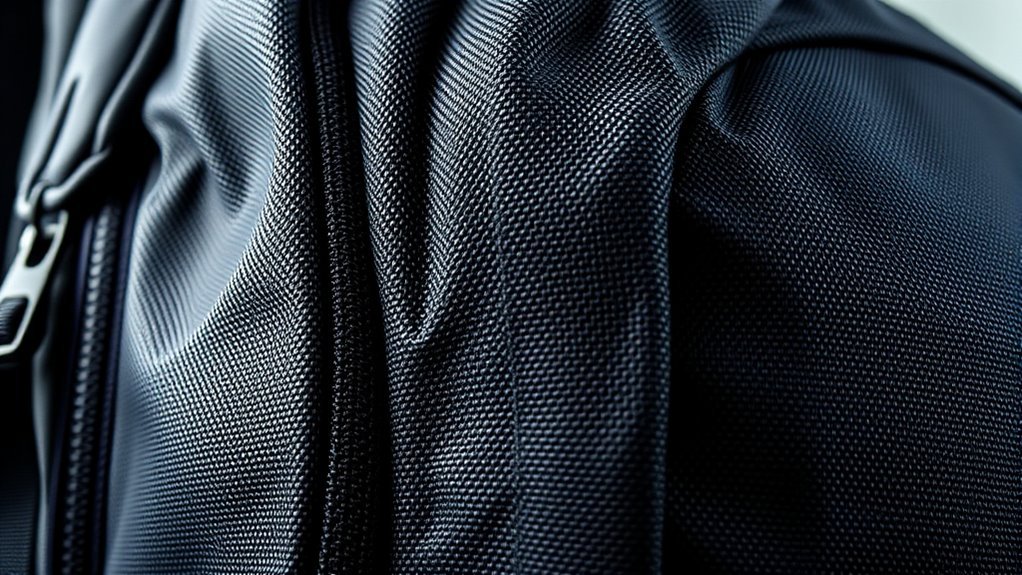
Ripstop nylon is a lightweight bag fabric built with a reinforced grid weave. You get tear resistance because the stronger threads stop small cuts from spreading, so damage stays localized instead of running across the panel. That makes it a smart choice for backpacks, gear sacks, packing cubes, and rain covers. It also handles abrasion well and often resists moisture. If you keep going, you’ll see how weight, coatings, and sewing affect performance.
What Is Ripstop Nylon in Bags?
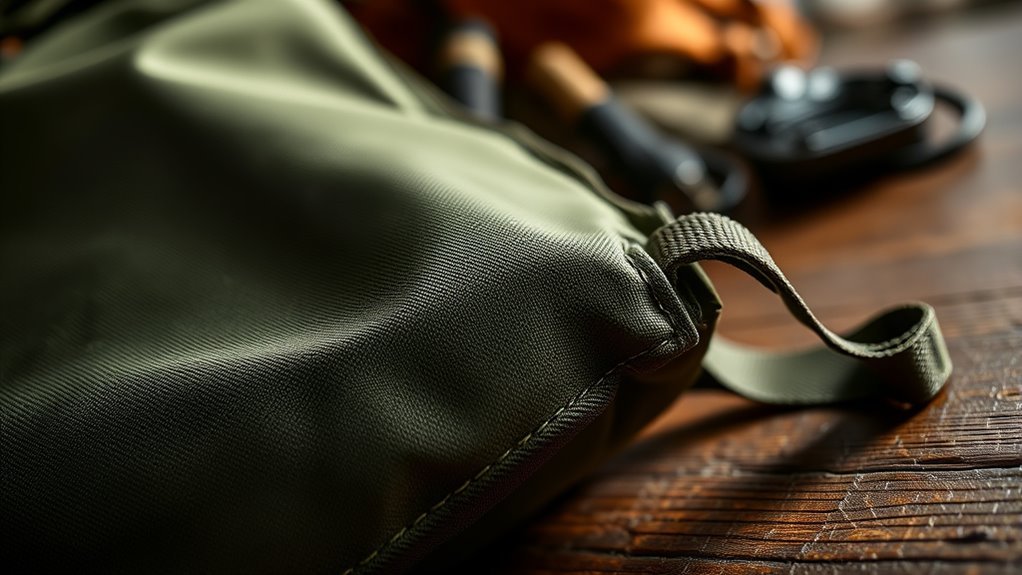
Ripstop nylon is a lightweight, durable fabric used in bags where tear resistance and low weight matter most. You’ll recognize it by the grid of reinforced threads woven into the base cloth. That structure limits tear spread, so a small cut doesn’t become a failed panel.
In bagmaking, you use it across many fabric applications, from backpacks and gear sacks to travel organizers and tactical pouches. Its low mass helps you reduce carry load without surrendering structural integrity, which matters in outdoor gear where every gram counts.
The fabric also resists moisture, giving your contents extra protection in changing weather or transit. Because it stays functional under repeated use, you can trust ripstop nylon for designs that need durability, portability, and practical freedom.
It isn’t just a material; it’s a technical solution for bags that have to move with you.
Why Ripstop Nylon Works for Bags
You get tear resistance from ripstop nylon’s grid weave, which confines small punctures and helps prevent propagation across the panel.
You also gain lightweight durability, since the fabric adds strength without a large mass penalty, so your bag stays efficient under load.
Its water-ready surface further protects contents by resisting moisture and abrasion in demanding use conditions.
Tear-Resistant Grid Weave
The defining advantage of ripstop nylon is its grid weave of thicker reinforcing threads, which interrupts tear propagation and keeps small punctures from spreading.
You get a grid structure that locks damage into a tiny cell instead of letting it race across the panel. This design gives you clear fabric benefits: better puncture containment, greater field reliability, and less risk when you push your bag through abrasive travel or outdoor use.
The crisscross reinforcement supports repeated loading without surrendering flexibility, so your gear stays usable under pressure. For bags, that means you can move freely, carry hard, and trust the fabric to resist failure.
In demanding conditions, the weave functions as a controlled defense, preserving integrity without restricting practical performance.
Lightweight Durability
Even at very low weights, ripstop nylon delivers a durability-to-mass ratio that makes it especially effective for bags. You get durability features from the grid weave, which blocks small cuts from propagating and preserves structural integrity under stress.
At roughly 1.1 oz, the fabric stays light enough for lightweight applications where every gram matters, so you can move freely without burden. Its high abrasion resistance helps your bag endure repeated contact, packing, and rough handling without fast degradation.
Because the material flexes well and sews cleanly, you can design precise panels and efficient seams for DIY or commercial builds. In practice, you gain a strong, agile shell that supports portable carry, practical autonomy, and long service life.
Water-Ready Performance
Ripstop nylon’s crosshatch weave gives bags a practical edge in wet conditions by limiting tear spread while helping the shell resist moisture intrusion. You get durable, water-resistant protection without unnecessary bulk, so your carry stays agile and ready.
Its waterproof features aren’t absolute, but they do reduce wetting and shield contents during rain, spray, and damp ground. That matters when you move freely through changing conditions.
- The grid arrests small punctures.
- The coating slows moisture entry.
- The fabric stays light and portable.
- The structure supports outdoor versatility.
You can trust this material for travel, commuting, and field use because it balances resilience with low mass. It lets you act without friction, and that’s real freedom.
How Ripstop Nylon Stops Tears
You can see the ripstop grid as a mechanical barrier that limits how far a tear can propagate.
The reinforced threads take on and distribute stress, so the surrounding weave doesn’t fail as easily. As a result, small rips usually stay localized instead of running across the fabric.
Grid Limits Tear Spread
A reinforcing grid is what gives ripstop nylon its tear-limiting behavior: the crosshatch of stronger threads interrupts a small puncture or nick and keeps it from propagating across the fabric.
You get tear containment, not invincibility, and that distinction matters when you depend on gear that won’t collapse under stress. The grid strength comes from the repeating squares, usually 1/4 to 1/2 inch wide, which lock the material into place.
- A cut hits one cell, not the whole panel.
- The weave stops the rip at the next thread.
- Damage stays localized, so performance stays usable.
- You keep freedom to move, pack, and travel with less failure risk.
That’s why you see it in bags, tents, and field equipment.
Reinforced Threads Absorb Stress
Strength under load comes from ripstop nylon’s reinforced threads, which are woven at regular intervals to spread tension and blunt tear growth. You get a fabric that absorbs stress through stress distribution across the grid, so force doesn’t concentrate in one weak zone.
That matters when you carry tools, travel light, or push gear hard, because the structure helps prevent catastrophic failure while staying flexible. The heavier threads act like load paths, taking pressure and preserving fabric longevity without adding much weight.
You can rely on this construction in backpacks, tents, and other outdoor systems originally engineered for demanding use. The result is a material that resists abrasion, handles movement, and supports your freedom to move without fearing sudden structural collapse.
Small Rips Stay Localized
Even when a rip starts, ripstop nylon’s crisscross grid helps stop it from running by diverting stress into the stronger threads woven at regular intervals. You get localized damage instead of a spreading failure, so your gear keeps working under load.
- The heavier yarns interrupt tear propagation.
- The square cells confine strain to a small zone.
- The weave protects fabric integrity under abrasion.
- The structure supports lightweight, high-stress use without full-panel collapse.
Originally built for wartime performance, this architecture still gives bags, tents, and outdoor gear a durable edge. It isn’t rip-proof, but it does make minor cuts manageable, preserving function and extending service life when you need freedom without fragility.
How to Choose Ripstop Nylon Weight
Choosing the right ripstop nylon weight depends on how you plan to use the bag: you can align material choice with function, load, and wear. For ultralight systems, 1.1 oz gives you portability with solid resistance, making it one of the best lightweight options. For everyday carry, 1.6 oz adds structure without excess mass, so your bag stays efficient under movement. For harsh use, 1.9 oz increases tear resistance and supports heavier loads, so you don’t sacrifice agency to failure. Include durability considerations early, then match the fabric to the task.
| Weight | Best Use | Key Trait |
|---|---|---|
| 1.1 oz | Stuff sacks | Minimal mass |
| 1.6 oz | Daypacks | Balanced performance |
| 1.9 oz | Gear sacks | Maximum toughness |
If you want freedom through gear that works, choose the lightest weight that still meets your real demands.
Ripstop Nylon vs. Regular Nylon for Bags
When you compare ripstop nylon with regular nylon for bags, the key difference is structure: ripstop’s reinforced grid weave adds thicker threads that stop small tears from spreading, so it handles rough use more reliably.
- You gain higher tear resistance for bags that face abrasion, overload, or sharp edges.
- You often get lower weight, which helps you move freely with travel packs and everyday carry.
- You can choose it for ripstop applications like outdoor gear, tactical packs, and rugged commuter bags.
- You still need disciplined nylon maintenance, but ripstop’s construction tolerates stress better than standard nylon.
Regular nylon remains serviceable, yet it lacks the same fail-safe weave logic.
If you want gear that supports mobility without surrendering durability, ripstop gives you a sharper performance profile and more autonomy in demanding conditions.
Water Resistance and Coatings on Ripstop Nylon
Although ripstop nylon’s grid weave is best known for tear resistance, its performance in bags also depends on water management, which usually comes from a polyurethane (PU) coating or a hydrophobic treatment.
You get this barrier on the fabric’s surface, where waterproof coatings reduce liquid penetration and help you move through wet conditions without surrendering function. Because the weave already limits tear growth, a coated panel can also keep small punctures from spreading when moisture adds stress.
Hydrophobic treatments work differently: they cause water to bead and roll off, but they’re typically temporary and lighter than full coatings. If you want sustained resistance, you’ll need maintenance, including reapplying DWR as it wears.
In practice, you’re choosing between durability, weight, and repellent behavior. That choice lets you carry gear with less exposure, more autonomy, and fewer compromises.
Common Bag Types Made With Ripstop Nylon
Ripstop nylon shows up in several common bag types because its grid weave resists tear propagation under load. You’ll find it in practical gear that keeps you mobile, organized, and less tethered to excess weight. Its structure supports freedom of movement without sacrificing durability.
- Lightweight backpacks: You can choose from backpack styles built for trekking, commuting, or travel; ripstop nylon helps them tolerate abrasion and rough handling.
- Gear sacks: You’ll rely on these for compressing or separating equipment, especially where moisture and stress threaten contents.
- Packing cubes: These support gear organization by reducing bulk while keeping clothing and accessories sorted inside luggage.
- Ponchos and rain covers: You get breathable, lightweight protection that shields exposed bags and gear during wet conditions.
Across these categories, the fabric’s tear resistance matters most when your bag faces repeated strain. It limits damage, extends service life, and lets you carry more with less compromise.
How to Sew Ripstop Nylon
To sew ripstop nylon cleanly, choose a universal needle in size 70/10 or 80/12 so it can pass through the weave without snagging.
You should treat the cloth as a low-friction, lightweight membrane: use weights instead of pins to hold layers, because pins can distort alignment and leave holes. Mark only on the wrong side, since the hydrophobic finish can repel ink and expose stray marks on the face.
Set your thread tension lower than you’d for denser fabrics; that reduces puckering and keeps seams flat. For cutting, use a sharp rotary cutter or scissors, and skip pre-washing because shrinkage is minimal.
These sewing techniques give you controlled seams and cleaner edges. With careful fabric handling, you can build bags that stay light, resilient, and unconstrained.
Maintain steady feed pressure, guide the material without stretching it, and let the machine do the work.
Frequently Asked Questions
What Are the Disadvantages of Ripstop Fabric?
You’ll face durability concerns and weight limitations: ripstop can tear under extreme stress, wear faster in high-stress zones, and coated versions may spread damage. You also can’t easily mend it without specialized repair techniques.
What Is the Difference Between Nylon and Ripstop Nylon?
Nylon uses a plain weave; ripstop nylon adds a reinforced grid that stops tears from spreading. You get greater ripstop advantages, better nylon durability, lower weight, and often improved water resistance for demanding, self-directed use.
What Is the Best Fabric for Bags?
Ripstop nylon’s your best bet for bags: its durability comparison outperforms many fabric types, while staying light, water-resistant, and easy to sew. You’ll gain reliable performance and freedom from heavy, fragile materials.
What Are the Downsides of Nylon Bags?
You’ll face durability concerns: nylon can wear, abrade, and eventually tear under heavy use. You’ll also see environmental impact from fossil-fuel-based production, plus limited breathability, moisture retention, and coating sensitivity in harsh chemical environments.
Conclusion
So, when you choose ripstop nylon, you’re choosing a fabric that’s both light and tough, delicate in appearance yet engineered for resistance. Its grid weave can stop a small tear from becoming a failure, which is exactly why it performs so well in bags. You’ll get better strength, better durability, and often better water resistance, too. If you want a material that balances weight and resilience, ripstop nylon isn’t just useful—it’s smart.