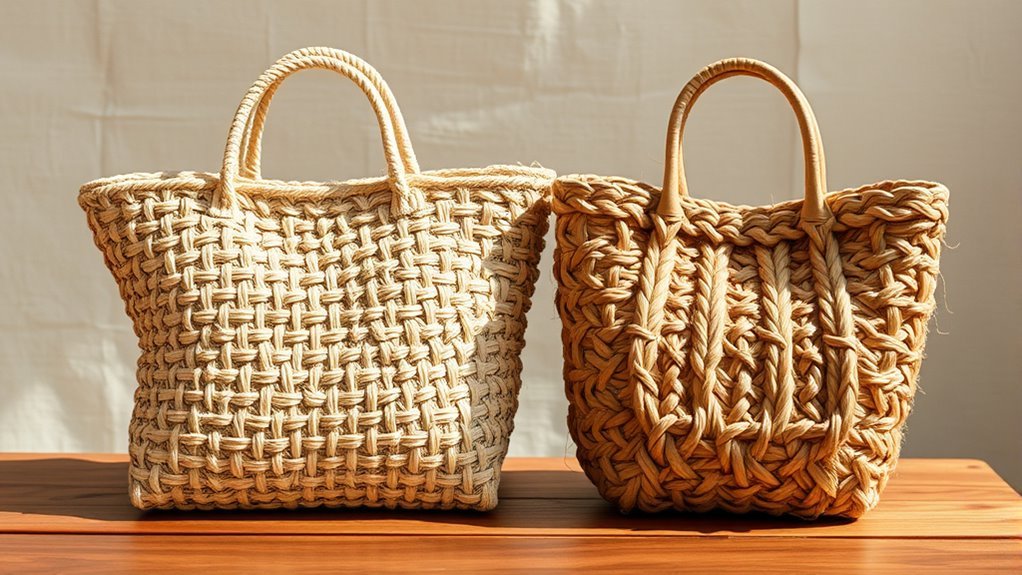
When comparing straw and raffia bags, you’ll notice key differences in fibers and weaving methods. Raffia, derived from raffia palm leaves, offers a soft, flexible texture, allowing for complex hand-woven designs. In contrast, straw, made from materials like wheat and barley, has a stiffer, brittle structure with simpler, uniform patterns. These distinctions impact durability and comfort, shaping your choice based on your activities. Explore further to uncover more insights on their unique characteristics and ideal uses.
Raffia vs. Straw: Key Differences to Know
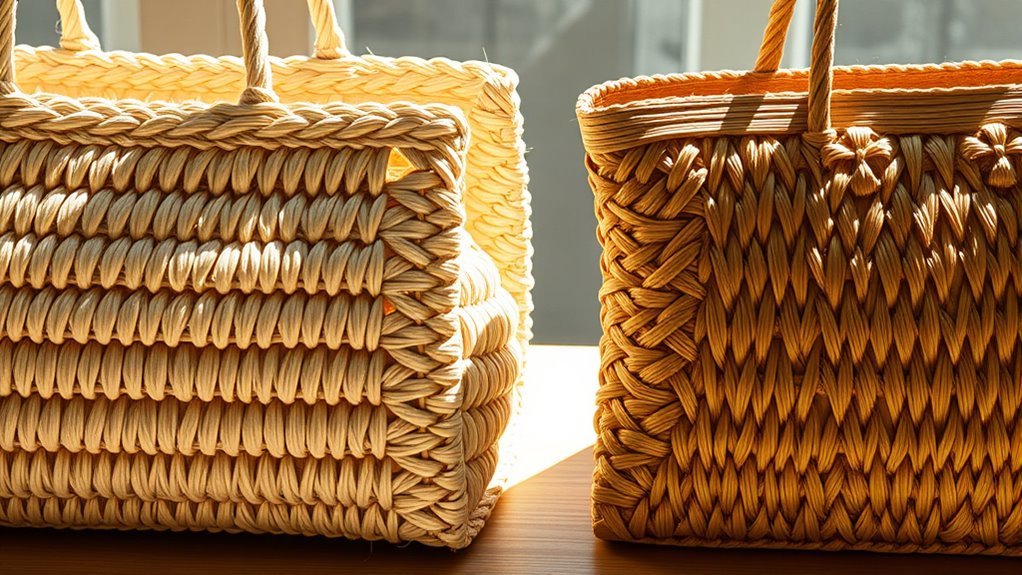
When you compare raffia and straw, you’ll quickly notice some key differences that can affect your choice of bags.
Raffia boasts several advantages; its flexible, soft texture allows for elegant draping, making it a stylish option for regular summer use. The artisan craftsmanship often showcased in raffia bags highlights intricate hand-woven patterns, celebrating skilled artistry.
Raffia’s flexible texture and artisan craftsmanship create stylish, elegant bags perfect for summer.
In contrast, straw presents some disadvantages. Its stiffer, brittle nature leads to a less forgiving design, limiting versatility. Additionally, straw bags can be uncomfortable due to their rigidity, especially in warmer weather.
While both materials have eco-friendly attributes, raffia stands out as it can be harvested sustainably without harming the palm tree. This not only enhances its appeal but also aligns with a growing desire for liberation through conscious consumer choices.
Ultimately, understanding these differences will help you make a more informed decision for your next bag purchase.
Material Composition of Raffia and Straw Bags
Understanding the material composition of raffia and straw bags is essential for making an informed choice. Raffia bags are made from the fibers of the raffia palm, specifically the leaves, which are split, dried, and hand-woven. This process results in a soft, flexible texture, showcasing sustainability factors that highlight natural resource usage. Historically, raffia has deep roots in various cultures, enhancing its appeal.
On the other hand, straw bags utilize materials like wheat, barley, and seagrass, often employing hollow stems that create a stiffer structure. The weaving techniques for straw tend to be simpler, limiting design complexity.
Raffia’s natural fibers provide a matte, slightly silky finish, while straw offers a crisper, uniform appearance with a characteristic crackle. Generally, raffia is more durable and breathable than straw, making it a more practical choice for everyday use, while straw bags often lean towards decorative purposes.
Texture Comparison: Raffia vs. Straw Bags
When you compare the textures of raffia and straw bags, you’ll notice distinct differences in feel and flexibility.
Raffia offers a soft, warm texture that adapts easily to varying contents, while straw’s rigid structure can lead to cracking under pressure.
This contrast not only affects usability but also influences the overall aesthetic of each bag, with raffia presenting a more relaxed look compared to straw’s structured appearance.
Texture Differences
Texture plays an essential role in distinguishing raffia bags from their straw counterparts. Raffia bags offer a soft, textile-like quality that results in a warm, flexible drape, enhancing your tactile experience. In contrast, straw bags maintain a crisper, stiffer texture, which can be less forgiving under pressure.
- Raffia showcases intricate woven patterns, adding visual complexity.
- Straw often presents a more uniform, tube-shaped appearance with distinct nodes.
- The flexible nature of raffia bends without cracking, ensuring durability for everyday use.
While both materials share a golden-beige tone, their textures greatly influence functionality and style, making your choice both a practical and aesthetic decision.
Feel and Flexibility
The feel and flexibility of bags can greatly influence your overall experience. Raffia bags offer a soft, textile-like quality that enhances comfort levels, allowing them to drape effortlessly against your body. This flexibility makes them ideal for everyday usability, adapting to various situations without losing form.
In contrast, straw bags maintain a stiffer, crisper texture, which can limit comfort during extended wear and may lead to discomfort. Their uniform appearance often restricts design adaptability, making them less versatile.
Additionally, while raffia bends without cracking, straw is prone to brittleness, compromising durability. For those seeking liberation in their accessory choices, raffia emerges as the superior option, merging aesthetic appeal with practicality for the modern lifestyle.
Durability Insights: Which Material Lasts Longer?
When evaluating durability, you’ll find that raffia bags typically outperform straw bags in resilience and longevity.
Their flexibility allows them to withstand daily use without cracking, while straw’s rigidity makes it prone to breakage under stress.
Additionally, proper maintenance plays an essential role, but raffia requires less effort to keep it looking good compared to straw, which is sensitive to environmental factors.
Natural Resilience Comparison
While both raffia and straw bags are popular choices for eco-friendly fashion, their durability sets them apart markedly. Raffia’s natural elasticity allows it to bend rather than break, making it ideal for repeated use. In contrast, straw can crack under pressure, limiting its lifespan.
- Raffia bags withstand daily summer activities, aging beautifully with proper care.
- Straw bags often require tighter weaves, which restrict their longevity and flexibility.
- Raffia fibers are less irritating to the skin, ensuring comfort across various weather conditions.
Ultimately, if you’re seeking durability and resilience, raffia bags offer superior weather resistance and adaptability, making them a more practical choice for your eco-conscious lifestyle.
Maintenance and Care Tips
Understanding how to maintain your raffia and straw bags can greatly extend their lifespan and preserve their aesthetic appeal.
For raffia, employ gentle cleaning techniques; keep the bag dry, and reshape it while air-drying after any spills to maintain its form. Its inherent flexibility allows it to withstand daily wear without breaking.
In contrast, straw bags require careful handling. Avoid moisture and heat, as these can lead to brittleness and deformation. Store your straw bags in a cool, dry place, away from direct sunlight.
Craftsmanship and Quality of Raffia vs. Straw
Raffia bags often exemplify superior craftsmanship compared to their straw counterparts, primarily due to the intricate, handcrafted techniques employed by artisans. This level of artistry results in unique patterns and a softness that elevates both style and comfort.
- Flexible, intricate weaves allow for elegant draping, enhancing aesthetic appeal.
- Soft, ribbon-like texture guarantees comfort, reducing the risk of discomfort during use.
- Durable construction means these bags can bend without breaking, ideal for everyday wear.
In contrast, straw bags often suffer from a lack of design versatility due to their rigidity. They may be machine-produced or less meticulously crafted, leading to inconsistencies in quality.
While straw bags can be more affordable, the labor-intensive artisan techniques behind raffia bags justify their higher price point, ultimately reflecting a commitment to quality craftsmanship that resonates with those seeking unique, durable accessories.
Best Uses for Raffia and Straw Bags
Artisanship greatly influences how each bag type serves various purposes. Raffia bags are lightweight and flexible, making them ideal for everyday use and beach outings. Their ability to conform to your essentials offers versatility for casual day trips. Conversely, straw bags excel in structured designs, providing a crisp aesthetic suited for formal events. Their decorative appeal makes them less practical for daily wear but perfect for occasional outings.
| Bag Type | Best Use | Key Feature |
|---|---|---|
| Raffia | Beach outings | Lightweight, flexible |
| Straw | Formal events | Structured, decorative |
| Raffia | Everyday use | Conforms to contents |
Choosing the right bag depends on your activities. For summer adventures, opt for raffia for comfort. When attending a sophisticated gathering, a straw bag’s shape and style elevate your look.
Caring for Your Raffia and Straw Bags
To guarantee your raffia and straw bags maintain their beauty and functionality over time, proper care is essential. Adopting effective storage solutions and cleaning techniques will extend their lifespan and preserve their aesthetics.
- Keep raffia bags dry; moisture can damage fibers.
- Store raffia bags stuffed to retain shape; straw bags should be lightly stuffed in a cool, dry place.
- Regularly dust both types with a soft brush, avoiding water or harsh solutions.
When spills occur, blot immediately and air-dry the bag while reshaping it. For straw bags, minimize exposure to moisture, heat, and direct sunlight to prevent brittleness.
When not in use, place your bags in breathable fabric dust bags to protect against dust and light while allowing airflow.
Frequently Asked Questions
What Are the Key Differences Between Raffia and Straw?
Raffia’s sustainability factors and softer texture variations offer flexibility and resilience, ideal for daily use. In contrast, straw’s rigidity may limit durability and comfort, making it less suitable for versatile applications. Choose wisely for your needs.
Which Raffia Bag Is Best?
The best raffia styles often come from popular raffia brands, showcasing exquisite craftsmanship. Look for supple designs, reinforced handles, and timeless colors. These elements elevate your bag, making it versatile and perfect for any occasion.
Why Is Raffia so Expensive?
Raffia’s high cost stems from sustainable production methods and labor-intensive crafting. Its unique softness and durability, combined with limited sourcing, elevate its value, making it a fashionable, long-lasting investment in your wardrobe.
Can Raffia Straw Get Wet?
Raffia straw can’t withstand moisture absorption well; prolonged exposure leads to deformation. Imagine a damp day ruining your favorite bag’s durability. Always keep it dry to maintain its shape and structural integrity.
Conclusion
When choosing between raffia and straw bags, it’s essential to weigh their unique qualities and uses. Will you opt for the vibrant, textured charm of raffia or the classic, breezy appeal of straw? Each material offers distinct advantages, but the decision ultimately hinges on your personal style and needs. As you contemplate your next purchase, ask yourself: which bag will elevate your outfits and stand the test of time? The right choice could redefine your accessory game.