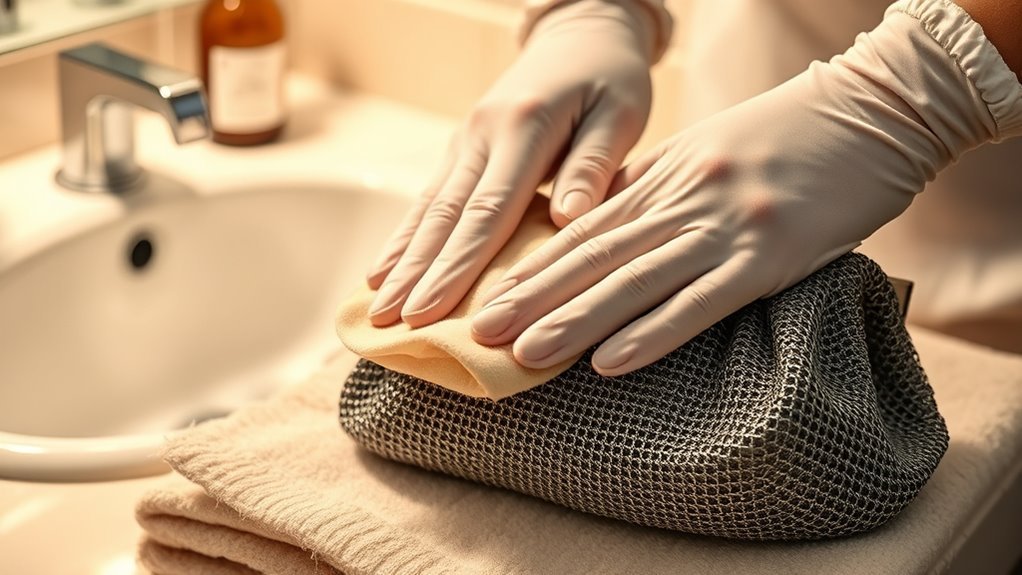
To clean a metal mesh evening bag without snagging the links, work with the bag flat and use only smooth tools. Empty it, then dust the mesh with a soft brush. Wipe it with a smooth, lint-free cloth dampened in mild soapy water, moving in the direction the links lie. Wipe again with plain water and dry it right away. Do not soak the bag, and skip terry towels and paper towels, which catch on the links.
What Makes Metal Mesh Bags Special?
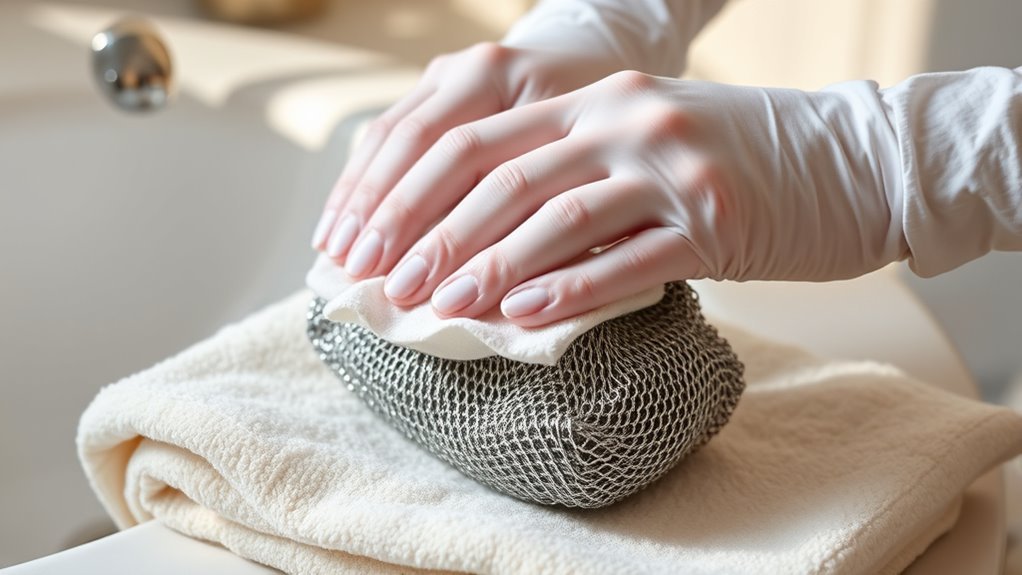
A metal mesh bag is made of hundreds of small metal rings or flat plates linked together. The result moves like fabric but shines like jewelry.
The mesh is usually brass or another base metal with gold or silver plating. Some are stainless steel or aluminum, and older ones can be sterling silver. Inside there is normally a fabric lining.
Finishes include gold, silver, and antique tones. Some vintage bags have a painted or enamel pattern on the mesh.
Mesh bags have been popular for evening since the early 1900s, and many vintage ones are still in use. The mix of plated metal, tiny joints, and fabric lining is why they need a careful clean.
Prepping Your Bag for Cleaning: Essential Steps
Before you clean, empty the bag and look it over for loose or damaged links.
Hold it open, upside down, and shake it gently to clear dust and crumbs.
Then lay it flat on a smooth towel or cotton sheet. A flat, supported mesh is much less likely to snag or stretch.
Inspect for Damage
A quick check tells you how gentle you need to be.
Look for open rings, bent plates, and gaps in the mesh. Check for green or dark spots, which point to tarnish or corrosion. Rust-colored spots mean the plating has worn through.
Open the bag and check the lining for tears and stains. A torn lining can catch on the links from inside.
If the frame has stones or the mesh has a painted design, note it. Those parts should get only a dry brush or a barely damp cloth.
Take a photo of any damage before you start. If a link is already open, have it repaired before a full clean, because a cloth will catch on it.
If the bag is vintage or valuable and in poor shape, stop here and see a professional.
Remove Contents and Debris
Next, clear out everything inside.
Check the corners of the lining for small items. Then brush dust off the mesh with a soft brush, such as a clean makeup brush or a baby toothbrush.
Trim any loose threads on the lining with small scissors. Do not pull them. A cotton swab reaches dust around the frame and clasp.
Do this light dusting after every few wears. It removes makeup powder and skin oils before they dull the metal.
Most of the time, this dry clean is all the bag needs.
Step-by-Step Cleaning Techniques to Prevent Snagging Links
When the mesh looks dull or feels sticky, move to a damp clean. Dust it first with a soft brush, so grit does not scratch the plating.
Mix a few drops of mild dish soap into a bowl of lukewarm water. Dip a smooth, lint-free cotton cloth and wring it out well. Wipe the mesh in one direction, following the way the links lie. Use light pressure and do not scrub back and forth.
Rinse the cloth in clean water, wring it out, and wipe the mesh again to lift the soap. Slip a dry cloth inside the bag first, so the lining stays dry.
Pat the mesh dry at once with a smooth towel. Then leave the bag open in moving air until no moisture is left between the links. Keep it out of direct sun.
Tips for Tough Stains on Metal Mesh
For a mark that soap does not shift, work on that spot alone.
A cotton swab gives you the most control. Roll it over the mark. Do not drag it, because the cotton can catch.
Test any cleaner on a hidden spot first, such as the base or inside the top edge.
Identify Stain Type
Start by working out what the stain is. Makeup and skin oils are greasy. Drinks and food are water-based. Dark or green patches are tarnish, not dirt.
| Stain Type | Recommended Cleaning Solution |
|---|---|
| Ink Stains | Rubbing alcohol on a cotton swab (not on painted or enamel mesh) |
| Protein Stains | Mild soap solution with gentle blotting |
| Tough Stains | Jewelry polishing cloth, or a professional cleaner |
For ink, dab with a swab barely dampened with rubbing alcohol. For food or drink, use mild soapy water and blot. Do not use alcohol on painted or enamel mesh, since it can lift the color.
Use Gentle Cleaning Methods
Gentle tools matter more than strong cleaners on mesh.
Use a soft baby toothbrush on stained links, with short strokes in the direction of the mesh.
Follow with a cloth dampened in mild soapy water. Keep it damp, not wet, so water does not pool in the joints.
For tarnish on silver or silver-plated mesh, rub lightly with a jewelry polishing cloth. Skip liquid silver dips, which can get trapped between links and reach the lining.
Never use abrasive cleaners, scouring pads, or metal polish paste. They scratch the plating and leave residue in the links.
Dry each spot as soon as you finish it.
If a stain stays after two gentle tries, leave it for a professional.
Test on Hidden Area
A spot test takes a minute and can save the finish. Plating and paint on mesh are thin, and some cleaners dull or strip them.
Dab a little of the cleaner on a hidden area and wait a few minutes. Wipe it off and check for color change. Do not use vinegar, lemon juice, or baking soda on plated mesh. Acids and abrasives can wear through the plating.
After any cleaning, pat the area dry with a soft, lint-free cloth. Moisture left in the links leads to tarnish.
Wiping and Drying: How to Avoid Residue
Soap left on the mesh dries to a dull film, so it has to come off. Do not hold the bag under a tap or dip it in a basin. Water soaks the lining and sits in the joints. Wipe the mesh two or three times with a cloth dampened in clean water instead.
Then dry it fast. Pat with a smooth towel, and blow cool air from a hair dryer across the mesh to clear water from between the links. Leave the bag open for a few hours before you put it away.
| Step | Action | Purpose |
|---|---|---|
| Wipe | Cloth dampened in clean water | Remove dirt and residue |
| Dab | Soft cloth | Eliminate excess moisture |
| Air Dry | Well-ventilated area | Prevent discoloration |
Routine Maintenance Tips for Your Metal Mesh Bag
A little routine care keeps the mesh bright and the links intact:
- Inspect regularly: Check for loose or snagged links. Early detection prevents further damage.
- Wipe gently: Use a soft, lint-free cloth to remove dust and oils without snagging the mesh.
- Store wisely: Keep your bag in a dust bag or soft pouch. This protects it from scratches and environmental damage when not in use.
- Avoid overloading: Don’t stuff your bag beyond its capacity. Excessive weight can strain links and lead to breakage over time.
Knowing When to Call in the Pros for Your Bag?
Home care covers dust, light dirt, and small marks. Some problems need an expert.
Broken or missing links should go to a jeweler or a handbag repair shop. Trying to close rings with household pliers often scratches or snaps them.
Bags with painted mesh, enamel, or set stones are easy to damage and are better cleaned by a specialist.
The same goes for stains or smells in the lining that do not come out with a damp cloth.
If the bag is vintage, sterling silver, or valuable, ask a professional before you use anything stronger than a dry brush.
When you are not sure what the metal or finish is, ask first. The wrong cleaner can do damage that cannot be undone.
Frequently Asked Questions
Can You Put a Metal Mesh Bag in Water?
It is best not to. Most mesh bags have a fabric lining and plated links. Soaking can stain the lining and leave water trapped in the joints. Clean the mesh with a damp cloth and dry it right away.
How to Remove Rust From Handbag Chain?
Light tarnish often comes off with a dry jewelry polishing cloth. Real rust on a plated chain means the plating has worn through, and cleaning will not bring it back. Do not use vinegar or baking soda, which wear plating further. A handbag repair shop can replace or replate the chain.
Conclusion
A metal mesh bag stays bright with gentle, mostly dry care. Dust it often, wipe it with a damp smooth cloth when needed, and dry it at once. Keep it flat while you work, and the links will not snag.

