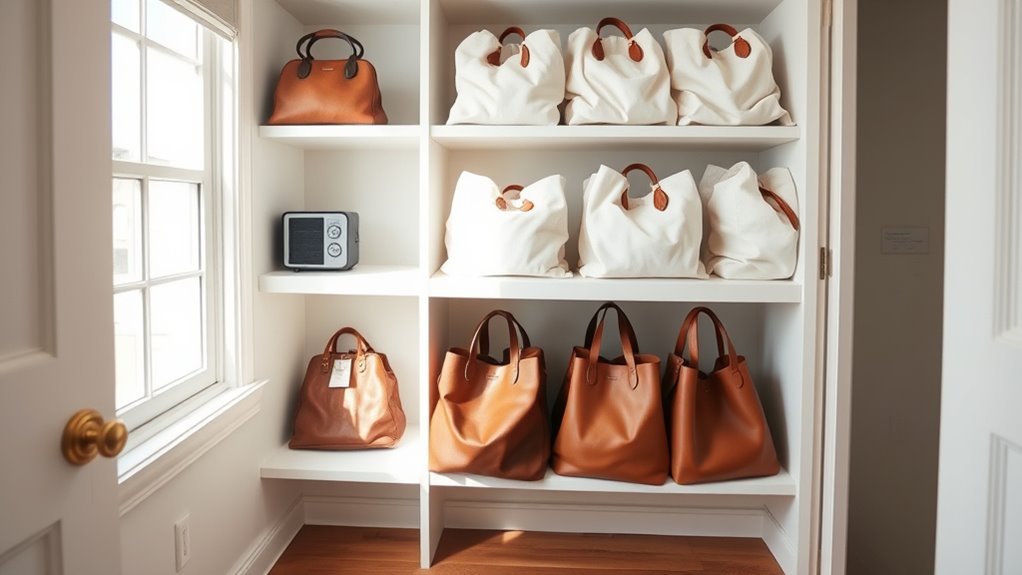
To prevent mold in handbags, store them clean, fully dry, and with air around them. Use breathable cotton dust bags, not plastic. Keep the storage area at about 40 to 55 percent relative humidity, and never above 60 percent. Stuff each bag lightly with acid-free tissue, add a silica gel packet, and check your bags once a month.
Why Proper Storage Is Essential for Leather Bags
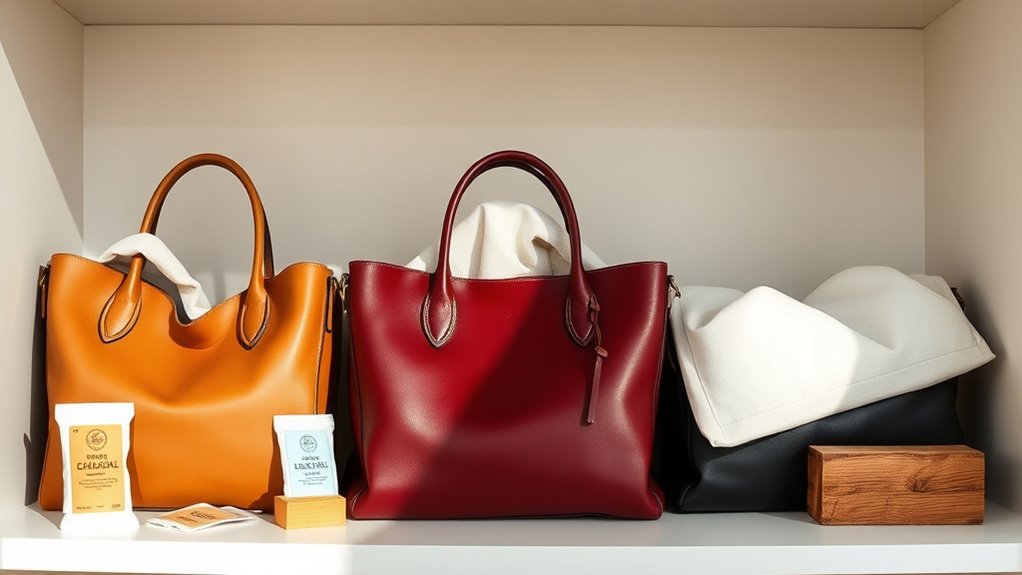
Mold needs moisture, still air, and something to feed on. Leather, fabric linings, and the dirt and oils on a used bag all give it food. A dark, closed closet supplies the rest.
So the goal is to control moisture. Keep bags in a dry, ventilated spot at about 40 to 55 percent relative humidity. The U.S. EPA advises keeping indoor humidity below 60 percent to limit mold, and ideally between 30 and 50 percent. Leather can dry out and crack in very dry air, so 40 to 55 percent is a good middle range for bags.
Make sure every bag is clean and completely dry before it goes into storage. A bag put away damp from rain, or with a spill inside, is the most common start of mold.
Stuff bags lightly with soft material so they hold their shape and air can move inside them.
What Materials Should You Use to Store Your Handbags?
What you wrap and fill a bag with matters as much as where you put it.
Choose breathable covers, such as cotton or non-woven fabric dust bags. They keep dust off while letting moisture escape.
Avoid sealed plastic bags and airtight bins. They trap whatever moisture is already in the bag.
Optimal Storage Materials
A cotton or non-woven dust bag is the best cover. A clean cotton pillowcase works just as well.
For stuffing, use acid-free tissue paper or clean, dry cotton cloths. Do not use newspaper, because the ink can rub off on a light lining.
Add one or two silica gel packets inside each bag. They absorb moisture from the air. Replace them, or dry them out as the packet directs, when they stop working. Keep them away from children and pets.
These few items cost little and remove most of the risk.
Breathable Fabric Options
Not all covers breathe equally well.
These options let air through while keeping dust off:
- Non-woven fabric bags that protect against dust and moisture buildup
- Cotton fabric, which helps moisture escape and prevents mold
- Silk or other natural fibers, offering gentle protection for leather
- Clean, dry fabric to avoid transferring dirt or moisture
Avoiding Plastic Containers
A plastic box looks tidy, but it seals moisture in with the bag. If the air inside is humid when you close the lid, it stays humid.
If you must use a plastic bin, do not seal it tight. Add silica gel, and open it every few weeks. Open shelves with fabric dust bags are a better choice.
Leave a little space between bags on the shelf, so air can move around each one. Do not push them hard against an outside wall, which can be cold and damp.
Creating an Ideal Storage Environment
The room matters too. A small humidity gauge, called a hygrometer, costs little and shows whether your closet stays in the safe range of about 40 to 55 percent.
A few simple rules set up a good space:
- Choose a dry, well-ventilated spot—steer clear of basements or attics.
- Keep your handbags away from direct sunlight and heat sources to prevent drying out the leather.
- Use breathable dust bags instead of plastic coverings to avoid trapping moisture.
- Regularly check your stored handbags for any signs of mold or dampness.
Common Mistakes in Leather Bag Storage
Most mold problems trace back to a few habits.
The main ones are storing bags in plastic, packing them tightly, and putting them away damp or dirty.
Leaving them unchecked for months is the other. Mold caught early is far easier to remove. Mold left for a season can stain for good.
Improper Use of Plastic
Plastic is the classic mistake. A sealed plastic cover traps moisture against the leather, and mold can take hold quickly in warm, humid weather.
Use one of these instead:
- Breathable dust bags that let your bags breathe
- Cotton pouches that protect while allowing airflow
- Soft fabric liners to help maintain shape
- Natural materials that won’t transfer inks or toxins
Any of these protects from dust while letting the bag dry out between wears.
If a new bag arrives wrapped in plastic, take it out before you store it.
Neglecting Regular Checks
Bags in long-term storage need a look now and then.
Once a month, open the closet and check each stored bag. Look inside as well as outside, since mold often starts in the lining and seams.
Empty every bag before storage. Tissues, receipts, makeup, and food crumbs hold moisture and feed mold.
Every month or two, take the bags out of their dust bags and let them sit in the open air for a few hours, out of direct sun.
Overstuffing and Compression Issues
Packing bags tightly together blocks airflow, and it also crushes them. Deep creases in leather can be permanent.
Give each bag some room:
- Fill your bags with soft materials like acid-free tissue or clean cotton towels.
- Regularly check stored bags to avoid tight packing.
- Avoid stacking them too high to prevent pressure marks.
- Keep an eye out for stress points that could lead to structural damage.
Essential Maintenance Tips for Stored Leather Bags
A bag that goes into storage clean is far less likely to grow mold. Wipe the outside with a soft cloth, and use a leather cleaner on leather bags. Wipe the lining and let everything dry fully, ideally overnight.
This table sums up the routine:
| Maintenance Task | Frequency |
|---|---|
| Clean with leather cleaner | Before storage, then every 3-6 months |
| Check silica gel packets | Monthly |
| Ventilate bags | Every 2 months |
| Confirm complete dryness | Before storage |
Condition leather every 3 to 6 months. Let the conditioner soak in and dry before the bag goes back in its dust bag.
How to Inspect Your Bags for Moisture and Mold?
A monthly check catches moisture before it becomes mold. Look and smell for these signs:
Here’s what to look for:
- Musty odors that signal trapped moisture
- Discoloration or dark spots on the leather
- A powdery white residue often linked to mold
- Dampness in seams and linings
Wipe each bag with a dry, soft cloth while you check it. Dust holds moisture and gives mold a foothold.
Check the room as well. If the hygrometer reads above 60 percent for days at a time, add a dehumidifier or move the bags.
If you find a damp bag, take it out, empty it, and let it dry in moving air before it goes back.
If you find mold, keep that bag apart from the others until it is cleaned, because spores spread easily.
Extra Tools for Effective Mold Prevention
A few low-cost tools make prevention easier. Silica gel packets or other moisture absorbers go inside the bags and on the shelf.
You do not need a mold spray on a clean, dry bag. If you choose one, use only a product labeled safe for leather, and test it on a hidden spot first.
Breathable dust bags are worth buying if your bags did not come with them.
In a humid climate, a dehumidifier in or near the closet does the most good. Set it to hold the room at about 45 to 50 percent.
A closet fan, or simply leaving the door open for part of the day, also keeps air moving.
Frequently Asked Questions
How to Store Bags to Avoid Mold?
Store bags clean and fully dry, in breathable dust bags, on a shelf in a dry, ventilated room. Keep humidity at about 40 to 55 percent, add silica gel, and check the bags monthly.
Can Mold Spores Go Through Ziploc Bags?
No, spores do not pass through intact plastic. The problem is what gets sealed inside. Spores are already on almost every surface, and a zip bag traps them with any moisture in the bag. That is why sealed plastic is a poor choice for storing handbags.
What Is the Best Way to Store Luxury Bags to Keep Them in Good Condition?
Store them upright on a shelf, each in its own breathable dust bag, stuffed lightly with acid-free tissue. Keep them out of sunlight, at steady room temperature and about 40 to 55 percent humidity. Check and air them every month or two.
What to Put in Handbags for Storage?
Use acid-free tissue paper or clean cotton cloths to hold the shape, plus one or two silica gel packets to absorb moisture. Do not use newspaper, and take out everything else first.
Conclusion
Mold prevention comes down to dry bags, dry air, and airflow. Store handbags clean, in breathable covers, at moderate humidity, and look at them once a month. Those few habits protect leather and fabric bags alike.
Sources: U.S. EPA: Mold and moisture guidance.