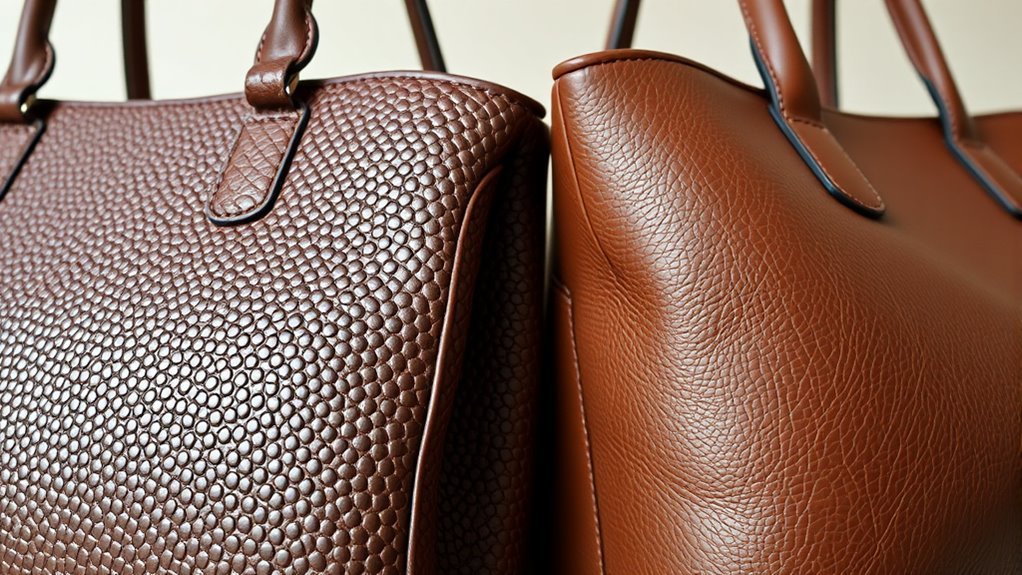
Pebbled leather is leather with a raised, bumpy grain that looks like a surface of tiny pebbles. The texture comes from tumbling the hide or pressing a pattern into it. In handbags, it is popular because the bumps hide scratches and scuffs and the finish is easy to wipe clean. It is a texture, not a grade, so quality still depends on the hide underneath.
What Is Pebbled Leather in Handbags?
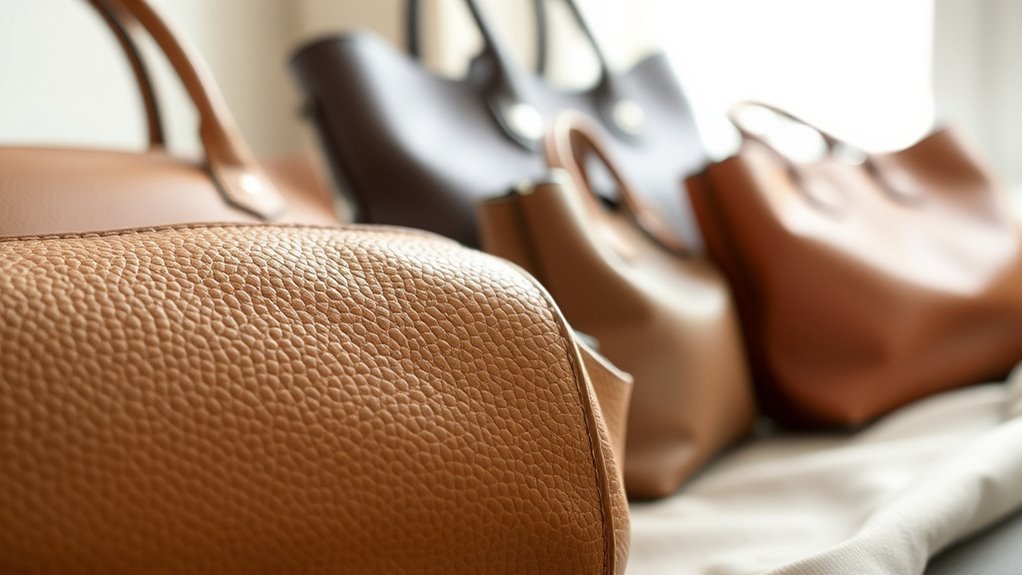
Pebbled leather has a surface covered in small, rounded bumps. It adds depth to a plain color and gives the bag a slightly matte, textured look.
The pebbling can be natural or embossed. Either way, the uneven surface breaks up light, so small scratches and scuffs are hard to see.
That makes it a practical choice for bags you carry every day, set on floors, and squeeze under seats.
You will also see the names pebble grain and pebble leather. Faux leather can be pebbled too, so the word alone does not tell you the bag is real leather.
How Pebbled Leather Is Made
All leather starts with tanning, which preserves the hide. The pebble texture is added afterward, in one of two ways.
The first is milling. The tanned hide is tumbled in a large drum, which makes the natural grain shrink and rise into soft, irregular bumps. The second is embossing. A heated plate or roller presses a pebble pattern into the surface. Embossed grain is more even and repeats across the hide.
Embossing is common on corrected-grain leather, where the surface has been sanded to remove marks. The stamped pattern and a pigment finish then give a uniform look. Most pebbled handbag leather is cowhide. PU and PVC faux leathers are embossed in the same way.
How to Spot Real Pebbled Leather
Telling real pebbled leather from faux takes more than a glance at the grain. Embossed real leather can look just as even as faux. Press the surface with a finger. Real leather wrinkles finely around the press and springs back, while faux tends to dent smoothly.
| Check | Real leather | Faux leather |
|---|---|---|
| Grain | Slightly varied (embossed grain can look even) | Uniform, repetitive |
| Hand feel | Soft, resilient | Stiffer, smoother |
| Backing | Fibrous, layered | Thin, nonfibrous |
Check a raw edge or the underside if you can see one, for example inside a pocket or under a strap. Real leather has a fuzzy, fibrous back. Faux has a thin fabric or knit backing. Real leather also has a distinct smell, and the label or product page should name it as leather.
Why Pebbled Leather Works for Handbags
The main reason is that pebbled leather hides wear. Bags get scraped by keys, zips, and tabletops, and the texture keeps those marks from showing.
It also resists light moisture and stains fairly well, because most pebbled leather has a protective pigment finish. A few drops of rain will usually wipe off without a mark.
Cleaning is simple. A wipe with a soft, slightly damp cloth removes most dirt. Dust can settle in the low points of the grain, and a soft brush lifts it out.
It suits many bag shapes, from soft totes and hobos to structured satchels and crossbody bags.
The trade-off is feel and aging. A coated, pebbled surface does not develop the rich patina that smooth, uncoated leather does.
Pebbled Leather vs Smooth Leather
Pebbled and smooth leather can come from the same kind of hide. The difference is the surface.
Pebbled leather has a raised, bumpy grain. Smooth leather is flat and sleek, and it shows more of the natural hide. A scratch that stands out on smooth leather often disappears into a pebbled surface.
That does not make pebbled leather stronger. It simply hides wear better. It is also a little easier to keep clean, since most marks wipe off the finish.
Smooth leather shows scuffs, water spots, and fingerprints sooner, so it needs more careful handling. Both types benefit from conditioning every 3 to 6 months.
In style terms, pebbled leather looks relaxed and practical. Smooth leather looks dressier and more formal.
Best Pebbled Leather Handbag Styles
Pebbled leather works well in bags that see daily use. Satchels, hobos, totes, and crossbody bags are the most common styles.
A pebbled satchel keeps a neat shape for work and hides the knocks of a commute.
A pebbled hobo is soft and roomy for casual days. A pebbled crossbody stands up to rubbing against your hip and coat.
When you compare bags, look past the texture. Check the listed leather type, the stitching, the edge finish, and the hardware. Prices and ratings change often, so compare current listings before you buy.
How to Care for Pebbled Leather Bags
Pebbled leather is easy to look after. Wipe it regularly with a soft, slightly damp microfiber cloth, and use a soft brush to lift dirt from the grain.
For a deeper clean, use a leather cleaner after a patch test. Condition real leather every 3 to 6 months.
Store the bag in a cool, dry place out of direct sun.
Gentle Cleaning Routine
Gentle cleaning keeps the texture crisp.
Wipe the bag with a lightly damp microfiber cloth to lift dust and surface grime. For marks in the grain, use a soft brush and a little leather cleaner. Test the cleaner on a hidden spot first.
Do not soak the leather. Too much water can leave stains and stiffen the hide as it dries.
Blot spills at once, and let the bag air dry away from heat.
Skip household cleaners and alcohol wipes. They can strip the finish.
Conditioning Pebbled Leather
Conditioning keeps leather supple and helps prevent cracking.
Use a conditioner made for finished leather. Put a small amount on a clean cloth and work it in with light, circular strokes. Then buff with a dry cloth so no residue sits in the grain.
Test it on a hidden spot first, since some conditioners darken leather.
Clean the bag and let it dry before you condition. Every 3 to 6 months is enough for most bags.
Do not condition faux pebbled leather. The product cannot soak in and only leaves a greasy film. Wipe faux leather with a damp cloth instead.
Proper Storage Tips
Store the bag in a cool, dry place away from direct sunlight, which fades color and dries leather.
Keep it in a breathable dust bag or a cotton pillowcase, not in plastic.
Stand it upright or lay it flat, stuffed lightly with tissue. Do not hang it by the straps for long periods, because the weight stretches them.
Do not stack heavy things on it. Pressure can flatten the pebble texture and leave dents.
Wipe the bag and let it dry fully before storage.
Aim for moderate humidity, about 40 to 55 percent, to avoid both mold and dried-out leather.
Frequently Asked Questions
Is Pebbled Leather Good Quality?
It can be. Pebbling is a texture, not a grade. A pebbled bag can be full-grain leather, corrected-grain leather, or faux leather. Check the product details for the leather type. Whatever the grade, the texture hides wear well.
What Type of Leather Is Best for Handbags?
Full-grain leather is usually considered the best for handbags, because it keeps the strongest part of the hide and ages well. Top-grain leather is a close second and is common in mid-priced bags. Pebbled and saffiano finishes are good picks if you want a bag that hides scratches.
What Is the Lowest Quality of Leather Called?
Bonded leather is usually ranked lowest. It is made from leather scraps and fibers bound together with adhesive on a backing. It tends to peel and crack much sooner than solid leather.
Conclusion
Pebbled leather is a practical handbag material. The bumpy grain hides scratches, the finish wipes clean, and it suits everyday styles. Check what leather lies under the texture, look after it with simple cleaning and conditioning, and it will hold up well to daily use.