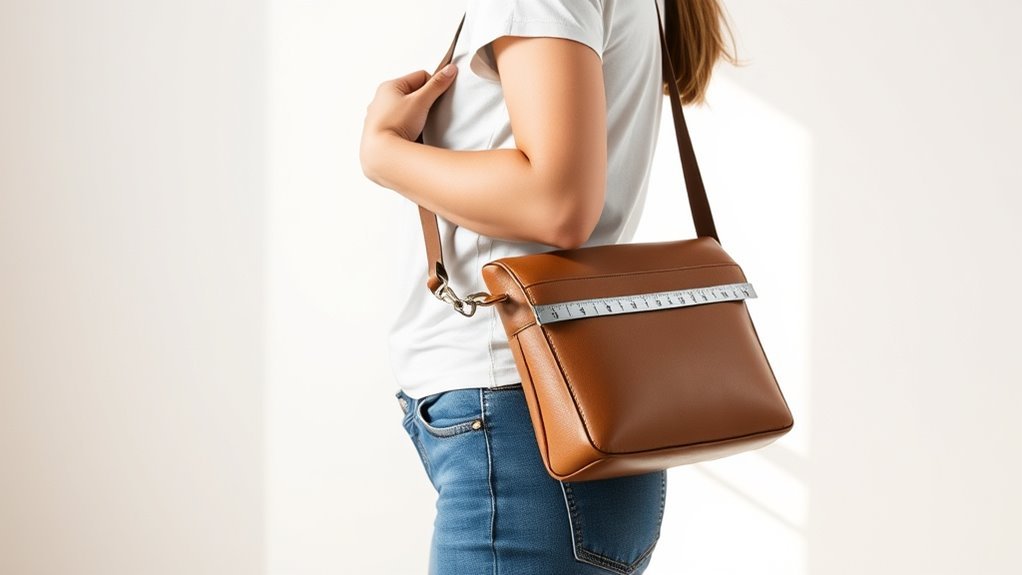
To measure a crossbody strap for your carry position, put a tape measure over one shoulder and across your body to the opposite hip. Hold both ends where you want the top of the bag to sit, and read the length of the loop. That number is the strap length you need. For most adults it falls between 40 and 55 inches, or about 100 to 140 cm. Add an inch or two if you will wear the bag over a thick coat.
Why the Right Crossbody Strap Length Matters
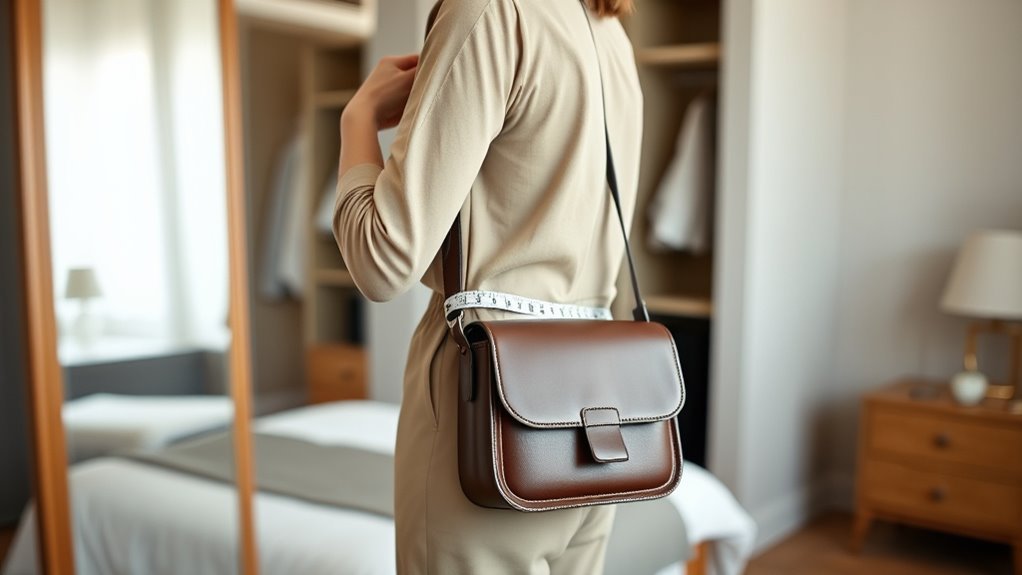
Strap length decides where the bag sits, and that affects comfort and access. A bag at the right height stays close to your body and does not bounce as you walk.
Too short, and the bag rides up under your arm and is hard to open. Too long, and it swings, bumps your thigh, and pulls on your shoulder.
For most people, the easiest position is with the top of the bag at about hip level. Your hand reaches it without lifting your elbow.
An adjustable strap lets you change the position for different clothes and uses, so it is the safest choice if you are unsure.
Identifying Your Ideal Crossbody Strap Length and Carry Position
First decide on your carry position. There are three common ones. At the hip, the top of the bag sits level with your hip bone. This is the standard position. At the waist, the bag sits higher and closer, which is steadier in crowds and suits small bags. Below the hip, the bag hangs lower for a relaxed look, but it swings more.
Most crossbody straps adjust somewhere between 100 and 140 cm, or 39 to 55 inches. Petite people usually end up at the shorter end, and tall people at the longer end. Chest size, shoulder width, and clothing all change the number too, so measure instead of going by height alone.
Where you wear the bag around your body matters as well. In front of the hip, it is easy to see and reach. Behind the hip, it is out of the way but less secure.
Once you know the position, you can measure for it.
Essential Tools for Measuring Your Crossbody Strap
You need only a few things.
A soft tape measure follows the line the strap will take. A mirror shows where the bag will sit.
A piece of string works if you have no soft tape. Mark it and measure it against a ruler.
Measuring Tools Needed
Here is the full list:
- Flexible measuring tape: Perfect for capturing strap length and drop, conforming to your body and bag’s curves.
- Ruler or straight edge: Ideal for precise measurements, especially with fixed straps.
- Pen and paper or digital note-taking app: Great for recording measurements for future reference.
- Mirror: Helps you check the bag’s positioning, ensuring you achieve that desired carry height and style.
- A friend: Having someone assist can improve accuracy, especially when fine-tuning strap length and drop.
Wear the kind of clothes you will usually wear with the bag when you measure.
Accurate Measuring Techniques
There are two things you can measure: your body, to find the length you need, and a strap, to see whether it will fit.
To measure your body, hold one end of the tape at the hip where the top of the bag will sit. Run the tape up across your chest, over the opposite shoulder, down across your back, and return to the same hip. That loop is the strap length you need for a small bag. For a wide bag, subtract a couple of inches, because the bag itself fills part of the loop.
To measure a strap, lay it flat and measure from end to end, including the clips. For an adjustable strap, measure it at the shortest and the longest setting. Your number should fall between the two, ideally not right at either end.
Common Measurement Mistakes
A few common errors throw the number off. Keep these points in mind:
- Use a flexible measuring tape to navigate your body’s curves.
- Measure an empty bag to prevent distortion from weight.
- Fully extend adjustable straps for maximum strap length.
- Check the strap drop separately for ideal fit.
- Consider your body proportions and height for better comfort factors.
How to Measure Your Strap Length in Simple Steps
Here is the whole process in short.
Pick the carry position, loop the tape around your body to that point, and read the length.
Then compare that length with the strap you own or plan to buy.
Measuring Strap Length Accurately
If you do not have anyone to help, there is a quick estimate. Measure from the top of your shoulder straight down to where you want the top of the bag, and double it. This is close enough for choosing an adjustable strap. A few more pointers:
Here’s how to measure accurately:
- Double your shoulder-to-bag measurement to estimate the strap length, typically between 100 cm to 140 cm (39 to 55 inches).
- Consider strap material and style compatibility with your outfits for versatility.
- Test both shortest and longest settings on adjustable straps.
- Account for your frame: petite people might need shorter straps, while taller folks may prefer longer ones.
- Use a mirror to guarantee the bag sits comfortably without straining your shoulders or altering your posture.
Write the number down, in both inches and centimeters, so it is ready when you shop.
Adjusting for Personal Preference
The measured length is a starting point. Fine-tune it by feel.
Put the bag on with your usual load and look in a mirror. The top of the bag should sit where you planned, and the strap should lie flat across your chest.
Walk a few steps. If the bag bounces against your leg, shorten the strap a little. If it digs in under your arm, lengthen it. A change of one inch makes a clear difference.
Measuring Strap Drop for Comfort and Style
Shops often list strap drop instead of strap length. Drop is the vertical distance from the top of the strap to the top of the bag when the strap is held up. For a crossbody, it is roughly half the strap length. Keep these points in mind:
- Ideal Length: Aim for a drop of 20 to 25 inches for easy access and smooth movement.
- Adjustable Options: Check both the shortest and longest settings to fit your unique strap comfort.
- Height Matters: Your height and torso length can dramatically influence the ideal drop.
- Structured vs. Relaxed: Shorter drops (15 to 20 inches) lend a structured look, while longer drops improve a casual vibe.
- Fashionable Functionality: A well-measured strap drop balances style preferences with practicality.
Common Mistakes When Measuring Strap Length
The most common mistake is choosing by height alone. Two people of the same height can need different lengths because of build and clothing.
The second is confusing strap length with strap drop. A listing that says 22 inches is giving the drop, not the full length.
The third is using shoulder-bag numbers. A shoulder bag needs a drop of only 8 to 12 inches. A crossbody needs about 20 to 25 inches of drop, which is a strap of roughly 45 to 55 inches.
The last is buying a fixed strap without measuring. If the length is wrong, you cannot change it without a repair.
How to Adjust Your Crossbody Strap for a Perfect Fit
With an adjustable strap, set the length on your body, not on a table.
Follow these steps:
- Measure from your shoulder to where you want the bag to sit, usually around hip level, then double that for a starting length.
- Use adjustable straps to customize based on your body type.
- Aim for a strap drop of 20 to 25 inches for maximum accessibility.
- If you’re wearing outerwear, lengthen the strap by 1–2 inches so the bag stays at hip level.
- Regularly check your strap length in the mirror to guarantee it sits comfortably without straining your shoulders.
Choosing Between Fixed and Adjustable Straps
Straps come in two kinds, fixed and adjustable.
A fixed strap has one length. It looks clean and has no buckle to slip, but it fits only one position.
An adjustable strap has a buckle or slider and covers a range of lengths.
Benefits of Adjustable Straps
An adjustable strap is the practical choice for most people. One bag can sit at your waist one day and your hip the next.
The main benefits are:
- Versatile carry positions: Switch between hip-level for casual outings and higher placements for formal settings.
- Customizable lengths: Fit standard lengths from 100 to 140 cm (39 to 55 inches) for better style compatibility.
- Improved usability: Quickly modify lengths based on outfit changes or outerwear bulk.
- Balanced weight distribution: Fine-tune strap lengths to reduce shoulder strain during prolonged wear.
- Diverse strap materials: Choose options that align with your lifestyle and aesthetic preferences.
Adjustable straps truly free your carrying experience!
Fixed Strap Considerations
A fixed strap can still work well if you measure first.
Check the listed length or drop against your own number. Remember that it will sit higher over a thick coat, since the coat takes up some of the length.
If a fixed strap is a little long, a repair shop can shorten it. Some people tie a small knot near the hardware as a quick fix, though this can crease leather.
Whatever the type, look for firm stitching at the ends and solid metal hardware.
Versatility in Strap Design
Length is not the only thing that affects comfort.
Width, material, and hardware matter too:
- Ergonomic Design: They improve comfort through better weight distribution.
- Versatility: Perfect for various outfits and activities.
- Width Options: Choose wider straps for heavier bags or slim ones for lighter loads.
- Material Choices: Nylon or leather impacts flexibility and durability.
- Easy Modifications: Quickly adjust for improved access and comfort throughout the day.
How to Measure Strap Length When Wearing Outerwear
A thick coat or puffer jacket adds bulk at the shoulder and chest, so the same strap sits higher. To keep the bag at hip level, lengthen the strap by an inch or two when you wear outerwear.
The simplest way is to measure twice, once in a shirt and once in your heaviest coat. Note both numbers. An adjustable strap should cover both.
Put the bag on over the coat and check in a mirror. Make sure you can still reach the zip easily.
In spring, shorten the strap again, or the bag will hang too low.
Key Takeaways for Choosing the Right Strap Length
Here are the main points to remember:
- Measure from your shoulder to your desired bag position, then double that length for a starting point.
- Most ideal strap lengths range from 100 cm to 140 cm (39 to 55 inches).
- Petite frames (under 5’3″) often need shorter straps, while taller frames (over 5’7″) benefit from longer lengths.
- Adjustable straps offer versatility, adapting to various outfit styles and seasonal outerwear.
- Aim for the bag to sit around hip level for easy access. Higher placements can improve your polished look for formal occasions.
Frequently Asked Questions
How Many Inches Should a Crossbody Strap Be?
Most adults need a crossbody strap between about 40 and 55 inches long. The exact number depends on your height, build, clothing, and where you want the bag to sit.
How to Position a Crossbody Bag?
Wear the strap over one shoulder and across your chest, with the top of the bag at about hip level and slightly to the front. Higher is more secure, and lower is more relaxed.
How to Calculate Strap Length?
Loop a tape measure from the hip where the bag will sit, over the opposite shoulder, and back to the same point. That loop is the strap length. As a quick estimate, measure from shoulder to hip and double it.
How Do I Know My Strap Size?
Measure a strap that already fits you well, from end to end including the clips. Use that length, and its width, when you buy a new one.
Conclusion
The right crossbody strap length is the one that puts the bag where you want it. Choose the position, loop a tape around your body to measure it, and compare the number with the strap. Allow an extra inch or two for coats, and pick an adjustable strap if you want room to change.