
Yes, you can wear a crossbody bag while cycling, but be cautious! The straps can get tangled in gears or wheels, and uneven weight might strain your shoulder. To keep safe, go for a snug fit and consider bags with reflective elements. Adjusting straps will help minimize swaying, making for a smoother ride. Remember, comfort matters for longer trips! Want tips on choosing the best bag and enhancing your cycling experience? Keep exploring!
Identifying Risks and Solutions for Crossbody Bags While Cycling
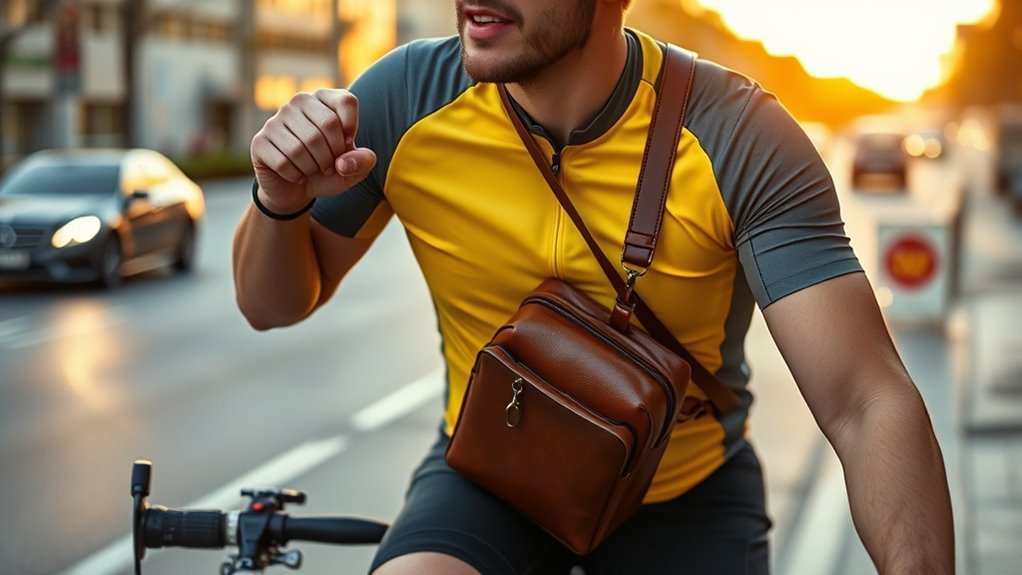
When you’re out cycling, wearing a crossbody bag can seem convenient, but it’s essential to recognize the potential risks involved. The strap might get caught in moving gears or wheels, leading to serious accidents.
Wearing a crossbody bag while cycling may seem practical, but it poses risks like entanglement with gears, leading to accidents.
Plus, that uneven weight distribution can cause shoulder and neck strain, especially on longer rides.
To enhance crossbody bag safety, choose one that fits snugly against your body and has a secure closure to prevent swinging. Look for cycling gear recommendations that feature reflective elements for visibility and materials designed to withstand the elements.
Regularly check the strap’s condition and positioning to avoid tangling or discomfort while riding. Make sure it doesn’t limit your range of motion, so you can enjoy the freedom of the ride without worry.
How Crossbody Bags Impact Comfort and Safety While Riding
While cycling, the comfort and safety of your ride can be greatly affected by how your crossbody bag behaves. If your bag shifts around, it can distract you and lead to discomfort. The uneven weight distribution might strain your shoulder, affecting your cycling biomechanics and increasing the risk of pain.
To combat this, opt for a crossbody bag with an ergonomic design that fits snugly against your body. Lowering the strap can help stabilize it, reducing unwanted movement during your ride.
Plus, look for bags with reflective elements to boost your visibility in low-light conditions—safety first! Always adjust the straps properly to guarantee your bag stays secure, allowing you to focus on the road ahead.
With the right bag and setup, you can enjoy a liberating ride without the hassle of discomfort holding you back.
Essential Features for Safe Cycling With Crossbody Bags
When you’re cycling with a crossbody bag, you want to make sure it’s secure and lightweight.
Look for bags with adjustable straps that fit snugly, so they don’t bounce around while you ride.
Plus, lightweight materials keep your load manageable, letting you focus on the road ahead.
Secure Fastening Mechanisms
A reliable crossbody bag can make all the difference during your cycling adventures, and secure fastening mechanisms are key to that safety.
To guarantee your gear stays put while you ride, look for these essential features:
- Magnetic closures: These keep your bag securely shut, preventing items from spilling out.
- Buckle designs: Opt for quick-release buckles that allow for easy detachment when you need it.
- Adjustable straps: Customize the fit to prevent shifting and distractions while you pedal.
- Reflective elements: Enhance your visibility in low-light conditions, keeping you safer on urban streets.
With these features, you’ll ride confidently, knowing your crossbody bag won’t hold you back!
Lightweight Materials Preference
Choosing lightweight materials for your crossbody bag can make all the difference in your cycling experience. Opt for nylon options or ripstop fabric; these lightweight fabrics enhance comfort and reduce strain while you ride. They won’t weigh you down, allowing you to focus on the freedom of the open road.
Plus, look for water-resistant materials to keep your belongings safe from sudden rain or spills—because who wants soggy essentials?
Reflective elements are a must for low-light conditions, boosting your visibility and safety.
And with multiple compartments, you can easily organize your gear, minimizing distractions as you pedal. Embrace the ride with a bag that’s as liberated as your spirit!
Adjustable Strap Design
Having an adjustable strap design for your crossbody bag can greatly enhance your cycling experience. It’s all about that ideal fit, ensuring strap comfort and minimal movement while you ride.
Here are four key features to look for:
- Customizable Fit: Adjust the strap length to keep your bag secure and comfortable.
- Durable Materials: Opt for straps that can handle the demands of cycling, reducing wear and tear.
- Reflective Elements: Enhance visibility during those early morning or late evening rides for added safety.
- Quick-Release Buckles: Enjoy easy removal while ensuring your bag stays securely fastened.
With these features, you’ll achieve optimal weight distribution and ride freely, feeling liberated on every journey!
How to Adjust Your Bag for a Better Ride
To guarantee a smooth ride, you’ll want to adjust your crossbody bag for ideal fit and stability. Start by ensuring your bag sits high on your torso; this prevents interference with your legs and keeps your center of gravity stable.
Next, focus on strap adjustments—tighten those straps so the bag hugs your body snugly. This minimizes swinging and helps maintain balance while you pedal along.
Tightening your bag straps ensures a snug fit, reducing swinging and enhancing balance as you ride.
Position the bag towards your back to enhance visibility and reduce snag risks. It also feels more secure, giving you the freedom to ride without distractions.
Don’t forget to regularly check the strap’s tightness during your ride; you want it secure but not constricting. A well-adjusted bag not only boosts your comfort but makes your cycling experience more enjoyable.
Tips for Securing Your Bag to Prevent Swinging While Riding
Even with a well-adjusted bag, you might still notice some movement while riding. To keep your crossbody bag secure and prevent it from swinging, consider these tips:
- Adjustable Straps: Confirm your bag has adjustable straps that you can tighten for a snug fit against your body.
- Secure Design: Opt for a crossbody bag that distributes weight evenly, keeping it close to your body for better stability.
- Sleek Profile: Choose a bag with a lower profile to minimize wind resistance, reducing the chances of swinging.
- Extra Straps: Use additional straps or clips to secure your bag to the bike frame or your body, adding another layer of stability.
Alternatives to Crossbody Bags: What Cyclists Use Instead
When it comes to cycling, finding the right way to carry your essentials can make all the difference. Many cyclists ditch crossbody bags for more streamlined options. Hydration packs, like Camelbaks, are a game-changer, keeping you hydrated while freeing up your hands.
Finding the right way to carry essentials transforms your cycling experience, with hydration packs offering hands-free convenience.
You can also make the most of gear pockets in cycling jerseys or cargo shorts to stash essential snacks, gels, and energy bars without extra bulk.
If you prefer compact storage, waist packs offer a snug fit, though they might feel restrictive during intense rides. For those longer journeys, pannier systems mounted on bike racks allow you to transport larger loads with ease, shifting weight to the bike for better stability.
Embrace these alternatives to elevate your cycling experience, ensuring you ride freely and comfortably while carrying everything you need!
Cyclists Share Their Experiences With Crossbody Bags
How do cyclists really feel about using crossbody bags on their rides? Many embrace them for their hands-free convenience, enhancing their commute. However, experiences vary based on individual comfort and bag size.
Here’s what you need to know about crossbody preferences from fellow cyclists:
- Convenience: Quick access to essentials makes rides smoother.
- Comfort: Many find crossbody bags more liberating than restrictive waist packs.
- Adjustment: Proper strap adjustments are key to stability—don’t overlook this!
- Size Matters: Small crossbody wallets work well, but bigger bags can get in the way.
While some worry about needing to remove their bags during rides, community feedback leans toward positive ride experiences overall.
Managing Personal Items While Cycling: Park Policies to Know
When you’re out cycling, knowing the park’s bag policies can save you from unexpected hassles.
Some parks allow small crossbody bags, while others might ask you to stash them in designated storage.
Before you hit the trails, check the rules to guarantee a smooth ride!
Allowed Bag Types
Maneuvering park policies on personal items can feel like a maze, especially when it comes to allowed bag types while cycling.
To help you navigate these crossbody bag regulations, check out this quick list of bag types typically allowed:
- Small Crossbody Bags: Perfect for essentials, as long as they comply with park guidelines.
- Fanny Packs: These sit snugly and won’t interfere with your ride.
- Sling Bags: A trendy option that balances style and functionality.
- Backpacks: If allowed, opt for smaller sizes to maintain cycling bag etiquette.
Always assess park rules beforehand to avoid any bumps in your ride.
Sharing experiences with fellow riders can also clarify what’s acceptable, ensuring your cycling adventure remains liberating and enjoyable!
Storage Guidelines During Rides
Understanding storage guidelines during your cycling adventures can make all the difference in your experience. Before heading out, check the park policies regarding personal items. Some parks allow you to keep small bags like crossbody purses while cycling, while others might require you to stash them in designated areas.
For smooth sailing, opt for a small, secure crossbody bag that you can wear comfortably. This not only enhances bag organization but also aligns with cycling etiquette, ensuring you’re not a hazard on the trail.
Keep your personal items minimal and prioritized; this way, you can enjoy the ride without worrying about storage issues. Engaging with the cycling community can also provide valuable insights into managing your essentials effectively.
Choosing the Right Bag for Your Cycling Adventures
Choosing the right crossbody bag for your cycling adventures can make all the difference in comfort and safety. When you’re out there feeling free, you want a bag that complements your journey.
Here are some key features to evaluate:
- Durable, Weather-Resistant Materials: Protect your belongings from unexpected weather changes.
- Adjustable Straps: A snug fit minimizes movement and distractions, allowing you to focus on the ride.
- Reflective Elements: Enhance your visibility during evening rides for added safety.
- Multiple Compartments: Keep your essentials organized and easily accessible, so you’re never fumbling around.
Frequently Asked Questions
How Are Crossbody Bags Supposed to Be Worn?
To wear a crossbody bag, position it diagonally across your body, resting near your hip. Adjust the strap length for comfort, ensuring it doesn’t bounce while you move. Stay stylish and free while you roam!
What Is the 75% Rule in Cycling?
The 75% rule in cycling keeps your heart rate within 75% of its max, ensuring cycling safety and bag comfort. This balance boosts endurance, prevents fatigue, and helps you ride longer without overdoing it. Enjoy the freedom!
What Do You Carry in a Bike Bag?
When you pack your bike bag, think essentials checklist—water, snacks, tools, and personal items. Keep the weight distribution under 10% of your body weight for a smoother, carefree ride. Enjoy every moment!
Can I Wear Baggy Pants on a Bike?
You can wear baggy pants on a bike, but consider comfort and style choices. Fitted options reduce the risk of accidents, while breathable fabrics keep you cool. Secure them with adjustable straps for a carefree ride!
Conclusion
In the end, whether you’re cruising or commuting, crossbody bags can be convenient but come with caution. Prioritize proper positioning, and pick a bag that’s both practical and secure. With the right adjustments, you can enjoy a smooth, safe ride without the sway. So, gear up, glide confidently, and let your cycling adventures be stylish and stress-free!