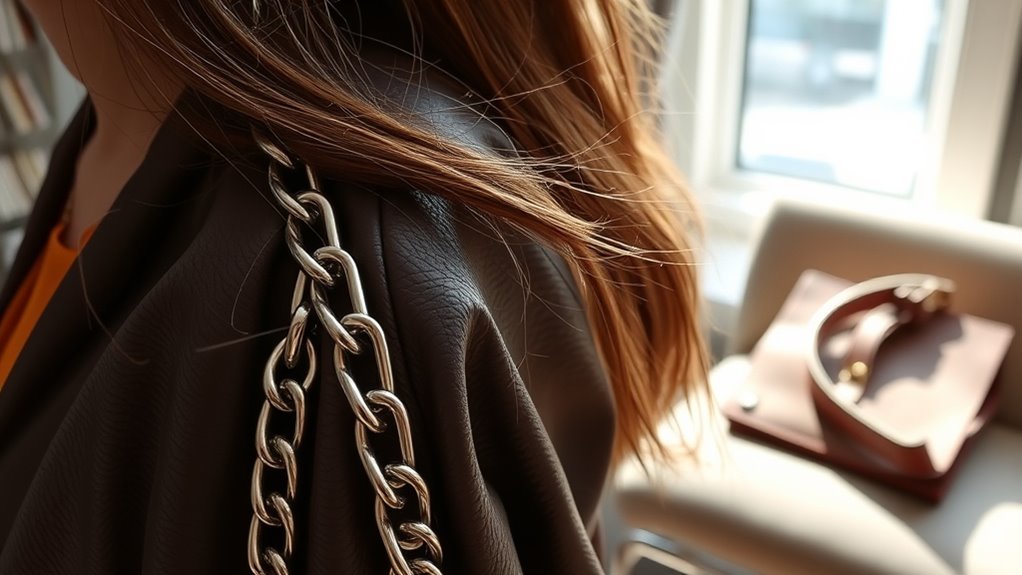
Your bag chain catches hair when tiny links, rough seams, and constant movement turn loose strands into little traps. You can prevent snags by choosing smooth, rounded, polished hardware, checking for burrs, and keeping the chain clean and lightly buffed. Tie hair back, tuck it under a scarf, and adjust your bag so it doesn’t brush your shoulders. With the right chain and a few smart habits, you’ll keep things sleek—and there’s more to uncover just ahead.
Why Does a Bag Chain Catch Hair?
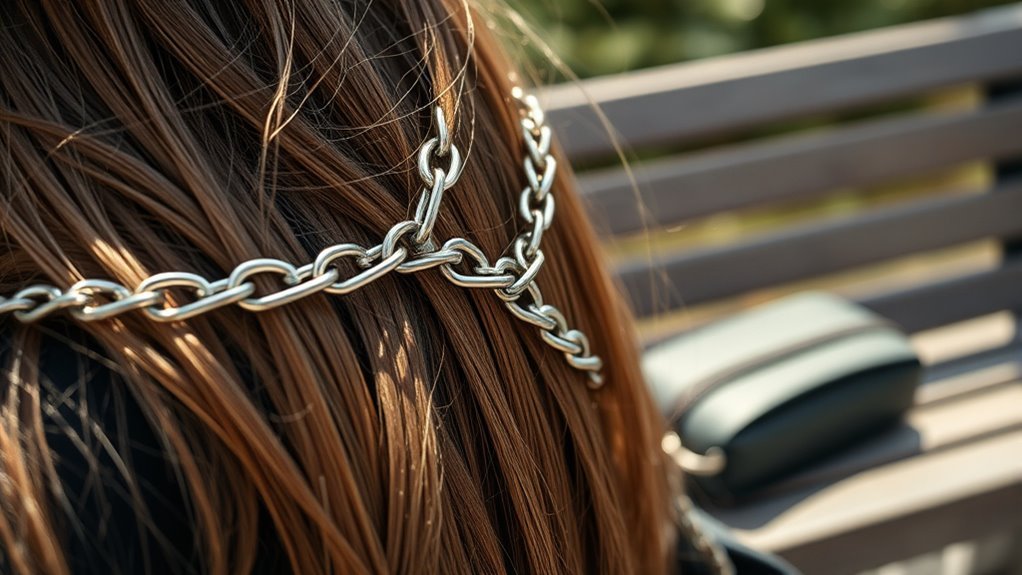
A bag chain catches hair because its tiny links and textured surfaces are built to snag on anything nearby, especially loose strands. When you move, the bag shifts too, and that restless swing lets the chain graze your hair again and again.
If your style is long, wavy, curly, or otherwise airy, it sits closer to the bag and invites tangles more easily than tighter hair types. The same goes for rough bag materials: uneven finishes, sharp edges, and gritty metal can hook strands like a sly little trap.
You don’t need to accept that friction as fate. You can notice where the chain lands, how it brushes your shoulder, and how your body carries the bag through the day. That awareness helps you reclaim your space, reduce snags, and keep your hair moving free instead of getting caught in the chain’s grip.
Which Bag Chain Designs Snag Least?
You’ll notice the smoothest chains are the ones with link shapes that glide instead of grip, especially when each curve feels soft against your hair.
Low-profile hardware keeps protrusions from becoming tiny snag traps, so the bag moves with less friction.
Rounded edge finishes also matter, since they soften every contact point and help the chain slip past strands cleanly.
Smooth Link Shapes
When it comes to snag-resistant bag chains, smooth, rounded links are the gentlest choice, because their curves glide past hair instead of hooking into it. You’ll feel the difference in link flexibility and weight distribution, since a well-made chain moves like jewelry, not a trap. Larger links can help, too, giving strands fewer places to lodge.
| Design | Effect |
|---|---|
| Rounded links | Slide cleanly |
| Larger links | Reduce tangling |
| Polished finish | Limits friction |
Choose polished metal or sleek synthetic surfaces, and skip rough textures that tug at your freedom. Minimalist chains with fewer adornments keep motion easy and elegant. Keep yours clean, because debris dulls the smoothness and invites snags. With the right chain, you carry style without surrendering softness.
Low-Profile Hardware
Low-profile hardware is your best bet if you want a bag chain that plays nice with hair, because flat links, smooth edges, and slim silhouettes give strands far fewer places to catch. You’ll feel the difference in motion: less swing, less jostle, more freedom.
- Flat links gliding like polished pavement
- Soft-metal or silicone hardware materials cooling friction
- Lightweight chains moving with your body, not against it
- Woven designs staying secure without sharp drama
- Design trends favoring sleek, pared-back lines
Choose hardware that looks intentional and feels effortless. When you keep the profile low, you let your bag flow with you instead of snagging your day.
Rounded Edge Finishes
Rounded edges are the quiet heroes of snag-free bag chains, smoothing the passage for hair so strands slide past instead of catching on a sharp corner. You’ll feel freer with rounded edges and polished links that support snag prevention without sacrificing style.
| Design | Snag Risk | Best For |
|---|---|---|
| Rounded | Low | Daily wear |
| Polished steel | Very low | Sleek looks |
| Coated metal | Low | Soft touch |
| Thick chain | Low | Extra security |
| Wide links | Low | Hair freedom |
Choose stainless steel or coated metals, and let heavier, thicker chains do the work with softer contours. Wide links open space, so your hair can move unbound. When you want liberation from tangles, pick finishes that glide, not grip, and your bag becomes a smoother companion.
How to Spot Rough Links and Edges
You can spot trouble by inspecting each link seam, because even a tiny burr or uneven join can hook strands like a hidden fishhook.
Run your fingers along the chain to feel for sharp, jagged edges that your eye might miss, and note any roughness that hints at poor finishing.
Check for worn spots or dulled polish too, since faded surfaces often turn abrasive and snag-prone.
Inspect Link Seams
Trace each link seam with care, looking for roughness, tiny burrs, or jagged edges that can easily catch and tangle hair. You’ll honor your freedom by checking every seam where chain materials meet, because link durability depends on clean finishes and steady upkeep.
- A silver loop glinting under daylight
- Fingertips sliding over a satin-smooth chain
- A magnifying glass revealing hidden micro-scratches
- Connection points wearing thin like weathered stone
- Polish restoring a sleek, untamed shine
Run your fingers along the chain; if it glides, you’re clear. If it snags, inspect the join.
Use a magnifier to spot micro-abrasions the eye misses, then polish the chain regularly so rough spots don’t grow into snagging traps.
Feel For Sharp Edges
A single rough link can turn a bag chain into a hair trap, so feel each edge with your fingertips and check for any sharpness, jaggedness, or tiny burrs hiding along the metal. You’ll notice liberation in the details when you slow down and trust your touch.
Run your hand along every link, hunting for snag points your eyes might miss. If the chain is petite or intricate, bring in a magnifying glass for sharper edge detection. A soft cloth can help you sweep across the surface and reveal rough spots without force.
This kind of chain maintenance keeps your look fluid and your hair free, letting metal move like jewelry instead of a snare. When you find a flaw, set that chain aside before it can catch and cling.
Check For Finish Wear
Even a little finish wear can turn a sleek bag chain into a snag hazard, so inspect the links for scratches, dull patches, and rough spots that could catch hair.
Run your fingers along each curve; if you feel a burr, trust that warning. A magnifying glass helps you spot tiny chips, tarnish, and jagged edges hiding in plain sight.
These chain maintenance tips keep your look free and fluid.
- silver flashes dulled by time
- a nick glinting like a blade
- matte patches near clasp joints
- uneven seams brushing fingertips
- worn links shadowed by tarnish
Choose finish protection methods that preserve the shine, and check the chain regularly.
Even slight wear grows into stubborn snags, so stay watchful and keep your style moving unbound.
Keep Hair Clear of Your Bag Chain
Your bag chain can turn into a tiny snag trap, catching strands with every swing and brushing motion, so keep your hair clear before the damage starts.
Tie your hair back, twist it up, or tuck it beneath a silk scarf so it stays out of reach. A scrunchie or scarf can act like a graceful shield, letting you move freely without inviting tangles. This simple habit supports hair care and smarter bag maintenance, because fewer snags mean less breakage and less stress.
Before you head out, run your fingers along the chain and check for rough spots or tiny protrusions; fix anything sharp right away. If the chain brushes near your neck or shoulder, adjust the bag so it sits away from your hair.
The goal is ease: clean lines, fewer catches, and a bag that works with your rhythm, not against it.
Choose Smoother Charms and Hardware
You’ll want charms and hardware with smooth, rounded surfaces that glide instead of grip, like polished metal or glossy acrylic catching the light.
Skip sharp edges and ornate cuts, since they can hook onto loose strands with a tiny, annoying snag.
When you choose a sleek finish, your bag looks chic—and your hair stays free.
Smooth, Rounded Surfaces
Polished charms and rounded hardware are the quiet allies of snag-free style, because smooth surfaces glide past hair instead of grabbing at it. You’ll feel the difference when charm materials and bag textures work in harmony, not in tension.
Choose pieces with a satin sheen, soft contours, and a finish that lets movement stay fluid.
- polished metal catching light
- sleek plastic curving softly
- rounded links brushing free
- hair slipping past clean edges
- a bag chain moving like silk
Inspect your bag chain often, because tiny rough spots can invite tangles.
When you pick charms made for hair safety, you protect your freedom, comfort, and flow. Your bag should move with you, never against you.
Skip Sharp Edges
Sharp edges can turn a stylish bag chain into a snag machine, catching hair and pulling with every shift. You deserve hardware that moves like silk, not scissors.
Choose charms with rounded contours, polished links, and smooth charm materials that glide past your strands instead of latching on. This matters across hair types, from fine coils to thick waves, because every texture can catch on a burr or jagged seam.
Run your fingers along clasps and connectors before you buy; if anything feels rough, skip it. Keep an eye on wear, too, since scuffs can create new snags over time.
High-quality, well-crafted chains protect your hair, preserve your freedom, and keep your look polished without the pain.
What to Do When Hair Gets Caught?
When hair gets caught in a bag chain, resist the urge to yank; instead, gently guide it back in the direction of growth to reduce breakage and keep the strands from knotting tighter.
If the snag stays stubborn, you can soften the grip with a little conditioner or detangling spray, then ease the fibers free.
For hair care that honors your freedom, keep scissors close for only the tightest, single strands, and snip with precision, away from surrounding hair.
Before you step out, inspect the chain for rough links as part of snag prevention, and keep long hair pinned or tied back when you want effortless movement.
Inspect the chain for rough links, and keep long hair pinned back for easy, snag-free movement.
- Silk strands gliding free
- A chain catching moonlight
- Conditioner blooming like balm
- Scissors poised, not panicked
- Hair tied back, neck open
How to Clean a Bag Chain Properly
To keep your bag chain gleaming, wipe it gently with a soft cloth dampened in warm, soapy water, lifting away grime without scratching the finish. You’ll free the links from city dust and daily residue with graceful, steady strokes.
For stubborn tarnish, mix baking soda and water into a soft paste, then brush it on lightly with a soft brush. Rinse well, because lingering paste can dull the shine, and dry every link thoroughly with a clean cloth.
Skip harsh chemicals and abrasive pads; they can strip the finish and leave the metal tired. These cleaning tips turn chain maintenance into a simple ritual of care, helping your accessory stay polished, strong, and ready to move with you.
When you clean it regularly and store it properly, you protect its beauty and extend its life, so your bag chain keeps its liberated sparkle.
Daily Habits That Stop Hair Snags
A few small habits can keep your hair safely clear of your bag chain’s reach. Choose bag styles with smooth metal or plastic links, so every swing feels sleek, not snaggy.
In your hair care routine, favor buns or high ponytails that lift strands above the chain’s path. When you grab your bag, move with calm intention; quick jerks invite tangles.
Check the chain before you head out, and if you spot a rough edge, smooth it down before it bites. Hair-friendly clips and ties can also give you extra protection on busy days.
- A polished chain glinting like a silver ribbon
- A high ponytail floating above your shoulder
- Fingers lifting a bag with easy grace
- A clip holding wisps back from danger
- A smooth strap resting against your side
How to Make Your Bag Chain Last Longer
Keeping your bag chain smooth and sturdy helps it stay snag-free, so a little care goes a long way. Make chain maintenance part of your routine: wipe away dirt and grime often, because grit can rub, dull, and invite hair to catch.
Keep moisture off the metal, since dampness can speed tarnish and weaken the finish. Slip the chain into protective storage when you’re not using it, and choose an anti-tarnish bag or strip to fend off oxidation that can leave rough patches.
Keep moisture away, tuck your chain into protective storage, and use anti-tarnish protection to preserve its smooth, polished finish.
Every so often, run your fingers along the links and inspect for sharp edges, bends, or wear. If you spot damage, fix it right away so snag risks don’t build up.
Treat your chain like the statement piece it is—polished, resilient, and free to move with you, not against you.
How to Store a Bag Chain Safely
Tuck your bag chain away in a soft velvet pouch, and you’ll give those links a cushioned rest that helps guard against scratches and slows tarnishing by limiting air exposure.
Choose storage materials that feel luxurious yet practical, then slip in a grip seal bag or anti-tarnish strip for extra protection. Keep the pouch out of direct sunlight; UV rays can fade shine and weaken delicate finishes over time.
Before storing, wipe the chain clean so grime won’t settle into crevices and spark snags later. If your chain has protective coatings, treat them gently and avoid rubbing them against rough seams.
- A velvet pouch resting in a drawer
- A sealed bag with one bright chain
- An anti-tarnish strip tucked beside metal
- Soft shadows away from a sunny sill
- A polished chain gleaming after a quick wipe
Frequently Asked Questions
What Is the 2:1:1 Rule for Jewelry?
The 2:1:1 rule means you wear two statement jewelry pieces, one simple piece, and one medium piece. You’ll balance chain types, refine styling tips, support jewelry maintenance, and protect your hair with elegant restraint.
How to Keep Hair From Getting Tangled in Necklace?
You can keep your hair free by choosing smoother necklace materials, shorter jewelry length, and thoughtful styling tips like tying hair back. Treat this as hair care with style—clean your chain, store it separately, and move freely.
Can You Wear a Herringbone Necklace Every Day?
Yes, you can wear a herringbone necklace every day; its sleek shape suits daily wear, and herringbone durability keeps it looking polished. You’ll enjoy effortless style, comfort, and a liberated, versatile glow.
What Kind of Necklace Won’t Get Caught in Hair?
You’ll want a smooth gold or silver necklace with hair friendly designs, like flat or rounded links, secure clasps, and no danglers; these chain materials glide cleanly, stay put, and won’t snag your strands.
Conclusion
If your bag chain keeps catching your hair, it’s no accident—it’s usually the little ridges, sharp seams, or thirsty-looking gaps doing the grabbing. When you choose smoother links, keep hardware polished, and tuck loose strands away, you make those snags far less likely. Clean it gently, store it carefully, and your chain’ll stay sleek, stylish, and kind to your hair. In the end, the right bag chain doesn’t just carry your essentials—it moves with you.