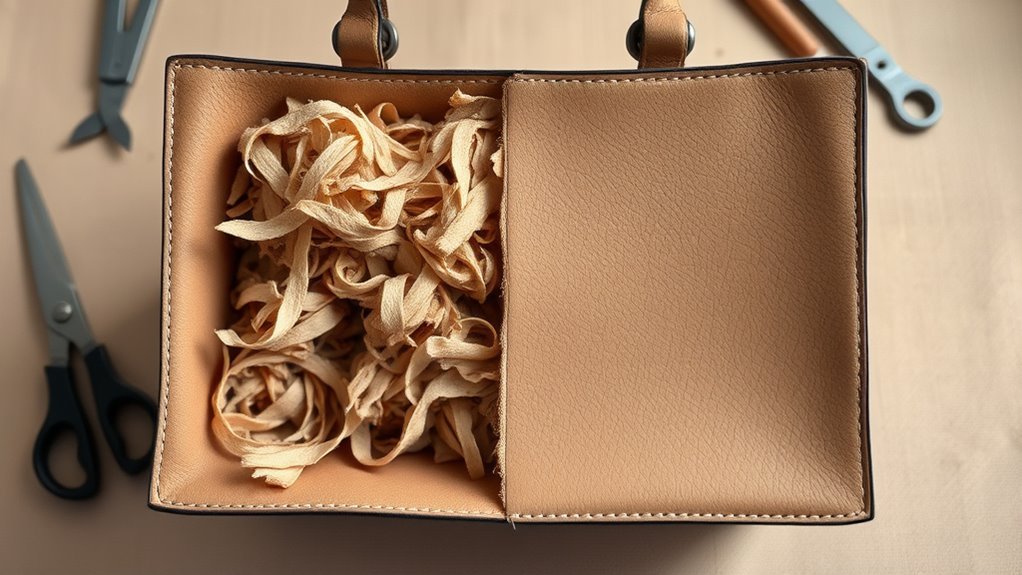
Bonded leather bags are made from 15–30% genuine leather fibers mixed with polyurethane or latex binders, then pressed onto a fabric or paper backing. You get a uniform, embossed surface coating that mimics real grain and pores, but it doesn’t breathe or recover flex like full-grain hide. It’s a lower-cost, lighter option, yet it usually peels, cracks, and wears faster. If you want the details, the differences become clearer next.
What Is Bonded Leather in Bags?
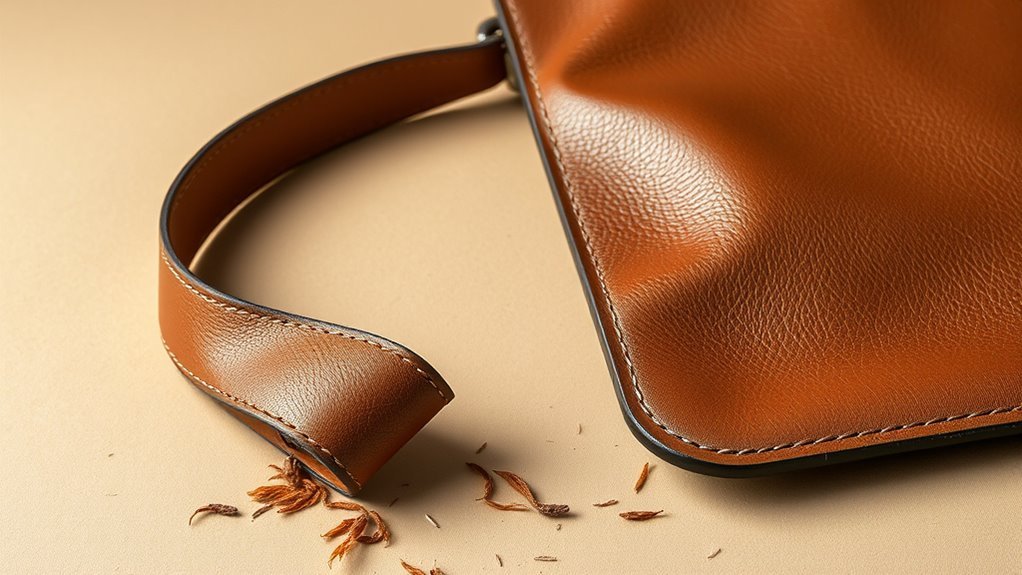
Bonded leather in bags is a composite material made from 15–30% genuine leather fibers blended with synthetic binders such as polyurethane or latex, then formed over a fabric or paper backing for structure.
You get an affordable alternative to full-grain leather when you need lower cost and lighter weight. The surface usually receives an embossed finish, so it can imitate leather grain while staying visually uniform.
That consistency can look clean, but it also signals the material’s engineered nature. Because it relies on synthetic materials and a thin leather-fiber content, bonded leather isn’t true leather in the full sense.
You should expect reduced toughness, limited aging character, and a service life of roughly 2 to 5 years. If you want access without premium pricing, this material offers it, but you’ll trade away durability and long-term resilience for immediate affordability.
How Bonded Leather Bags Are Made
To make bonded leather bags, manufacturers start by blending leather scraps and fibers—usually about 15–30% of the final material—with polyurethane, latex, or similar binders into a composite slurry.
You then see production techniques that press this mix into sheets, creating a workable substrate for bag panels and trims.
- Mix fibers, adhesives, and fillers to form a uniform matrix.
- Press the slurry into dense sheets under heat and pressure.
- Add a fabric or paper backing for structure and handling strength.
- Emboss the surface to mimic natural grain and achieve a consistent finish.
These material advantages let you access lower-cost construction and predictable surfaces while keeping the hand of leather-like material.
Because the composite relies on synthetic binders, it’s less durable than full-grain leather and can peel or crack over time, so your choice should balance affordability, performance, and the freedom to prioritize use over prestige.
How to Spot Bonded Leather on a Bag
You can spot bonded leather on a bag by checking for a uniform, embossed surface pattern that looks repeated rather than naturally varied.
Inspect the edges and backing for exposed white fibers or a layered composite structure, then flex the material to see if it feels stiff instead of supple.
A smell test also helps: bonded leather often gives off a chemical odor, while genuine leather usually has a more natural scent.
Surface Pattern Clues
Surface clues can reveal bonded leather quickly, especially when the bag’s exterior shows a uniform, artificial grain with repeated embossed patterns that don’t vary like natural leather.
Use texture analysis and pattern recognition to inspect the finish for sameness, stiffness, and machine-made regularity. You’ll notice bonded surfaces rarely develop organic pores or irregular scars, so the material reads as controlled rather than alive.
Check these cues:
- Repeating grain blocks
- Flat, overly consistent sheen
- Hard, less pliable feel
- Chemical odor from the coating
When you study the surface closely, you claim clearer knowledge about what you’re carrying and refuse deception by imitation materials.
Bonded leather can imitate luxury, but its pattern language stays mechanical, not natural.
Edge And Backing
Where the surface can look convincing, the edge and backing usually give bonded leather away. You should inspect the cut edge closely: bonded leather often looks like cardboard or plastic, with a thin coating over a fabric or paper core.
That weak backing quality limits support, so the bag won’t present the dense, self-supporting structure you get from genuine leather. On worn corners, you may see the backing start to show through as the finish cracks or flakes.
True leather edges look fibrous, compact, and more refined, and they keep their integrity as they age. If you want better edge durability, trust materials that retain a unified grain structure rather than layered scraps bound with resin.
Bend And Smell Tests
Bending a bonded-leather bag usually reveals the material quickly: instead of forming soft, natural folds, it tends to crease sharply and may even crack at the fold line.
You can verify it with this quick diagnostic:
- Bend the panel; bonded leather shows rigid creases, while genuine leather flexes smoothly.
- Smell the surface; a chemical, plastic-like odor signals synthetic binders.
- Check the grain; uniform texture suggests an engineered coating, not natural hide.
- Note any flaking or white fibers, which point to durability concerns.
These signs help you choose gear that supports your freedom, not a product that fails early.
For maintenance tips, keep the bag dry and inspect stress points, but remember: bonded leather won’t age like full leather.
Bonded Leather vs. Top-Grain Leather
When you compare bonded leather with top-grain leather, the core difference is material integrity: bonded leather uses only 10–30% genuine leather fibers mixed with synthetics, while top-grain leather comes entirely from the top layer of animal hide.
That composition drives performance. You get bonded leather advantages when budget matters: it’s cheaper, easier to clean, and works for short-term use.
Bonded leather is budget-friendly, easy to clean, and suited for short-term use.
But the tradeoff is clear—bonded leather usually lasts 2–5 years, then peels or cracks as its matrix breaks down.
Top-grain leather benefits include far higher durability, a decades-long service life, and a natural surface that develops patina with proper conditioning.
You also keep unique hide variation instead of uniform imitation grain.
If you want a bag that supports long-term use and material autonomy, top-grain leather gives you more value per year.
Bonded leather can lower upfront cost, but top-grain leather protects your investment and extends wear.
Why Bonded Leather Looks Like Real Leather
You’ll notice that bonded leather often looks convincing because manufacturers emboss grain patterns into its polyurethane-coated surface, creating a tactile texture similar to natural hide.
You’re also seeing a fiber-and-glue matrix of leather scraps mixed with synthetic binders, which helps the material accept a leather-like finish. That process produces a uniform appearance with fewer natural marks, so the surface reads as real leather at a glance.
Embossed Grain Patterns
Embossed grain patterns give bonded leather its convincing leather-like look by imprinting a surface texture that mimics the natural pores, wrinkles, and irregularities of genuine hide. You get embossed aesthetics and synthetic appeal from a controlled die pattern that makes the bag read as leather at a glance.
- The pattern adds visual grain without natural hide variation.
- Polyurethane or PVC coatings flatten tone and boost uniformity.
- Repeating motifs can imitate character, yet stay mechanically regular.
- The surface often peels or cracks sooner than true leather.
You can choose bonded leather for low-cost style, but you’re not getting the depth, random markings, or long-term resilience that freedom-minded buyers often expect from authentic leather.
Fiber-Glue Surface Blend
Bonded leather’s leather-like look comes from a fiber-glue blend that uses about 10–30% real leather fibers mixed with polyurethane or latex.
You’re seeing a controlled fiber composition that turns scraps into a usable sheet, while the glue properties bind those particles into a compact skin.
This matrix lets manufacturers press, coat, and shape material at low cost without relying on full hides.
The result feels close to leather at first glance, yet the synthetic binder limits breathability and flex recovery.
You won’t get the same aging response or tensile behavior as premium leather, because the fibers sit in a resin-rich matrix rather than a continuous hide structure.
For you, that means a lighter-price bag, but also a shorter service life and less material freedom.
Uniform Finish Mimicry
Surface uniformity is one of bonded leather’s biggest visual advantages. You get a controlled, repeatable finish because manufacturers blend leather fibers with synthetics, then press and coat the sheet. That process lets you read the material as refined, even when it’s engineered for affordable options and style versatility.
- Artificial grain embossing copies real-hide texture.
- Synthetic coatings add a glossy, polished surface.
- Limited natural flaws create a consistent look.
- Uniform color helps bags appear premium at first glance.
You’ll notice the tradeoff: genuine leather shows pores, scars, and tonal shifts that bonded leather suppresses. That sameness can signal the material, yet it also frees you to choose a sleek bag without paying full-hide prices.
How Long Bonded Leather Bags Last
Most bonded leather bags last about 2 to 5 years, though actual lifespan depends heavily on how often you use them and how well you care for them.
You’ll see durability concerns early because bonded leather contains only 10-30% genuine leather, with the rest built from fibers and surface coatings that wear faster than full-grain hides.
Peeling, edge fray, and cracking usually start where flex stress is highest. Sunlight and high temperatures can also accelerate fading and binder breakdown, so avoid prolonged exposure.
To extend service life, follow practical maintenance tips: wipe the surface gently, keep the bag dry, and store it away from heat and direct UV.
Even with careful handling, the material’s limited structure means it won’t match real leather longevity. That shorter cycle can make the bag feel economical at purchase, but over time you may replace it sooner, reducing overall value and limiting your freedom from repeated spending.
When Bonded Leather Bags Make Sense
If you want the look of leather without the cost of top-grain hides, bonded leather bags can make practical sense. You’re getting a material with 10-30% leather fibers blended into synthetics, then embossed for a leather-like grain. That construction gives you lightweight handling, easy cleaning, and strong fashion versatility for outfits that don’t need heirloom durability.
Use them when:
Use them when you want affordable style, occasional use, and a leather look without the premium price.
- You want a lower-cost accessory, often a quarter to a fifth of top-grain pricing.
- You need a bag for occasional wear, not daily abrasion.
- You value visual texture over long-term aging.
- You’re willing to follow basic maintenance tips to limit surface wear.
For casual events, decorative styling, or short-term rotation, bonded leather lets you access the leather aesthetic without locking you into expensive materials.
Keep it dry, wipe it gently, and store it flat; with that care, you can stretch its 2-to-5-year service window.
Should You Buy a Bonded Leather Bag?
You should buy a bonded leather bag when you want a lower-cost, lighter accessory with a leather-like look and don’t need long-term durability. It blends 10-30% leather fibers with 70-90% polyurethane, so your cost comparison favors savings over permanence. Yet the surface coating can peel and crack, and service life often stays near 2-5 years.
| Factor | Bonded leather |
|---|---|
| Weight | Light |
| Texture | Uniform |
| Durability | Limited |
| Resale value | Low |
Choose it if you value easy cleaning, mobility, and a controlled budget. Skip it if you want the depth, grain variation, and resilience of full-grain or top-grain leather. Since it isn’t true leather, you should expect weaker longevity and lower resale value. For maintenance tips, keep it dry, wipe it gently, and avoid heat. That lets you use the material on your terms, without pretending it’s something it’s not.
Frequently Asked Questions
What Is Reconstituted Leather?
You get reconstituted leather by bonding leather fibers with polyurethane or latex; you’ll see reconstituted properties and bonded advantages in its uniform grain, lower cost, and lighter feel, though it won’t age like full-grain leather.
Is Leather Considered a Fiber?
No, you don’t treat leather as a fiber; it’s more like a woven shield. You compare its collagen matrix, durability comparison, and texture against synthetic alternatives, because tanning transforms hide into a flexible material.
What Is the Lowest Quality Leather?
Bonded leather is the lowest-quality leather you’ll encounter; you get limited durability factors, weak wear resistance, and synthetic alternatives blended in, so it peels, cracks, and can’t match real leather’s performance or longevity.
What Does “Leather Bound” Mean?
Leather bound means you’ve got a leather-covered item—by chance, often bonded leather—where leather terminology signals a wrapped exterior, not always solid hide. You’ll see it on books or bags, with stitched, embossed surfaces.
Conclusion
If you choose a bonded leather bag, you’re getting a material that can look convincingly premium while being built from leather fibers, adhesives, and a coated surface—not full hide. That irony matters: it often wins on price and appearance, yet it usually loses on durability and aging. You’ll spot the tradeoff in edge wear, peeling, and stiffness. So if you want short-term style, it can make sense; if you want longevity, you’ll likely need top-grain leather instead.