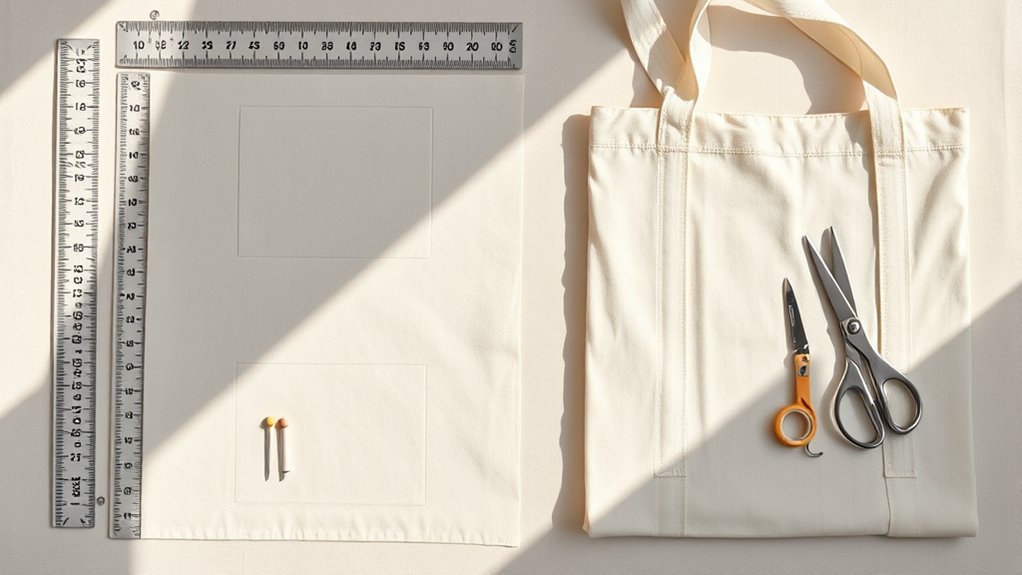
To calculate fabric for a tote bag and its handles, start by measuring the bag’s height, width, and depth. Add seam allowances of 3/8 inch and hem allowances of at least 1/2 inch. For a small tote (12 x 14 x 4 inches), you’ll typically need about 1 yard of fabric, while larger bags may require up to 1.75 yards. Don’t forget to account for handle dimensions and any additional features. There’s more to contemplate as you design your perfect tote!
Why Accurate Measurements Matter for Your Tote Bag
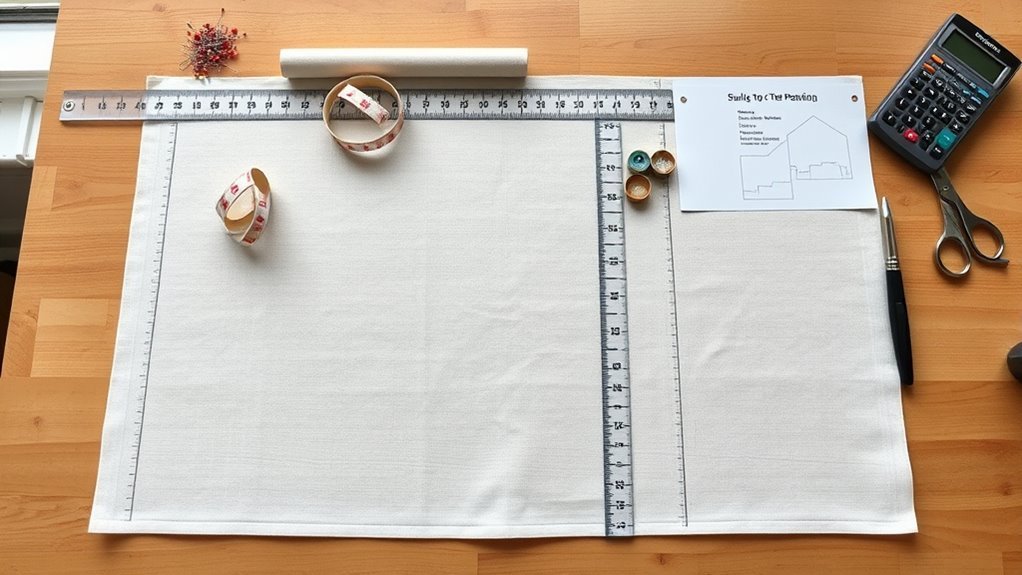
When you’re crafting a tote bag, accurate measurements are vital to guarantee it serves its intended purpose effectively. Whether you’re carrying books, groceries, or gym gear, proper sizing assures your bag meets its needs without compromising tote bag functionality.
Nobody wants a bag that’s too small, leading to frustration and reduced customer satisfaction, especially in online shopping.
Understanding dimensions like height, width, and depth helps you select the right size for everyday use or specific items. Additionally, measuring handle lengths and drop is essential for comfort and usability when the bag is filled.
Consistent and precise measurements not only enhance the bag’s usability but also streamline fabric calculations, reducing waste and optimizing material use. By prioritizing accurate measurements, you empower yourself and your customers to enjoy a tote bag that truly meets their needs.
Essential Dimensions for Tote Bag Design: Width, Height, and Depth
Accurate measurements set the foundation for your tote bag design, and understanding the key dimensions—width, height, and depth—plays a significant role in achieving the perfect fit.
The width of a tote bag typically ranges from 12 to 18 inches, depending on its intended use, such as shopping or carrying books. Height measurements generally fall between 12 to 16 inches, guaranteeing ample space for various items.
Depth, or gusset, usually varies from 4 to 10 inches, allowing for a more spacious interior to accommodate larger items.
For versatile tote bag styles, consider a standard size like a 15 x 15-inch bag with a 5-inch gusset. These dimensions not only meet functional needs but also complement different fabric patterns.
How to Calculate Fabric for the Bag Body
Calculating the fabric for your tote bag body is essential to guarantee you have enough material for a well-structured design. Start by determining the dimensions you want: height, width, and depth.
Don’t forget to include seam allowances of 3/8” (1 cm) and hem allowances of 1/2” (1.5 cm) to 1” (2.5 cm). For simple tote bag styles, you’ll need about 1 yard for small totes (12 x 14 x 4 inches) and up to 1.75 yards for extra-large ones (17 x 20 x 10 inches).
When cutting, fold the height side in half with right sides together and sew both sides using the seam allowance. Shape the bottom corners into triangles for stability, which may slightly affect your fabric needs.
If you’re adding pockets or a lining, factor in an additional 10-20% of fabric or an extra yard for lining to accommodate different fabric patterns.
Calculating Fabric for Tote Bag Handles
To create sturdy and comfortable tote bag handles, start by measuring the desired length, which generally ranges from 20 to 22 inches for shoulder straps and 24 to 26 inches for crossbody straps.
Don’t forget to add an extra inch for seam allowances at each end, totaling 2 inches to the final length.
Next, consider the handle width; if you’re using webbing or cord, a width of 1 to 1.5 inches is standard, impacting both the look and comfort.
For two handles, multiply the total length by two to determine how much fabric you’ll need, ensuring you account for any additional design elements.
Also, think about the handle drop length, which should be between 6 to 11 inches, depending on your bag’s depth and intended use, providing ideal usability and style.
With these calculations, you’re set to craft functional and fashionable handles!
Understanding Seam and Hem Allowances for Tote Bags
Understanding seam and hem allowances is essential for your tote bag project.
Typically, you’ll need a seam allowance of 3/8 inch and a double-fold hem of 1/2 inch followed by another fold of 1 inch at the top.
Including these allowances in your fabric calculations guarantees your tote bag fits well and stands up to daily use.
Seam Allowance Importance
While crafting a tote bag, paying attention to seam and hem allowances is crucial for achieving a polished and functional result.
Understanding seam allowance benefits can greatly improve your project. Here are a few key points to take into account:
- A standard seam allowance of 3/8” (1 cm) guarantees durability.
- Accurate seam allowances help maintain the desired finished dimensions.
- Including seam allowances in your fabric calculations prevents shortages.
- Neglecting seam allowances risks creating a bag that’s too small.
Hem Allowance Guidelines
When you’re crafting a tote bag, paying attention to hem allowances is essential for achieving a professional finish and guaranteeing the bag’s durability.
For the top edge, use a double fold hem of 1/2” (1.5 cm) to keep the fabric neat. A 1” (2.5 cm) fold at the bottom adds extra strength and structure.
Seam allowances are typically set at 3/8” (1 cm), balancing fabric usage and construction strength. When calculating fabric requirements, always include these allowances to avoid shortages.
Consider the height of the tote, hem allowances, and any extra features like pockets. Don’t forget to factor in additional fabric for handles, using appropriate hem techniques based on your chosen fabric types to make sure everything stays securely attached.
Choosing the Ideal Fabric Type for Your Tote Bag
When choosing fabric for your tote bag, consider durability, weight, and eco-friendliness.
Heavier fabrics provide structure and support, making them ideal for frequent use, while lightweight options suit casual outings.
Additionally, opting for sustainable materials can enhance your tote’s appeal and reduce your environmental impact.
Fabric Durability Considerations
Choosing the right fabric for your tote bag is essential, especially if you want it to withstand daily wear and tear.
To guarantee fabric longevity, consider the following factors:
- Durability: Look for tightly woven fabrics like canvas or denim.
- Weight: Opt for heavier materials (e.g., 10 oz canvas) for better structure.
- Water Resistance: Choose fabrics with a water-repellent finish, like waxed canvas.
- Ease of Cleaning: Machine-washable options, such as cotton canvas, make maintenance a breeze.
Weight and Structure Importance
Selecting the right weight and structure for your tote bag fabric is essential, as it directly impacts both durability and aesthetics. Heavier fabrics, like canvas, provide better support for your items, ensuring fabric resilience against wear.
For medium to large totes, aim for fabrics weighing between 8 to 12 ounces per square yard. This weight balance helps maintain shape while carrying everyday essentials. Tightly woven materials prevent sagging or stretching over time, enhancing structural integrity.
Additionally, consider the aesthetic; stiffer fabrics deliver a structured look, while softer options offer a casual vibe. Remember, the right weight can also make cleaning easier, as heavier fabrics resist stains and are simpler to wipe down.
Choose wisely to create your perfect tote!
Eco-Friendly Fabric Options
While you might be tempted to pick any fabric for your tote bag, considering eco-friendly options can make a significant difference.
Here are some sustainable choices you should explore:
- Organic Cotton: Grown without harmful pesticides and uses less water.
- Recycled Polyester: Made from post-consumer plastic bottles, it’s durable and stylish.
- Hemp: Grows rapidly with minimal fertilizers, making it robust and eco-friendly.
- Tencel: Biodegradable and produced through sustainable sourcing in a closed-loop process.
When selecting your fabric, look for fabric certifications like the Global Organic Textile Standard (GOTS) or OEKO-TEX.
These guarantee you’re choosing materials that support environmentally friendly practices, paving the way for a more sustainable future.
Common Mistakes to Watch Out for When Calculating Fabric
When calculating fabric for your tote bag, it’s important to avoid common mistakes that can lead to frustration later on. First, always account for seam allowances—typically 3/8” or 1 cm—so you don’t underestimate your yardage.
Neglecting hem allowances of 1/2” or 1” can leave you short for finishing edges. Also, consider the width of your fabric; narrower fabrics may need more length, impacting your calculations.
Don’t forget to add extra yardage for features like pockets or linings, which can enhance your design but also require more fabric.
Misjudging the size of the handles or their attachment points can affect both stability and appearance, leading to further adjustments in your fabric requirements.
How to Use a Tote Bag Calculator Effectively
To effectively use a tote bag calculator, start by entering the desired height, width, and depth of your bag, guaranteeing you fill in all fields for accurate fabric dimensions.
Always select your measurement units (inches or centimeters) before clicking “Calculate” to avoid confusion.
- The calculator automatically includes seam allowances, typically 3/8” (1 cm).
- Don’t forget to input the length of your handles, as this affects overall fabric quantity.
- Review the calculated dimensions to guarantee they match your design vision.
- Experiment with different tote bag styles and fabric patterns for unique results.
Finalize Your Fabric Requirements With This Step-By-Step Guide
Now that you’ve learned how to use a tote bag calculator effectively, it’s time to finalize your fabric requirements. Start by measuring your desired dimensions—height, width, and depth.
Don’t forget to add seam allowances (3/8” or 1 cm) and hem allowances (1/2” or 1.5 cm for the top fold, and 1” or 2.5 cm for the handle area).
Remember to include seam allowances of 3/8” or 1 cm, plus hem allowances for the top fold and handles.
For a simple unlined tote, you’ll need about 1 yard for small bags (12 x 14 x 4 inches), while larger bags may require up to 1.75 yards. Factor in any additional components like pockets or linings, which can increase your total by 10-20%.
Lastly, remember to take into account fabric width; narrower fabrics will need more length to achieve the same design.
With these steps, you’ll be prepared to choose fabric patterns that reflect current tote bag trends while ensuring you have enough material.
Frequently Asked Questions
How Many Yards of Fabric Do I Need to Make a Tote Bag?
You’ll need about 1 yard of fabric for a small tote bag. Adjust based on dimensions; larger bags require more. Consider fabric types and any additional features, like pockets, to guarantee you have enough.
How Long Are Handles on a Tote Bag?
Tote handle lengths typically range from 14 to 26 inches, depending on the tote design. Shorter handles suit smaller bags, while longer ones provide comfort for shoulder and crossbody carrying, enhancing your overall experience.
How Much Does 2 Yards of Fabric Cover?
Two yards of fabric covers medium-sized projects, like tote bags, effectively accommodating fabric types and yardage estimation. It’s ideal for main bodies, handles, and often leaves remnants for creative ventures or small repairs.
What Is the Best Fabric to Use for Making a Tote Bag?
For making a tote bag, you should choose canvas types for their fabric durability. They’re sturdy, water-resistant, and perfect for heavy use, ensuring your bag lasts while looking stylish and functional.
Conclusion
By following these steps, you can accurately calculate the fabric needed for your tote bag and its handles, ensuring a successful project. For example, if you’re making a tote bag for a local farmer’s market, knowing the right measurements and fabric requirements means you’ll create a sturdy, stylish bag that lasts season after season. With practice, you’ll avoid common pitfalls, making your future tote bag creations even easier and more enjoyable. Happy sewing!

