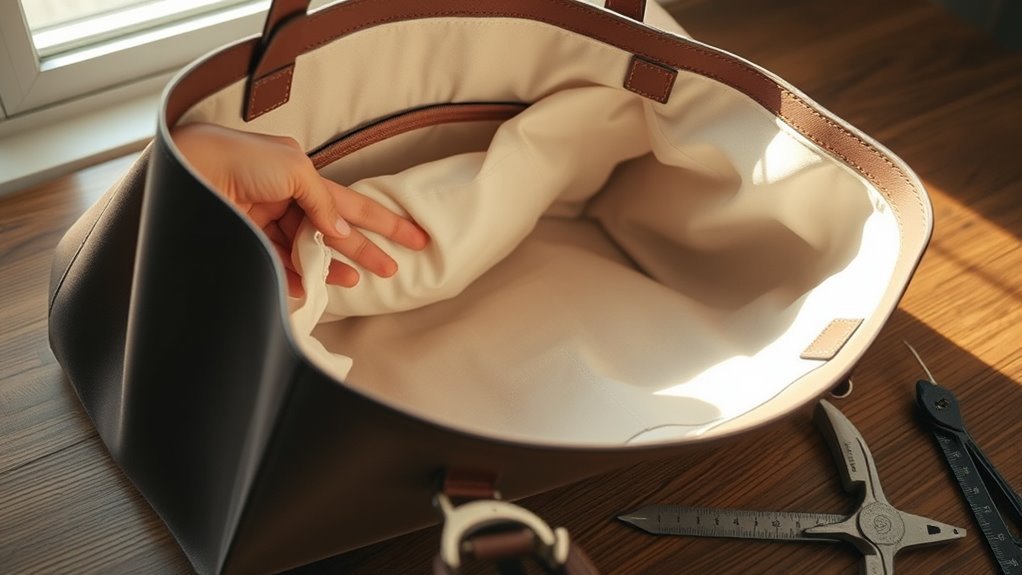
Handbag lining bunches up when the lining is cut too loose or tight, the seam allowances are uneven, the fabric is too weak, or the interfacing doesn’t support the shell. You can find the cause by checking fit, comparing lining and exterior sizes, and inspecting seam balance, stitch tension, and presser foot pressure. Use a smooth, lightweight lining and baste it in place before final sewing. A few targeted checks usually point straight to the problem.
What Causes Bag Lining to Bunch
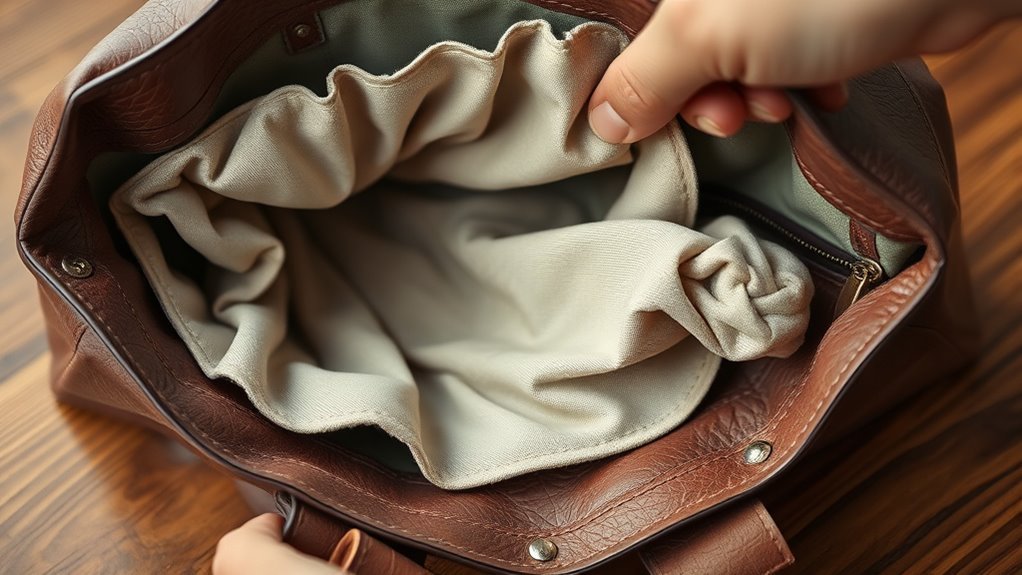
Bag lining often bunches because the construction lacks the support and balance needed to hold fabric in place. You’ll usually trace it to poor construction techniques that leave uneven lining tension, letting the lining shift as you use the bag.
Your fabric choice matters too; a weak or mismatched lining can’t stay stable under load. Low thread quality can shed lint, clog stitches, and weaken seam integrity, which makes bunching worse over time.
A weak or mismatched lining won’t stay stable under load, while poor thread quality worsens bunching over time.
If your bag design skips proper interfacing or uses the wrong type, the lining may sag instead of staying controlled. Insufficient seam allowances also let fabric pull when the bag carries weight, creating distortion.
You can reduce these problems with maintenance tips: keep needles sharp, set thread tension correctly, and inspect tools often. Smart fitting adjustments during construction help you secure the lining, so your bag works with you, not against you.
Check Fit, Ease, and Seam Allowance
When you cut the lining, make sure it matches the outer bag’s dimensions closely, because extra fabric can bunch and sag inside the handbag.
You should also build in just enough ease so the lining can move without pulling; if it’s too snug, it’ll gather under stress.
Keep seam allowance consistent on every panel, since uneven widths create tension points that distort the lining’s lay.
Choose a lightweight lining fabric to reduce bulk and help the interior drape cleanly.
Before you commit to final stitching, baste the lining into the shell and inspect the fit from edge to base.
That quick test lets you catch unwanted folds early and make precise lining adjustments.
Use these fitting techniques to keep the lining aligned, smooth, and free from hidden resistance, so your bag supports your movement instead of fighting it.
Fix Stitching Issues That Cause Shifting
To stop lining shift, you need to align the needle and thread path so the machine forms even stitches without pulling the fabric off grain.
You should set presser foot pressure high enough to control the layers, but not so high that it creates drag or bunching.
Keep fabric feed consistent by checking stitch length, needle size, and bobbin area cleanliness so the lining moves through smoothly.
Needle And Thread Alignment
Proper needle and thread alignment is essential if you want even stitches and a stable handbag lining, because a mismatched needle can cause skipped stitches, bunching, and fabric shifting.
Match needle types to your fabric: use finer sizes for lightweight lining and thicker needles for heavier layers.
Thread the needle and tension discs exactly as directed, because poor threading throws off thread tension, and that imbalance pulls the lining off course.
Replace bent or dull needles every 8–10 hours of sewing so you keep the stitch path clean and controlled.
Before you sew the bag, test alignment on scrap fabric and check for smooth, balanced stitches.
When you correct these details early, you take control of the seam and prevent the lining from bunching later.
Presser Foot Pressure
Adjust the presser foot pressure if your handbag lining is shifting or bunching, because too much downward force can drag the fabric and throw off your stitches.
On your sewing machine, start with a medium setting, then use adjustment techniques to match pressure settings to fabric types. Lighter linings usually need less pressure, while thicker layers may need a firmer touch.
Watch stitch consistency and keep tension balance stable as you sew; that helps prevent misalignment and thread bunching.
Use practical alignment tips: guide the layers without forcing them, and let the presser foot do only the work it needs.
Run testing methods on scrap fabric before you commit to the bag, so you can dial in clean fabric handling and keep your sewing freedom intact.
Fabric Feed Consistency
Consistent fabric feed is the key to stopping handbag lining from bunching and shifting while you stitch, especially when you’re working through thicker seams or multiple layers.
You need to guide the layers evenly so the machine doesn’t tug one side ahead of the other. A walking foot helps because it moves the top and bottom layers together, which reduces puckering.
Set presser foot pressure so it supports the fabric without squeezing it; too much can drag, too little can let it wander. Match your needle size and type to the fabric texture so stitching stays clean and even.
Keep your machine maintained, clear lint, and check the feed dogs regularly.
These sewing techniques help you sew with control and freedom.
Choose the Right Bag Lining Fabric
Choosing the right bag lining fabric can make a noticeable difference in how smoothly the interior sits and moves. When you compare lining fabric types, prioritize lightweight, smooth materials like polyester or silk; they cut friction and help the lining glide instead of bunch.
If you want more freedom in fit, choose stretch options, such as spandex blends, because they flex with the bag’s inner shape without pulling out of place. Skip heavy or textured fabrics like cotton canvas, especially inside bags with dense outer materials, since they add bulk and trap folds.
You should also check drape: a fluid lining moves with the bag and resists wrinkling at stress points. Before you cut, pre-wash and iron the fabric so it stays true to size and shape during use. That simple prep keeps the interior responsive, clean, and ready to move on your terms, not against them.
Add Interfacing for More Structure
Choose an interfacing weight that matches your lining fabric and the bag’s size, since a heavier option gives you more support without over-stiffening the interior.
Fuse it before assembly so it bonds cleanly to the fabric and helps the lining hold its shape during construction.
Test the stiffness first on a scrap, and adjust the weight if the lining feels too soft or too rigid.
Choose The Right Weight
Picking the right fabric weight for your handbag lining makes a big difference: too light, and the lining can sag or bunch, but too heavy, and it can add unnecessary bulk.
You need to compare fabric types and weight variations carefully so the lining works with the shell, not against it. Interfacing adds structure, but its weight must match your lining and handbag fabric to keep the interior smooth and balanced.
- Test lightweight and medium fabrics
- Check how each drapes inside the bag
- Match interfacing firmness to the fabric
- Choose fusible or sew-in by need
- Sample combinations before final construction
When you tune these layers, you gain control over shape, reduce uneven pull, and build a lining that supports freedom of use without sacrificing clean construction.
Fuse Before Assembly
Fuse interfacing to your handbag lining before assembly so the fabric gains stability and resists bunching during construction and wear. You’ll lock the structure in place, reduce shifting, and support a cleaner interior finish.
Choose from common interfacing types, but a medium-weight option usually gives you firm control without making the lining stiff. Different fusing techniques call for careful heat, time, and pressure, so follow the manufacturer’s instructions and use a pressing cloth to protect the fabric surface.
Prewash both fabric and interfacing first; that step helps prevent later shrinkage that can distort seams and create puckers.
When you fuse before assembly, you set up your bag for reliable shape, smoother handling, and less correction work later.
Test Stiffness First
Before you commit to assembly, test the stiffness of your handbag lining so you know whether it needs more structure. Do quick stiffness testing with your chosen fabric, then judge whether sagging or bunching will show up under load.
Use interface selection to match the design: fusible interfacing gives clean, fast support, while sew-in interfacing can suit delicate cloth.
- Bend the lining sample and check recovery.
- Compare it with the outer shell.
- Press on the wrong side for collapse.
- Add interfacing if it feels too soft.
- Secure it fully so it won’t shift.
You want a lining that holds shape without fighting movement. A firmer build can free your bag from droop, keep contents balanced, and preserve a crisp interior finish.
Match Lining Weight to the Bag
Matching the lining weight to the bag’s outer material helps you avoid sagging, bunching, and an uneven finish. You want lining weight to support, not fight, the shell, so check fabric balance before you cut.
If your outer fabric is supple, choose a lining with a little more body; if the shell is firm, a lighter but stable lining can work. Lightweight linings move too freely and create slack, while flimsy cloth collapses and wrinkles.
Cotton and polyester linings usually give you better durability and hold than thin decorative fabrics. Keep enough ease for comfort, but don’t add extra width that can pool inside the bag.
When the layers match in behavior, the bag keeps its shape and you stay in control of the result. That balance lets you build a cleaner interior and a sharper silhouette without overengineering it.
Sew Linings So They Stay in Place
To keep handbag lining from bunching, cut the lining to the same dimensions as the outer fabric so it fits snugly without extra bulk. You’ll get cleaner results when you treat every step as part of your lining techniques, not an afterthought.
Cut the lining to match the outer fabric for a snug fit and cleaner finish.
Add lightweight interfacing to stabilize the lining and help it hold shape under daily wear.
- Baste the top edge before final stitching.
- Use high-quality thread that suits your fabric.
- Check machine tension before each seam.
- Keep layers aligned while you sew.
- Press seams flat after sewing.
These sewing tips reduce shifting and help the lining stay anchored where you place it. When you secure the layers first, you free yourself from constant readjustment and create a bag that moves with you, not against you.
Balanced stitches and proper materials support a smooth interior, so your bag feels intentional, durable, and ready for real use.
Diagnose the Problem Step by Step
Start with the lining itself: if you’re using a lightweight or slippery fabric, it can shift during assembly and bunch inside the bag.
Check your lining materials first, then compare the cut pieces to the bag exterior. If the lining is even slightly oversized, trim it to match exactly so you don’t trap excess fabric.
Next, inspect seam allowances; if they’re too wide, they add bulk and force folds when you turn the bag right side out.
Then test your sewing techniques by checking stitch balance on scraps. Uneven tension can pull one layer harder than the other and distort the seams.
Finally, assess the interfacing. If it’s too soft or the wrong weight, the lining won’t have enough support and may sag or gather.
Work step by step, isolate each cause, and adjust only one variable at a time so you can build a bag that moves freely and stays aligned.
Frequently Asked Questions
Why Is Thread Bunching Underneath My Fabric?
You’ve got thread bunching underneath because your upper thread tension’s too loose, your machine’s threaded wrong, or lint’s disrupting flow. Check fabric type, needle condition, and thread quality, then rebalance settings and test again.
What Can You Use to Stiffen Bags?
Like armor for your tote, you can use interfacing options, non-woven stabilizers, plastic canvas, cardboard inserts, or spray stiffener. Match stiffening techniques to your fabric choices and lining materials for durable structure without freedom-limiting bulk.
What Is a Handbag Lining?
A handbag lining is the inner layer you see inside your bag. You’ll choose it from handbag materials like cotton, polyester, or nylon, and lining types that protect contents, add structure, and improve organization.
What Does Bagging Out Mean in Sewing?
Bagging out means you turn your lining through a small opening so the bag’s right side shows cleanly. You use sewing techniques and smart fabric choice to hide raw edges and finish your bag neatly.
Conclusion
When your handbag lining bunches up, it’s usually screaming one of three things: poor fit, weak stitching, or the wrong fabric. Check your seam allowance, ease, and attachment points first—tiny errors can snowball into folds big enough to look like a fabric traffic jam. Then match lining weight, add interfacing if needed, and secure it properly. Test each fix step by step, and you’ll stop the lining from migrating and keep the inside crisp.

