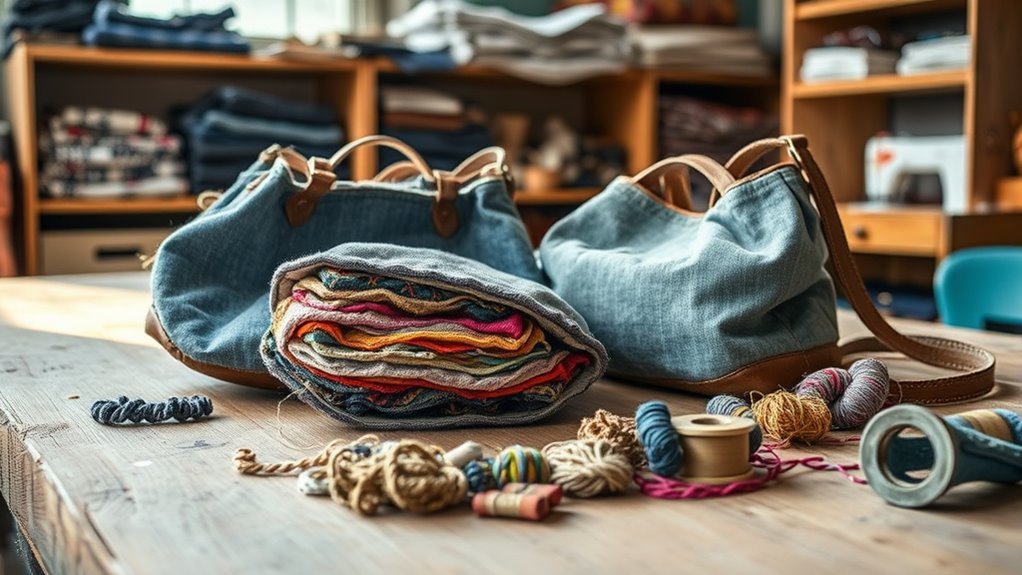
Recycled fabric handbags are made from waste that has been turned back into fiber. The waste may be plastic bottles, old textiles or factory scraps. It is cleaned, broken down, spun into new yarn and woven or knitted into fabric. Common results are recycled polyester (rPET), recycled nylon and recycled cotton. These bags reduce the need for new raw materials, though they are not impact-free. This guide explains how the fibers are reused and how to choose a good bag.
What Is Recycled Fabric in Handbags?
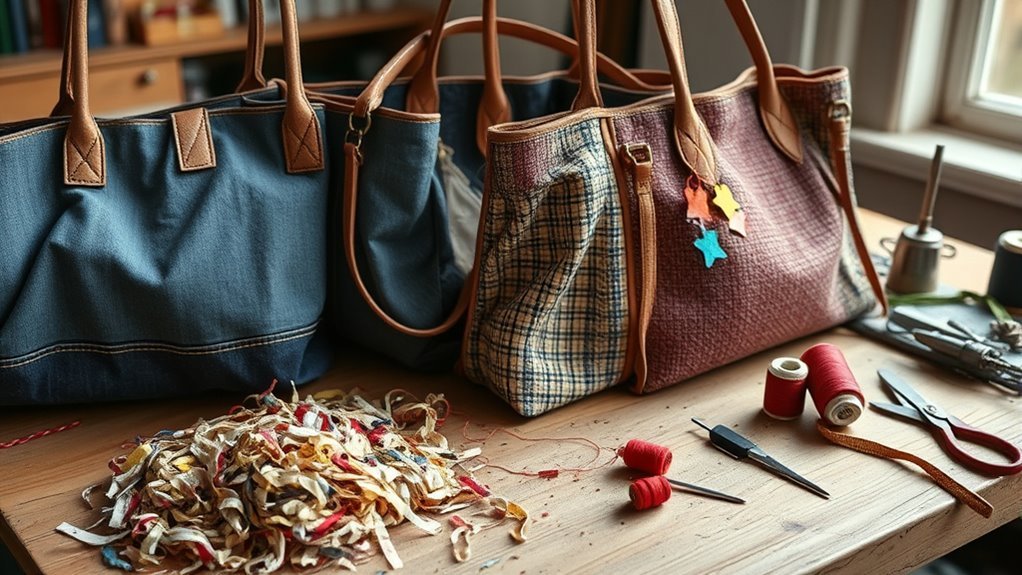
Recycled fabric is cloth made from material that has already been used or discarded. In handbags, the source is usually plastic bottles, fishing nets, old clothing or leftover fabric from factories.
The most common type is recycled polyester, known as rPET. Recycled nylon and recycled cotton are also widely used. All three can be made into canvas, twill, linings and webbing for bags.
Recycled content can be checked through third-party standards. The best known is the Global Recycled Standard (GRS), which tracks recycled material through the supply chain.
The term covers two sources. Pre-consumer waste comes from factories, such as cutting scraps. Post-consumer waste has been used and thrown away, such as bottles and worn clothing.
How Do Fibers Become Recycled Fabric?
Recycling turns waste back into fiber in a few stages. The details depend on whether the waste is plastic or textile.
First the waste is collected, sorted by material and color, and cleaned. Then it is broken down. In mechanical recycling, plastic is shredded into flakes, melted and pushed through fine holes to form new filaments. Textiles are shredded back into loose fibers and spun again.
For rPET, clear plastic bottles are washed, chopped into flakes, melted into pellets and spun into polyester yarn. Chemical recycling goes further. It breaks the plastic down into its building blocks, which are then rebuilt into new fiber. It can handle waste that mechanical methods cannot.
Recycled cotton is a little different. Shredding shortens the fibers, so recycled cotton is usually blended with new cotton or polyester to make it strong enough.
Recycling has limits. Blended fabrics are hard to separate, dyes and coatings contaminate the stream, and every step uses energy. This is why most recycled fabric still comes from bottles and factory scraps, not from old clothing.
Which Recycled Fabrics Are Used in Handbags?
Three recycled fabrics dominate in handbags: rPET, recycled nylon and recycled cotton. rPET is the most common, because used bottles are plentiful and easy to sort.
Recycled nylon is popular for sporty and travel bags because it is strong and light. Recycled cotton gives a soft, natural feel and is mostly used for totes.
You will also see polypropylene, or PP, in reusable shopping bags. It is a different plastic from rPET, and the two are compared below.
Common Recycled Fabrics
Each recycled fabric has its own strengths. Here is what to expect from the main types.
rPET is made mostly from used drink bottles. It is strong, light, quick to dry and holds color well. It behaves much like new polyester.
Recycled nylon comes from waste such as fishing nets, carpet and factory offcuts. It is tough, smooth and resists abrasion, which suits backpacks and crossbody bags.
Recycled cotton is made mostly from factory cutting scraps. It feels like ordinary cotton, though the shorter fibers make it a little less strong.
Recycled canvas is a heavy woven fabric made from recycled cotton, recycled polyester or a blend. It is common in tote bags.
A GRS label on a bag means the product contains at least 50 percent certified recycled material. It also means the factories met set social, environmental and chemical rules.
PP vs. rPET
PP and rPET are both plastics used for reusable bags, but they are not the same material.
PP, or polypropylene, is usually made into a non-woven fabric, the soft, papery material of many shopping totes. It is light, cheap and holds its shape. It may be new or recycled plastic, so check the label.
rPET is recycled polyester made from bottles. It is usually woven or knitted, so it looks and feels more like regular cloth and tends to last longer.
Both materials print well, which is why they are popular for branded and promotional bags.
Neither one breaks down in nature. Their benefit comes from being reused many times in place of single-use bags.
For a bag you will carry daily for years, woven rPET or recycled nylon is the sturdier choice. For a light, foldable shopping bag, PP does the job.
How Do Recycled Fabric Handbags Compare to Natural-Fabric Bags?
Recycled synthetic bags and natural-fabric bags each have advantages. Neither is better in every way.
Recycled fabrics give waste a second use and reduce the demand for new oil-based fiber. Making recycled polyester generally takes less energy than making it new.
Natural fabrics such as cotton, hemp and jute come from plants and break down at the end of their life. Growing them takes land and water, and conventional cotton also uses pesticides.
Recycled synthetics are usually lighter, stronger for their weight and better in the rain. They can shed tiny plastic fibers, mainly when washed, and they do not biodegrade.
Natural fabrics feel softer and more breathable, and many people prefer their look. They stain more easily and take longer to dry.
Whatever the material, the most important factor is how long you use the bag. A bag carried for years has a smaller footprint than several that wear out quickly.
Are Recycled Fabric Handbags Safe and Durable?
Yes, in general. Recycled polyester and nylon are the same polymers as the new versions, and bags made from them are sold under the same product safety rules. The table below sums up the main materials:
| Material | Safety check | Durability |
|---|---|---|
| rPET | Same polymer as new polyester | Strong for daily wear |
| PP | Resin code 5 plastic | Resists cracking and abrasion |
| Finished bag | Depends on stitching and hardware | Holds shape over time |
Recycled polyester and nylon are close to new fibers in strength. Recycled cotton is somewhat weaker, which is why it is often blended. As with any bag, the stitching, lining and hardware matter as much as the fabric.
How Are Recycled Fabric Handbags Printed?
Recycled fabrics can be printed in the same ways as new ones. The main methods are screen printing, digital printing and heat transfer.
PP and rPET both have fairly smooth surfaces that take detailed designs. Some bags are laminated with a thin plastic film that protects the print and adds water resistance.
The method affects how long the design lasts and how the bag can be cleaned.
Printing Methods
Each of the three methods suits a different kind of design.
Screen printing pushes ink through a stencil. It is best for bold designs in a few colors, and it is cost-effective for large batches. The prints are durable.
Digital printing sprays ink directly onto the fabric, like an office printer. It handles photos and many colors, and it suits small runs.
Heat transfer presses a printed film or vinyl onto the fabric with heat. It gives sharp edges, though the design can crack or peel after long use.
If you are ordering custom bags, ask the supplier about water-based inks, which avoid the PVC used in plastisol inks.
Best Fabrics For Graphics
For sharp graphics, smooth and tightly woven fabrics work best. Laminated PP and woven rPET both give clean, bright prints.
Rough fabrics such as recycled cotton canvas give a softer, more textured print. Fine details can blur on them, so simple designs work better.
Light-colored fabrics show colors most accurately. On dark fabrics, printers often lay down a white base first.
A laminated surface makes prints look glossy and wipe clean. The trade-off is that mixed layers are harder to recycle later.
Durable Sustainable Imprints
A print lasts longest when it is matched to the fabric and cared for correctly.
Screen prints and laminated prints hold up well to rubbing. Heat transfers are the most likely to wear at folds and corners.
Wash printed bags in cold water, inside out if possible, and let them air dry. High heat from a dryer or an iron can damage both the print and the synthetic fabric.
Printing adds color only where it is needed. That generally uses less water than dyeing a whole roll of fabric.
What Makes a Recycled Handbag Sustainable?
A recycled handbag earns the word sustainable through several things at once. The table below lists the main factors:
| Factor | Benefit | Impact |
|---|---|---|
| Recycled content | Reuses waste | Less landfill pressure |
| Lower energy use | Efficient production | Smaller carbon footprint |
| Less water use | Conserves resources | Lower environmental stress |
| GRS verification | Confirms recycled claims | Better transparency |
| Circular design | Extends material life | Reduces synthetic pollution |
Recycled content alone is not enough. Look for verified claims, solid construction and a design you will use for years. A recycled bag that falls apart in a season is not a gain for the environment.
How Do You Choose the Right Recycled Bag Material?
Start with how you will use the bag. For daily carry, recycled polyester and recycled nylon are the most durable. For a light shopping bag that folds away, PP is economical.
Check the label for the percentage of recycled content. A vague claim about recycled materials can mean very little without a number. Certifications such as GRS add proof.
Look at the build quality as well. Check the stitching at the handles, the weight of the fabric and the quality of the zippers. Read how the brand describes the source of its material.
Remember that recycled synthetics do not biodegrade. Their benefit depends on long use, so choose a bag you will keep.
Why Do Recycled Fabric Handbags Reduce Waste?
Recycled fabric bags reduce waste in two ways. They use material that would otherwise be thrown away, and they reduce the amount of new fiber that has to be made.
The scale of textile waste is large. The U.S. EPA estimates that 17 million tons of textiles were generated as waste in 2018. About 11.3 million tons went to landfill, and only 14.7 percent was recycled.
Most recycled polyester today comes from bottles, not from old clothing. That keeps bottles out of landfill, but it does not yet solve the problem of textile waste itself. Fabric made from old textiles is still rare.
For shoppers, the practical steps are simple. Buy fewer bags, choose well-made ones with verified recycled content, and use them for as long as they last.
Frequently Asked Questions
Is It True That 85% of All Textiles Go to Dumps Each Year?
It is close for the United States. EPA data for 2018 show that about 66 percent of textile waste was landfilled and about 19 percent was burned for energy. Only 14.7 percent was recycled. So roughly 85 percent was not recycled.
Is Recycled Fabric Safe to Wear?
Yes, in general. Recycled polyester and nylon are the same materials as the new versions and are sold under the same safety rules. If you want extra assurance, look for a product tested to a recognized textile safety standard.
What Fabric Is Used for Reusable Bags?
Most reusable shopping bags are made of non-woven polypropylene, recycled polyester, nylon, cotton canvas or jute. Polypropylene and rPET are common for printed promotional bags, while cotton and jute are the main natural options.
What Does GRS Certified Mean?
GRS stands for Global Recycled Standard, which is run by Textile Exchange. It verifies recycled content and tracks it through the supply chain. A product needs at least 50 percent certified recycled content to carry the GRS label.
Conclusion
Recycled fabric handbags turn bottles, nets and fabric scraps into useful, durable material. They save raw resources, but they are not a perfect fix, since they do not biodegrade. Check the recycled content, look for a trusted certification and judge the build quality. Then carry the bag for as long as you can.
Sources: U.S. EPA: Textiles, material-specific data; Textile Exchange: Recycled Claim Standard and Global Recycled Standard.

