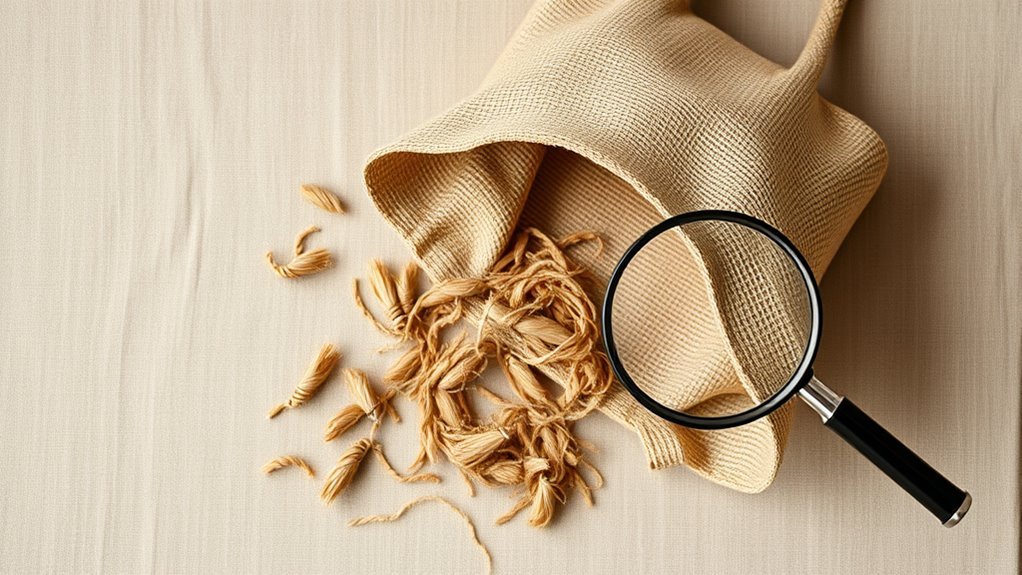
A jute tote bag is made from fibers of the *Corchorus* plant, harvested from the stalk bark, retted, decorticated, and spun into yarn. You get a strong, biodegradable fabric with high tensile strength and good load capacity, often up to 20 kg. But jute is moisture-sensitive, coarse, and not machine washable. It works best for groceries or markets, and you’ll see how to choose, use, and care for one below.
What Is a Jute Tote Bag Made Of?
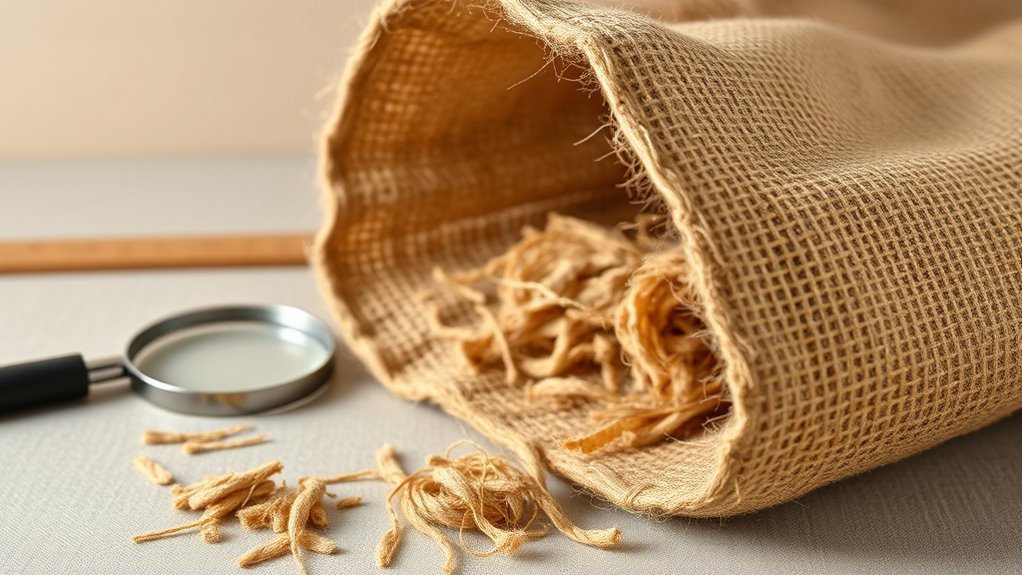
A jute tote bag is made primarily from jute fibers extracted from the stalks of the jute plant, genus *Corchorus*. You’re choosing a bast fiber with high tensile strength, reaching about 14 MPa, so it outperforms cotton’s 3–5 MPa in load-bearing use. That makes the bag technically suitable for carrying heavy items without immediate structural failure.
In jute production, growers use minimal pesticides and fertilizers, which lowers chemical dependence and supports jute sustainability. The material is also biodegradable: when discarded, it can decompose in 1–2 years and return nutrients to the soil instead of persisting as waste.
For you, that means a textile built from renewable plant matter, not petrochemical residue. Jute’s fiber profile gives you durability, reduced environmental burden, and a material choice aligned with liberation from extractive manufacturing systems.
How Jute Fibers Become Fabric
Jute fibers begin as bark fibers harvested from the stalks of *Corchorus* plants, then undergo retting, a soaking process that loosens the fiber bundles for extraction.
You let the retting process prepare the stalks for fiber extraction by softening the pith and freeing the long bast fibers. After soaking, skilled workers or mechanical decorticators strip away the bark, and you get clean fibers ready for spinning.
Retting softens the pith and frees bast fibers, preparing stalks for clean extraction and spinning.
Next, you feed those fibers into yarn production, where they twist into a workable thread for weaving. On shuttle or rapier looms, you convert yarn into fabric with controlled density and structure.
The result is a textile that resists everyday wear while remaining biodegradable and compostable, so it returns to the earth in about 1–2 years instead of lingering as waste.
This process gives you a material path that replaces synthetic dependence with disciplined, regenerative production and practical freedom.
What Gives Jute Tote Bags Their Strength?
Once those fibers are spun and woven, their structure is what gives jute tote bags real load-bearing strength. You benefit from a fiber composition built around long, interwoven cellulose chains, which boost tensile properties and help the bag resist tearing under pressure.
Jute’s natural twist and density lock the yarns together, so you get a stable form that keeps its shape instead of sagging. In practical terms, that means a typical jute tote can reach about 20 kg of weight capacity, supporting demanding use without losing integrity.
You’re also choosing a material with a lower environmental impact than many synthetics, since jute is plant-based and durable enough for repeated carry cycles.
- Stronger than cotton by a wide margin
- Maintains shape through repeated loading
- Handles heavy groceries or books
- Lasts 3 to 5 years with regular use
- Supports practical, low-waste carrying
What Jute Tote Bags Don’t Do Well
You should treat jute tote bags as moisture-sensitive, since damp storage can promote mildew and weaken the fibers.
You also can’t machine-wash them without risking distortion, surface damage, or reduced lifespan.
Their coarse texture limits comfort for extended carries, especially when you’re handling heavy or delicate items.
Moisture And Mildew Risks
Though jute fibers are naturally breathable, they don’t offer inherent moisture resistance, so prolonged dampness can quickly create mildew risk. You need disciplined moisture management to keep the bag stable and free from odor.
Because jute is organic, humid storage conditions can accelerate microbial growth and weaken fibers. For mildew prevention, act fast when the bag gets wet: air-dry it fully, avoid trapping moisture, and keep it out of damp closets.
Unlike synthetics, jute isn’t suited for carrying wet items, so you should treat it as a dry-use carrier.
- Damp air encourages mildew
- Wet bags need prompt air-drying
- Humid storage raises risk
- Spot clean with mild soap
- Skip soaking and machine washing
Limited Wash Durability
Moisture control matters because jute also has limited wash durability. You should hand wash it, since machine cycles can shear fibers, accelerate wear, and weaken the bag’s structure.
Compared with cotton, jute won’t tolerate repeated cleaning without losing shape and visual integrity. If you spill on it, act fast: jute absorbs liquids readily, stains can set, and damp fibers can foster mildew.
You’ll also notice odor if you store it before it’s fully dry. That makes maintenance a technical constraint, not a moral failure.
Jute sustainability still matters, but it works best when you use the bag carefully and clean it sparingly. If your routine demands frequent washing, choose eco friendly alternatives that handle water and agitation better while preserving utility and autonomy.
Coarse Texture Limits Use
Jute’s coarse texture creates a few practical tradeoffs that matter in everyday use. You’ll notice the rough fibers can abrade delicate contents, so these bags don’t suit fragile textiles or polished surfaces.
Their stiffness also limits foldability, making storage less efficient than softer jute bag alternatives. For branding, the fiber pattern resists fine ink detail, so high-resolution graphics lose precision.
In jute bag aesthetics, the material reads as rustic rather than sleek, which can narrow fashion-forward use. Moisture retention adds another constraint: if you don’t dry the bag fully, mildew risk rises.
- Rough carry surface
- Limited print fidelity
- Reduced drape
- Bulky packing profile
- Dampness sensitivity
How Jute Tote Bags Compare to Cotton Totes
When you compare strength and durability, jute usually outperforms cotton: it can support about 20 kilograms and its fibers reach roughly 14 MPa tensile strength, versus cotton’s lower load and 3–5 MPa range.
You’ll also need to account for washability and care, because cotton handles routine cleaning more easily, while jute’s coarser structure and moisture sensitivity demand more cautious maintenance.
In practical use, jute gives you a longer service life, but cotton offers simpler day-to-day care.
Strength And Durability
Compared with cotton totes, jute tote bags offer substantially greater strength and durability, making them better suited for demanding everyday use. You get tensile strength up to 14 MPa, versus cotton’s 3–5 MPa, so you can carry heavier loads with less risk of failure. Jute also handles up to 20 kg, while cotton usually tops out near 10 kg.
- You gain a bag that lasts 3–5 years.
- Cotton often shows wear after 2–4 years.
- Jute fibers stay resilient and hold shape.
- Cotton stretches, tears, and stains more readily.
This durability supports eco friendly benefits and jute sustainability.
For you, that means fewer replacements, less material waste, and a more robust tool for daily autonomy.
Washability And Care
Jute tote bags demand more careful maintenance than cotton totes because they’re best cleaned by hand and can’t be machine washed without risking damage. You’ll need gentle soap, cool water, and thorough air-drying to limit mildew and preserve fiber integrity.
Jute’s rough texture traps soil, so cleaning takes more effort than with cotton’s smoother, less stain-prone surface. Cotton totes tolerate repeated washing, resist moisture better, and usually keep their shape and appearance longer.
That difference matters in jute bag history, where utility often outweighed convenience. Still, both materials offer environmental benefits, and you can choose jute when you value low-impact fibers, as long as you accept stricter care.
Cotton gives you easier upkeep; jute asks for more disciplined maintenance and closer monitoring.
Best Uses for Jute Tote Bags
Because of their strength and airflow, these bags work well for grocery shopping, farmers’ markets, and other tasks where you need to carry heavier loads, since they can hold up to 20 kg without losing comfort.
Strong, breathable bags handle heavy groceries and market hauls, comfortably carrying up to 20 kg.
You can move fresh produce without trapping excess moisture, so the contents stay stable and spoilage risk drops.
For beach trips, the rigid weave resists sagging under towels, books, and gear, while the natural fiber supports eco friendly alternatives to single-use carriers.
In practical terms, each trip can replace 2–3 plastic bags, and that adds up to roughly 30 kg less plastic waste per year.
- Carry dense staples with controlled strain.
- Transport delicate produce with airflow.
- Use it for picnics and beach trips.
- Choose it for corporate gifting events.
- Reduce dependence on disposable bags.
Which Customization Options Work on Jute Bags?
Customization options for jute bags typically cover size, handle style, and decoration methods, so you can tailor them to specific branding or functional requirements. You can align them with design trends and branding strategies while keeping production practical.
| Option | Methods | Effect |
|---|---|---|
| Printing | screen, digital, heat transfer, embroidery | sharp logos, vivid graphics |
| Structure | linings, pockets, closures | better organization, higher utility |
| Packaging | biodegradable poly bags | cleaner presentation, stronger eco signal |
You can specify low MOQs, often around 200 pieces, which lets you test concepts without locking into heavy inventory. That flexibility supports independent makers, campaign teams, and liberation-minded brands that need control over message and scale. Screen printing works well for bold marks; digital printing handles detail; embroidery adds texture. Structural upgrades improve everyday use, but they don’t sacrifice the bag’s natural aesthetic. With the right configuration, you get a product that communicates purpose, supports reuse, and still feels technically resolved.
How to Care for a Jute Tote Bag
To keep a jute tote bag performing well, you should remove loose debris after each use, avoid machine washing, and limit moisture exposure. Shake it gently to clear grit, then inspect seams and handles for wear.
Remove loose debris after each use, and gently shake out grit to keep your jute tote bag performing well.
If you need cleaning, use a soft cloth with mild soap and water; that method reduces fiber abrasion and fraying. When the bag gets damp, air dry it fully, but don’t leave it in direct sunlight for long, because UV exposure weakens the weave.
- Store it flat or hanging.
- Keep it in a cool, dry place.
- Skip crumpling to preserve shape.
- Treat stains immediately, not later.
- Use regular care to support jute bag benefits and extend life.
With disciplined maintenance, your bag can last 3–5 years, making it one of the practical eco friendly alternatives for daily carry.
How to Choose the Best Jute Tote Bag
A well-chosen jute tote bag should match both load requirements and intended use, since high-quality options can carry up to 20 kg without compromising structure.
You should verify seam reinforcement and handle construction, because these elements determine whether the bag can endure repeated loading and last 3–5 years in regular use.
Next, compare size, handle style, and print methods so the tote aligns with your branding or daily carry demands.
Examine care instructions carefully: you’ll need spot cleaning, air-drying when damp, and no machine washing if you want to preserve shape and fiber integrity.
Choose certified manufacturers with ISO9001 or fair-trade labels to confirm quality control and ethical production.
This approach supports jute sustainability while preserving eco friendly benefits.
Frequently Asked Questions
What Are Jute Fibers?
Jute fibers are long cellulose strands from the jute plant; you’ll get strong, lustrous material with notable jute properties. You’ll also value jute sustainability, since it needs little water, few pesticides, and biodegrades quickly.
Is Jute Fabric Good for Summer?
Yes, jute fabric works well for summer: you’ll get jute benefits like breathability, low moisture retention, and light weight. It supports summer fashion with durable, eco-friendly texture, so you stay cool, comfortable, and free.
Why Is Jute Used as a Packing Material?
You use jute as packing material because it’s strong, breathable, biodegradable, and cheap. It delivers eco friendly benefits, protects goods from moisture, and offers a cost effective solution that reduces plastic dependence and waste.
Is a Jute Bag Biodegradable or Nonbiodegradable?
Jute bags’re biodegradable: they typically decompose in 1–2 years. You can verify jute sustainability through cellulose-based fibers, which microbes break down efficiently, reducing environmental impact, landfill load, and toxin release.
Conclusion
You can now see that a jute tote bag is more than a rustic accessory: it is a fabric built from long bast fibers, giving it strong load-bearing performance but limited moisture and abrasion resistance. Think of it as a sturdy bridge with clear weight limits. When you choose one, match its strengths to your use case, and you’ll get a durable, low-impact bag that works best for dry, light-to-moderate carrying tasks.
