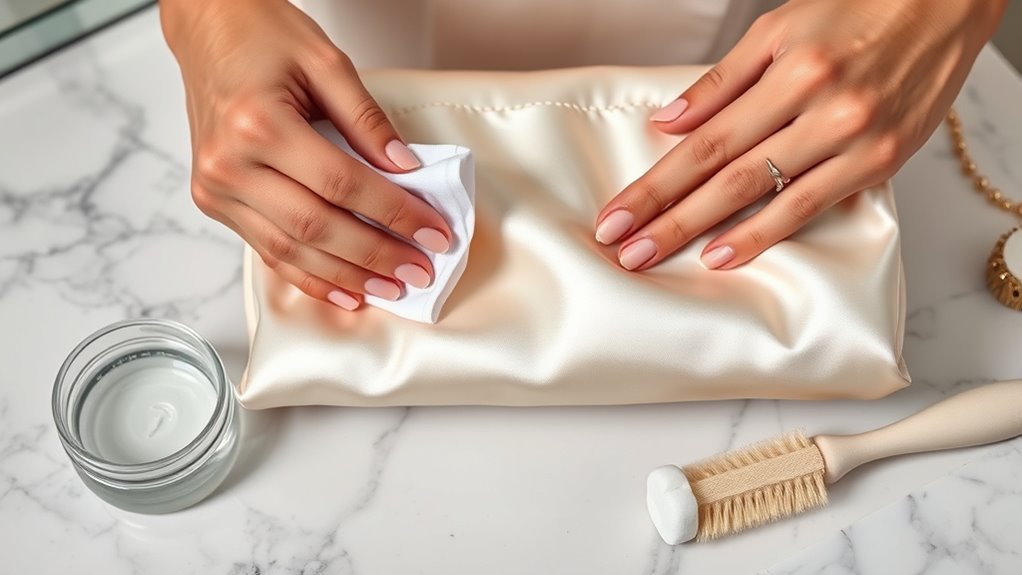
To clean a satin clutch without water rings or snags, use as little liquid as possible and never rub. Blot fresh marks with a dry white cloth. For a stain, dab with a smooth cloth barely dampened with distilled water and a drop of mild detergent, working from the outside of the mark inward. Then feather the damp edge outward and dry the spot quickly with cool air, so no ring forms. Do not soak a structured clutch, and take silk satin or heavy stains to a professional.
Understanding Satin Care: Why It Needs Special Attention
Satin is a weave, not a fiber. Long threads float across the surface, which gives the fabric its smooth shine. Those floating threads are also easy to catch and pull, which is why satin snags.
The fiber underneath matters for cleaning. Polyester satin tolerates a little water. Silk and acetate satin water-spot very easily and are best cleaned by a professional. Check the label or the product details if you can.
Water rings form when a wet patch dries and leaves a line at its edge. Hot water, scrubbing, and heavy wetting all make marks and can shrink or warp the fabric.
Check the clutch for pulled threads before you clean. Do not cut a snag. Ease the loop back by gently stretching the fabric around it, or push it through to the inside with a needle.
Essential Tools for Safely Cleaning Your Satin Bag
You need only a few soft tools.
Use smooth, white, lint-free cloths, cotton swabs, and distilled water. Avoid anything rough, including stiff brushes, paper towels, and terry cloth.
A fabric protector spray is optional and comes later, once the clutch is clean and dry.
Soft Sponges Benefits
A soft makeup sponge or a fine-pored cosmetic wedge is useful for dabbing. It holds very little water, so it is hard to over-wet the fabric. Press it on and lift it off. Do not wipe.
Use a clean, new sponge, since an old one can carry makeup or soap. A corner of the sponge reaches along seams and around the frame.
Microfiber Cloth Advantages
A smooth microfiber or cotton cloth is the main tool. Choose a fine, flat weave. Fluffy or looped cloths can catch on the satin threads.
Use white cloths, so no dye transfers to the clutch. Keep one for dabbing and a dry one for blotting.
Take off rings and bracelets before you start, and check your nails for rough edges. Jewelry causes more snags than cleaning does.
Always dampen the cloth, not the clutch. That gives you control over how much water reaches the fabric.
Protective Spray Importance
A fabric protector spray can help a clean satin clutch resist spills. Choose one that says it is safe for delicate fabrics.
Test it on a hidden area first, such as the inside of the flap. Some sprays darken the fabric or dull the sheen, especially on silk.
Spray lightly from the distance given on the can, and let the clutch dry fully before you use it. Reapply after each clean.
Step-by-Step Guide to Spot Cleaning Your Satin Clutch
Spot cleaning is the safest way to clean a satin clutch.
Work on one mark at a time, and start with the mildest method.
Stop if the color lifts onto your cloth.
Essential Cleaning Supplies Needed
Gather a few white cloths, cotton swabs, distilled water, and a mild detergent made for delicates. Distilled water matters, because the minerals in tap water are one cause of rings.
Test the detergent mix on a hidden area and let it dry. Then blot the stain gently. Do not rub, which roughens the threads and leaves a dull patch.
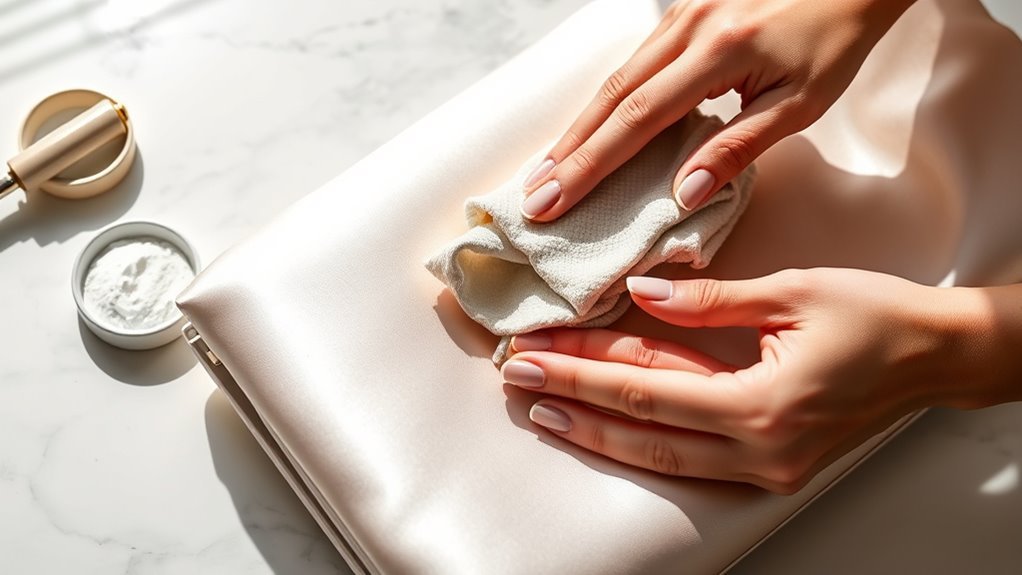
For oily stains such as makeup or food grease, cover the mark with cornstarch. Leave it for a few hours, then shake it off or lift it with a very soft brush. Repeat before you try anything wet.
Clean marks as soon as you notice them. Old stains are much harder to lift from satin.
Effective Spot Cleaning Techniques
First work out whether the stain is oily or water-based, since they need different treatment.
Lay the clutch on a clean towel. Slip a folded dry cloth inside, under the stain, to absorb moisture from behind.
Mix one or two drops of mild detergent into half a cup of cool distilled water.
Dampen a cloth or sponge in the mix and squeeze it almost dry. Dab the stain from the outside toward the center. Then dab with a second cloth dampened in plain distilled water to lift the soap.
Now prevent the ring. With a barely damp cloth, lightly feather the edge of the wet area outward so it has no sharp border. Blot with a dry cloth, then dry the spot with a hair dryer on the cool setting, moving from the outer edge toward the middle.
Gentle Hand Washing Techniques for Satin Bags
Most satin clutches should not be washed. They have a frame, glue, and stiffeners inside that water will ruin.
Hand washing suits only a soft, unstructured polyester satin pouch with a label that allows it. If yours qualifies, swish it gently in cool water with a little delicate detergent for a minute or two.
Rinse in cool water until no suds remain. Do not wring. Lay it flat on a towel and roll the towel up to press the water out.
Reshape it and dry it flat, away from sun and heat. If you are in any doubt, spot clean instead.
Tackling Common Satin Stains: Effective Solutions
Different stains need different first steps. The table gives a quick guide:
| Stain Type | Solution | Key Tip |
|---|---|---|
| Oil-based | Sprinkle cornstarch, let sit for 4-6 hours, then gently brush off. | Avoid rubbing to prevent fraying. |
| Water-based | Dampen a soft cloth with distilled water, blot from outside in. | Guarantee even drying. |
| Ink | Use rubbing alcohol on a cotton swab, test first, then blot. | Work gently to lift ink. |
For food or drink, blot with cold distilled water and a drop of mild detergent, then blot with plain water. For blood, use only cold water, since warm water sets it. For any large or old stain, a professional cleaner is the safer choice.
Quick Fixes for Minor Stains With Baby Wipes
Baby wipes are a common quick fix when you are out. They can work on polyester satin, but they contain cleansers and moisturizers that may leave a mark of their own. Follow these rules:
Here’s how to use them effectively:
- Choose Wisely: Use unscented, alcohol-free baby wipes to avoid damaging your fabric.
- Test First: Dab the wipe on a hidden area of your clutch to check for discoloration or damage.
- Blot, Don’t Rub: Gently blot the stain instead of rubbing to lift it without causing snags or fraying.
- Air Dry: Let the cleaned area air dry completely to prevent moisture from settling into the fabric.
Best Drying Practices for Your Satin Clutch
Drying is where water rings are made or avoided.
Dry cleaned spots quickly and evenly. Do not leave a wet patch to dry slowly on its own.
Keep the clutch flat and in shape while it dries.
Proper Air Drying Techniques
Follow these steps after any damp cleaning:
- Flat Drying: Lay your clutch flat on a clean, dry towel to absorb excess moisture without causing distortions or water rings.
- Ventilation: Place it in a well-ventilated area to guarantee even drying and prevent musty odors.
- Shape Maintenance: Gently smooth the fabric with your hands while it’s still damp to keep its original form.
- Stuffing: Use soft, acid-free tissue paper to stuff the clutch, helping it retain shape and avoid creasing or snags.
A fan or a hair dryer on cool speeds things up. Keep the dryer moving and at least a hand width away.
Avoiding Direct Sunlight
Do not dry satin in direct sun. Sunlight fades the color, and uneven heat can leave marks.
A shaded, airy room is best. Never use a hot hair dryer, a radiator, or an iron on a damp clutch. Heat can set a ring or leave a shiny patch.
If you stuff the clutch with tissue while it dries, use plain white, acid-free tissue.
Reshaping While Damp
Satin holds whatever shape it dries in, so set the shape while it is still slightly damp:
- After blotting excess moisture, lay the clutch flat on a clean, dry towel to air dry.
- While damp, smooth the fabric with your hands to preserve its shape.
- Stuff the interior with acid-free tissue paper or a soft cloth to absorb any remaining moisture and help retain form.
- Keep the drying clutch in a shaded area, steering clear of direct sunlight to prevent fading.
Check it again after an hour and smooth out any ripples with your fingers.
Smart Storage Tips for Your Satin Bag
Store a satin clutch in a breathable cotton dust bag. It keeps dust off and stops other bags from rubbing against it.
Keep it in a cool, dark, dry place. Light fades satin over time.
Stuff it lightly with acid-free tissue so it keeps its shape. Wrap any chain in tissue and tuck it inside, so the metal does not press into or snag the fabric.
Do not stack anything on top. Check the clutch every few months for marks or pulled threads.
When to Seek Professional Cleaning Services?
Home cleaning has limits with satin. Use a professional in these cases:
- Persistent Stains: When stains resist your cleaning efforts, professionals have specialized techniques to tackle deep-set marks without further damage.
- Delicate Fabrics: For satin accessories made of silk or adorned with intricate embellishments, experts guarantee proper handling to prevent snags or fraying.
- Value Consideration: If your clutch is high-end or vintage, professionals can preserve its integrity, handling valuable items with care.
- Chemical Concerns: Unsure about which cleaning agents to use? Professionals select fabric-safe solutions that won’t harm your delicate satin.
If the label says dry clean only, follow it.
Choose a cleaner with experience in evening bags or bridal wear, and point out every stain when you hand it over.
How to Prevent Future Stains on Your Satin Bag?
Prevention is easier than cleaning with a fabric this delicate.
| Action | Benefit |
|---|---|
| Apply protective spray | Creates a barrier against stains |
| Store in a cotton dust bag | Prevents dust and moisture buildup |
| Avoid dirty surfaces | Minimizes contact with potential stains |
| Keep away from sunlight | Reduces fading and discoloration |
| Handle with clean hands | Prevents transfer marks from lotions |
Hold the clutch with clean, dry hands, since hand cream and makeup are the most common stains. Do not set it down on bar tops or restaurant tables. Keep lipstick and pens capped inside. The table lists more habits.
Frequently Asked Questions
Is Satin Ruined if It Gets Wet?
Not always. Polyester satin usually dries without harm if you blot it and dry it evenly. Silk and acetate satin can be left with water spots or rings. In every case, blot at once and do not rub.
How to Clean Dirty Satin?
Blot loose dirt, lift oily marks with cornstarch, and dab other stains with a cloth barely dampened in distilled water and mild detergent. Feather the edges and dry quickly with cool air.
Can You Remove Stains off Satin?
Often, yes, if you act quickly and work gently. Fresh stains on polyester satin respond best. Old stains, ink, and any stain on silk satin are better left to a professional.
Conclusion
Satin needs a light touch. Use smooth cloths, very little distilled water, and dabbing instead of rubbing. Feather the damp edge and dry it quickly to avoid rings, and keep jewelry and rough surfaces away to avoid snags.

