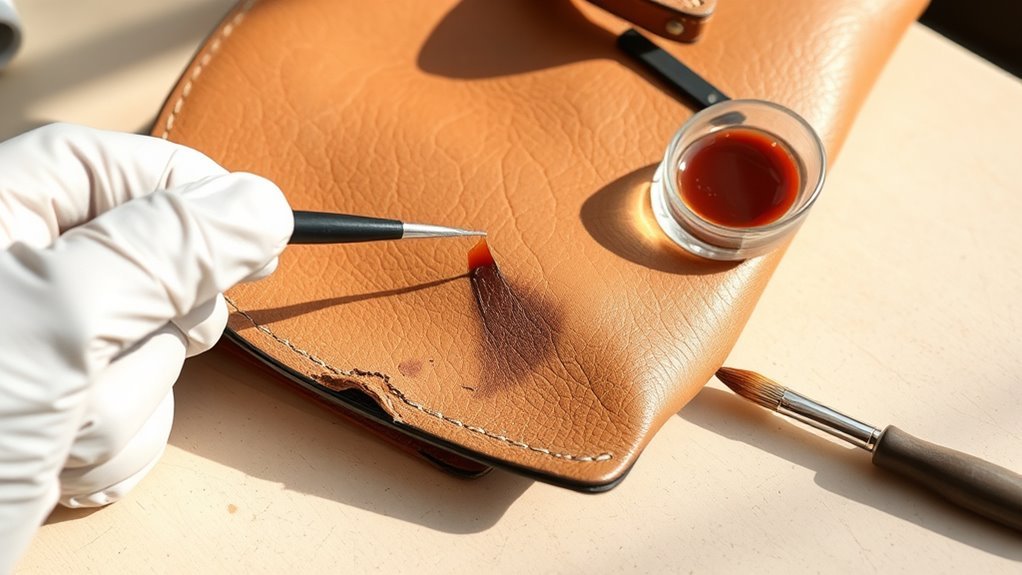
To fix peeling purse edge paint, remove the loose paint, sand the edge smooth, and repaint it with thin coats of leather edge paint in a matching color. Let each coat dry and sand lightly between coats. Two to four thin coats give a smooth, sealed edge. Glue is only needed if the leather layers themselves have come apart.
Common Causes of Peeling Purse Edge Paint and How to Fix Them
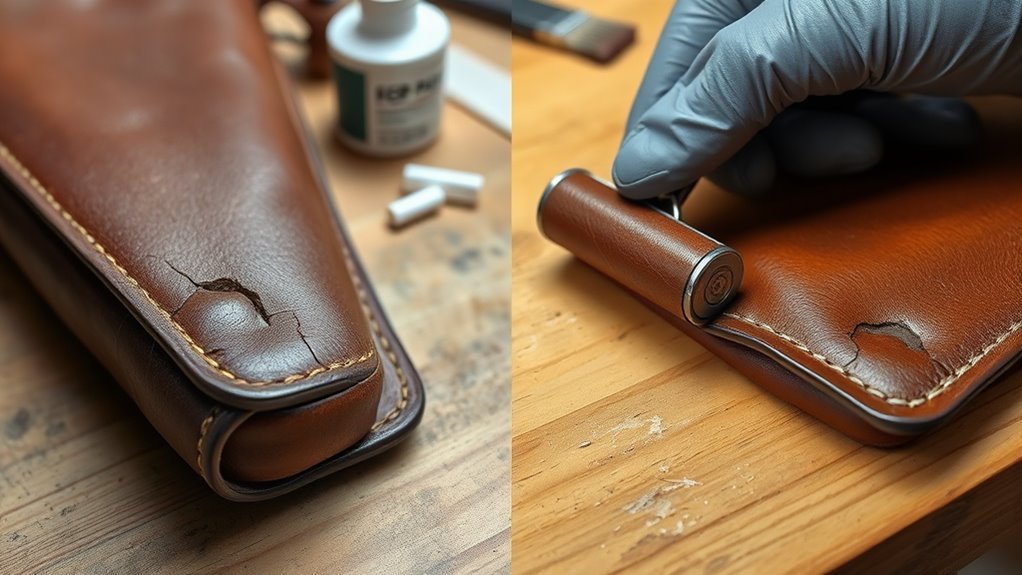
Edge paint is a flexible coating that seals the cut edges of leather straps, handles and flaps. It peels for a few common reasons. The first is poor preparation at the factory, where the edge was not sanded or primed well.
The second is wear. Handles and straps bend thousands of times, and edges rub against clothes and hands. Heat, moisture and dry air make the paint brittle, so it cracks and lifts.
The paint itself matters. Thick single coats and low-quality paints crack sooner than thin, layered coats of a paint made for leather edges.
Craft acrylics and nail polish are poor substitutes. They dry hard and crack on a flexing edge. Use a product sold as leather edge paint or edge coat.
The fix is the same in each case. Take off what is loose, make the edge smooth and build up new paint in thin layers.
Preparing the Area for Repair
Good preparation decides how long the repair lasts. Start by checking how far the peeling runs.
Then clean the edge and gather your materials before you open the paint.
New paint will not stick to dirt, oil or flaking old paint, so do not skip these steps.
Assessing Damage Extent
Look along every painted edge, not just the worst spot. Check handles, strap edges, flap edges and the top rim. Note where the paint is cracked, lifting or missing.
Gently lift the loose paint with a fingernail or tweezers and peel it back until you reach paint that is firmly attached. Do not cut into the leather.
Check whether the leather layers under the paint have separated. If you can see a gap between them, they will need glue before painting. Note the color and sheen of the old paint so you can match it.
Cleaning the Surface
Wipe the edges with a soft cloth that is barely damp to remove dirt and skin oils.
Let the edge dry completely. Paint applied over a damp edge will not bond. For greasy handles, use a leather cleaner and wipe off all residue.
Protect the faces of the leather. Run painter tape along both sides of the edge if your hand is not steady.
Sand the edge lightly with fine sandpaper, about 400 to 600 grit. The goal is a smooth, even surface with no step between old paint and bare leather.
Wipe away the sanding dust with a dry cloth before you paint.
Preparing Repair Materials
Set out everything you need so you can work without stopping.
You need leather edge paint in a matching color, a small applicator and fine sandpaper.
An awl, a toothpick or a small edge roller pen gives more control than a brush on narrow edges.
Have a scrap of leather or card ready to test the color and practice the stroke.
If the layers have separated, add a leather glue such as contact cement. Edge primer is optional, but it helps paint grip on smooth or oily leather.
Stir the paint gently. Do not shake it, because bubbles will show on the finished edge.
Essential Tools for Repairing Leather Edges
A few simple tools are enough for a neat result. Here is a short list:
| Tool | Purpose |
|---|---|
| High-quality adhesive | Rejoins leather layers that have separated. |
| Fine sandpaper | Smooths the edge before and between coats. |
| Small brushes | Apply edge paint in thin, even coats. |
| Wood burnisher | Smooths raw vegetable-tanned edges, not painted ones. |
| Soft cloths | Cleans surfaces and applies leather conditioner. |
You do not need professional equipment for a small repair. Patience between coats matters more than the tools.
Step-by-Step: Fix Peeling Edge Paint
With the edge clean, dry and sanded, the repair itself is simple.
Next, follow these steps:
- Trim away any loose or peeling edge paint, ensuring a smooth surface for the new application.
- If the leather layers have separated, glue them together, press firmly and let the glue cure before painting.
- Choose leather edge paint in matching colors, applying it evenly with a small brush for a professional finish.
Apply the first coat thinly along the center of the edge and let it level out. Let it dry fully, then sand lightly with 600 grit paper and wipe off the dust. Repeat for two to four coats, until the edge is smooth and slightly rounded.
Let the final coat cure for at least a day before you use the bag. Edge paint is its own sealer, so a separate topcoat is optional. Some brands sell a matte or gloss finish coat to match the original sheen.
How to Achieve Even Coverage When Applying Edge Paint
Even coverage comes from thin coats. Load a small amount of paint on the applicator and draw it along the edge in one steady pass. Do not go back over paint that has started to set. Let each layer dry completely before the next.
Here is a quick reference table of the main points:
| Tip | Description |
|---|---|
| Brush Techniques | Use a small brush for precision and control. |
| Layer Drying | Allow each layer to dry fully before the next. |
| Steady Hand | Maintain consistent pressure to avoid drips. |
| Painter’s Tape | Mask adjacent areas for clean edges. |
| Thin Layers | Apply paint in thin coats for even coverage. |
Burnishing: When It Applies and When It Does Not
Burnishing is a different way to finish a leather edge. It is often confused with edge painting, so it helps to know the difference.
Burnishing means rubbing a damp, raw leather edge until the fibers compress and turn smooth and glossy. No paint is involved.
It works on vegetable-tanned leather. Most handbags are made of chrome-tanned leather, which does not burnish well. This is why their edges are painted instead. Do not wet and rub a painted edge, because that will lift the paint.
Important Burnishing Tools
If your bag has raw, unpainted edges in firm vegetable-tanned leather, burnishing can restore them.
These are the tools used for burnishing raw edges:
- Edge Beveler: This tool rounds the edges, making them smoother for easier burnishing and a refined look.
- Wood Burnisher: A traditional choice, it polishes the edges by rubbing, sealing them against wear.
- Burnishing Gum: Applying this before burnishing methods boosts shine and durability, offering extra protection against fraying.
Dampen the edge only slightly. Too much water stains the leather and softens the edge.
For painted edges, skip these tools and use sandpaper and edge paint.
Best Techniques for Burnishing
To burnish a raw edge, sand it smooth, then dampen it lightly with water or burnishing gum.
Rub the edge briskly with a wood burnisher or a piece of canvas. Friction and light pressure compress the fibers into a smooth, shiny surface.
The method suits vegetable-tanned leather, which firms up under moisture and pressure. Soft chrome-tanned leather usually stays fuzzy.
Benefits of Edge Burnishing
A burnished edge is tidy and resists fraying, and it can be redone at any time.
Both finishes, burnishing and edge paint, protect an edge in similar ways:
- Minimized Fraying: The smooth, rounded finish reduces wear and prevents edges from fraying.
- Improved Lifespan: A protective seal created during burnishing helps resist peeling and moisture damage.
- Improved Aesthetics: Using burnishing gum not only adds shine but also upgrades the overall appearance of your leather items.
Painted edges offer more color choice and suit soft leathers. Burnished edges cannot peel, since there is no coating to lift.
Use the finish your bag already has. Repaint painted edges, and burnish raw ones.
How to Maintain Your Purse After Repairs
A repaired edge lasts longer with simple care. Keep the leather clean, and condition it every 3 to 6 months. Keep conditioner mostly off the painted edge, and wipe away any that gets on it.
Here’s a quick guide:
| Task | Frequency |
|---|---|
| Clean with leather cleaner | Monthly |
| Condition leather | Every 3-6 months |
| Inspect for wear | Bi-monthly |
Store the purse in a cool, dry place in a breathable dust bag, away from sunlight and heaters. Do not overload it. Extra weight bends the handles more sharply and cracks the paint.
How to Keep Your Purse From Peeling Again
Edge paint is a wear item, and it will need touching up from time to time. These habits make it last longer:
- Regular Conditioning: Condition your leather purse every 3-6 months to maintain suppleness and prevent dryness that can lead to peeling.
- Proper Storage: Store your purse in a cool, dry place using breathable fabric bags to avoid moisture buildup and damage.
- Gentle Cleaning: Clean your purse with leather-specific cleaners, steering clear of harsh chemicals that can strip protective coatings.
Touch up small chips as soon as you see them. A chip lets moisture and friction get under the paint, and the peeling spreads from there.
Avoid heat. Do not leave the bag in a hot car or on a radiator, since heat can make edge paint sticky or brittle.
Frequently Asked Questions
How to Prevent Faux Leather From Peeling?
Faux leather peels when its plastic surface layer breaks down. You cannot stop this fully, but you can slow it. Keep the bag away from heat, sun and moisture, wipe it with a damp cloth and store it in a breathable bag. Leather conditioner does not help, since faux leather does not absorb it.
How to Seal off Leather Edges?
Use leather edge paint, applied in two to four thin coats with light sanding between them. On firm vegetable-tanned leather, you can burnish the raw edge with water or gum and a wood burnisher.
How Long Does Edge Paint Take to Dry?
It depends on the product, so follow the label. Many edge paints are dry to the touch within an hour and need about a day to cure fully. Thin coats dry faster and crack less than thick ones.
Can You Use Acrylic Paint Instead of Edge Paint?
It is not a good idea. Ordinary acrylic paint and nail polish dry hard and crack on edges that bend. Leather edge paint is made to stay flexible.
Conclusion
Peeling edge paint looks bad, but it is one of the easier bag repairs. Remove the loose paint, sand the edge smooth and build up thin coats of matching leather edge paint. Let it cure before use. Touch up chips early and keep the bag away from heat, and the edges will stay sealed.

