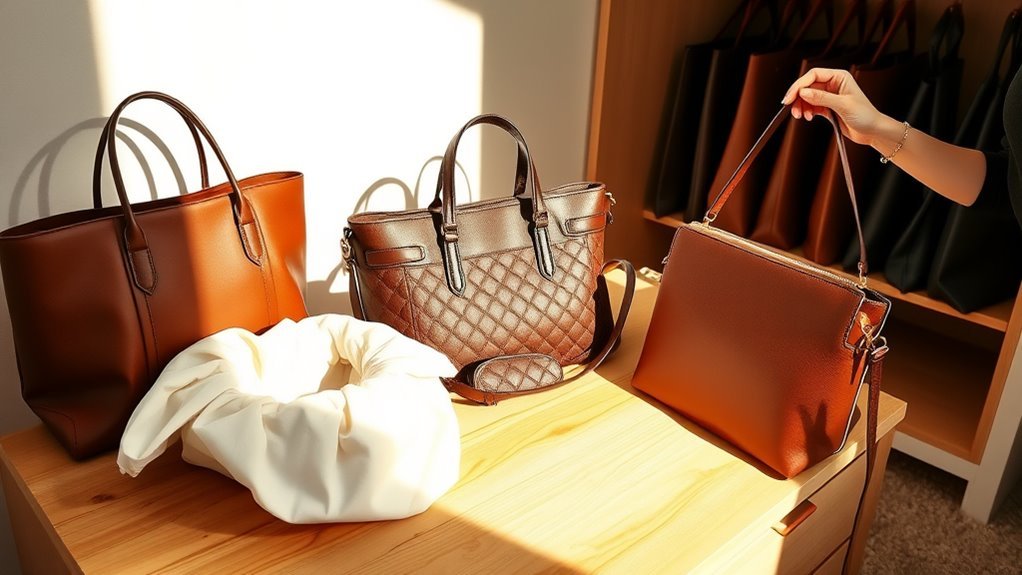
To keep a handbag in shape, do not overload it, set it down on its base, and stuff it when you store it. Use acid-free tissue paper for structured bags and soft cotton for slouchy ones. Clean the bag before storage, keep it in a cool, dry place, and wrap chains and hardware so they do not dent the body. Check stored bags every few months for early signs of wear.
Essential Cleaning Techniques for Your Handbag
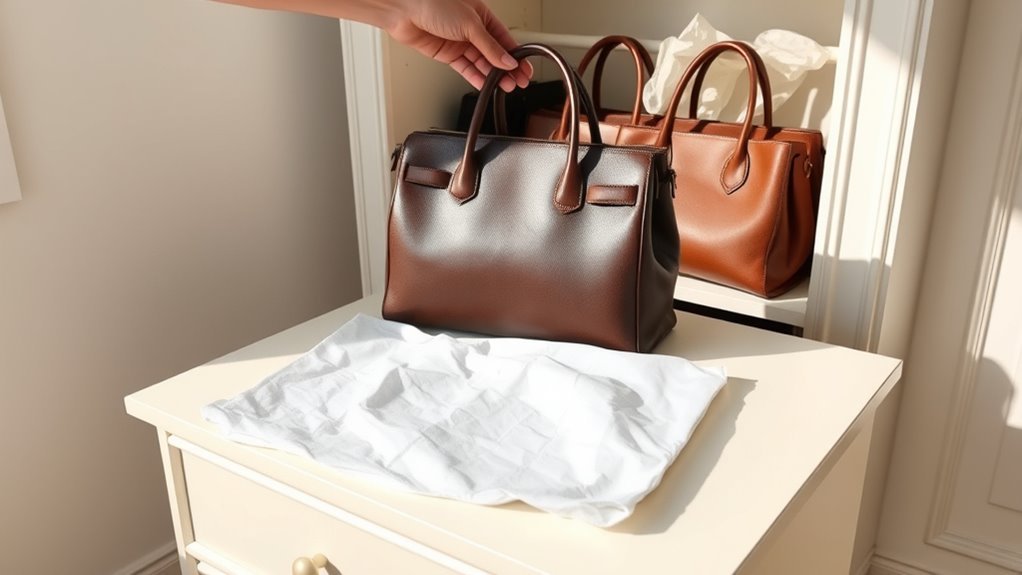
Good shape starts with a clean bag. Dirt and oils weaken materials over time, so regular cleaning protects both the look and the structure.
Clean the bag well before long-term storage so stains do not set. Use gentle, non-abrasive cleaners made for the material of your handbag.
Treat stains soon with a method that suits the material. The sooner you act, the less likely a mark becomes permanent.
Dust and grit build up in seams and corners and slowly wear the material.
After cleaning, dry the handbag fully. Moisture left inside can lead to mold and mildew.
A clean, dry bag holds its shape better and serves you well for years.
Why Proper Handbag Storage Matters?
Storage has a big effect on how long a bag keeps its shape. A bag that is stored well stays ready to carry for years.
Poor storage causes creases and a sagging shape. To keep the structure, give the bag support, for example with acid-free tissue paper inside.
Clean the bag before you store it. Then keep it in steady conditions: a relative humidity of about 40% to 55% and normal room temperature. Very damp air encourages mold, and very dry air can dry out leather.
Protect the hardware and accessories too. Wrapped chains and buckles cannot press dents into the body of the bag.
With this care, the bag will look right every time you reach for it.
How to Properly Stuff Your Handbag for Support
The right stuffing keeps a handbag in shape. Use acid-free tissue paper for structured bags so they keep their outline. Softer styles do better with breathable cotton or muslin.
Find the balance. Too much stuffing stretches the bag, and too little lets it crease and fold.
Ideal Stuffing Materials
Stuffing supports a bag from the inside and keeps its outline. The material you use matters:
Here are some ideal options:
- Acid-free tissue paper: Perfect for structured bags like the Hermes Kelly, it prevents ink transfer and acid damage.
- Cotton or muslin fabric: Best for softer bags like the Bottega Veneta pouch, offering support without creating pressure points.
- Individual compartment stuffing: For bags with sections, like the Goyard St. Louis tote, this guarantees balanced support and prevents sagging.
With the right stuffing, a stored bag keeps its shape until you need it again.
Avoiding Overstuffing Issues
Overloading is the main way a bag loses its shape in daily use. Carry only what you need, and keep heavy items low and centered. Carry the bag by both handles, and set it down on its base. Do not hang a loaded bag by one strap for long, since this stretches the strap and pulls the body out of line.
In storage, the same rule applies to stuffing. Use enough acid-free tissue in a structured bag to fill it out without stretching it. Use cotton or muslin in softer bags to avoid pressure points.
Stuff each compartment on its own in bags that have sections. Avoid newspaper and colored tissue, since ink and dye can transfer to the lining or leather.
Check the stuffing from time to time and adjust it. Rotate the bags you carry, so each one gets time to rest and recover its shape.
Safeguarding Accessories: Protecting Your Handbag Hardware
Hardware needs attention too, both to stay bright and to keep it from marking the bag.
Follow these tips to protect the hardware and the bag around it:
- Wrap heavy chains and handles in soft fabric or tissue paper to prevent indentations on the bag’s body.
- Store detachable accessories separately and wrap them to avoid scratching the exterior.
- Tuck away non-detachable features like straps or embellishments, wrapping them carefully to minimize contact.
Check and wipe the hardware regularly to prevent corrosion and tarnish.
Padded shelves or boxes add one more layer of protection.
These small habits prevent dents, scratches, and wear for years.
Optimal Storage Conditions for Your Handbag
The storage environment matters as much as the stuffing.
Aim for normal room temperature and a relative humidity of about 40% to 55%.
Keep the bag away from strong light and from big swings in temperature.
Ideal Temperature Range
Room temperature is best for handbags, and leather in particular. Somewhere around 60 to 75 degrees Fahrenheit (15 to 24 degrees Celsius) is a good target.
Big swings in temperature are hard on leather and can lead to stiffness or cracks over time.
To protect your handbag, keep these points in mind:
- Avoid temperatures exceeding 75 degrees Fahrenheit to prevent material degradation.
- Keep it above 60 degrees Fahrenheit to avoid stiffness that can cause cracking.
- Steer clear of extreme environments, like basements or attics, that risk temperature swings.
Humidity Control Tips
Humidity control keeps a bag looking as good as new. Aim for about 40% to 55% relative humidity. Much higher than that invites mold and mildew.
A small humidity meter, called a hygrometer, tells you what the level is. Silica gel packets in the storage space soak up extra moisture. Replace or dry them out from time to time.
Keep the temperature steady as well, at normal room level, so leather stays supple.
Avoid attics, basements, and other places where temperature and humidity change a lot.
Light Exposure Prevention
Light fades color over time. Keep stored bags out of it as much as you can.
Here are some key tips:
- Store your handbag in dark closets or use dust bags to minimize light contact.
- Keep it away from windows and direct sunlight to protect against harmful UV rays.
- Use opaque containers or acid-free tissue paper to shield your bag while allowing it to breathe.
Look over stored bags now and then for fading or color changes.
How Dust Bags Preserve Your Handbag
Dust bags protect a handbag from dust, scratches, and light. They are a simple and effective form of care.
Many designer bags come with a dust bag made to fit. Use it.
A dust bag shields the bag from light during storage, which helps keep its color and texture.
If you have lost the original, use a dust bag made of 100% cotton or linen. These fabrics let air through, so moisture does not get trapped. Do not use a plastic bag.
The dust bag should fit loosely. There should be room for a stuffed bag without squeezing it.
Organizing Your Handbag Storage System
An organized storage system keeps handbags in good shape. Choose a spot indoors with steady temperature and humidity.
Leave a couple of inches of space between bags on a shelf. Air can move, and the bags do not press on each other. A soft, acid-free shelf liner prevents scratches.
Here are a few more tips for your storage system:
- Label shelves clearly to make identifying your bags effortless.
- Implement a rotation schedule for everyday bags, ensuring even wear and maintaining their shape.
- Regularly inspect stored bags for signs of wear or damage, allowing for timely intervention.
Regular Maintenance Checks and Documentation for Your Handbag
Regular checks catch problems before they become permanent. Look over your bags every few months for creases, fading, and hardware problems.
Take photos of your bags and note when you stored them. A record is useful for insurance and helps you spot changes.
Clean and condition leather on a routine, so it stays supple. A simple list of which bags need attention keeps you on track.
Rotate your handbags so the wear is even and each bag gets a rest.
A few minutes of care now and then keeps a collection in good shape for years.
Frequently Asked Questions
What Is the Best Way to Organize My Handbags?
Sort your handbags by type or by how often you use them. Keep everyday bags at eye level, and leave space between bags so air can move.
How to Stiffen a Tote Bag?
Use a structured insert or a base shaper cut to the size of the bottom. Acid-free cardboard also works as a simple base. These add support without changing the bag.
How to Fix Slouching Leather Bags?
Stuff the bag with acid-free tissue or cotton when you are not using it. Store it upright, and do not hang it by the handles. A bag organizer or base shaper adds support while you carry it.
How to Minimize What You Carry in Your Purse?
Carry only your essentials, and use a small organizer so each item has a place. Clear out your bag every week or so. A lighter bag keeps its shape longer and is easier on your shoulder.
Conclusion
A handbag keeps its shape when you treat it with care. Do not overload it, set it down on its base, and stuff it for storage. Keep it clean, dry, and out of the light, and check it every few months. These simple habits keep the bag looking as it should for years.