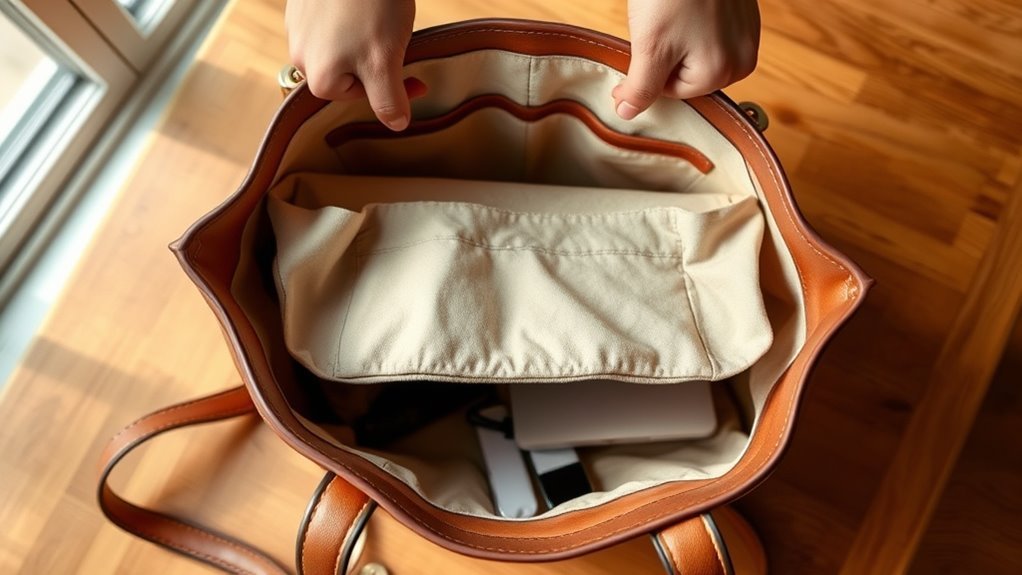
To fit a purse organizer without stretching your bag, measure the inside of the bag, choose an organizer slightly smaller than the interior, use a soft, flexible material, and fill it lightly. A tight or overstuffed insert pushes against the seams and can distort the bag over time.
Why You Might Want a Purse Organizer
An organizer is a fabric liner with pockets that sits inside a bag. It keeps small things upright and easy to find, and it makes it simple to move your belongings from one bag to another. It can also help a soft bag hold its shape. The wrong size or the wrong material, however, can put pressure on the walls of the bag, so fitting it well matters. For the wider method of arranging a bag, see how to organize a purse.
Types of Purse Organizers
- Tote organizers: open-top inserts with pockets for larger bags.
- Tapered organizers: narrower at the bottom, for bags that curve in at the base.
- Zipper pouches: loose pouches for small items, which do not press on the bag walls at all.
- Base shapers: a flat insert that supports the bottom of a bag.
Pouches are the gentlest option for a delicate or unstructured bag, since they take up little space and exert almost no pressure.
How to Measure Your Bag for a Good Fit
Measure the inside of the bag, not the outside. Take the width at the bottom and at the opening, the depth and the height, and note any interior pockets or seams that may get in the way. If the bag tapers, the base will be narrower than the top. Choose an organizer that is slightly smaller than the interior, by about a centimeter or half an inch on each side, so that it does not push on the walls. More measuring advice is in how to measure handbag width, height and depth.
Choose a Flexible, Lightweight Material
The material of the organizer affects how it behaves inside the bag.
- Thin nylon or polyester: light, flexible and easy to wipe clean, with little bulk.
- Felt: soft and gentle, but it can be bulky and attract lint.
- Mesh: light and breathable, and good for seeing what is inside.
- Stiff plastic or heavy fabric: avoid in a soft bag, because it can force the bag out of shape.
Reinforced seams help an organizer last, but the walls should be soft enough to flex with the bag.
How to Arrange Items to Prevent Bulging
- Use slim pouches that lie flat against the inside of the bag.
- Stand items upright, to use the height and not the width.
- Keep heavy things at the bottom, and light things near the top.
- Put your daily items, such as your phone, keys and wallet, in easy-to-reach pockets.
- Review the contents regularly, and remove anything that you do not need.
Signs the Organizer Is Too Tight
- The sides of the bag bulge outward even when the bag is half full.
- The bag no longer sits flat or tips over when you put it down.
- The seams look strained, or the lining pulls at the stitching.
- You have to squeeze the organizer in, or it springs back when you remove it.
If you see any of these signs, take the organizer out, and use a smaller one or loose pouches. A bag that has already stretched may be reshaped, as covered in how to reshape a crushed handbag without risky heat.
Caring for the Bag and the Organizer
Take the organizer out from time to time, and shake out crumbs and dust. Wipe both the organizer and the inside of the bag with a damp cloth, and let them dry before you put them back. When the bag is not in use, take out the organizer and store the bag lightly stuffed with acid-free tissue, as how to store handbags describes. This lets the bag rest in its natural shape.
Fitting an Organizer in Different Bag Styles
The best fit depends on the shape of the bag. A tote with straight sides can take a rectangular insert that sits snugly but not tightly, with room at the top so the handles still move freely. A bucket or tapered bag needs a tapered insert or a set of pouches, because a rectangular organizer forces the base wider and pulls the sides out of shape. A structured satchel or a bag with a rigid frame can take a firmer insert, since the walls hold their own shape, but the insert must still clear the closure, so that the bag opens and shuts easily. A very soft or unlined bag does best with loose pouches or a thin, felt-like insert, which adds no pressure at all.
Whichever style you have, try the organizer empty first. Put it in, close the bag and look at the outline from the front and the side. If the silhouette has changed noticeably, the insert is too large, or too stiff. Then fill it with a normal day load, and look again. The bag should look about the way it did before, only more organized. If you carry the bag for long periods, check the shoulder strap anchors as well, since the extra weight of a full organizer is carried there. For details of the shape types, see what a satchel is and what a bucket bag is.
Frequently Asked Questions
How Do I Organize All My Purses?
Use a pouch set that moves from bag to bag, and keep a small set of essentials in each bag, so that you do not need to repack every time.
How Do I Stiffen a Floppy Purse?
A base shaper or a soft structured insert can help. Keep it thin, so that it does not stress the seams.
What Is a Good Organizer for Totes?
An open-top insert that matches the inside size of the tote, with pockets for a phone, keys and a bottle, is a good choice.
Conclusion
A purse organizer works best when it is measured, soft and slightly smaller than the bag. Choose thin, flexible material, do not overfill it and remove it for storage, and your bag will keep its shape.