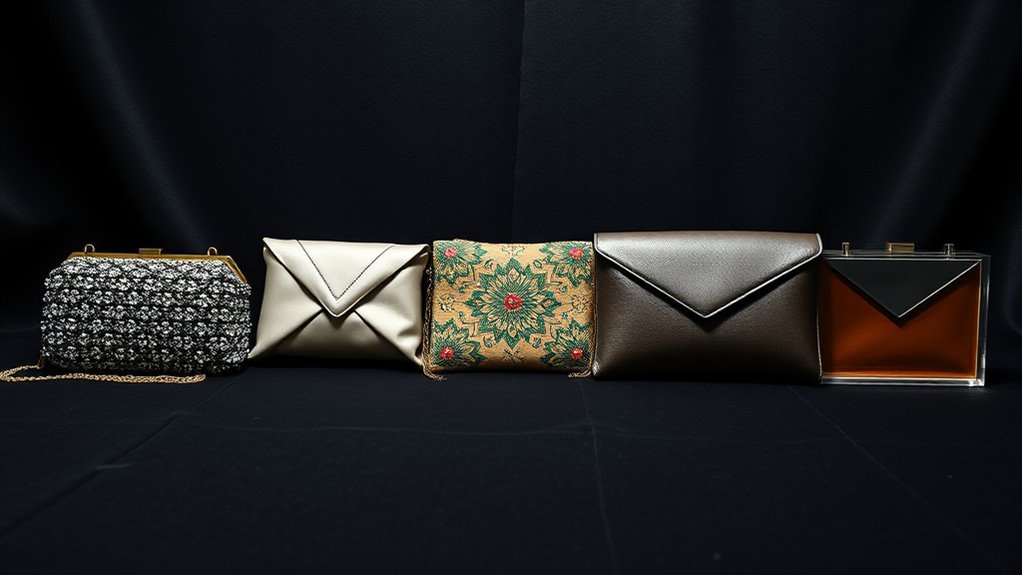
The clutch bag as we know it took shape in the mid-1920s. It was a flat bag with no strap, carried in the hand or under the arm. In 1933 the jeweler Van Cleef & Arpels created the minaudière, a hard jeweled case for evening. Frame clutches followed in the 1950s, and large envelope styles in the 1980s. Today many clutches hide a strap and work for day and night. Here is how each step happened.
The Birth of Clutch Bags in the 1920s
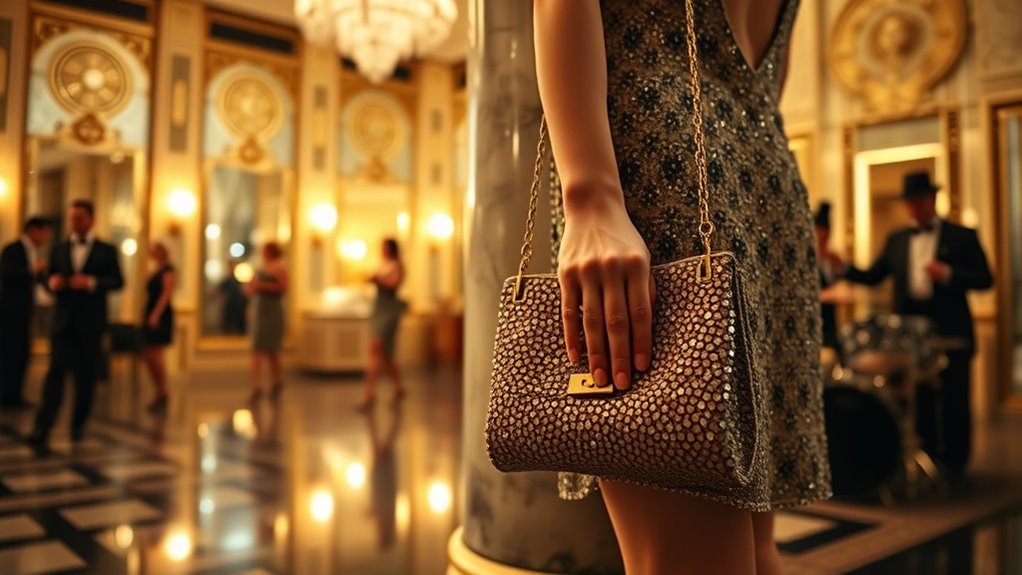
Small hand-held bags are much older than the clutch. From the late 1700s, women carried a reticule, a small drawstring pouch held in the hand or on the wrist. It stayed in use through the early 1800s and returned in new forms later.
The modern clutch arrived in the mid-1920s. Hemlines rose and dresses hung straight and loose. A flat bag with no strap suited that clean line. Shops sold these bags as pochettes, underarm bags or clutch bags.
Early clutches were made of soft leather, silk or beaded fabric. Many carried the bold geometric patterns of Art Deco. From the middle of the decade, reptile skins such as lizard and snakeskin were also in fashion.
The new bag also said something about its owner. A woman with a clutch carried her own money, keys and makeup in public. That was part of the freer life many women claimed in the 1920s.
The Glamorous Minaudière: Origins in the 1930s
The minaudière dates from 1933. Van Cleef & Arpels, the Paris jeweler, created it as a slim hard case in metal, often set with stones. Inside were fitted spaces for powder, lipstick, a comb and other small items. It replaced both the evening bag and the vanity case.
| Feature | Description |
|---|---|
| Structure | Rigid, rectangular design |
| Functionality | Holds essentials like lipstick and a compact |
| Created By | Van Cleef & Arpels, 1933 |
The house tells a well-known story about its origin. Charles Arpels is said to have seen the American socialite Florence Jay Gould carry her makeup and cigarettes in a plain metal tin. He designed a precious case to do the same job in style. The name is said to honor Estelle Arpels, the wife of Alfred Van Cleef. The word is still used for any small, hard evening case.
How Clutch Styles Evolved Over the Decades
After the 1930s, the clutch kept changing with fashion. Its shape, size and materials shifted with each decade.
The basic idea stayed the same: a bag with no strap, held in the hand. What changed was how stiff, how large and how decorated it was.
The timeline below shows the main shapes, followed by the materials used in each period.
Evolution of Clutch Shapes
Each period had its own typical clutch shape, as the list below shows:
- 1920s: The flat envelope clutch emerged, complementing the flapper dress’s loose silhouette.
- 1930s: The minaudière appeared, showing luxurious materials and ornate embellishments.
- 1950s and 60s: Structured frame clutches gained popularity, emphasizing sophistication with leather and patent finishes.
- 1980s: Oversized envelope clutches in bold colors echoed the era’s adventurous spirit.
Today many clutches are convertible. A chain or strap tucks inside, so the same bag can be held in the hand or worn on the shoulder.
These shapes follow changes in clothing and daily life. As women carried more of their own things, the clutch grew, shrank and grew again to match.
Materials Through the Decades
Materials changed as much as shapes. Each decade used what suited its clothes and its budget.
In the 1920s, makers used soft leather, silk and beads. The minaudière of the 1930s was metal, lacquer and gemstones, and it belonged to the jeweler as much as the bag maker.
In the 1950s and 1960s, frame clutches in leather and patent leather matched the neat, structured clothes of the time. In the 1980s, large envelope clutches came in bright colors and metallic finishes.
Today the range is wide: leather, satin, canvas, straw, acrylic and recycled fabrics. Evening styles still favor satin, metal and beading.
Princess Diana and the Clutch
Few people are as closely linked to the clutch as Diana, Princess of Wales. In the 1990s she often carried small satin clutches by the British designer Anya Hindmarch to evening events.
Hindmarch later said that Diana jokingly called them her cleavage bags. She held the clutch against her chest as she stepped out of cars, so photographers could not get an unflattering shot. It shows that a clutch can be a practical tool as well as a pretty object.
Mid-Century Influences on Clutch Structure and Functionality
After World War II, fashion turned neat and structured again. Fitted waists and full skirts called for tidy, matching accessories, and bags followed.
The frame clutch became a standard of the 1950s and 1960s. It had a rigid frame, a clasp at the top and firm sides. Leather and patent leather were the usual materials, often chosen to match shoes or gloves.
These bags were built to be used. A clasp kept the contents secure, and the firm body protected a compact and lipstick. The clutch was no longer only for evening. Smaller day versions went to lunches, offices and shops.
The Bold Comeback of Oversized Clutches in the 1980s
The 1980s made the clutch big. Large envelope and foldover styles were carried in the hand or tucked under the arm, by day as well as at night.
Fashion houses and high street brands alike sold them, in leather, suede and quilted finishes.
Bright color, shine and bold hardware matched the confident clothes of the decade.
Statement Fashion Piece
The oversized clutch was meant to be noticed. It was part of the outfit, not a quiet extra.
Several things defined the look of the decade:
- Vibrant Colors: Designers embraced eye-catching hues that demanded attention.
- Unconventional Materials: Textured leather and metallic finishes added a daring twist.
- Power Dressing Influence: Women used clutches to express individuality while maintaining professionalism.
The result was a strong contrast with the tiny evening bags of earlier decades. Size itself became the statement.
Versatile Daytime Appeal
The bigger size also made the clutch useful by day. It could hold a wallet, keys, makeup and a diary, which a small evening clutch never could.
It paired easily with the suits and strong shoulders of the decade, as a lighter choice than a shoulder bag. Patent leather and bright fabrics kept it from looking plain.
This is when the clutch stopped being only an evening bag. The same shape could go from the office to dinner.
Modern Clutch Bags: Versatility for Day and Night
Modern clutches are built to do more than one job. Many have a hidden chain, a wrist loop or a detachable strap, so you can free your hands when you need to.
They are also sized for what people carry now. Most are made deep enough for a large phone, a card case, keys and a lipstick. Day versions come in leather, canvas and woven materials.
Evening styles keep the classic shapes: the envelope, the box clutch and the hard minaudière. Color and decoration change with the season, but the outlines stay close to those of a century ago.
That mix of old shape and new function is why the clutch has lasted. It still does what it did in the 1920s: it carries the essentials and leaves the outfit to do the talking.
Choosing the Right Clutch Size for Your Essentials
History aside, the right clutch is the one that fits what you carry. Check these items before you buy:
- Phone: Confirm it fits comfortably without bulging.
- Wallet: Choose a size that accommodates your cards and cash.
- Lipstick: Don’t forget a touch-up for your look.
- Keys: Make sure they’ve a designated spot to avoid chaos.
A slim envelope clutch suits short outings with a phone, cards and a key. A deeper box or frame clutch holds more and suits long events such as weddings.
Look for a secure closure, such as a clasp, zipper or magnetic snap. For events where you will eat, dance or hold a drink, choose a style with a wrist strap or a chain that tucks inside.
Frequently Asked Questions
What Was Princess Diana’s Favorite Bag?
The bag most linked to Princess Diana is the Lady Dior, but it is a top-handle bag, not a clutch. Bernadette Chirac, then First Lady of France, gave it to her in Paris in September 1995. Dior renamed the bag Lady Dior in 1996. For evening events she often carried small satin clutches by Anya Hindmarch.
When Were Clutch Bags Popular?
Clutches have had several peaks. They first became fashionable in the mid-1920s, returned as frame clutches in the 1950s and grew large in the 1980s. They have remained a standard evening bag ever since.
What Is the Difference Between a Clutch and a Minaudière?
A clutch is any small bag with no strap or handle that is held in the hand. A minaudière is one kind of clutch. It is a small hard case, usually metal and often decorated with crystals or stones.
What Came Before the Clutch Bag?
Before the clutch, women carried the reticule, a small drawstring pouch that appeared in the late 1700s. Framed pouch bags and beaded or mesh purses followed in the 1800s and early 1900s.
Conclusion
The clutch has changed shape many times in a hundred years, from the flat pochette of the 1920s to the jeweled minaudière, the frame clutch, the oversized envelope and the convertible styles of today. The idea has not changed. It is a small bag for the few things you truly need, held in your hand.
Sources: Van Cleef & Arpels: Florence Jay Gould and the Minaudière; V&A: clutch bag, c. 1925; European Fashion Heritage Association: Reticules; W Magazine: Princess Diana and her clutches; Marie Claire UK: the Lady Dior bag.

