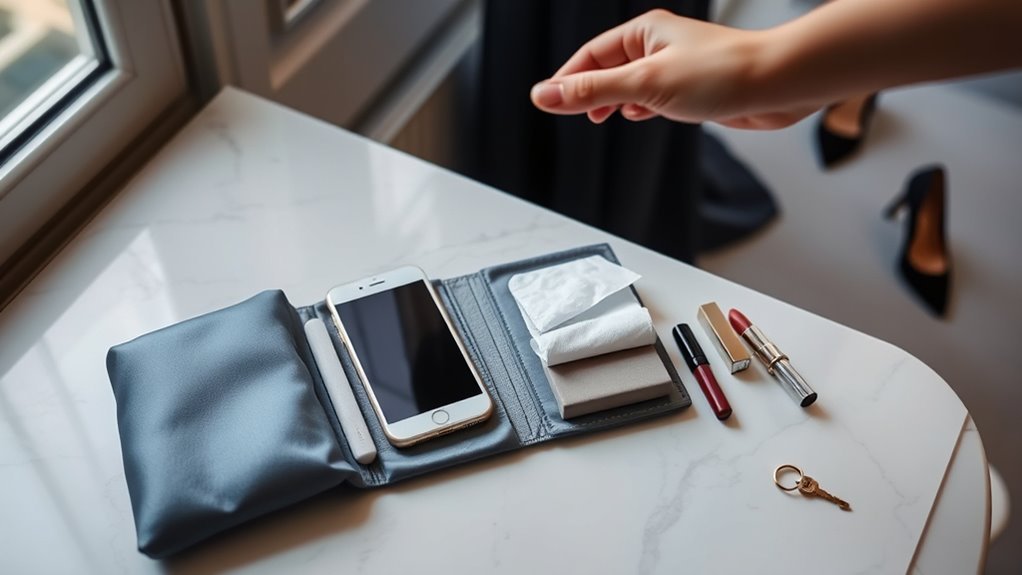
To pack a clutch without overfilling it, carry only flat essentials: phone, cards, a key, and one or two makeup items. The clutch should close easily without pressing on the clasp. To pack the clutch itself for travel or shipping, empty it, fill it lightly with tissue so it holds its shape, wrap the hardware, and put it in a dust bag inside a snug box or the middle of your suitcase.
What to Put Inside a Clutch
A clutch holds less than it looks. Start with the phone, since it takes the most room. Add a slim card holder in place of a full wallet, with one or two cards, an ID, and a folded bill. Take one key off the ring. Then add a lipstick and, if there is room, a flat compact or a few tissues.
Lay the items flat and side by side, not stacked. Put the phone against the back wall and the small items in front of it. Close the clutch. If you have to push the clasp or the zip strains, take one thing out. An overfilled clutch bulges, pops open, and wears out its frame or zip.
The rest of this guide covers the other kind of packing: getting the clutch itself through a trip or a delivery without it being crushed.
Why Clutch Bags Get Crushed
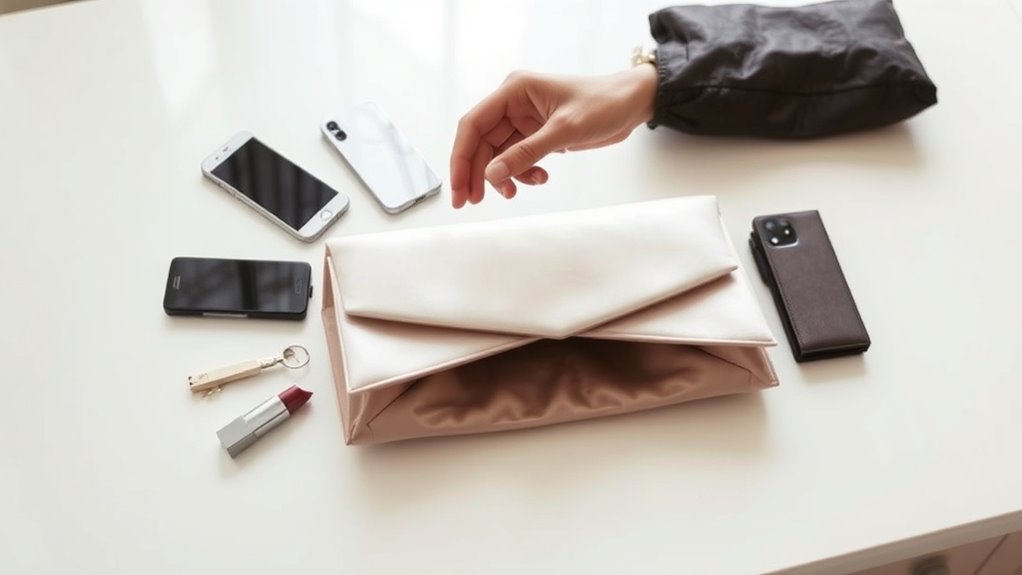
A clutch gets crushed when other things press on it in a suitcase or shipping box and nothing inside it pushes back. Corners flatten, the body creases, and seams strain.
Soft clutches crease, and firm ones can dent or crack at the frame. Damp makes it worse, because wet leather and fabric take a new shape as they dry.
Bare hardware is the other risk. A clasp or chain can scratch the bag itself or anything packed next to it.
So the plan has three parts: light support inside, soft layers outside, and no pressure on top.
Empty and Shape the Clutch First
Start by emptying the clutch completely. Loose items inside can press dents into it from within.
Then fill it lightly with tissue paper so it holds its natural shape.
Cover the clasp and any chain with tissue before you move on.
Clear Out Contents
Take everything out, including cards in slots and anything in a zip pocket.
Shake out crumbs and powder. Wipe the lining with a dry cloth if it needs it.
Look over the corners, the clasp, and the seams, so you know what condition the bag is in before it travels.
If the clutch has a chain strap, take it off or tuck it inside, wrapped in tissue so it does not mark the lining.
An empty clutch is lighter and easier to protect.
If you are shipping it to a buyer, this is also the time to take photos.
Support Natural Shape
Fill the clutch with crumpled acid-free tissue paper. A rolled pair of clean socks or a soft scarf also works in a suitcase. Do not use newspaper, because the ink can rub off on the lining.
Use just enough to round out the bag. It should look the way it does when you carry it, not swollen. If the sides bow outward or the clasp is hard to close, take some out.
Close the clutch and put it in its dust bag or a clean cotton pillowcase. That keeps off scuffs and dust.
Use the Right Packing Materials
You only need a few soft materials.
Tissue paper goes inside the bag and around the hardware. A dust bag or soft cloth goes around the outside.
For shipping, add bubble wrap around the wrapped bag, with extra at the corners. Do not let bubble wrap sit directly on leather or satin, because it can leave marks. Keep the dust bag or tissue between them.
Soft Fill Materials
For the filling and padding, softer and lighter is better:
- Tuck tissue paper inside the clutch to support its structure without bulk.
- Wrap delicate hardware with bubble wrap strips so you can prevent scratches with precision.
- Choose a dust bag or soft pouch, then add crumpled paper around the box to steady the bag without crowding it.
Skip packing peanuts and anything hard or scented.
Every layer should cushion the clutch without squeezing it.
Protective Outer Layers
Wrap the outside in layers. Start with tissue paper against the bag, to protect the finish.
Next comes the dust bag or pillowcase. For shipping, add a layer of bubble wrap over that, with extra at the corners and over the clasp.
For a firm or framed clutch, always use a box. A padded mailer bends, so it suits only soft pouch-style clutches with no frame. In a suitcase, place the clutch in the middle, between layers of soft clothes, and never under shoes or a toiletry bag.
You can mark a shipping box as fragile, but do not rely on the label alone. The padding is what protects the bag.
Wrap Hardware and Delicate Surfaces
Metal parts cause most scratches, so wrap them separately. Fold a strip of tissue around the clasp, and wrap any chain in tissue so it cannot touch the body of the bag.
On a beaded or sequined clutch, lay a sheet of tissue over the decorated side before it goes into the dust bag, so the beads do not snag the fabric. Then finish with these steps:
- Tuck straps in and fasten them.
- Wrap the clutch in a dust bag or pillowcase.
- Keep it away from hard items.
Keep the wrapping snug but not tight. It should stop rubbing without pressing on the bag.
Leave a soft layer on every side so nothing hard touches the surface.
Choose a Box or Mailer for Clutches
Choose packaging that fits the clutch closely. A soft, unframed clutch can go in a padded mailer for a short trip.
A structured or framed clutch needs a small corrugated box. Pick one that leaves about an inch of space on each side for padding. Fill that space with tissue or paper so the bag cannot slide.
Do not use a box that is much too large. The clutch will move around inside, and you will need far more padding to hold it still. For long trips or rough handling, choose the box over the mailer.
If the clutch is valuable, add tracking and insurance when you ship it.
Pack the Clutch Without Overfilling It
Here is the whole method in short. Empty the clutch, fill it lightly, wrap it, and pad it:
- Use lightweight stuffing, never heavy fillers.
- Wrap the clutch in a soft dust bag or pillowcase for clutch care.
- Place it upright and cushion it so it won’t shift.
The filling is the step people overdo. Too much tissue stretches a soft clutch and strains the clasp of a framed one. Too little lets it collapse. Aim for its normal carried shape.
The same rule applies in a suitcase. Give the clutch its own space, and do not use it as a container for jewelry or chargers on the way.
Check the Fit Before Sealing
Before you seal the box, check the fit.
Close the flaps without taping them and shake the box gently. You should feel no movement. If the clutch slides, add more padding at the sides.
Press lightly on the top. If you can feel the clutch right under the cardboard, add a layer of padding above it.
Fill gaps with crumpled paper or bubble wrap, but do not pack it down hard. The clutch should be held in place, not squeezed.
Protect Leather, Suede, and Satin Clutches
Different materials need slightly different care. Leather should go in a breathable dust bag and stay dry. Keep it away from heat and direct sun.
Suede marks easily, so wrap it in tissue and a dust bag, and keep it apart from anything that could shed color. For shipping in wet weather, you can put the wrapped bag inside a plastic bag for the trip. Take it out on arrival, because suede and leather should not be stored in plastic. Satin snags and water-spots, so wrap it in tissue with no tape touching the fabric, and fill it lightly.
- Cushion, don’t crowd.
- Shield every clasp with tissue paper.
- Match the packing techniques to the finish.
Whatever the material, do not overfill the clutch. A bulge stretches the shape and strains seams and clasps.
Unpack it soon after you arrive, and let it air for a while before you use it.
Frequently Asked Questions
How to Fix a Purse That Has Lost Its Shape?
Fill it with tissue paper until it is back to its normal shape, and leave it for a few days. For leather, light steam from a distance can relax a crease. Let it cool and dry while still stuffed. Deep creases in firm bags may need a professional.
How to Make a Bag Keep Its Shape?
Do not overfill it when you carry it. Store it stuffed lightly with tissue, in a dust bag, standing upright or lying flat with nothing on top.
How to Turn a Clutch Into a Crossbody Bag?
You can only do this if the clutch has attachment points. Many have small rings inside or a hidden chain. Clip a thin strap or chain to those. If there are no rings, a repair shop can add them.
Conclusion
Packing a clutch well means not overfilling it in either sense. Carry only flat essentials so it closes easily. When the clutch itself travels, fill it lightly, wrap the hardware, and give it a snug box or a soft spot in the middle of your suitcase.