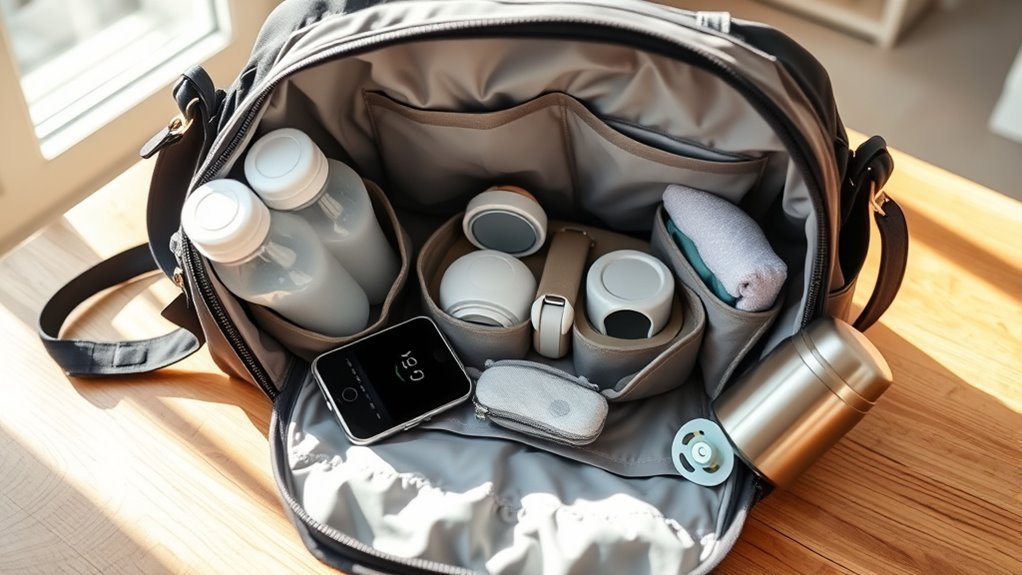
To carry formula in your diaper bag safely, use airtight, BPA-free containers for powder and ready-to-feed bottles. Pack pre-measured formula and water separately to minimize bacteria risk. Remember, prepared formula’s safe for 2 hours at room temperature, while refrigerated bottles last up to 24 hours. Keep your formula cool with ice packs and insulated pockets. Stay organized for easy access, and your outings will be smooth and stress-free. Discover more tips to streamline your feeding experience.
How to Choose Safe Containers for Formula Storage
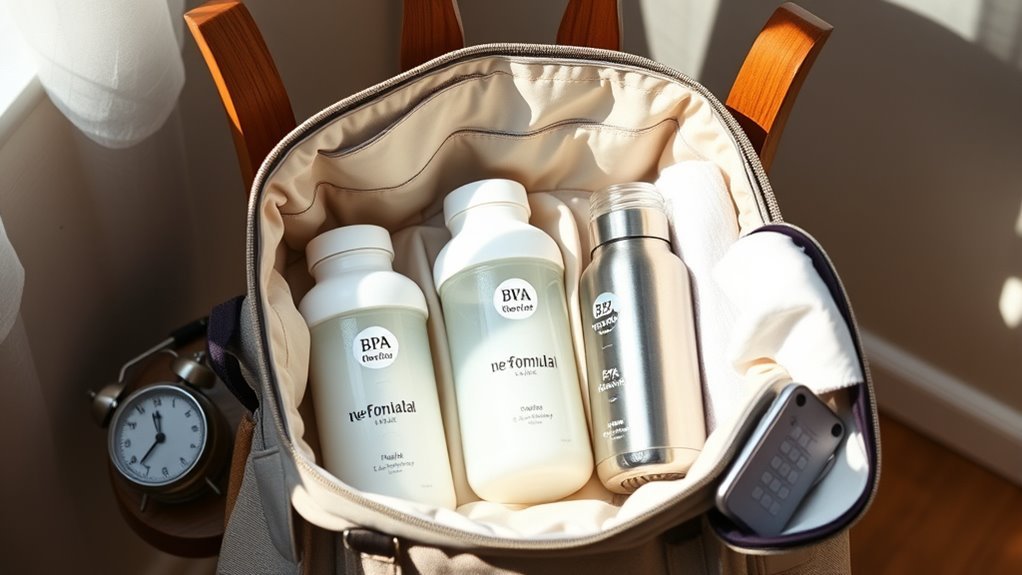
When you’re out and about with your little one, choosing the right containers for formula storage is essential. Start by selecting airtight containers for powdered formula; these keep it dry and free from contamination.
Choosing the right airtight containers for powdered formula is crucial to keep it dry and safe for your little one.
Look for options that are easy to clean and sanitize, ensuring you maintain a safe environment for your baby. For premixed formula, opt for BPA-free plastic or glass bottles, as these materials are safe and help maintain the right temperature.
Consider pre-measured formula containers with separate compartments—they simplify mixing and reduce bacteria risk during outings.
Don’t forget to clearly label any container with the expiration date and instructions for use; this avoids confusion when you’re busy.
Finally, use insulated bags for transporting premade bottles, ensuring they stay at the appropriate temperature for hours.
With the right container materials and storage solutions, you can confidently care for your baby wherever you go.
Essential Tips for Packing Formula in Your Diaper Bag for Travel
Packing formula for travel can feel overwhelming, but with a few essential tips, you can make the process smoother. Start by choosing the right formula types for your journey. Use separate containers for pre-measured formula and water to minimize bacteria growth. Ready-to-feed bottles are handy since they can be stored at room temperature.
Here’s a quick reference to help you pack effectively:
| Item | Usage | Notes |
|---|---|---|
| Pre-measured formula | Mix with water on-the-go | Safe within 1 hour after mixing |
| Ready-to-feed bottles | Convenient feeding option | Use within 2 hours of opening |
| Insulated bags/ice packs | Keep bottles at safe temperature | Essential for outings |
Organize your diaper bag for easy access, and always check expiration dates. With these tips, you can stick to your feeding schedules while traveling!
What Are the Safe Limits for Keeping Prepared Bottles?
Keeping your baby’s formula safe during outings is just as important as packing it properly. Prepared formula should be used within 2 hours if it’s kept at room temperature to prevent bacterial growth.
If you store it in the fridge, you’ve got up to 24 hours before it needs to be discarded. Always toss any leftover formula after a feeding to avoid potential contamination—this is essential for feeding safety.
For longer outings, consider using ice packs to keep pre-made bottles cool, which can extend their safe use time. Monitor the storage conditions, ensuring the formula stays in a cool, dry place to maintain its quality.
Tips for Keeping Formula at the Right Temperature
To guarantee your baby’s formula stays at the right temperature during outings, it’s essential to store premade bottles in insulated pockets of your diaper bag. This helps maintain the right temperature for up to one hour without refrigeration. For longer outings, use ice packs in a separate compartment to keep bottles cool, ideally below 40°F (4°C).
If you prefer formula mixing on the go, prepare it with warm water and store it in an insulated thermos to keep it at a suitable feeding temperature. When using powdered formula, keep it in a dry container and mix just before feeding to avoid bacteria. Always prioritize temperature monitoring before feeding; the formula should be comfortably warm, around 98.6°F (37°C).
| Tip | Purpose |
|---|---|
| Insulated Pockets | Maintain temperature |
| Ice Packs | Keep formula cool |
| Insulated Thermos | Retain warmth |
| Mix Just Before Feeding | Prevent bacterial growth |
| Monitor Temperature | Guarantee safe serving temperature |
Airline Regulations for Traveling With Formula
When traveling with formula, it’s essential to understand airline regulations to make your journey smoother.
Most airlines allow formula and baby food in carry-on bags without the usual liquid restrictions, so you can keep them handy.
Remember to pack these items separately for security screening and check your airline’s specific policies to avoid any surprises.
Allowed Liquids for Infants
Traveling with an infant can be challenging, especially when it comes to managing airline regulations for liquids.
Fortunately, you can navigate these rules with ease:
- Baby formula and food are exempt from standard liquid restrictions.
- Pre-mixed bottles of formula are allowed but may undergo safety swabbing.
- Keep all feeding items, including your chosen formula brands, in a separate bag for easy access.
- Remember, prepared formula should be used within 2 hours at room temperature or can be refrigerated for up to 24 hours.
Security Screening Process
Steering through the security screening process can feel overwhelming, but knowing a few key details about traveling with formula makes it much simpler. Remember, formula and baby food are allowed in your carry-on, exempt from standard liquid restrictions. Security personnel may swab containers for testing, so keep these items easily accessible. Here’s a quick reference:
| Item Type | Screening Notes |
|---|---|
| Premixed Bottles | Allowed; may be tested by personnel. |
| Baby Food Containers | Allowed; swabbing may occur. |
| Diaper Bags | Don’t count against carry-on limits. |
| Airline Policies | Check for specific regulations. |
Familiarize yourself with airline policies to guarantee compliance and facilitate a smoother travel experience. You’ll navigate these screening procedures with confidence!
Packing and Organization Tips
Packing your formula efficiently can make a significant difference in your travel experience. Here are some organization strategies to keep in mind:
- Container Selection: Use clear, leak-proof containers for easy visibility and security checks.
- Separate Bag: Pack baby food and formula in a dedicated bag for quick access during screening.
- Insulated Bags: Store pre-mixed formula with ice packs to maintain safety for several hours.
- Check Policies: Always verify your airline’s specific regulations regarding baby food and formula, as they can vary.
Community Insights: Real Experiences and Helpful Tips
When it comes to carrying formula, real experiences from fellow parents can be incredibly helpful.
You might find tips on using insulated bags or pre-portioning formula that simplify your outings and keep your baby safe.
Sharing unique challenges can also spark ideas on how to tackle those unexpected moments while traveling.
Community Experiences Shared
Maneuvering the world of formula feeding while on the go can feel overwhelming, but many parents have shared practical strategies that can make it easier.
Here are some tried-and-true tips from your community:
- Pre-portion formula in separate compartments to keep it fresh and minimize preparation time.
- Use insulated bags with ice packs for pre-made bottles, especially for outings over an hour.
- Keep ready-to-feed formula bottles handy; they require no mixing and are ultra-convenient.
- Always stash backup ready-to-drink formula for emergencies or unexpected delays.
Tips From Fellow Parents
Steering formula feeding on the go becomes much easier with insights from fellow parents who’ve been in similar situations.
Many recommend using insulated bags with ice packs to keep pre-made bottles cool, especially for outings longer than an hour. Pre-portioning your formula in separate containers can help reduce the risk of bacteria growth, making on-the-go mixing a breeze.
A three-section container for formula powder paired with a separate water bottle can simplify nighttime feedings greatly.
Don’t forget to check airline regulations regarding baby formula liquids to avoid travel hassles.
Sharing experiences about formula brands like Tommee Tippee can also guide you in finding the best solutions for mixing and storing, enhancing your confidence while maneuvering through parenthood.
Unique Challenges Faced
Maneuvering the unique challenges of formula feeding on the go can feel overwhelming, but you’re not alone in this journey.
Many parents face similar formula preparation challenges and temperature maintenance issues. Here are some practical tips to ease your experience:
- Use insulated bags with ice packs to keep premade bottles cool for hours.
- Pre-measure formula powder in separate containers and store water in an insulated thermos.
- Consider ready-to-feed formula bottles for hassle-free travel.
- Always have backup feeding options, like instant formula bottles, for unexpected delays.
Frequently Asked Questions
How Long Can Formula Bottles Be Refrigerated?
You can refrigerate prepared formula bottles for up to 24 hours. Always prioritize formula storage safety; after removing a bottle, use it within 2 hours to guarantee your baby stays healthy and happy.
Can You Take a Carry-On and a Diaper Bag?
Yes, you can take both a carry-on and a diaper bag. Pack your diaper bag essentials wisely, and remember these travel tips to guarantee a smooth journey with your little one by your side.
How Do You Pack Formula Bottles for Daycare?
To pack formula bottles for daycare, use pre-measured containers for easy mixing. Keep bottles in an insulated bag with ice packs, ensuring freshness and safety. Don’t forget to label everything with your child’s name!
My Baby Accidentally Drank 5 Hours Old Formula. What Should I Do?
If your baby drank that 5-hour-old formula, think of a garden left untended. Monitor for signs of distress, like vomiting. Prioritize your baby’s health—consult a pediatrician to guarantee safety and peace of mind.
Conclusion
Carrying formula in your diaper bag doesn’t have to be stressful; it can be as smooth as a gentle breeze. By choosing the right containers, packing smartly, and keeping an eye on temperature, you can guarantee your little one stays nourished safely. Remember the time limits for prepared bottles and stay informed about airline regulations. With these tips, you’re not just prepared—you’re a formula-carrying pro, ready for any adventure with your baby!