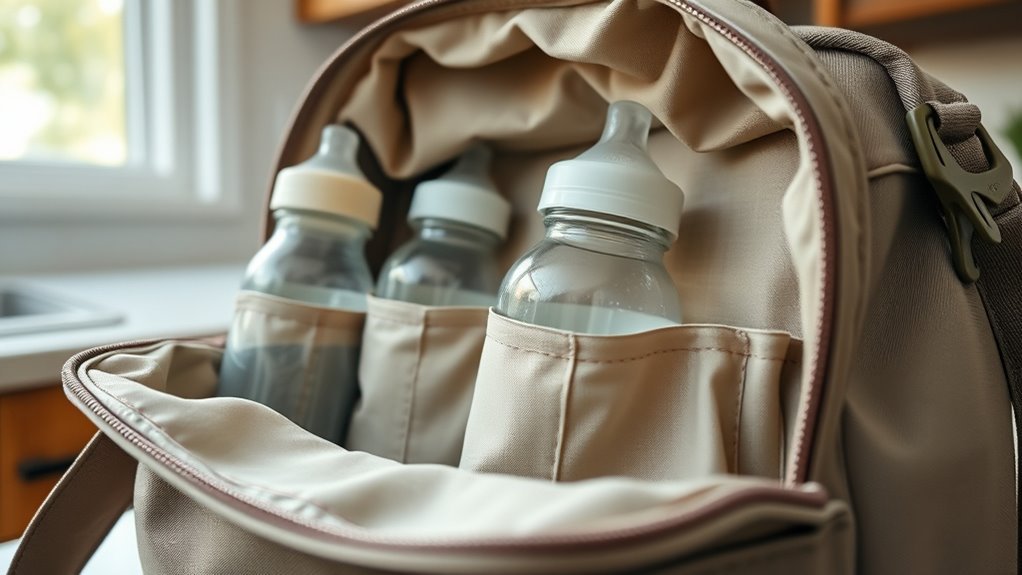
Diaper bag bottle pockets are usually not completely leakproof. Most are designed to hold a bottle upright and to cushion it, and an insulated lining can resist small spills, but a bottle that tips, a loose lid or a seam under pressure can still leak. Treat the pocket as a first line of defense, and keep bottles tightly closed, upright and, for extra safety, inside a sealed bag.
What a Bottle Pocket Actually Does
A bottle pocket holds a bottle in place, away from the other contents, and often has an insulated lining to slow warming and cooling. The lining may be wipeable, but the pocket is rarely sealed at the top or at the seams. That means it can catch a small drip, but it cannot be relied on to contain a larger spill. For how insulated pockets work, see how insulated pockets work.
Why Leaks Happen
- A loose lid or a worn seal: the most common cause.
- A bottle that tips: a pocket that is too wide lets the bottle fall sideways.
- Pressure changes: in a car or on a plane, air in a bottle can expand and push liquid out.
- Overfilling: leaves no room for expansion.
- Seams and stitching: small holes where stitching passes through the lining can let liquid through.
- Damaged linings: cracks, peeling and worn spots.
Limits of Liners
Many pockets have a water-resistant or a wipeable lining. This helps with condensation and small spills, but it has limits. The lining can crack with age and with repeated folding, and the stitched seams are weak points. A liner that looks intact may still allow liquid to pass at the seams. Water-resistant does not mean waterproof. See water-resistant vs waterproof for the difference. Do not assume that a pocket will protect your phone, documents or clothes from a bottle that empties inside it.
How to Reduce the Risk of Leaks
- Check the lid. Make sure it is tight, and that the seal and the nipple are in good condition.
- Keep bottles upright. Pack them in the pocket, or wedge them with a soft item, so that they cannot tip.
- Leave a little room. Do not fill the bottle to the brim.
- Use a second barrier. Place each bottle in a zip-top bag or a small waterproof pouch.
- Keep dry items apart. Pack clothes and electronics in a separate compartment.
- Test at home. Fill the bottle with water, close it, and leave it upright for a while in the pocket. Then lay it down over a towel to see if any liquid escapes.
Powdered Formula and Pre-Mixed Bottles
For formula, many parents carry powder in a separate dispenser, and water in a bottle, mixing when needed. This reduces the risk of a spill, and it avoids storing mixed formula for a long time. See how to carry formula in a diaper bag for details. If you do carry ready-mixed bottles, keep them cold, and follow the instructions on the formula packaging, and your pediatrician guidance, about how long they can be kept.
What to Do After a Spill
- Remove the bottle and everything near it.
- Blot up the liquid with a towel, and do not rub it into the lining.
- Wipe the pocket with a damp cloth and mild soap, then rinse with a clean damp cloth.
- Leave the bag open to dry fully, away from heat, since a damp lining can grow mildew.
- Check the seams, and the lining, for damage.
For detailed cleaning steps, see how to clean insulated diaper bag pockets after spills. For general washing, see how to wash a diaper bag.
Choosing a Bag With Better Bottle Protection
- A pocket that is sized for a bottle, not much wider.
- A lining that is smooth, with few seams, and that can be wiped clean.
- A zipped or a flap-closed pocket, which keeps the bottle from falling out.
- Removable pocket inserts, which can be washed separately.
- A separate, waterproof pouch, if you want extra protection.
When to Replace the Bag or the Lining
If the lining is cracked, peeling or has a lingering smell that you cannot remove, the pocket will not protect the bag any longer. Wipe it down, and use a bottle pouch, or consider replacing the bag. A damaged lining can also trap moisture and encourage mildew.
Traveling With Bottles in a Diaper Bag
Leaks are more likely when you travel, because the bottle is moved around, laid on its side and exposed to pressure changes. In a car, wedge the bag upright so that it does not tip over on turns. On a plane, air in a partly filled bottle can expand as the cabin pressure drops, which can push liquid past a seal, so leave some space in the bottle, and keep it upright where you can. Pack a spare cloth and a spare zip-top bag in an outer pocket, so that you can deal with a spill quickly. Keep a bottle that has been opened and used apart from the clean ones, and wash it as soon as you can. For rules about carrying milk and formula through security, see diaper bag airport security rules for milk and baby food.
Frequently Asked Questions
Are Insulated Pockets Leakproof?
Generally not. They are designed to slow temperature changes, and may resist small spills, but they are not sealed.
How Do I Stop a Bottle From Leaking in My Bag?
Tighten the lid, keep the bottle upright and place it in a sealed bag or pouch.
Can I Wash the Bottle Pocket?
Wipe it with a damp cloth and mild soap. Check the care label on the bag, and let it air dry.
Conclusion
A bottle pocket helps to keep bottles in place, but it is not a guarantee against leaks. Secure the lid, keep bottles upright and add a second barrier. Clean spills quickly, dry the lining fully and replace a worn pocket.

