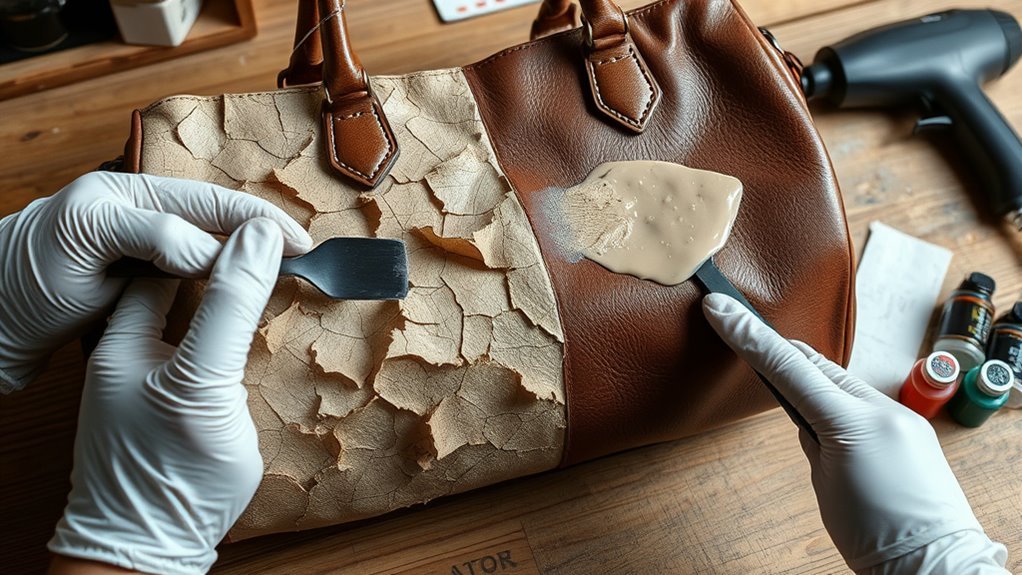
Yes, you can often repair a peeling faux leather bag successfully if the damage is still limited. Clean the surface first so oils and dirt don’t block adhesion, then use a faux leather repair kit, glue, filler, or flexible paint matched to the finish. Seal the repair after it cures to improve durability. If large sections are peeling, replacement may be the smarter choice, and the next steps show you how to judge both options.
What Causes Faux Leather Peeling?
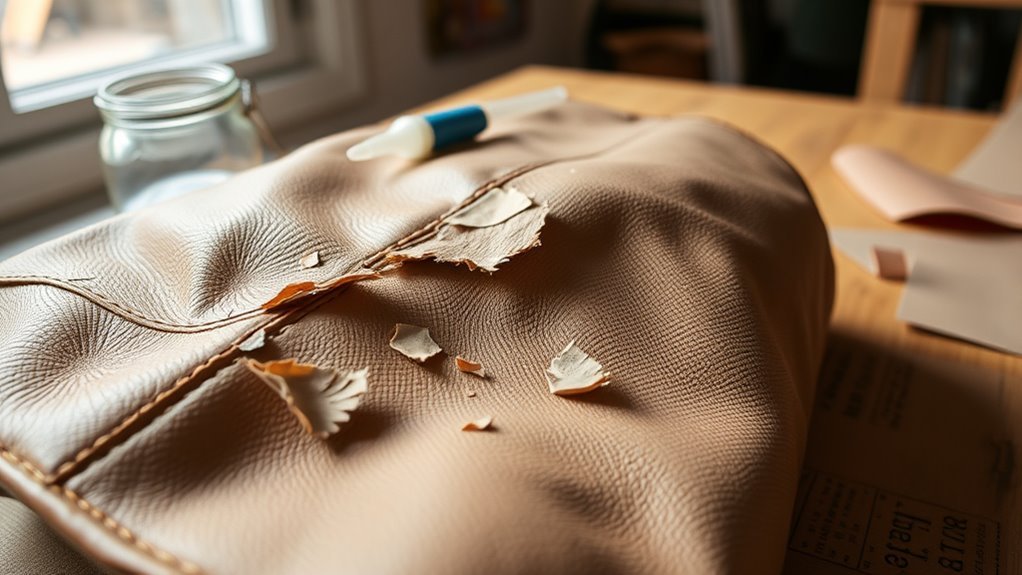
Faux leather peels when its surface layer breaks down or separates from the backing, and that usually happens because of moisture, heat, sunlight, and general wear. You’re seeing the main causes of peeling when polyurethane or PVC can’t resist prolonged exposure, and the adhesive bond starts to fail.
Friction from daily use, tight packing, or rough storage also abrades the finish and weakens the material. Over time, temperature swings and humidity speed degradation, so the layers lose cohesion faster.
Product age matters too: cheaper faux leather usually has lower faux leather durability, while higher-quality material holds up longer under stress. When the backing and coating no longer work as one, peeling spreads.
If you understand these technical factors, you can judge whether the damage is isolated wear or a broader loss of integrity. That knowledge helps you decide your next move with clarity and autonomy.
Clean the Bag Before Repair
Before you patch or repaint the bag, clean it thoroughly so dirt and skin oils don’t block adhesion. Use a soft cloth or sponge with a gentle leather cleaner, or mix water with mild soap.
Apply light pressure and work in small sections so you lift contaminants without abrading the faux leather. These cleaning techniques help create a sound surface for repair materials and reduce the risk of trapped grime weakening the bond.
Before you treat the whole bag, spot test the solution on a hidden area to check for discoloration or surface damage. After cleaning, wipe away residue with a damp cloth, then let the bag dry completely.
Moisture can interfere with repair products and paint, so don’t rush this step. Good maintenance tips start with preparation: a clean, dry bag gives you the best chance to restore its look and keep its finish intact.
Choose the Best Faux Leather Repair Kit
Choose a faux leather repair kit with color-matching compounds so the repair blends with your bag’s original finish.
Make sure it also includes applicators, patch materials, a flexible durable coating, and a clear sealant to protect the repaired area.
Check customer ratings and reviews to confirm the kit matches color accurately and holds up without cracking or peeling.
Best Kit Features
A quality faux leather repair kit should give you the right materials for both blending and reinforcement. You should look for color-matching compounds, because they support repair techniques that create a discreet finish without forcing you to replace the bag.
Choose kits with cleaning solution, adhesive, and applicators so you can prep, bond, and smooth damaged areas with control. A clear sealant matters too; it shields the repaired surface from moisture, abrasion, and renewed peeling.
Before buying, check user reviews and ratings to confirm the kit has worked on similar faux leather. Also verify compatibility with your bag’s material, since product recommendations only help when the kit suits your specific faux leather type.
These features let you repair on your terms.
Color Matching Tips
For the most seamless repair, you’ll want a faux leather kit that matches both your bag’s texture and its color as closely as possible.
Check whether the kit includes a color chart; it lets you compare shades and use color blending techniques to recreate your bag’s original hue. If the kit offers mixing pigments, use them for finer control and a tighter match.
Before committing, test a small hidden spot so you can verify adhesion, sheen, and finish without risking the visible surface.
Apply texture matching tips by choosing a formula that cures with a similar grain and flexibility.
Follow the manufacturer’s instructions exactly for mixing, application, and drying time. That discipline gives you a cleaner repair and helps you keep your bag ready for free, everyday use.
Fix Small Peels With Glue or Filler
For tiny peels, you can apply a thin layer of strong adhesive made for synthetic materials and press the lifted edge flat.
For flaking spots, use a matching faux leather filler to level the damaged area and restore surface continuity.
Clean the area first, then let the repair cure fully before sealing it for added durability.
Glue For Tiny Peels
Tiny peels in faux leather often respond well to a strong adhesive made for leather or vinyl, which lets you bond the lifting layers back together cleanly.
You should compare adhesive types and choose one that stays flexible, because rigid glue can crack as the bag moves.
Clean the area first with a lint-free cloth and a mild cleaner to remove oils, dust, and residue; this prep is one of the most important repair techniques.
Apply a thin, controlled layer with a toothpick or fine applicator, then press the flap flat without stretching it.
Wipe away excess before it sets.
Keep the bag undisturbed while the bond cures, ideally for 24 hours.
That patience helps you restore function without surrendering the bag to further damage.
Filler For Flaking Spots
When the surface is flaking rather than just lifting, you can use a faux-leather filler or a repair kit to rebuild the worn spot and smooth the edge into the surrounding material.
Choose a product made for faux leather, then clean the area and press in the filler with controlled filler application. Small spots often respond to fabric glue or a kit that bonds loose flakes back to the substrate.
Test the color first on a hidden section, or mix shades until the repair blends with the bag. Use precise repair techniques to level the patch, let it cure fully, then seal it with a protective coating.
That final layer improves durability, slows new wear, and helps you keep the bag looking strong and free.
Match the Faux Leather Color
Matching the faux leather color is essential if you want the repair to blend in instead of stand out. You should choose a leather paint formulated for faux materials, since standard coatings often fail to bond or match the original sheen.
Check manufacturer color swatches or matching guides first, then compare them under natural light so you can select the closest shade with confidence. Clean the repaired area thoroughly before any test, because dust and oils distort color and reduce adhesion.
Apply a small sample to an inconspicuous spot and let it dry fully; wet paint can mislead you. If the kit includes several tones, use custom mixing to fine-tune the result until the repaired section reads as one surface.
Once you’re satisfied, seal the finish with a clear protective coat to lock in the color and help stop future peeling.
Repaint Large Damaged Areas
For larger peeling or worn sections, repainting can restore the bag’s finish, but you’ll need to prep the surface carefully so the new coating bonds well and lasts. Clean the damaged area with a mild, residue-free cleaner, then let it dry fully.
Choose specialized faux leather paint among the available paint types; you need a flexible formula made for synthetic materials, not rigid craft paint. Test it on a hidden spot first to confirm color match and surface response before you commit.
- Lightly scuff glossy edges for better adhesion.
- Apply faux-leather primer if the surface feels slick.
- Build coverage with thin, even coats.
- Give each layer adequate drying time.
These repair techniques help you reclaim a bag that still deserves use, autonomy, and style.
Work steadily, keep your strokes controlled, and stop before the coating becomes heavy or uneven.
Seal the Repair for Longer Wear
Once the repainting or patching is complete, you should seal the repair with a faux-leather-safe sealant to lock out moisture and reduce future wear.
Before sealant application, clean the surface again and lightly sand the repaired zone so the coating grips well. Choose a product made for faux or vegan leather, and match both sheen and texture to the surrounding material so the fix blends in cleanly.
Apply a thin, even coat with a soft cloth or applicator, then let it cure fully before handling the bag. This barrier helps slow peeling, resists scuffs, and keeps the repaired area stable under daily use.
If the bag gets heavy wear, reapply the sealant as needed to preserve the finish. With careful texture matching and disciplined maintenance, you keep the bag functional, reduce waste, and stay in control of your gear.
When Replacement Is Better
When the peeling covers a large area or keeps returning after repair, replacement is often the more cost-effective choice. You’ll usually find that a clear cost comparison favors buying a new bag over paying for labor-intensive restoration that still won’t fully recover the finish.
Faux leather has a shorter service life than genuine leather, so once deterioration spreads, replacement gives you a cleaner, more reliable result and frees you from repeated fixes.
- You avoid spending on patches that don’t match.
- You get full structural and visual function back.
- You can choose a similar style if sentimental value matters.
- You reduce time spent chasing temporary repairs.
If your bag was inexpensive to begin with, replacing it’s often the rational move.
When you need continuity, select a comparable design and keep your look intact while restoring everyday usability.
Prevent Faux Leather From Peeling
You can slow faux leather peeling by cleaning it regularly with a damp cloth and a gentle soap solution, then applying a conditioner made for synthetic materials to preserve flexibility.
Keep the bag away from direct sunlight, heaters, and other heat sources, since heat accelerates surface breakdown.
Finish by using a protective sealant or spray designed for faux leather to block moisture and dirt before they damage the finish.
Clean And Condition Regularly
Regular cleaning helps stop faux leather from breaking down before peeling starts. Use gentle cleaning techniques: wipe the bag with a soft cloth and mild soap to remove dirt before it embeds in the surface. Don’t scrub; you’ll weaken the coating.
Then apply conditioning products made for faux leather every few months to keep the material flexible and reduce cracking.
- Clean seams and handles where grime collects.
- Test any conditioner on a hidden spot first.
- Apply product sparingly for even coverage.
- Buff lightly after treatment to restore finish.
This routine keeps your bag resilient and under your control. Consistency matters more than occasional heavy treatment, because small maintenance steps preserve structure, appearance, and freedom from avoidable wear.
Keep Away From Heat
Heat speeds up the breakdown of faux leather, so keeping your bag away from direct sunlight, radiators, heaters, and other hot spots helps prevent peeling. You need firm temperature control because prolonged heat exposure weakens the synthetic binder and speeds surface failure. Place your bag in a cool, shaded area and avoid storing it near heat sources.
| Risk | Effect |
|---|---|
| Sunlight | Warms material unevenly |
| Radiators | Dries the surface fast |
| Heaters | Breaks down adhesive |
| Stable room | Slows peeling |
If you already repaired a damaged section, heat can still worsen it, so protect it immediately. Pair this with steady humidity and regular conditioning to keep the material flexible, resilient, and free from cracking.
Use Protective Leather Sealant
A protective leather sealant can help slow faux leather peeling by forming a flexible barrier that resists moisture, wear, and UV exposure. You’ll get real sealant benefits when you choose a formula made for faux leather, because it penetrates the surface without stiffening it.
Clean the bag first, then apply thin coats using proper application techniques so the film bonds evenly and stays breathable.
- Wipe off dust, oils, and residue before sealing.
- Test a hidden spot for color or texture change.
- Reapply on a regular schedule to limit UV damage.
- Follow manufacturer directions to maximize protection and durability.
With disciplined maintenance, you keep your bag intact longer and reduce the need to replace it.
Care for the Bag After Repair
Once you’ve repaired the peeling faux leather, keep the bag clean by wiping it with a damp cloth to remove dirt before it can break down the surface. This repair maintenance step protects the finish and slows new damage.
After cleaning, apply a conditioner made for faux leather to preserve flexibility and reduce cracking. Don’t use generic leather products unless they’re compatible.
For proper bag storage, place it in a cool, dry area away from direct sunlight, since heat and UV exposure can fade the repaired zones and weaken coatings. Avoid overloading the bag; excess weight strains seams and repaired panels, accelerating renewed peeling.
Inspect the restored areas regularly for wear, lifting edges, or color loss. If you see changes, reapply conditioner or touch up the coating promptly.
Consistent care keeps the bag functional, sharp-looking, and free from avoidable stress, so you stay in control of what you carry.
Frequently Asked Questions
How to Fix Damaged Faux Leather?
You clean it first, then apply repair techniques: fill peeling spots with faux leather adhesive, match color with paint, and seal it. For lasting faux leather maintenance, condition gently and avoid heat, abrasion, or harsh cleaners.
What Causes Bags to Peel?
Bags peel because faux leather ages, dries, and loses its coating. You’ll also see peeling from friction, heat, moisture, sunlight, and harsh cleaners; follow maintenance tips to reduce breakdown and preserve flexibility.
Can a Cobbler Repair Peeling Leather?
Yes, a cobbler can repair peeling leather using cobbler techniques and leather restoration methods. You’ll get cleaning, adhesive, patching, dye matching, and conditioning, though results depend on damage severity and material integrity.
What to Do if a Leather Bag Is Peeling?
If your leather bag’s peeling, clean it gently, then apply matching synthetic leather paint or patching adhesive. Test first, seal the repair, and follow maintenance tips for peeling prevention to extend durability and reclaim freedom.
Conclusion
In most cases, you can repair a peeling faux leather bag if you clean it first, use the right kit, and seal the finished surface well. Small flakes and cracks respond best to careful patching and color matching. If the material is badly delaminated, though, replacement may be the smarter choice. Remember, an ounce of prevention is worth a pound of cure, so store and care for your bag properly after repair.