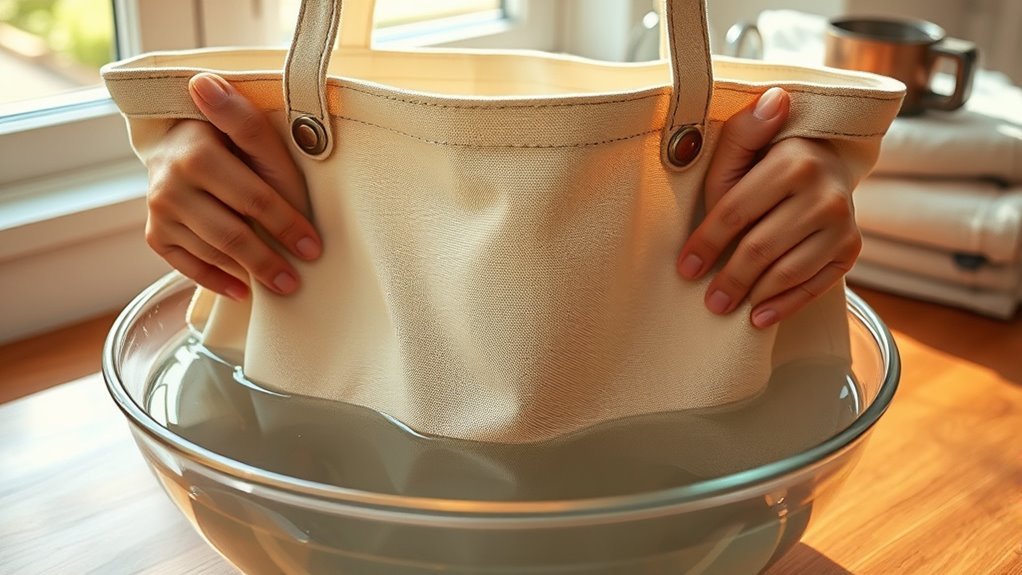
To reshape a shrunken canvas tote without tearing it, soak it in lukewarm water with a little mild fabric conditioner for 25–30 minutes, then lift it gently and roll it in a clean towel to remove excess moisture. While the fabric is damp, tug it back into shape with slow, even pulls, checking seams as you go. Lay it flat on a dry towel to air-dry, and you’ll see how to keep it stable next.
Why Canvas Totes Lose Their Shape
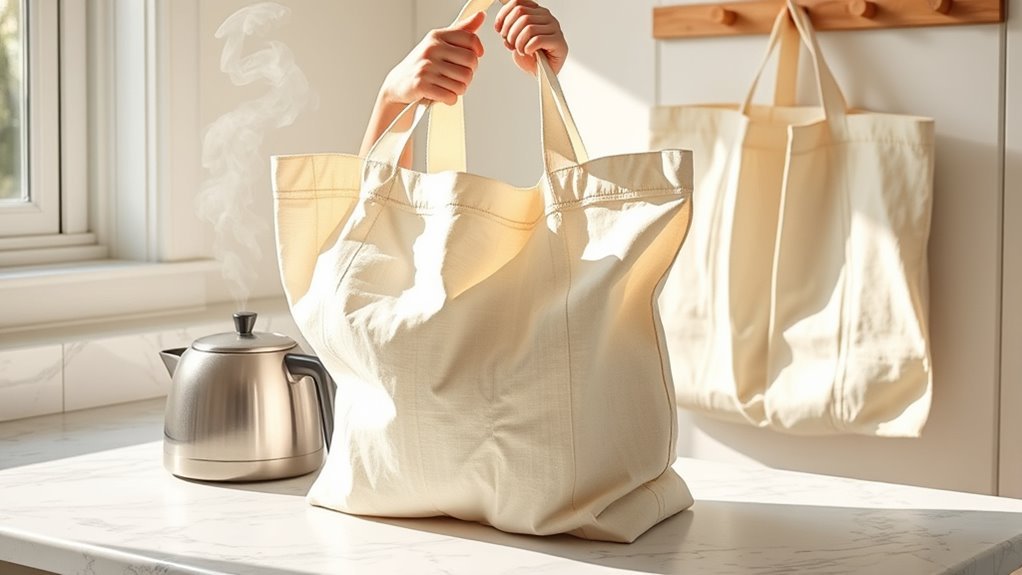
Canvas totes lose their shape for a few predictable reasons: heavy loads stretch the fibers over time, moisture and heat can alter the fabric’s structure, and uneven packing puts extra stress on the bottom and sides.
You’ll usually see sagging when repeated strain exceeds the bag’s canvas durability. Fiber types matter: cotton yarn generally resists stretch better than acrylic, so your tote’s recovery depends partly on what it’s made from.
Sagging appears when repeated strain outpaces canvas durability, and cotton usually rebounds better than acrylic.
If you wash or dry it often, heat and moisture can contract or relax the weave, which can warp the panel geometry. When you load weight to one side, you force the base down and the walls outward, and the distortion can become permanent.
Without reinforcement, like a lining or a sturdy base, the fabric has little support. To keep your tote functional and self-possessed, you need to understand these pressures before you try to restore its original form.
Supplies for Reshaping a Canvas Tote
You’ll need gentle reshaping tools, including clean towels, to support the tote without stressing the fibers.
Use safe moisture supplies such as lukewarm water and a mild fabric conditioner, and make sure the tote is clean before you start.
These materials let you soften the canvas and control the shape change with less risk of damage.
Gentle Reshaping Tools
When the tote is still damp, use gentle tools to guide it back into shape without stressing the fibers. Roll it in a clean towel to blot out excess water; don’t twist, because that can distort the weave.
Then use gentle brushes or your fingers to coax seams, corners, and the base back into alignment. If the canvas resists, a brief pass of low steam can relax tight areas, but keep the iron off the fabric and move deliberately.
Slide a sturdy cardboard insert into the bottom so the tote holds its form while it dries. If you’ve used fabric conditioners before, note they can leave fibers more pliable, but reshaping still needs restraint.
Finish by air drying flat on a clean surface, never hanging, so the liberated shape stays true.
Safe Moisture Supplies
To keep the tote safe while you reshape it, choose moisture supplies that relax the fibers without weakening them. Use lukewarm water mixed with a gentle fabric conditioner, because it softens canvas without stripping strength.
If you need controlled application, fill a spray bottle with water and fabric softener and mist the surface lightly. That lets you target shrunken zones and limit over-wetting. Avoid bleach and harsh chemicals; they can break down fibers and increase tearing risk.
After soaking, press the tote in a towel for moisture absorption, but don’t twist it. Twist-free handling preserves the weave.
Then stretch the damp canvas by hand, focusing on compressed areas, and air-dry it flat so the liberated shape sets cleanly.
Soak the Tote in Lukewarm Conditioner Water
Fill a clean sink or tub with lukewarm water and mix in enough hair conditioner to make the solution feel soft but not greasy.
You’ll submerge the shrunken canvas tote completely and let it soak for 25 to 30 minutes so the fibers can relax gradually.
After soaking, lift it out gently, avoid twisting, and prepare it for careful reshaping.
Lukewarm Conditioner Soak
Mix lukewarm water with a generous amount of hair conditioner in a sink or tub, then fully submerge the shrunken canvas tote in the solution.
This soak uses conditioner benefits to soften compacted fibers while supporting careful fiber care.
Keep the tote immersed for 25–30 minutes; that window usually gives the fabric time to relax without stressing the weave.
Don’t agitate the bag or force water through it.
After soaking, lift it out gently, letting liquid drain off naturally.
Roll it in a towel to pull out excess moisture, but never wring it.
At this stage, you’re preparing the canvas for controlled reshaping, not rushing it.
A precise soak helps you reclaim form while respecting the material’s limits and your freedom to restore it.
Gentle Fiber Relaxation
Once the tote has rested in the lukewarm conditioner bath for 25–30 minutes, the fibers should feel softer and more workable without becoming strained. You’re using fiber care, not force, so keep the water soft, not greasy, with a generous dollop of conditioner. This controlled soak supports fabric maintenance by reducing stiffness while preserving weave integrity.
- Lift the tote out gently
- Don’t twist the fabric
- Roll it in a towel
- Blot excess moisture carefully
- Track the most shrunken areas
Handle the canvas with measured pressure; you want relaxation, not distortion. This step gives you a safer, more liberated starting point for recovery because the fibers can yield without tearing.
Stop if the material feels slippery or fragile, since overconditioning can undermine control.
Safe Reshaping Steps
Start by filling a clean sink or tub with lukewarm water and adding a generous amount of hair conditioner to create a softening bath for the canvas tote. Submerge the tote fully for 25–30 minutes so the fibers can relax without shock. Different fiber types respond differently, so monitor the tote materials closely.
| Step | Action | Caution |
|---|---|---|
| 1 | Lift gently | Don’t twist |
| 2 | Roll in towel | Blot, don’t wring |
| 3 | Stretch to shape | Focus on shrunk zones |
After soaking, lift the tote out carefully, then roll it in a towel to remove excess moisture. Reshape it with measured pressure, avoiding yanks. Finally, air dry it flat; hangers and heat can distort the fabric again.
Roll Out Excess Water Without Twisting
Lift the tote from the soaking solution gently, without twisting it, so you don’t stress the fibers or worsen the shrinkage.
- Lay it flat on a clean, dry towel.
- Spread the canvas evenly to preserve the outline.
- Roll the towel with the tote inside.
- Apply gentle pressure to boost water absorption.
- Skip wringing, heat, and other harsh fabric care methods.
This controlled roll-out removes excess moisture while keeping the weave stable. You’re not forcing the canvas; you’re guiding it toward a safer drying state.
After the towel has taken up most of the water, unroll the tote and check that it still lies flat. If needed, smooth minor folds with careful hands, then leave it air dry on a fresh towel, away from dryers or radiators.
This cautious approach protects the liberated shape you’re restoring and reduces the risk of further distortion.
Gently Stretch the Tote Back Into Shape
With the tote still damp, gently tug the canvas back toward its original dimensions, working evenly across the body and paying extra attention to the areas that shrank most.
Use slow, measured pulls; don’t yank, or you may distort the weave. These stretching techniques work best after the fibers have relaxed in the lukewarm water and hair conditioner soak, so the fabric moves with less resistance.
Use slow, measured pulls; let relaxed fibers move gently after the soak, preserving the weave’s shape.
Check the seams as you go, and stop if you feel sharp tension. In careful fabric care, balance matters: pull one side, then the opposite side, so the tote stays symmetrical and you keep control.
If the base has tightened, coax it outward with your hands rather than forcing a hard edge. You’re reclaiming usable space, not overpowering the material.
When the outline looks true again, leave the tote supported in its corrected shape so the canvas can hold the form you’ve restored.
Dry the Tote Flat to Hold Its Shape
Lay the tote flat on a clean, dry surface immediately after rinsing so it can hold the shape you just restored. Put a towel underneath to pull moisture away and support the canvas. Keep the bag spread evenly; this controlled drying technique reduces distortion and helps your fabric care work stay precise.
- Smooth seams and corners
- Recheck the width while damp
- Replace wet towels if needed
- Avoid hanging the tote
- Keep it away from heat
Let air dry fully before you lift it. Hanging can pull the handles and body out of alignment, creating uneven stretch. Direct sunlight or a heater can also harden fibers and invite new shrinkage, so choose shade and steady airflow instead.
If an area still looks compressed, you can make a final gentle adjustment while the fabric remains slightly damp, then leave it alone. Your goal is a stable, liberated tote shape that dries flat and stays true.
How to Keep a Canvas Tote From Stretching Again
To keep your canvas tote from stretching again, choose materials and reinforcements that limit strain on the fabric.
Choose materials and reinforcements that limit strain, helping your canvas tote keep its shape longer.
For preventive care, make careful material selection: use cotton yarn for the straps and body, since it stretches less than acrylic.
Build in a rigid base by sliding cardboard or plastic into the bottom; this reduces sagging when you carry books, tools, or groceries.
Line the tote with sturdy fabric, such as a pillowcase, to add structure and spread load more evenly.
When you stitch straps, use fewer stitches, because dense stitching can distort the weave and invite elongation under weight.
You should also inspect the bag regularly and rearrange contents so the load stays balanced.
This small discipline protects the tote’s shape and your freedom to carry what you need without constant repair.
Frequently Asked Questions
Can You Iron Canvas Tote Bags?
Yes, you can iron canvas tote bags on low heat. Use a thin cloth barrier, keep the tote slightly damp, and avoid direct steam. This careful canvas care supports fabric maintenance without risking shrinkage or damage.
What Are the Downsides of Canvas Bags?
You’ll face durability issues, limited weight capacity, and cleaning challenges; canvas can sag, wear at seams, and retain moisture. Its environmental impact depends on sourcing and care, so you’ll need to choose and maintain it carefully.
How to Unwrinkle a Longchamp Tote Bag?
Start with steam, not steamroll: you’ll unwrinkle your Longchamp tote by using a low iron 1 inch away, or stuffing it and hanging it in a steamy bathroom. That tote bag care supports fabric maintenance.
How to Unshrink a Tote Bag?
You can unshrink your tote bag by soaking it in lukewarm water with conditioner, then gently fabric stretching it and air-drying flat; this cautious tote bag care helps restore shape without stressing fibers or causing damage.
Conclusion
By now, you can see that reshaping a shrunken canvas tote takes patience and a light touch. You’ve soaked it in lukewarm conditioner water, pressed out excess moisture, and gently restored its dimensions without forcing the fibers. Let it dry flat, and it should hold its new shape. Avoid heat and rough handling later, or you’ll undo the work in a heartbeat. With care, your tote can look almost magically revived.