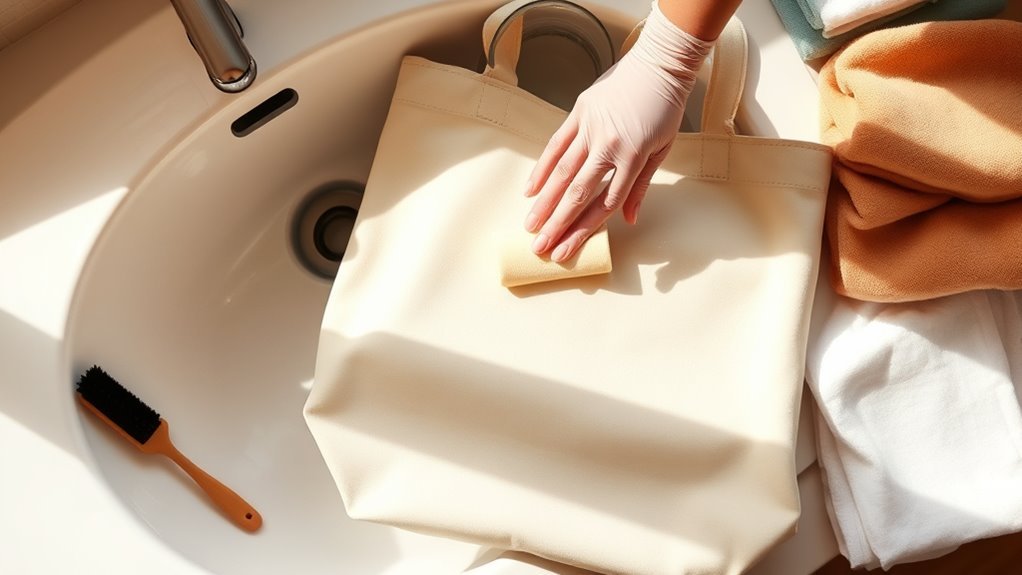
To clean a coated canvas bag without wearing the finish, wipe it with a soft cloth dampened with lukewarm water and a few drops of mild soap, use a soft toothbrush on stubborn spots with light pressure, rinse with a clean damp cloth and air-dry it away from heat. Never soak the bag, scrub hard or use solvents, because those damage the coating.
Why Cleaning Your Coated Canvas Bag Matters
Coated canvas is wipe-clean, but dirt, sunscreen, hand oils and spills build up on the surface and in the seams. Left in place, they can stain, dull the finish and wear the edges faster. Regular gentle cleaning keeps the bag looking neat, and it is also more hygienic if you carry it daily. For what the material is, see what coated canvas is.
Supplies You Need
- Two or three soft cloths, such as microfiber
- Mild liquid soap or a gentle cleaner, and lukewarm water
- A soft toothbrush for seams and corners
- Cotton swabs for hardware and tight areas
- A clean, dry towel
Do not use wire brushes, abrasive pads, bleach, nail polish remover or other solvents. They can cut through the coating or dissolve it, leaving a rough or sticky area that cannot be repaired.
Step-by-Step Guide to Cleaning a Coated Canvas Bag
- Empty the bag, open all pockets and shake it out. Brush off loose dirt with a dry soft cloth.
- Mix a few drops of mild soap into lukewarm water, dampen a cloth and wring it until it is barely wet.
- Wipe the bag in small sections, using gentle circular motions. Use a soft toothbrush on seams and textured areas with very light pressure.
- Wipe again with a cloth dampened in clean water, to remove soap residue.
- Blot the bag with a dry towel, then leave it open to air-dry, away from sunlight and heaters.
Test any cleaner on a hidden spot first, such as the underside of a flap or the inside of a strap. If the color transfers to the cloth or the surface turns tacky, stop and use plain water only.
Cleaning Zippers and Hardware
Use a cotton swab or a soft toothbrush with a little soapy water along the zipper teeth, and wipe the metal parts with a clean cloth. Take care not to wet the coating near metal edges for long. If the zipper sticks, wipe off grit first, and then run a graphite pencil or a small amount of zipper lubricant sparingly along the teeth. Do not use abrasive metal polish, which can mark the coating around the hardware. If a zipper is rippling or failing, how to fix a rippling zipper has advice.
How Often Should You Clean Your Bag?
- Daily or heavy use: a quick wipe once a week, and a fuller clean once a month.
- Occasional use: wipe it after use and clean it each season.
- Vintage bags: clean them only with a dry or barely damp cloth, because older coatings can be brittle and may flake or crack.
Removing Odors
Musty smells usually come from storage in a closed space, especially for older bags. Air the bag in a shaded, ventilated spot. If the smell stays, place an open container of baking soda in the bag, or a sachet of activated charcoal, close the bag and leave it for a day or two. Avoid sprinkling loose powder on the lining where it may be hard to remove, and avoid strong scents that can transfer to the surface.
Should You Use a Protectant?
Many coated canvas bags do not need a protectant, because the coating already provides protection. Some sprays can change the look of the finish, leave a sticky film or darken it, and a spray that suits one coating may not suit another. If you want to use one, choose a product that states that it is suitable for coated fabric, check the maker care guidance, test on a hidden spot and apply a thin, even coat with a soft cloth. Let it dry completely before you use the bag. Leather trim needs separate care, and how to condition leather explains the method.
Mistakes to Avoid
- Soaking the bag, which weakens glue, padding and the coating.
- Scrubbing hard, especially over seams, edges and zippers.
- Using hot water, which can soften the coating.
- Drying the bag with a hair dryer or in direct sunlight, which can cause cracking and fading.
- Using harsh chemicals, bleach or solvents.
When to Call a Professional
Consider a professional cleaner if the bag has delicate embellishments, strong odors that home cleaning does not remove, ink stains or mold, or if it is valuable and you are unsure about the method. A specialist can test the finish and use suitable methods, and a repair service can deal with peeling or cracked coatings. For why coatings fail, see why waterproof bag coatings peel.
Maintaining Your Bag Long-Term
Keep a simple routine. Wipe the bag after dirty outings, store it in a dust bag in a cool, dry place and stuff it lightly with acid-free tissue so that it keeps its shape. Do not overcrowd the storage space or stack heavy items on top of it. Avoid leaving it in direct sunlight or in a hot car. For general storage advice, see how to store handbags, and for caring for a bag that has leather parts, see how to clean a leather purse without stripping its finish.
Frequently Asked Questions
What Is the Best Way to Wash a Canvas Bag?
For coated canvas, wipe it with a damp cloth and mild soap, and do not machine wash it. Plain, uncoated canvas can often be washed, as explained in how to wash a canvas tote bag.
Can I Use Baby Wipes on Coated Canvas?
Unscented wipes are fine for a quick wipe on many coated surfaces, but test first, and rinse with a damp cloth if they leave residue.
How Do I Clean Vintage Coated Canvas?
Use only a barely damp soft cloth, avoid scrubbing, and test in a hidden place. If the coating is cracking or flaking, see a specialist.
Conclusion
Cleaning coated canvas is a matter of staying gentle. Use a soft cloth, mild soap and light pressure, keep the bag from getting soaked, and dry it in the shade. A short routine keeps the finish in good condition for years.