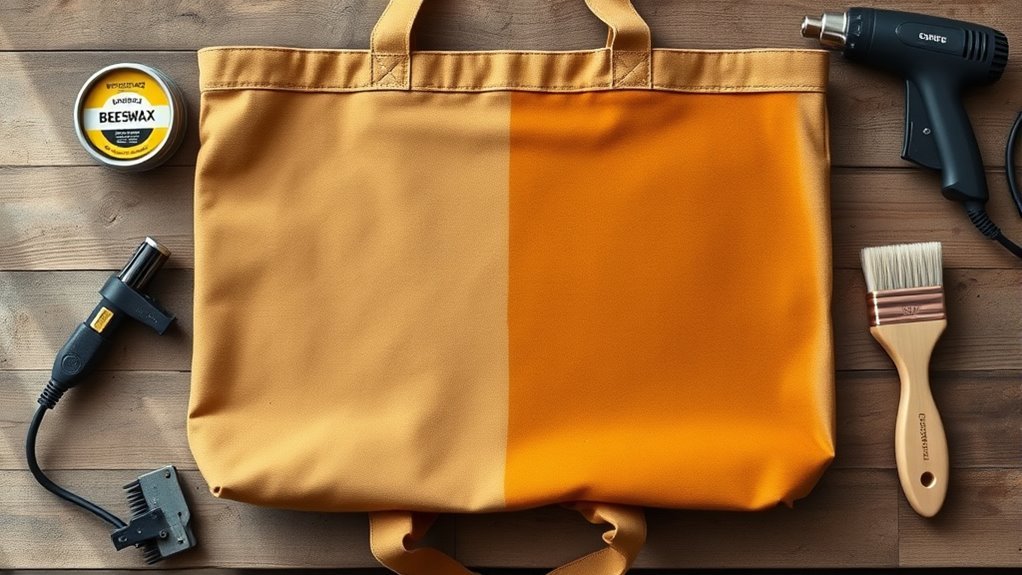
To waterproof your canvas bag without ruining its finish, choose a wax blend of paraffin and beeswax for ideal protection. Apply the wax evenly, focusing on seams and using gentle heat for better penetration. If you prefer sprays, select a high-quality waterproofing spray designed for canvas, applying it evenly from a distance. Always clean your bag first and check for any irregular changes on a small area. Keep your bag protected while learning more about maintenance and further techniques.
Why Waterproofing Your Canvas Bag Is Essential
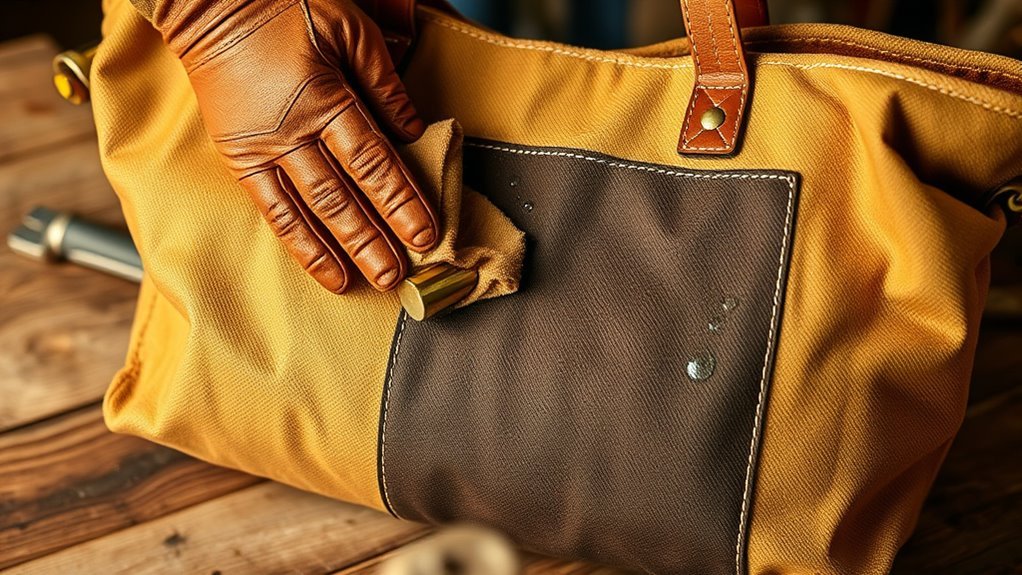
Waterproofing your canvas bag is essential because it safeguards your belongings from unexpected water damage. When you’re out and about, whether in the rain or near spills, moisture protection guarantees your electronics and important items stay safe.
Proper canvas care extends your bag’s lifespan by preventing degradation from moisture exposure, so you won’t have to replace it as frequently.
Additionally, waterproofing enhances your bag’s appearance by repelling dirt and stains, keeping it looking fresh and clean. Regular treatments strike a balance between protection and breathability, allowing your bag to remain comfortable without compromising its defensive capabilities.
A well-waterproofed canvas bag gives you peace of mind during outdoor adventures or daily commutes, letting you focus on your tasks without worrying about potential water damage.
Prioritizing waterproofing means you invest in a durable, reliable companion for all your journeys.
How to Waterproof Your Canvas Bag With Wax
To waterproof your canvas bag with wax, start by choosing the right wax, ideally a mix of paraffin and beeswax for maximum protection.
Apply it evenly using circular motions, focusing on seams and vulnerable areas.
Mastering these techniques guarantees your bag stays dry and lasts longer.
Wax Selection Tips
When selecting the right wax for waterproofing your canvas bag, prioritize natural options like paraffin or beeswax, as they effectively repel water while preserving the fabric’s integrity.
Look for wax blends specifically designed for fabric, avoiding silicones or petroleum that can alter the bag’s texture. If you’re environmentally conscious, opt for organic waxes to maintain aesthetic integrity.
Always test the wax on a small, inconspicuous area first to observe any changes in color or texture.
For best results, make sure the wax is applied evenly and worked into seams. Use gentle heat as an application tip to help the wax penetrate the fabric without causing damage.
Choose wisely, and your bag will remain functional and stylish.
Application Techniques Explained
Start by cleaning your canvas bag thoroughly to guarantee ideal adhesion of the wax. This step is essential for effective waterproofing.
For the wax application, rub the wax onto the fabric in circular motions, focusing on seams and areas prone to water exposure. This confirms maximum coverage and protection.
To enhance waterproofing, gently heat the wax with a hairdryer or sunlight after application, allowing it to melt and penetrate the fibers. Conduct a water test afterward; if water beads up, your waterproofing is successful.
Remember to reapply wax annually or after washing to maintain your bag’s waterproof properties without compromising its finish. These application techniques will help you achieve long-lasting results.
How to Pick the Perfect Waterproof Method for Your Bag?
How do you choose the right waterproofing method for your canvas bag? Start by evaluating your bag’s fabric compatibility. Heavier, untreated canvas might handle wax better than lighter blends.
Next, consider the application tools you’ll need. Here’s a quick checklist to guide your choice:
- Test on a Small Area: Always trial your method on an inconspicuous spot to check for unwanted changes.
- Focus on Seams and High-Wear Areas: Pay extra attention to seams and zippers, as these spots are vulnerable to water.
- Evaluate Maintenance Needs: Determine how often you’re willing to reapply. Waxing may require more frequent attention than sprays.
- Assess Aesthetic Impact: Some methods can alter your bag’s look; choose one that balances style and functionality.
Using Waterproofing Sprays Effectively
To effectively waterproof your canvas bag with sprays, begin by selecting a high-quality product specifically formulated for canvas materials, like Nikwax or Scotchgard. The waterproofing spray benefits include enhanced durability and protection against moisture, essential for any adventurous spirit.
Before you apply, clean your bag thoroughly and let it dry completely. This guarantees ideal adherence and performance.
When you’re ready, hold the spray 6-12 inches away from the surface, applying it evenly, with extra attention to seams and areas exposed to water.
Timing is key; allow the first coat to dry fully—typically around 24 hours—before applying a second coat for maximum effectiveness.
After the final layer, conduct a simple water test. If droplets bead up on the surface, you’ve achieved effective waterproofing. If not, consider reapplying to make certain your canvas bag stays protected on all your journeys.
Keeping Your Bag Waterproof
Although waterproofing your canvas bag is essential, maintaining that protection requires ongoing care. To keep your bag waterproof, follow these practical steps:
Waterproofing your canvas bag is crucial, but ongoing care ensures lasting protection and durability.
- Clean Before Treatment: Thoroughly clean your bag to remove dirt and debris, guaranteeing the waterproofing agent adheres properly.
- Choose Quality Products: Use a high-quality waterproofing spray designed for canvas. Apply two even coats for full coverage without altering the finish.
- Test First: Always test any waterproofing product on a small, inconspicuous area to check for adverse effects on color or texture.
- Reapply Annually: Reapply waterproofing treatments at least once a year, or after cleaning, to maintain peak protection.
Additionally, store your bag in a dry, cool place to prevent moisture buildup.
Avoiding Common Waterproofing Mistakes
To achieve the best waterproofing results for your canvas bag, proper preparation is essential.
You should always clean and dry the bag first and test any materials on a hidden area to avoid surprises.
Regular maintenance is vital too; keep an eye on the bag’s condition and reapply treatments as needed for maximum protection.
Preparation Steps Required
Before applying any waterproofing method to your canvas bag, it’s essential to prepare properly to avoid common mistakes. Follow these vital steps:
- Clean the Bag: Use effective cleaning techniques to remove dirt and debris, ensuring no contaminants interfere with the waterproofing.
- Dry Completely: Make sure the bag is completely dry before application; moisture can prevent proper adhesion.
- Test the Product: Apply the waterproofing agent on a hidden area first to check for any unwanted color changes or texture alterations.
- Don’t Rush Drying: After applying, allow ample time for the waterproofing agent to set properly, maximizing effectiveness.
Neglecting these preparation steps can greatly compromise your waterproofing results.
Testing Materials First
Testing materials first is essential to guarantee your waterproofing efforts are effective without compromising the bag’s appearance. Start by selecting small test areas on your canvas bag, ensuring they’re inconspicuous.
Before applying any waterproofing treatment, use a natural bristle brush or lint roller to remove dirt or lint from the fabric for accurate results. Always allow the test area to dry completely before evaluating any color changes or texture alterations, as wet fabric can mislead your assessment.
Document the outcomes of various waterproofing methods on fabric swatches, enabling you to compare effectiveness and aesthetic impacts. Remember, rushing the drying process can lead to ineffective treatment and potential damage to your bag’s finish.
Regular Maintenance Importance
Regular maintenance is essential for ensuring your canvas bag remains waterproof and functional over time.
To avoid common waterproofing mistakes, follow these tips:
- Maintenance Frequency: Reapply waterproofing treatments yearly or sooner if water doesn’t bead on the surface.
- Inspection Tips: Regularly check for wear and tear; early detection prevents bigger issues.
- Initial Cleaning: Always clean and dry the bag before applying waterproofing; debris can hinder effectiveness.
- Gentle Cleaning: Use cold water and mild detergents to preserve the waterproof coating; harsh chemicals can damage it.
Frequently Asked Questions
How Do I Waterproof My Canvas Bag?
To waterproof your canvas bag, clean it thoroughly first. Then, use fabric wax or a durable DWR spray. Apply evenly, focusing on seams, and reapply every few months for ideal canvas care and protection.
What Can I Spray on a Canvas Bag to Protect It?
Think of your canvas bag as a fortress. To shield it, use waterproofing sprays like Nikwax or Scotchgard for fabric protection. They’ll guard against moisture while preserving its unique finish, keeping your essentials safe.
Can You Scotchgard a Canvas Bag?
Yes, you can Scotchgard a canvas bag. For effective canvas care, clean it first, apply Scotchgard evenly, focus on seams, and allow it to dry. Reapply every few months to maintain protection.
Is There Something You Can Spray on Canvas to Make It Waterproof?
Yes, you can use waterproofing sprays designed for canvas. Look for spray options like DWR sprays, which offer effective waterproofing techniques without altering the bag’s finish. Just apply evenly and allow it to dry thoroughly.
Conclusion
In the end, you’ve gone through all the trouble to waterproof your canvas bag, only to realize it might still get a little damp. Isn’t it ironic? Even the best methods can’t guarantee absolute protection. But with the right care and techniques, you can extend your bag’s life and keep it looking sharp. So, while you can’t make it impervious, you sure can make it more resilient—proof that a little effort can go a long way.
