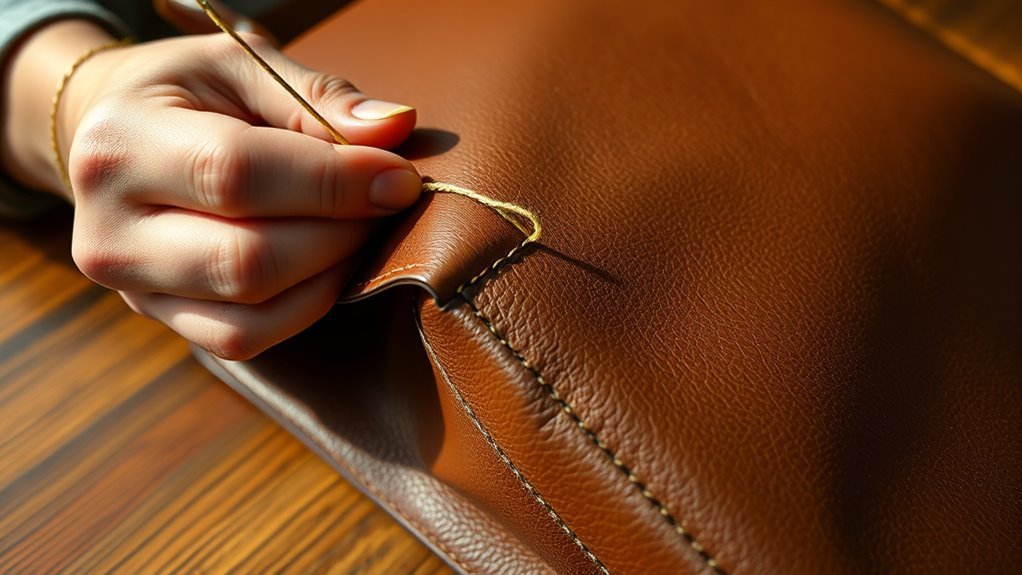
To repair a split handbag seam, remove the loose thread ends and restitch the seam through the original needle holes. Use a thread that matches the old one in color and thickness. Start a few stitches before the split and finish a few stitches past it, so the new stitching overlaps sound stitching at both ends. On leather, a hand saddle stitch gives the strongest and neatest result. Do not rely on glue alone, especially on seams that carry weight.
Why Stitching Matters in Handbags
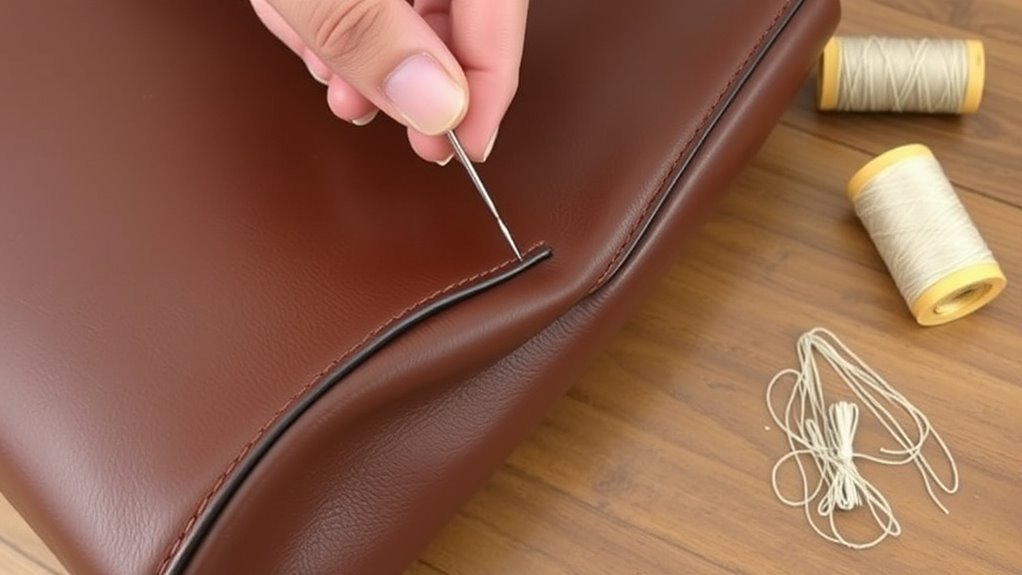
Stitching is what holds a handbag together. Each seam joins two or more layers and carries part of the load whenever the bag is filled or lifted. When one section of stitching fails, the stitches next to it take extra strain, so a small split tends to grow.
Most bags are sewn by machine with a lockstitch, which uses a top thread and a bobbin thread that lock together in each hole. Hand-sewn leather goods use a saddle stitch, in which one thread with a needle at each end passes through every hole in both directions. If a saddle stitch breaks at one point, the rest holds, which makes it ideal for repairs.
Check seams regularly, especially at the top corners, the base and the points where handles join. Restitching two centimeters of seam is quick. Rebuilding a seam that has torn the material is not.
Thread matters as much as technique. A strong polyester or nylon thread lasts far longer than cotton, which weakens with damp and age.
What Causes Handbag Seams to Split?
Seams split because the thread fails or because the material around the holes tears. It helps to know which, since the repair is different.
These are the usual causes:
- Overloading: Carrying too much weight creates excessive pressure on seams, leading to splits. Always adhere to your handbag’s intended weight capacity.
- Moisture Exposure: Water weakens both the leather and stitching thread, increasing the risk of seam failure. Protect your handbag from moisture to improve material durability.
- Quality of Threads: Poor-quality threads fray and degrade faster. Investing in high-quality materials can greatly reduce the likelihood of seam splits.
Essential Tools for Handbag Repair
You need only a few tools. For leather, use blunt-tipped harness needles if you are sewing through existing holes, or leather needles with a cutting point if holes have closed up.
An awl helps to open the old holes gently so the needle passes through. A stitching pony or a simple clamp holds the seam steady and leaves both hands free, though you can manage without one on a small repair.
Waxed polyester thread is the standard choice for hand sewing leather. For fabric bags, use a strong polyester sewing thread. You also need a seam ripper and small sharp scissors.
A thimble protects your finger on thick seams, and small pliers help to pull a needle through tight holes.
For fabric bags, an ordinary sharp hand-sewing needle is enough.
Preparing Your Handbag for Stitching
Empty the bag and wipe the area around the split with a dry cloth, so you can see the stitch holes clearly. Clean leather with a slightly damp cloth if it is dirty, and let it dry.
Then prepare the seam:
- Remove Damaged Stitches: Use a seam ripper to carefully eliminate any loose or damaged stitches. This creates a clean edge for new stitching.
- Measure and cut thread: Cut a length about four times the length of the split, plus extra for the needles. Match the color and thickness of the original thread.
- Find the original holes: Open the old needle holes gently with an awl. Do not punch new holes, which weaken the edge and make the repair visible.
Clip the two layers together so the holes line up exactly, or hold the seam in a stitching pony.
Removing Damaged Stitches Safely
Take out only the thread that is broken or loose. Leave sound stitching in place, since you will overlap it.
Lift the loose ends with the tip of a seam ripper or a needle and trim them. Do not pull hard on a thread that is still held, because that can tear the stitch holes.
Unpick two or three sound stitches at each end of the split and tie off or tuck those thread ends, so the old stitching cannot keep unraveling. Then check the material. If the holes have torn into a slit, the edge needs a reinforcing strip glued and stitched behind it before the seam is resewn.
Best Stitching Techniques for Repairing Handbag Seams
The best stitch depends on the material and on how the bag was made.
For leather, use a saddle stitch. For fabric, use a backstitch from the inside or a ladder stitch from the outside.
In every case, the aim is to copy the look and spacing of the original stitching.
Essential Stitching Techniques
These are the three techniques to know.
Each suits a different situation:
- Saddle Stitching: This technique uses two needles with a single thread, offering exceptional durability for high-stress areas.
- Backstitch: A strong hand stitch for fabric seams sewn from the inside. Each stitch overlaps the last, so it looks like machine stitching.
- Ladder stitch: An invisible stitch for closing a fabric seam from the outside when you cannot reach the inside.
Choosing The Right Thread
A matching thread is what makes a repair disappear. Compare thread with the original stitching in daylight. If you cannot find an exact match, choose a shade slightly darker, which shows less than a lighter one.
Match the thickness too. Thread that is too thin looks weak beside the original, and thread that is too thick will not sit in the old holes. For most handbag seams, waxed polyester thread of about 0.45 to 0.65 millimeters works well.
Match the stitch length by using the original holes. That keeps the spacing identical without any measuring.
Step-by-Step Guide to Matching Your Stitches
With the seam prepared, the stitching itself is straightforward. Start by checking these three points:
- Identify the Stitch Type: Check if your handbag uses a saddle stitch or a lock stitch. This choice affects your thread selection and technique.
- Gather Materials: Collect the necessary tools: a leather needle, waxed thread, an awl for creating holes, and scissors for trimming excess thread.
- Prepare the seam: Line up the two layers so the old holes match, and clip them together.
For a saddle stitch, thread a needle onto each end of the thread. Begin three stitches before the split, in sound stitching. Pass one needle through the first hole and center the thread. Then, at each hole, pass the first needle through, pull it snug and pass the second needle through the same hole from the other side. Keep the same needle in front every time, so the stitches slant evenly. Pull both threads with the same tension.
Continue three stitches past the end of the split. Then sew backward over the last two or three stitches to lock the thread. Trim the ends close on the less visible side. On fabric, finish with two small backstitches and bury the thread end in the seam.
When and How to Use Adhesive
Glue has a limited place in seam repair. It can hold layers in position or back up a weak edge, but it should not be the repair itself.
Use a flexible leather glue or contact cement, never a hard instant glue. Instant glues dry brittle, crack when the bag flexes and can leave shiny or pale marks on leather.
Apply a very thin layer inside the seam allowance only, press the layers together and let it set before you stitch. Keep glue away from the visible surface and wipe off any excess at once.
Then stitch through the seam as described above. On handles, straps and other parts that carry weight, stitching is essential, and glue alone will fail.
Caring for Your Handbag After Repair
Give the repaired seam an easy start. Avoid overfilling the bag for the first few days, and check the new stitching after a week of use.
Condition smooth leather around the seam, since supple leather is less likely to tear at the stitch holes.
Regular Cleaning Routine
Routine care helps the rest of the seams last.
Three habits are enough:
- Wipe down: Dust the bag with a soft, dry cloth now and then, and wipe marks with a slightly damp cloth.
- Inspect Regularly: Check seams for loose stitching or wear every month, allowing for timely repairs.
- Proper Storage: Keep your handbag in a cool, dry place, away from direct sunlight, to avoid fading and drying out.
Leather Conditioning Importance
Conditioning replaces the oils that leather loses with use. Dry leather becomes stiff, and stiff leather cracks and tears along the line of stitch holes.
Condition smooth leather every 3 to 6 months, and more often in a dry climate.
Apply a small amount with a soft cloth, let it absorb and buff off the excess. Test on a hidden spot first.
Do not use conditioner on suede or nubuck.
When to Seek Professional Repair Services
Some seam repairs are beyond a needle and thread at home.
Consider a professional in these cases:
- Specialized Techniques: Professional expertise is vital for repairs that require advanced methods, especially for intricate stitching patterns that can’t be replicated accurately at home.
- Luxury Items: If your handbag is a luxury or sentimental piece, ensuring it maintains its aesthetic integrity should be a priority. Professionals use high-quality materials that preserve the bag’s value.
- Preventing Further Damage: If the stitching has markedly weakened or frayed, immediate professional help can restore the bag’s structural integrity and prevent additional deterioration.
Frequently Asked Questions
Can You Repair a Split Seam Without Sewing?
Not reliably. Glue or iron-on tape may hold a light fabric seam for a while, but it will not last on a seam under load. Stitching through the original holes is the only durable repair.
What Thread Should You Use to Repair a Handbag Seam?
Use waxed polyester thread for hand sewing leather, and strong polyester sewing thread for fabric. Match the color and thickness of the original stitching.
How Do You Hide a Seam Repair on a Handbag?
Sew through the original holes with matching thread, keep the tension even and overlap the old stitching by a few stitches at each end. On fabric, a ladder stitch closes the seam invisibly from the outside.
Should You Glue or Stitch a Leather Seam?
Stitch it. A thin layer of flexible leather glue can hold the layers in place first, but the stitching carries the load. Glue alone tends to peel when the leather flexes.
Conclusion
A split seam is one of the more manageable handbag repairs. Clear the loose thread, line up the original holes and restitch with matching thread, overlapping the sound stitching at both ends. Use a saddle stitch on leather, and keep glue as a helper only. If the material itself has torn or the bag is valuable, take it to a professional.

