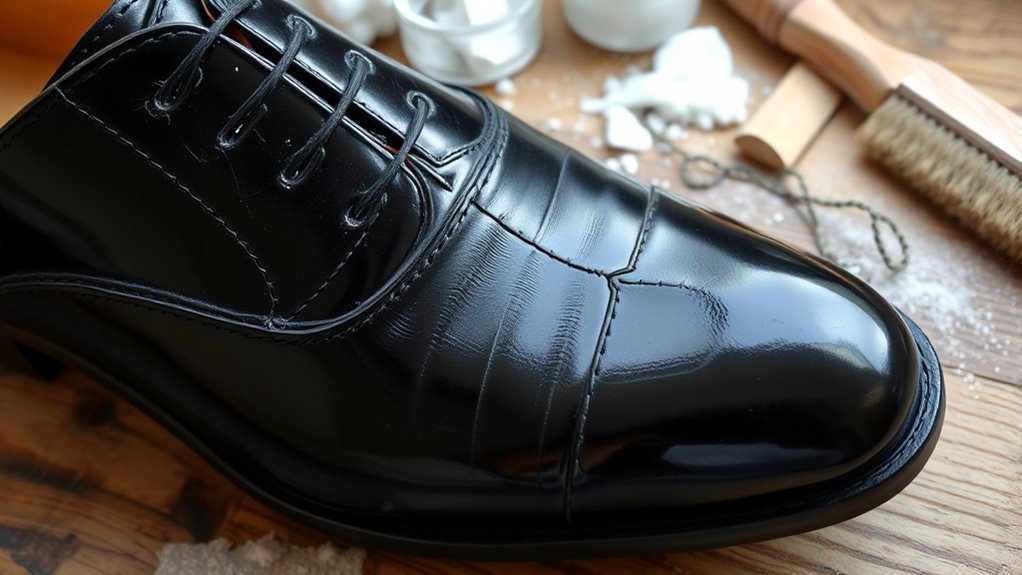
Yes, you can often repair cracked patent leather, but expect better results on minor surface cracks than on deep splits or peeling. Clean it first with a soft damp cloth and mild soap if needed, then use flexible adhesive, filler, or a matching touch-up for small damage. Larger cracks or worn areas usually need a cobbler. Repairs can improve appearance, but they may not make the finish look brand new, and care matters.
Can Cracked Patent Leather Be Repaired?
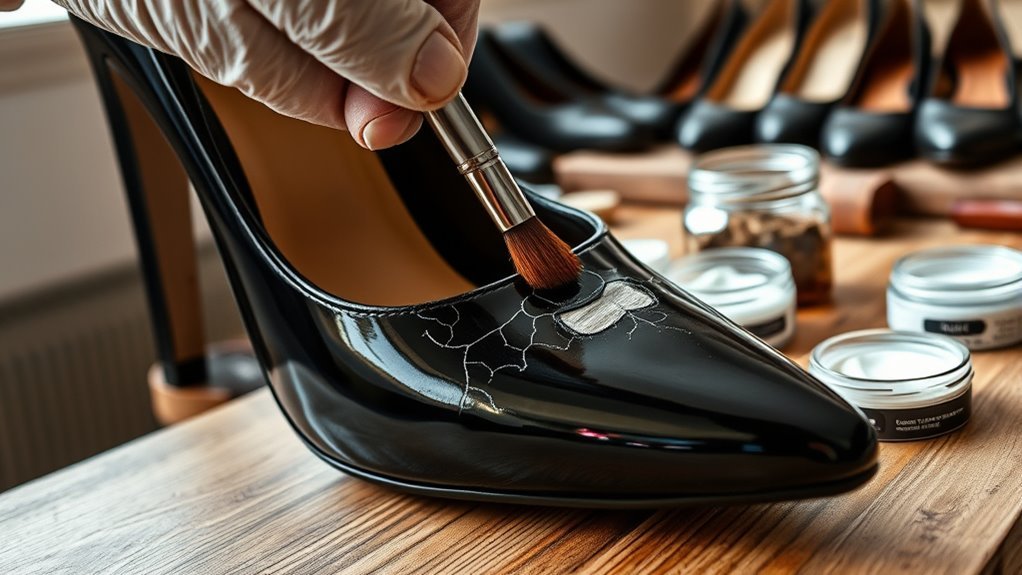
Yes—cracked patent leather can often be repaired, especially when the damage is still minor. You can usually manage small surface cracks with repair techniques that use clear nail polish or a dedicated patent leather adhesive to seal the split and preserve the shine.
For deeper cracks, you’ll get better results by using a flexible adhesive to join the edges, then applying a color-matched filler from a patent leather repair kit to smooth the area. Work carefully, because too-rigid products can worsen the damage.
If the crack runs widely, or the finish has lifted in several spots, a professional cobbler may give you a safer, cleaner result with specialized tools.
To protect your freedom from repeat damage, follow maintenance tips: keep the item clean, hydrate the leather, and inspect it regularly so you can address new stress points before they spread.
How to Clean Patent Leather First
Before you repair cracked patent leather, clean it first so you’re working on a smooth, debris-free surface. Start with a soft, damp cloth and wipe away dust and loose dirt using gentle cleaning techniques. Keep your pressure light so you don’t stress the finish.
If the surface still looks dull or sticky, mix a little mild soap with water, then apply it carefully with a clean cloth. Don’t use harsh chemicals, because they can strip the shine and weaken the coating.
After cleaning, dry the leather right away with a microfiber cloth to prevent water spots and protect its integrity. Skip abrasive sponges or brushes; they can scratch the glossy surface you’re trying to preserve.
Regular care isn’t just upkeep—it’s one of the best maintenance tips for helping patent leather stay sleek, resilient, and ready for repair, giving you more control over what happens next.
Fix Scuffs, Scratches, and Peeling Edges
Before you repair patent leather, make sure the surface is clean and fully dry so you don’t trap dirt or oils.
You can buff minor scuffs gently with a white pencil eraser, or use a little petroleum jelly on a cotton ball for stubborn marks.
For peeling edges, apply flexible shoe glue with a toothpick, then wipe away any excess right away to keep the finish neat.
Clean Before Repairing
Start by cleaning the cracked patent leather thoroughly so repair products can bond properly. Use a soft, damp cloth to lift dust and loose dirt, then inspect the surface closely.
For better surface preparation, apply a mild soap and water solution only where grime stays put, and wipe gently. Don’t soak the material; excess moisture can work against you.
Dry the area at once with a microfiber cloth, then let it air-dry completely before you move on. These cleaning techniques help clear the way for repairs and keep new products from slipping or failing.
If you see peeling edges, handle them later with care, but keep the surface clean and dry first. That small step gives you more control and better results.
Buff Minor Scuffs
For light scuffs, you can often buff patent leather back to a cleaner look with a clean white pencil eraser, which lifts marks without grinding into the finish.
Test eraser effectiveness gently first, then use short strokes and stop once the shine returns. If the mark resists, try scuff removal techniques like a dab of petroleum jelly or mineral oil on a cotton ball, rubbed in small circles.
- Work lightly; pressure can dull the gloss.
- Wipe away residue with a soft cloth right after buffing.
For deeper scratches, use matching nail polish sparingly and let it set.
You’re aiming for freedom from visible wear, not perfection at any cost. After color, a thin clear top coat can restore a smoother, brighter look.
Seal Peeling Edges
If the edge of your patent leather is lifting, clean the area thoroughly first, then apply a small amount of flexible shoe glue to seal the peel and press it back into place. This edge treatment works best on a dry, dust-free surface, and it supports peeling prevention by locking the finish down before more damage spreads. Use a cotton swab for control, then hold the edge firmly until it sets.
| Step | What you do |
|---|---|
| Clean | Wipe away grime |
| Glue | Seal the lifted edge |
| Press | Hold it flat |
If you also see scuffs, rub them with petroleum jelly or a white eraser. For deeper scratches, match nail polish carefully and test first.
When Cracked Patent Leather Needs a Cobbler
When patent leather develops large or widespread cracks, a cobbler is often the best next step because professional repair can restore both appearance and durability.
You shouldn’t wait if the surface is peeling or the damage is spreading, since delay can let the material break down further. A cobbler consultation helps you judge whether the shoe can still be stabilized and which repair techniques make sense for your pair.
- Ask about flexible adhesives and color-matched fillers.
- Check whether storage habits or weather exposure caused the damage.
- Avoid DIY fixes that may hide, not heal, major cracks.
With the right specialist, you can reclaim footwear that still has life left in it.
The goal isn’t perfection for its own sake; it’s preserving function, polish, and your freedom to keep wearing what serves you.
What a Cobbler Can Repair
You can count on a cobbler for common repairs like bonding cracked edges with specialized adhesive and sealing them to slow further peeling.
For deeper splits or tears, they’ll use flexible, color-matched fillers and professional tools to restore structure without making the damage stand out.
If the patent leather needs more than a patch, they can also refinish the surface and bring back its shine with a careful custom restoration.
Common Repair Services
A cobbler can often repair cracked patent leather with specialized fillers that seal the split edges and help restore a smoother look. You’ll usually get the best result when the shop also handles color matching, so the touch-up blends with the original finish instead of calling attention to the repair.
Professional cobblers choose flexible adhesive types that suit patent leather, which helps the fix stay secure and keeps the surface’s shine intact.
- Clean, prep, and fill visible cracks
- Blend repaired spots with matched color
- Use flexible adhesives for lasting wear
You should ask about care after repair, because timely maintenance can slow further cracking and keep your shoes looking polished.
If you act early, you’ll protect both appearance and comfort without giving up control over your footwear.
Structural Damage Fixes
Beyond surface cracks, a cobbler can also handle more serious structural damage in patent leather shoes.
First, you’ll need a careful damage assessment to see whether tears, peeling edges, or worn soles are fixable. For larger cracks, cobblers often use flexible adhesive to bond the leather cleanly and keep it moving without splitting again.
If seams are torn or holes have formed, they can stitch or patch them to restore strength. When the soles or heels fail, they can replace them, so you keep wearing the shoes with support.
Skilled repair techniques also include color-matched fillers and top coats, which help the repair blend in. You won’t get a perfect reset, but you can get a sturdier, more wearable pair.
Custom Leather Restoration
When cracked patent leather needs more than a quick touch-up, a cobbler can often restore items like shoes, bags, and belts with specialized repair methods for flexible, glossy surfaces.
You’ll get custom techniques that respect the material’s finish and structure, not a one-size-fits-all fix. They’ll clean the damaged area, add flexible adhesive or filler, and seal it with a clear top coat.
For deeper cracks, they may use color-matched repair liquids so the repair blends in better.
- Restore shine without stiffening the leather
- Reinforce seams to stop further splitting
- Patch larger tears to extend wear
Because cobblers use specialized products and tools, the result is usually stronger and more refined than DIY work.
Restore Patent Leather Shine After Repair
Once the crack repair has cured, clean the patent leather thoroughly so dust, dirt, and residue don’t dull the finish.
Use careful cleaning techniques with a soft cloth, then choose a commercial patent leather shine product made for glossy surfaces.
Apply a small amount, following the label, so you don’t overload the repair or leave streaks.
For fingerprints and smudges, you can mist a little window cleaner onto a soft cloth and buff gently; never spray it directly on the leather.
After the product goes on, buff the surface with a clean, soft, lint-free cloth until the shine looks smooth and mirror-like.
This step supports shine maintenance without making the finish feel greasy or heavy.
Check the result under good light, and repeat only if needed.
Keep up periodic cleaning and polishing, because regular care helps preserve the restored gloss and lets your repaired patent leather stay vibrant and free.
How to Keep Patent Leather From Cracking
To keep patent leather from cracking, you need to clean and protect it regularly before dirt and dryness have a chance to damage the finish. Wipe it with a soft, damp cloth after wear, then use a patent leather cleaner and conditioner to keep the surface hydrated and flexible. This preventive maintenance helps you stay ahead of brittle spots and preserves the glossy coating.
- Polish with products made for patent leather to add shine and a thin protective layer.
- Follow storage tips: keep items in a cool, dry place, away from sunlight and humidity.
- Avoid alcohol, acetone, and other harsh chemicals that can weaken the finish.
Check your shoes, bags, or straps often for dullness or stiffness, and treat them early. If you protect the surface and control where you store it, you give your patent leather the best chance to stay smooth, strong, and ready for years of use.
Frequently Asked Questions
How to Care for Patent Leather?
You care for patent leather by wiping it after wear, using gentle cleaning techniques, drying fast, storing it cool and dry, and applying protective sprays. Avoid alcohol, acetone, and plastic bags so you keep its shine.
Can Dry Cracked Leather Be Restored?
Yes—you can often restore dry cracked leather, like reviving a parched riverbed. You’ll need leather conditioning, careful cleaning, and crack prevention afterward; deeper fissures may still resist, so test first and consider professional help.
How Can I Repair Scuffed Patent Leather?
You can repair scuffed patent leather by using scuff removal techniques: gently rub with a white eraser, then try petroleum jelly on stubborn marks. For deeper scratches, use matching patent leather products, then seal with clear top coat.
Can Patent Leather Be Broken In?
Yes, you can, but only gradually: about 70% of wearers report discomfort at first. Use breaking techniques like thick socks and short walks, because patent leather flexibility is limited, so you’ll need patience and conditioning.
Conclusion
So, can you repair cracked patent leather? Sometimes, yes—but not always to perfection. You can clean it, soften minor scuffs, and even hide small flaws, yet deep cracks often stay visible, like a shiny mirror that remembers every fall. If you want the best result, act early and use a cobbler when damage spreads. After repair, keep it conditioned and dry. That way, you’ll protect the finish before a “small” crack becomes the last word.