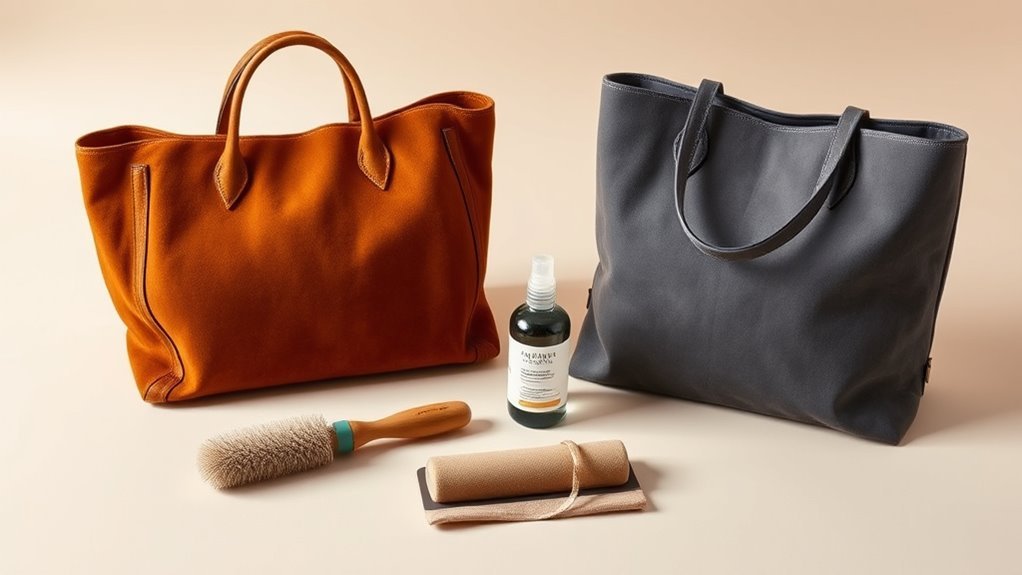
Suede is leather made from the underside of a hide, with a soft, fuzzy nap, while nubuck is made from the outer surface of the hide, buffed to a fine, velvety nap. Nubuck is generally tougher and has a shorter, denser nap. Both are sensitive to water and stains, and neither should be cleaned with a wet cloth.
What Are Suede and Nubuck?
Both materials are leathers with a napped surface, which gives them a soft, velvety look and feel. Suede is made from the inner side of the hide, often from lighter skins such as lamb or goat, and its surface is soft, loose and slightly fuzzy. Nubuck is made from the outer, grain side of the hide, which is sanded or buffed to raise a short nap. Because the grain side is the strongest part of the hide, nubuck is generally more durable, though it is usually more expensive. Both come in many colors, and both need careful handling.
Key Texture Differences
- Suede: a soft, loose, slightly longer nap that feels plush. It shows marks, rubbing and water quickly.
- Nubuck: a finer, shorter and denser nap that feels velvety, with a smoother look than suede.
Both absorb liquids readily, because the surface is open and porous. The difference in nap affects how the material looks when it is brushed, and how it shows wear.
How the Finish Changes the Look
A suede bag looks relaxed and soft, and the nap changes in color when it is brushed in different directions. A nubuck bag looks neater and a little more refined, with a more even surface. Either may be treated with a protective finish, which can slightly darken the color. If you want a bag that keeps a clean look through everyday use, nubuck is often the better pick, and if you like a casual, plush look, suede is the traditional choice. For other finishes, see what Saffiano leather is and what coated canvas is, which are far more resistant to stains.
Essential Care Tips
- Brush regularly: use a soft suede brush or a nubuck brush to lift the nap and remove dust, always in one direction.
- Use a suede eraser: rub gently on dry marks and shiny spots.
- Protect it: apply a protective spray made for suede and nubuck, after testing a hidden spot, and reapply it as the maker advises.
- Keep it dry: avoid rain, spills and damp places. If it gets wet, blot it, stuff it with acid-free tissue and let it dry naturally, away from heat.
- Store it well: in a cool, dry place, in a breathable dust bag, and stuffed lightly so it keeps its shape.
Avoid stiff wire brushes on delicate suede, which can mark it. For a thorough method, see how to clean a suede purse, and for flattened nap, see how to restore a flattened suede bag nap. General storage advice is in how to store handbags.
Common Mistakes to Avoid
- Cleaning with a wet cloth, soap or household cleaners, which can leave water marks and stiffen the leather.
- Using heat, such as a hair dryer or radiator, to dry it.
- Rubbing hard, which flattens the nap.
- Putting suede in plastic bags, which trap moisture.
- Using a conditioner or oil made for smooth leather, which can darken the nap.
- Ignoring small marks until they set.
How to Choose Between Suede and Nubuck
Durability
Nubuck generally resists wear better because it is made from the stronger grain side. If you need a bag for everyday use, nubuck may hold up longer. Suede is more delicate, and its soft nap flattens and wears faster.
Appearance
Suede suits a soft, casual style, and nubuck suits a cleaner, more polished one. Look at the bag in daylight, and feel the nap, because the look varies from maker to maker.
Maintenance
Both need regular brushing and protection from water. Nubuck is easier to keep looking tidy, while suede needs more attention. For a bag that you will carry in all weather, think carefully about whether either is practical. A smooth, finished leather, as in leather types used in handbags, is much easier to look after.
Dealing With Stains and Spills
The most common problem with both materials is liquid. Act quickly. Blot the spill with a clean, dry cloth, pressing without rubbing, and let the bag dry naturally in a ventilated place, away from heat. Once it is dry, brush the nap with the correct brush to restore the texture. For a dry stain or a shiny patch, a suede eraser can lift the mark, and for oil, some people sprinkle a little cornstarch on the spot, leave it for several hours, and then brush it off. Do not use water, soap or household cleaners on a mark that you have not tested, because they can leave a permanent ring. If a stain is large or the bag is valuable, it is safer to take it to a specialist cleaner who works with suede and nubuck, since the wrong treatment is very hard to undo.
Prevention is the best approach. A protective spray made for suede and nubuck forms a light barrier, though it does not make the bag waterproof, and it needs to be reapplied from time to time. Carry the bag with care in wet weather, avoid putting it down on damp or dirty surfaces, and keep it away from cosmetics, perfume and sunscreen, which can mark the nap. If you wear the bag against dark denim, be aware that the dye can transfer onto pale suede or nubuck, particularly when the weather is warm or damp, so it is best to choose a darker color if you often wear dark clothes.
Frequently Asked Questions
What Are the Disadvantages of Nubuck?
It stains and marks easily, is hard to clean and can darken with oils and water. It is also usually more expensive than suede.
What Is Suede?
Leather made from the underside of a hide, with a soft, napped surface.
Does Nubuck Stretch Over Time?
Like most leather, it can stretch a little with use, particularly at stress points such as straps and corners. Avoid overloading the bag.
Conclusion
Suede is soft and plush, while nubuck is finer and generally tougher. Both need a dry, careful routine with a brush and a protective spray, and neither suits wet weather. Choose according to the look you like and the care you are willing to give.