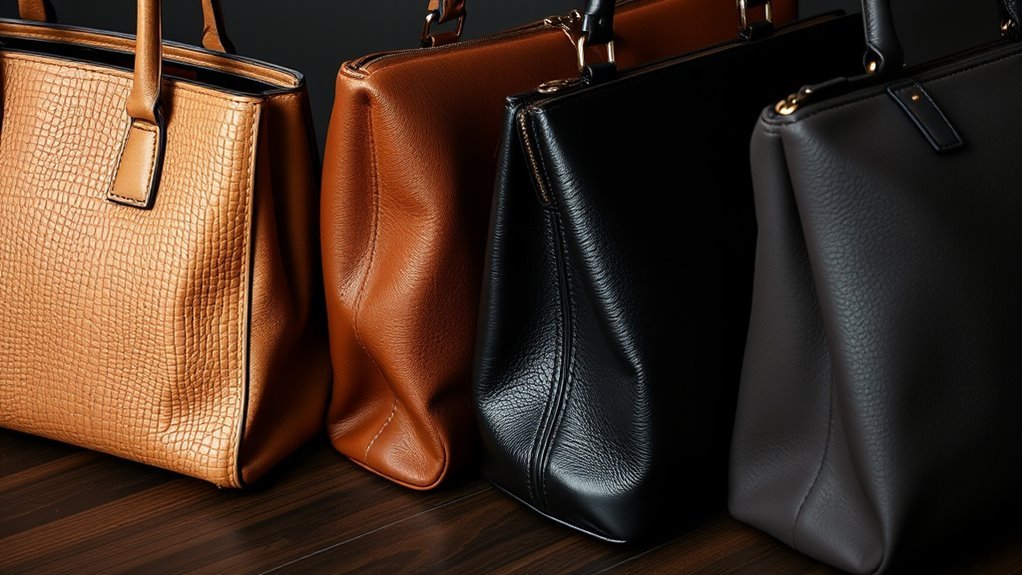
Handbag leather is described by two separate things: the grade, which tells you how much of the original hide surface is left, and the finish, which tells you what has been done to that surface. Common grades are full-grain, top-grain, corrected-grain, split and bonded leather. Common finishes are aniline, semi-aniline, pigmented and patent, plus the napped surfaces of suede and nubuck. Knowing both helps you judge how a bag will wear and how to care for it.
Leather Grades: How Much of the Hide Is Left
Full-Grain Leather
Full-grain leather keeps the whole outer surface of the hide, including its natural marks and pores. Because the strongest fibers are left intact, it is generally the most durable grade, and it tends to develop a patina with use. It can show scars, insect marks and uneven color, which many people regard as part of its character.
Top-Grain Leather
Top-grain leather has had the very top layer lightly sanded or buffed to remove surface flaws. The result is a more even, uniform look, and it is usually thinner and more flexible than full-grain. It is often given a protective finish, which makes it easier to wipe clean but slower to develop a patina.
Corrected-Grain Leather
Corrected-grain leather has been sanded more heavily, and an artificial grain pattern is usually embossed on the surface. It hides flaws well and gives a consistent look, but the heavier processing generally makes it less breathable and less likely to age in the way that full-grain does.
Split and Genuine Leather
When a thick hide is divided into layers, the lower layers are called splits. Splits are weaker, and they are often coated or embossed to look like a grain surface, or finished as suede. The label genuine leather usually means real leather in a lower grade, not a top-quality one, so it is worth asking which layer of the hide was used.
Bonded Leather
Bonded leather is made from leather scraps and fibers that are combined with a binder and given a surface coating. It is not a single piece of hide, and it can peel or crack with wear. See what bonded leather is in bags for more.
Tanning: How the Hide Becomes Leather
Tanning converts raw hide into a stable material that does not rot. The two most common methods are vegetable tanning and chrome tanning.
- Vegetable tanning uses natural tannins from plant sources. It is a slower process and produces firmer leather that tends to darken and develop a patina with age. It can mark if it gets wet. See how vegetable-tanned leather works.
- Chrome tanning uses chromium salts. It is faster and gives softer, more flexible leather that handles moisture and heat better, and it is common in many handbags.
Neither method is simply better. Vegetable-tanned leather suits structured bags and belts, and chrome-tanned leather suits soft, drapey styles. The finish and the quality of the hide matter as much as the method.
Leather Finishes: What Is on the Surface
- Aniline: dyed with soluble dye and with no heavy surface coating, so the natural grain remains visible. It feels soft, but it marks and stains more easily.
- Semi-aniline: a light protective coat with a little pigment, which keeps some natural look and adds some resistance to stains.
- Pigmented: a more opaque, colored coating, which gives a uniform look and more resistance to wear and spills.
- Patent: a high-gloss coating over the leather. See what patent leather is.
- Embossed or Saffiano-style: a pressed pattern with a protective wax or resin finish. See what Saffiano leather is.
- Suede and nubuck: napped surfaces, made by buffing the leather. See suede vs nubuck.
Exotic Leathers
Leather from reptiles, ostrich and other animals is sold as a specialty material, and it is usually more expensive. Rules for trading some species are regulated in many places, so ask the seller about documentation if you are considering one. These leathers often need specialist care, and the maker or a professional is the best source of advice.
How to Choose Leather for Your Handbag
- Think about use: a bag you will carry every day suits a durable finish, such as pigmented or top-grain, while a special-occasion bag can use a more delicate one.
- Check the edges and the inside: well-finished edges, and a lining that is stitched neatly, are good signs of care.
- Look at the weight and the feel: good leather feels supple and substantial, not plasticky.
- Ask what the label means: terms like genuine leather and real leather are not grades.
- Consider the care you are willing to give: aniline and suede need more attention than pigmented leather.
For ways to tell real leather from a synthetic without harming the bag, see how to identify real leather on a bag.
Caring for Different Leathers
- Smooth, finished leather: wipe with a soft, slightly damp cloth, and condition lightly every three to six months. See how to condition leather.
- Aniline and vegetable-tanned leather: keep it away from water and oils, since they can leave marks, and test any product on a hidden spot.
- Suede and nubuck: brush gently, and do not use conditioner. See how to clean a suede purse.
- Patent leather: wipe with a soft cloth, and avoid heat and contact with colored materials.
Store leather bags in a cool, dry place with moderate humidity, stuffed lightly with acid-free tissue, in a breathable dust bag. For general expectations about lifespan, see how long leather handbags last with regular care. To compare leather with coated canvas, see coated canvas vs leather.
Frequently Asked Questions
What Is the Best Leather for a Handbag?
It depends on how you will use the bag. Full-grain and top-grain leathers are generally the most durable, and a pigmented finish gives the most protection against everyday wear.
Is Genuine Leather Good Quality?
It is real leather, but often not the highest grade, since the term does not say which layer of the hide was used.
What Is Split Leather?
Split leather comes from the lower layers of a hide, after the top is separated. It is weaker than the grain layer and is often coated or turned into suede.
How Is Leather Made?
Hides are cleaned, tanned to make them stable, dyed, and then finished with oils, waxes or coatings. The exact steps vary by type.
Conclusion
Leather quality comes from its grade, its tanning and its finish. Look past the marketing terms, match the leather to how you will use the bag, and care for it according to its surface. A little knowledge makes it much easier to choose a bag that lasts.