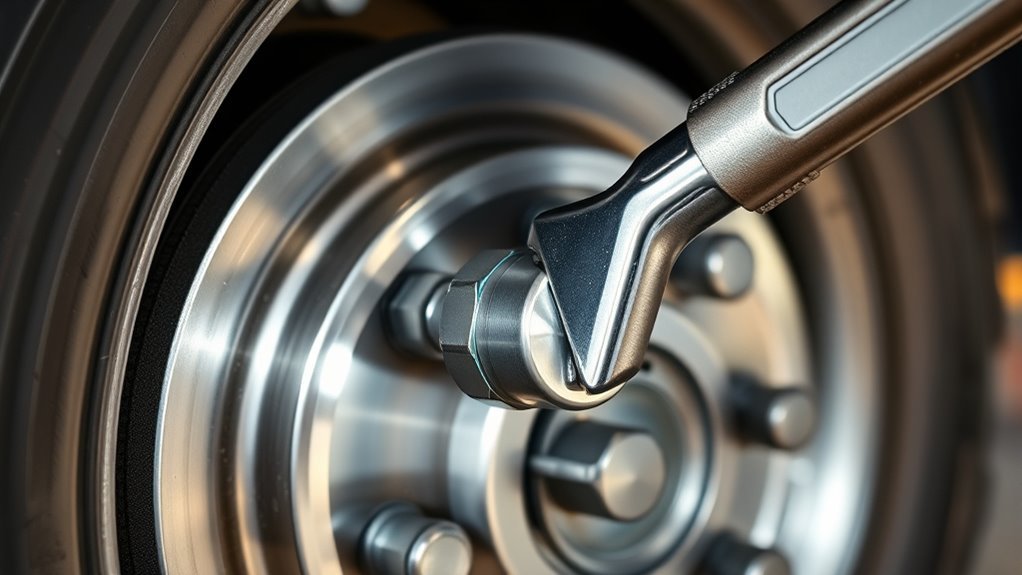
For most Toyota Tundra owners, the lug nut torque answer depends on the truck’s model year and wheel type. Use the factory value for your exact truck, tighten the lug nuts with a calibrated torque wrench, and never guess based on wheel size alone. The most common Tundra specs are 83 ft-lb for 2000-2006 trucks, 97 ft-lb for many 2007-2026 aluminum-wheel setups, and 154 ft-lb for some 2022-2026 steel wheels or steel spare wheels.
Quick Answer
Toyota Tundra lug nut torque is usually 83 ft-lb (110 N·m) for 2000-2006 models, 97 ft-lb (131 N·m) for many 2007-2026 aluminum wheels, and 154 ft-lb (209 N·m) for some 2022-2026 steel wheels or steel spare wheels. Always confirm your exact owner’s manual or wheel maker’s instructions before tightening.
Key Takeaways
- Use 83 ft-lb (110 N·m) for 2000-2006 Tundra factory wheel nuts unless your manual or wheel maker says otherwise.
- Use 97 ft-lb (131 N·m) for many 2007-2026 Tundra OEM aluminum wheels.
- Use 154 ft-lb (209 N·m) only when your manual specifies it for steel wheels or a steel spare.
- Hand-start every lug nut, tighten in a crisscross pattern, and finish with a calibrated torque wrench.
- Aftermarket wheels, wheel spacers, and non-OEM lug nuts can change the correct torque and seat style, so verify before driving.
At a Glance
| Time Required | 10-20 minutes per wheel set after the vehicle is safely positioned |
| Difficulty | Beginner to intermediate |
| Tools Needed | Torque wrench, correct 6-point socket, breaker bar or lug wrench, jack, jack stands, wheel chocks |
| Cost | Usually $0 if you already have the tools; a quality torque wrench commonly costs extra |
Toyota Tundra Lug Nut Torque Specs by Year and Wheel Type
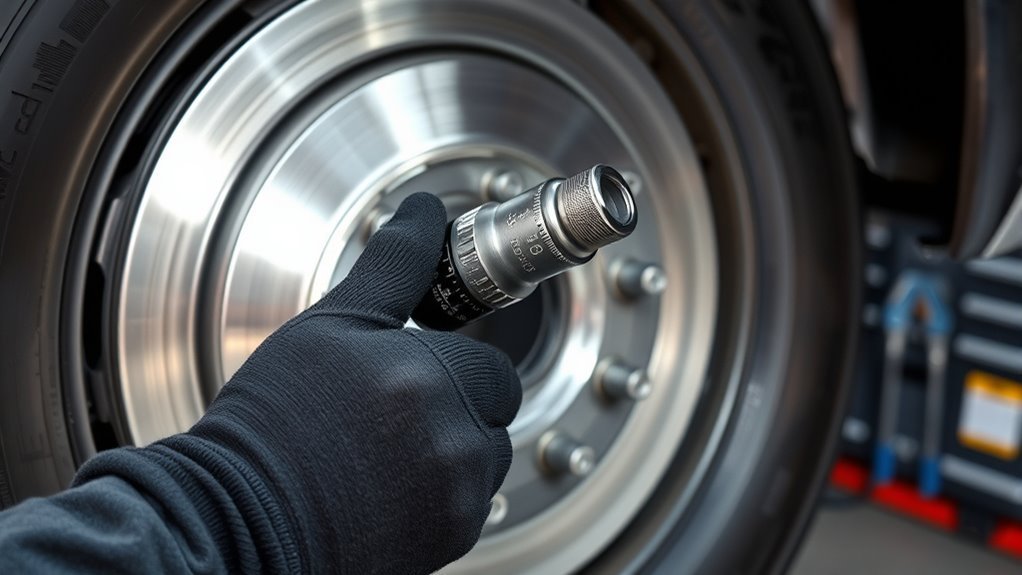
The safest starting point is your owner’s manual. Toyota has used different published values across Tundra generations, and newer trucks may list one value for aluminum wheels and another for steel wheels. Use the table below as a quick reference for factory-style wheels and lug nuts.
| Tundra model years | Wheel type | Torque spec | Notes |
|---|---|---|---|
| 2000-2006 | Factory wheels | 83 ft-lb (110 N·m) | Toyota’s published U.S. manual value is 83 ft-lb. Some charts show 81 ft-lb because they directly convert 110 N·m; follow the manual’s listed value. |
| 2007-2021 | Most OEM aluminum wheels | 97 ft-lb (131 N·m) | Common factory spec for second-generation Tundra wheels. Confirm your exact manual if wheels or lug nuts have been changed. |
| 2022-2026 | OEM aluminum wheels | 97 ft-lb (131 N·m) | Toyota’s third-generation manual tables list aluminum wheels at 97 ft-lb. |
| 2022-2026 | Steel wheels / steel spare where specified | 154 ft-lb (209 N·m) | Do not use this higher number on aluminum wheels unless your manual or wheel maker specifically calls for it. |
Warning: Do not use a torque range from a forum, chart, or product listing as your final setting. Use the torque value from your Toyota owner’s manual, the wheel manufacturer, or the spacer manufacturer. Wrong torque or mismatched lug nut seats can loosen the wheel or damage studs.
Why 2000-2006 Tundras Use a Different Value
The first-generation Toyota Tundra covers the 2000-2006 model years. Toyota’s owner manual specification for these trucks lists the wheel nut torque as 83 ft-lb (110 N·m). Because 110 N·m converts to about 81 ft-lb mathematically, some online charts show 81 ft-lb. For a U.S.-market article, use Toyota’s published foot-pound value: 83 ft-lb.
Why Newer Steel Wheels Can Use 154 Ft-Lb
On 2022 and newer Tundras, Toyota’s manual tables separate steel wheel torque from aluminum wheel torque. Aluminum wheels are listed at 97 ft-lb (131 N·m), while steel wheels are listed at 154 ft-lb (209 N·m). Many Tundra spare wheels are steel, so do not assume the spare uses the same value as the aluminum road wheels.
How to Torque Tundra Lug Nuts Correctly
Correct torque is about more than hitting a number. The wheel must sit flat against the hub, the lug nuts must thread smoothly, and the final pass must be done with a torque wrench rather than an impact gun.
- Park safely. Work on level ground, set the parking brake, and chock the wheels that will stay on the ground.
- Loosen before lifting. If removing a wheel, break the lug nuts loose while the tire is still touching the ground. Do not fully remove them yet.
- Lift and support the truck. Use the correct jack point and support the vehicle with jack stands before working around the wheel.
- Clean the mounting surfaces. Remove rust flakes, dirt, and debris from the hub face and wheel mounting pad.
- Install the wheel squarely. Seat the wheel against the hub and hand-thread each lug nut several turns.
- Snug in a crisscross pattern. Bring the lug nuts down evenly so the wheel centers and seats flat.
- Tighten in stages. Use about half torque first, then final torque. For example, on a 97 ft-lb setup, make a light pass, a mid pass around 50 ft-lb, then the final 97 ft-lb pass.
- Recheck each lug nut. Make one final crisscross pass at the full value until every lug nut clicks at the set torque.
- Retorque after driving. Recheck torque after about 50-100 miles whenever a wheel has been removed, replaced, or rotated.
Pro Tip: Use a smooth pull on the torque wrench handle until it clicks. Do not bounce on the wrench, use a pipe extension, or keep pulling after the click.
Socket Size and Lug Nut Styles for Tundra
Tundra lug nut socket size depends on the wheel and lug nut hardware installed on the truck. Many Toyota factory-style lug nuts use a 21 mm or 13/16-inch socket on older trucks, while many 2022 and newer OEM-style lug nuts use a 22 mm or 7/8-inch socket. The practical rule is simple: test the socket by hand before applying force, and use a snug-fitting 6-point socket to avoid rounding the nut.
You also need to match the lug nut seat style to the wheel. Factory Toyota alloy wheels commonly use a mag-style washer lug nut, while many aftermarket wheels use conical/tapered seats or spline-drive hardware. These styles are not interchangeable.
- Mag/washer seat: Common on many OEM Toyota alloy wheels.
- Conical/tapered seat: Common on many aftermarket wheels.
- Spline-drive lug nuts: Require the matching spline key.
- Open-ended lug nuts: Often used when longer studs or some spacers are installed.
- Closed-ended lug nuts: Cover the stud end and help keep debris out, but they must have enough internal depth.
Note: Never force a lug nut that does not thread by hand. Cross-threading can ruin the stud and make the torque reading meaningless.
Aftermarket Wheels: Do Torque Values Change?

Aftermarket wheels can change the correct lug nut torque because the wheel material, seat shape, lug nut design, and stud engagement can be different from Toyota’s factory setup. If your wheels are not OEM, the wheel manufacturer’s instructions control the final torque setting.
Before installing aftermarket wheels, confirm these five items:
- Torque spec: Use the wheel maker’s number, not a general online range.
- Seat style: Match mag, conical, ball, or spline hardware exactly to the wheel.
- Thread size: The lug nut threads must match the studs.
- Thread engagement: The nut must grab enough thread to clamp the wheel safely.
- Load rating: The wheel must be rated for the truck’s weight and use.
What About Wheel Spacers?
Wheel spacers need extra care because there may be two sets of fasteners: spacer-to-hub nuts and wheel-to-spacer nuts. Use the spacer manufacturer’s torque value for the spacer hardware and the wheel or vehicle specification for the wheel hardware. Recheck both after the first drive and again after 50-100 miles.
Warning: Do not lubricate wheel studs or lug nut seats with oil, grease, or anti-seize unless Toyota or the wheel/lug manufacturer specifically instructs it. Lubricated threads can change clamping force and lead to over-tightening.
Signs of Over- or Under-Torqued Lug Nuts
Loose lug nuts are a safety issue. Stop driving and inspect the truck if you feel a new vibration, hear clicking or clunking from a wheel, see rust trails around a lug nut, or notice that the wheel does not sit flush against the hub.
| Problem | Common signs | Why it matters |
|---|---|---|
| Under-torqued lug nuts | Wheel vibration, clicking, clunking, shiny movement marks, rust trails, loose nuts | The wheel can move on the hub, damage studs, and potentially separate from the truck. |
| Over-torqued lug nuts | Stretched studs, difficult removal, damaged lug seats, distorted wheels, brake pulsation after service | Too much clamping force can damage studs, wheels, and brake components. |
| Wrong lug nut seat | Nuts do not seat flat, torque will not hold, wheel feels unstable | A mismatched seat can lose torque even if the wrench clicked at the right number. |
Maintenance: Checking, Replacing, and Tool Tips
Check Tundra lug nut torque any time a wheel has been removed, after tire rotation, after brake work, after installing new wheels, and before a long trip if the truck has recently been serviced. A quick torque check is also smart after off-road driving or heavy towing.
Regular Torque Checks
Use the correct torque setting and a clean, properly fitting socket. Recheck in a crisscross pattern, not in a circle. If one nut moves a lot before the wrench clicks, inspect the wheel, stud, and lug nut before driving.
Replacing Swollen, Rusted, or Damaged Lug Nuts
Replace lug nuts that are swollen, rounded, cracked, heavily corroded, or hard to thread by hand. Many lug nuts use a decorative cap over a steel core, and the cap can swell or distort over time. If the socket no longer fits cleanly, replace the lug nut instead of hammering on the wrong socket.
Proper Torque Wrench Usage
- Use a torque wrench only for tightening, not for breaking stuck lug nuts loose.
- Set the wrench back to its lowest setting before storage if the manufacturer recommends it.
- Do not drop the wrench or use it as a breaker bar.
- Have the wrench calibrated according to the tool maker’s schedule or after a hard impact.
- Use a short extension only when needed, and keep the pull straight and controlled.
The correct torque spec is only reliable when the lug nut, wheel seat, threads, hub face, and torque wrench are all in good condition.
Frequently Asked Questions
What is the torque on Toyota Tundra lug nuts?
Most 2000-2006 Toyota Tundras use 83 ft-lb (110 N·m). Many 2007-2026 Tundras with OEM aluminum wheels use 97 ft-lb (131 N·m). Some 2022-2026 steel wheels or steel spare wheels use 154 ft-lb (209 N·m). Confirm your exact owner’s manual before tightening.
What is the torque spec for Toyota Tundra wheel spacers?
Use the wheel spacer manufacturer’s torque value for the spacer-to-hub fasteners. Then use the correct wheel torque for the wheel-to-spacer fasteners. Do not assume all spacer hardware uses the same value as the factory lug nuts.
Should I torque Tundra lug nuts wet or dry?
Torque them dry unless Toyota or the wheel/lug nut maker specifically says otherwise. Oil, grease, and anti-seize can change the relationship between wrench torque and clamping force.
What socket size do Toyota Tundra lug nuts use?
Many Tundra lug nuts use 21 mm, 13/16 inch, 22 mm, or 7/8 inch depending on the model year and lug nut style. Test the socket by hand and use a snug 6-point socket before applying force.
Do I need to retorque lug nuts after a tire rotation?
Yes. Recheck lug nut torque after about 50-100 miles whenever a wheel has been removed, rotated, replaced, or reinstalled. This helps catch settling, dirt on the hub face, or a lug nut that did not seat correctly.
Conclusion
Tundra lug nut torque is simple once you match the spec to the truck and wheel type. Use 83 ft-lb for 2000-2006, 97 ft-lb for many OEM aluminum-wheel setups, and 154 ft-lb only where Toyota specifies steel wheels or a steel spare. Hand-start the nuts, tighten in stages, use a crisscross pattern, and recheck after the first 50-100 miles. When wheels, lug nuts, or spacers are aftermarket, the manufacturer’s instructions should decide the final torque.
Sources
- Toyota USA Newsroom: 2000-2006 Toyota Tundra first generation — confirms first-generation model-year range.
- 2006 Toyota Tundra Owner’s Manual, specifications page — supports 83 ft-lb / 110 N·m first-generation wheel nut torque.
- 2022 Toyota Tundra Owner’s Manual, page 550 — supports 97 ft-lb aluminum wheel torque and 154 ft-lb steel wheel torque.
- Toyota Owners: 2026 Tundra manuals and warranties — confirms current model-year manual availability.
- NHTSA-hosted wheel fastener safety document — supports matching wheel fastener seat type and thread engagement.
- Tire Rack wheel lug torque guidance — supports using a torque wrench, manufacturer specs, and proper tightening procedure.

