Toyota Tundra tire pressure Guide: Daily Driving, Towing, and Loads
Your Toyota Tundra can feel planted one day and vague the next when tire pressure drifts from spec. A few pounds per square inch can change ride feel, tire heat, steering response, and towing stability. Use this guide to check cold pressure, adjust for load, and avoid unsafe guesswork.
Quick Answer
Set your Toyota Tundra tire pressure from the tire placard on the driver’s door jamb first. Some Tundra placards list about 30 psi front and 33 psi rear, but your exact truck may need a different cold pounds per square inch (PSI). For towing or heavy payloads, use your tire maker’s load and inflation chart, then stay within the tire sidewall and vehicle load limits.
Key Takeaways
- Start with the cold tire pressure on your Tundra’s door placard.
- Check pressure before driving or after the truck sits for at least three hours.
- Raise pressure for towing only when your tire load chart supports it.
- Use Tire Pressure Monitoring System (TPMS) alerts as a backup, not your only check.
- Call a tire shop or Toyota dealer if you changed tire size, load range, or wheel setup.
Before You Begin: What You’ll Need
Estimated total time: Plan 10 to 15 minutes for a normal pressure check, or longer if you tow or haul heavy loads. Park on level ground and let the tires cool before you start.
- A calibrated tire pressure gauge
- A portable inflator or air compressor
- Your Tundra’s tire placard and owner’s manual
- Your tire maker’s load and inflation chart for non-stock tires
- A notepad or phone note to track each tire reading
Read Your Toyota Tundra Tire Placard and Chart
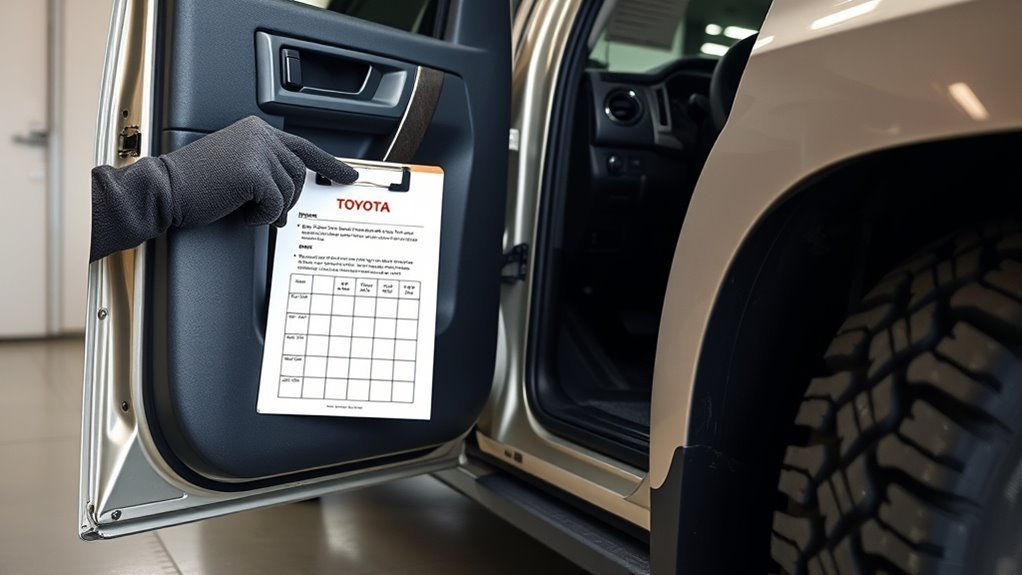
Find the tire placard on the driver’s door jamb before you add air. Toyota owner guidance points you to the door-jamb load label, driver’s door sticker, or owner’s manual for the correct tire inflation specification.
The placard lists the factory tire size and the recommended cold pressure for that exact setup. Some Tundra placards show about 30 psi front and 33 psi rear, but trim, model year, wheel size, and tire package can change the number.
Use the placard as your baseline for normal driving. If you run aftermarket tires, larger tires, or light truck (LT) tires, check the tire maker’s load chart before you copy the factory PSI.
Quick Toyota Tundra PSI Guide for Daily Driving, Towing, and Loads
Use this table as a safe starting point, not as a replacement for your placard. Your exact pressure depends on the truck, tire size, tire load range, and real weight on each axle.
| Scenario | Cold PSI Guidance |
|---|---|
| Factory setup | Use the exact door-placard PSI |
| Daily driving or light loads | Use placard pressure in most cases |
| Towing | Use the tire load chart and raise rear PSI only within limits |
| Heavy payloads | Use axle weight and tire load charts |
| Some older or specific Tundra placards | About 30 front and 33 rear |
Never use the tire sidewall maximum as your normal target pressure. That number shows the tire’s pressure limit under a rated load, not the best pressure for your truck.
Cold tire pressure gives you the cleanest reading because driving heats the tire and raises PSI. Check pressure before you drive, or wait at least three hours after driving.
Adjust Toyota Tundra Tire Pressure by Load and Tongue Weight
Towing adds tongue weight to the rear of your Tundra. Cargo in the bed can also shift weight toward the rear axle.
Use these steps to adjust pressure without guessing:
- Weigh the trailer tongue and cargo so you know the real load.
- Check your truck’s payload and gross vehicle weight rating before you load more.
- Find your tire size, load index, and load range on the tire sidewall.
- Match that tire information to the tire maker’s load and inflation chart.
- Set cold pressure to support the load without exceeding the tire or vehicle limit.
- Drive a short distance, then recheck handling, tire heat, and pressure when safe.
Warning: Do not tow with a soft rear tire because underinflation can build heat, weaken handling, and raise failure risk.
Do not raise rear pressure by a fixed number just because you hooked up a trailer. A small utility trailer and a heavy camper can place very different loads on the rear tires.
How to Check Toyota Tundra Tire Pressure the Right Way
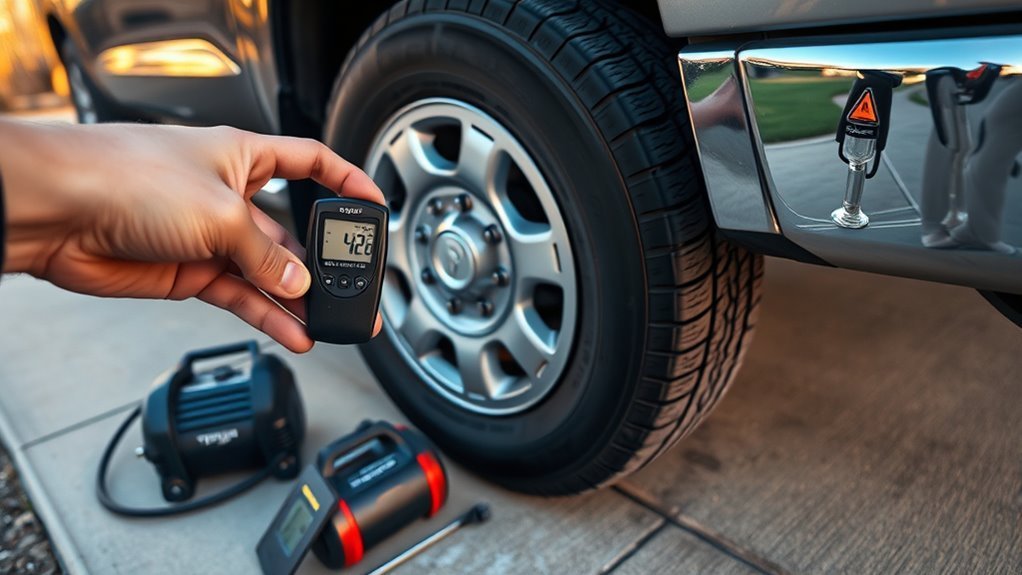
Check the tires before driving or after the truck sits for at least three hours. Remove the valve cap, press the gauge firmly onto the valve stem, and record the reading for each tire.
Compare each reading with the placard or load-chart target. Add air in short bursts, then recheck with the same gauge so each tire reaches the right cold PSI.
Check the spare tire too if your Tundra carries one. A spare loses pressure over time, and it may not help you when you need it most.
Note: NHTSA says TPMS helps warn you about low pressure, but it does not replace a monthly gauge check.
What should you do if the tires are warm?
If you must check warm tires, do not release air to reach the cold placard number. Note the reading, fix any clearly low tire for safe driving, and recheck pressure after the truck cools.
You can use a chalk test as a rough tread-contact check, but do not treat it as a load-rating tool. If the chalk line wears unevenly, inspect tire pressure, alignment, suspension, and tire condition.
After you adjust pressure or rotate tires, follow your owner’s manual for TPMS reset steps if your Tundra requires them. If the warning light flashes or stays on, schedule service.
Safety Checks for Underinflation, Overinflation, and Tire Changes
Underinflation creates extra sidewall flex, heat, poor handling, and faster wear. NHTSA research links low pressure with heat buildup, tread separation, blowouts, and loss of control risk.
Overinflation can also cause problems. A hard tire can reduce ride comfort, wear unevenly, and lose contact patch on rough pavement.
Check pressure any time you change tire size, wheel size, load rating, or tire type. The factory placard may no longer match your new tire setup.
- Follow the door placard for stock tires and normal loads.
- Use tire load charts for towing, payload, or LT tires.
- Inspect tread, sidewalls, valve stems, and spare tire pressure monthly.
- Use TPMS as a warning aid, not as your only pressure check.
- Ask a Toyota dealer or tire professional when specs conflict.
When to Ask a Tire Professional or Toyota Dealer
Call a tire professional if one tire keeps losing air faster than the others. You should also ask for help when you switch to LT tires, change wheel size, tow near the truck’s limits, or see uneven tread wear.
Ask the shop to match the new tire size, load index, and load range to your Tundra’s actual axle loads. That check matters more than a forum number or a quick guess at the air pump.
Frequently Asked Questions
What is the proper tire pressure for a Toyota Tundra?
The proper tire pressure is the cold PSI listed on your truck’s tire placard. Some Tundras list about 30 psi front and 33 psi rear, but your exact truck may differ.
Is 40 PSI good tire pressure for a Toyota Tundra?
Forty PSI may work for some towing or load setups, but you should not use it as a universal target. Confirm the right PSI with your door placard, tire load chart, and actual cargo or trailer weight.
How do you read a tire pressure chart?
Match your tire size, load index, and load range to the chart from the tire maker. Then choose the cold PSI that supports the weight carried by each axle.
Should you use the sidewall max PSI on a Tundra?
No. The sidewall max PSI shows the tire’s pressure limit under a rated load, not the normal pressure for your truck.
How often should you check Tundra tire pressure?
Check pressure at least once a month and before long trips, towing, or heavy hauling. Check more often when temperatures swing because tire pressure can change with weather.
Safety Disclaimer: This article is for informational purposes only and does not replace your Toyota owner’s manual, tire manufacturer guidance, or professional service. Ask a qualified tire professional or Toyota dealer before towing, hauling heavy loads, or changing tire size, wheel size, or load range.
Conclusion
Your Tundra’s best tire pressure starts with the door placard, not a one-size-fits-all number. Check pressure cold, adjust only with real load data, and use TPMS as a backup alert.
If you tow, haul, or run non-stock tires, match your setup to a tire load chart before you add pressure. Build the habit now, and your truck will feel steadier on every drive.
References
- 2026 Tundra Owner’s Manual, Toyota, 2026
- How To Check Tire Pressure, Toyota
- 2023 Toyota Quick Reference Guide, Toyota, 2023
- Tire Safety Ratings and Awareness, TireWise, National Highway Traffic Safety Administration
- Evaluation of the Effectiveness of TPMS in Proper Tire Pressure Maintenance, National Highway Traffic Safety Administration, 2012

